Who Is Cecilia Vicuña
Cecilia Vicuña was born in 1948 in Santiago de Chile. She works as a poet, visual artist, and filmmaker. Today, she lives and creates between New York and Chile. In 1973, following General Pinochet’s military coup and the death of President Salvador Allende, she went into exile in London. Her work has long focused on language, memory, ecological destruction, and feminist forms of creation. In 2022, she also received the Golden Lion for lifetime achievement at the Venice Biennale. In 2023, she won Chile’s National Prize for Visual Arts.
The New York gallery Lehmann Maupin represents her, working together with the artist since 2018.

Where and What Exactly Is the New Exhibition
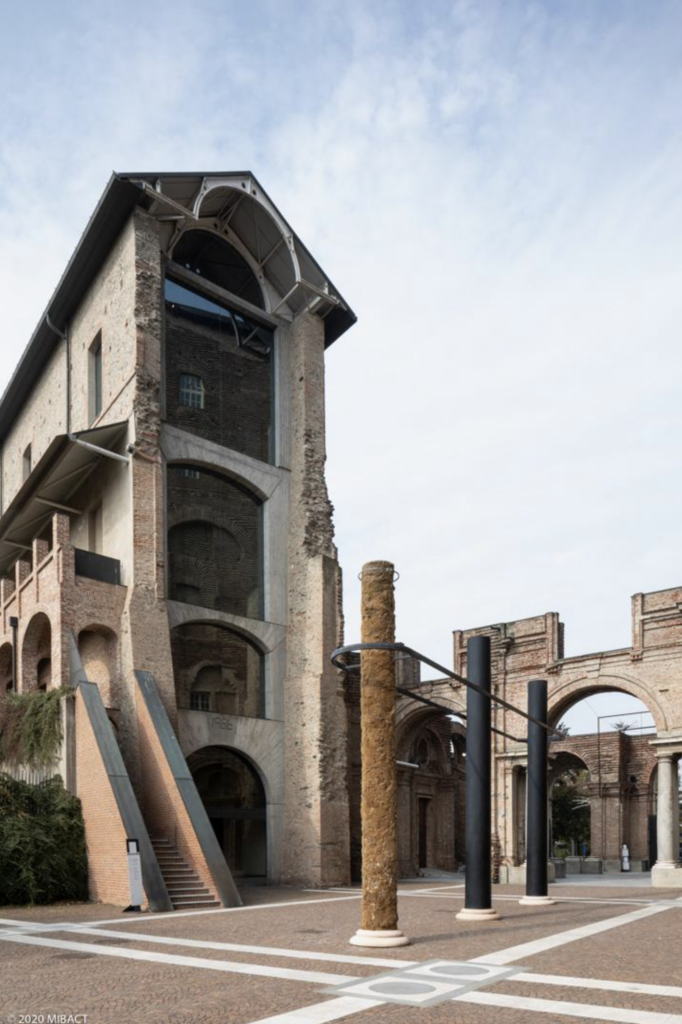
Cecilia Vicuña just opened a new exhibition titled El glaciar ido (The Vanished Glacier), staged directly at Castello di Rivoli Museo d’Arte Contemporanea in Turin. The show runs in the Manica Lunga space through September 20, 2026. Notably, it marks her very first solo museum exhibition in Italy.
Quipu as an Ecological Tool
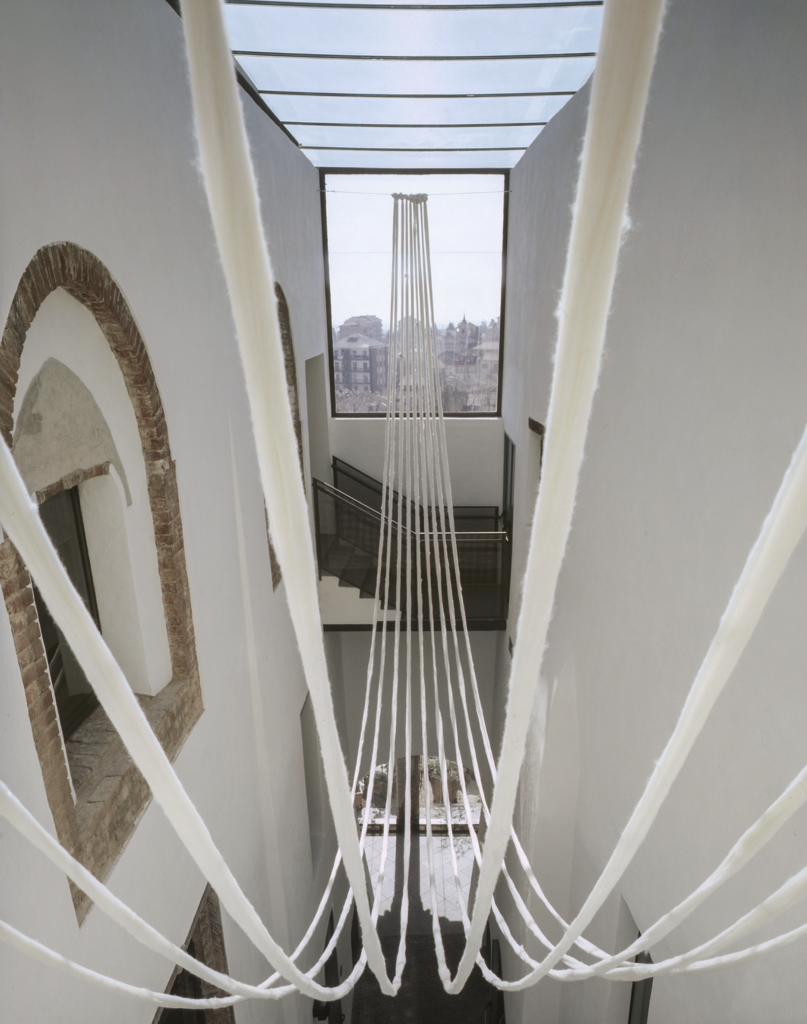
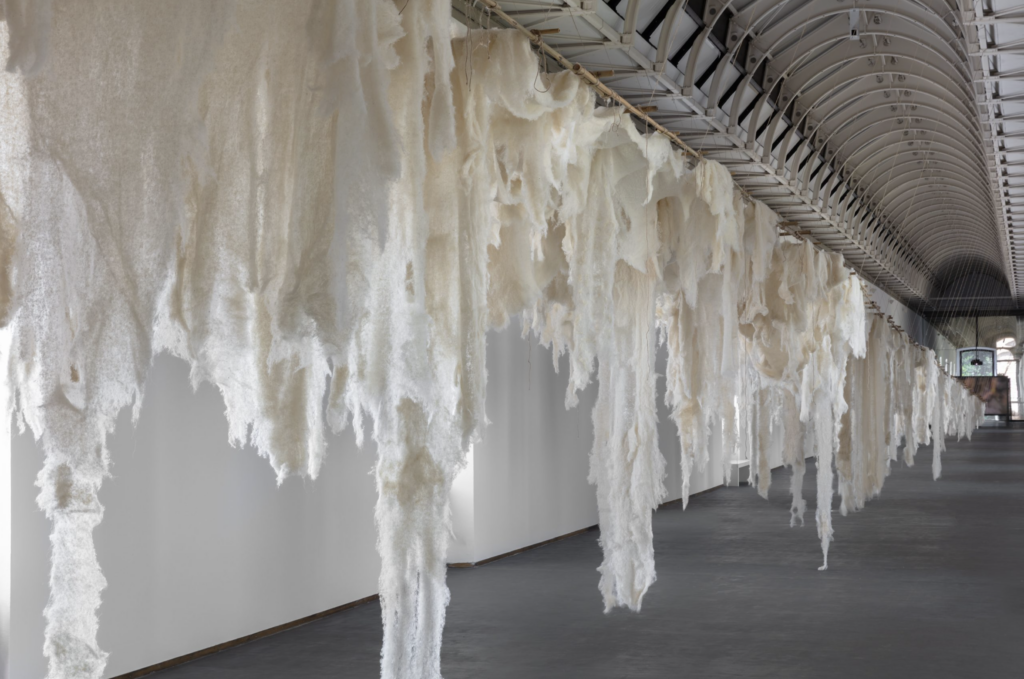
At the heart of the exhibition hangs a newly created installation, suspended beneath the ceiling of the elongated gallery. It takes the form of a monumental horizontal quipu, a system of colored knotted cords historically used by the Inca to record information. Here, Vicuña reinterprets it as a reflection on environmental loss. In 1583, the Spanish banned the use of quipu entirely.
Made from thick, unspun wool, the work also evokes glaciers, rivers, and flowing water. At the same time, it recalls the ice fields that once shaped the Valle di Susa near Turin. As visitors walk beneath its flowing threads, an imagined landscape emerges, one where nature, history, and memory remain closely intertwined.
A Reach Into Poetry and Performance
For more than five decades, Vicuña has explored decolonial themes through ephemeral materials, found objects, and collective gestures. The exhibition El glaciar ido expands this approach further, incorporating videos, songs, performances, and newly created wall poems. These elements deepen the dialogue between language, landscape, and ecological awareness. Accordingly, an upcoming publication will explore her long-standing relationship to glaciers and climate change.
Community as Co-Author
The project also involves the local community directly. During preparations for the exhibition, residents of Turin and the surrounding area joined walks along the Dora Riparia river and the lakes of Avigliana, collecting natural materials along the way. Later, they used these materials in an outdoor installation, created in collaboration with students from the Accademia Albertina di Belle Arti in Turin.

The Curator and Its Political Undertone
Marcella Beccaria curated the exhibition. Vicuña’s knotless quipu symbolize vanishing glaciers, fading memory, and lives lost during the Chilean dictatorship. Through sculpture, poetry, and shared experience, the work ultimately connects environmental fragility with human history.