French artist JR is among the most striking names in contemporary street art. His real name is Jean René, though almost no one knows him by it. In public, he almost never appears without dark sunglasses and a hat.
The Artist Who Dissolves Pyramids
Before we get to Venice, it’s worth knowing what JR is famous for. In 2016, he was invited directly by the Louvre. There, he created an optical illusion that convincingly “dissolved” the museum’s famous glass pyramid designed by I. M. Pei. From a precise point in the Cour Napoléon, it looked as though the pyramid didn’t exist at all, and the original palace wing stood in its place instead. Three years later, for the pyramid’s 30th anniversary, he returned with the opposite gesture: he wrapped the pyramid in 2,000 strips of paper, making it look as if it were emerging from a crater. Visitors could tear off pieces of paper themselves, until the work literally disappeared beneath the crowd’s feet.

He worked similarly elsewhere. On the border between Mexico and the US, he installed a 21-meter photograph of a child peering over the border wall, right as Donald Trump was pushing for a new barrier. In a maximum-security prison in California, he created a monumental mosaic together with inmates, visible only from a bird’s-eye view. One thing connects it all: he makes visible what a system, or history, would rather leave out.
JR and Agnès Varda: Faces Places
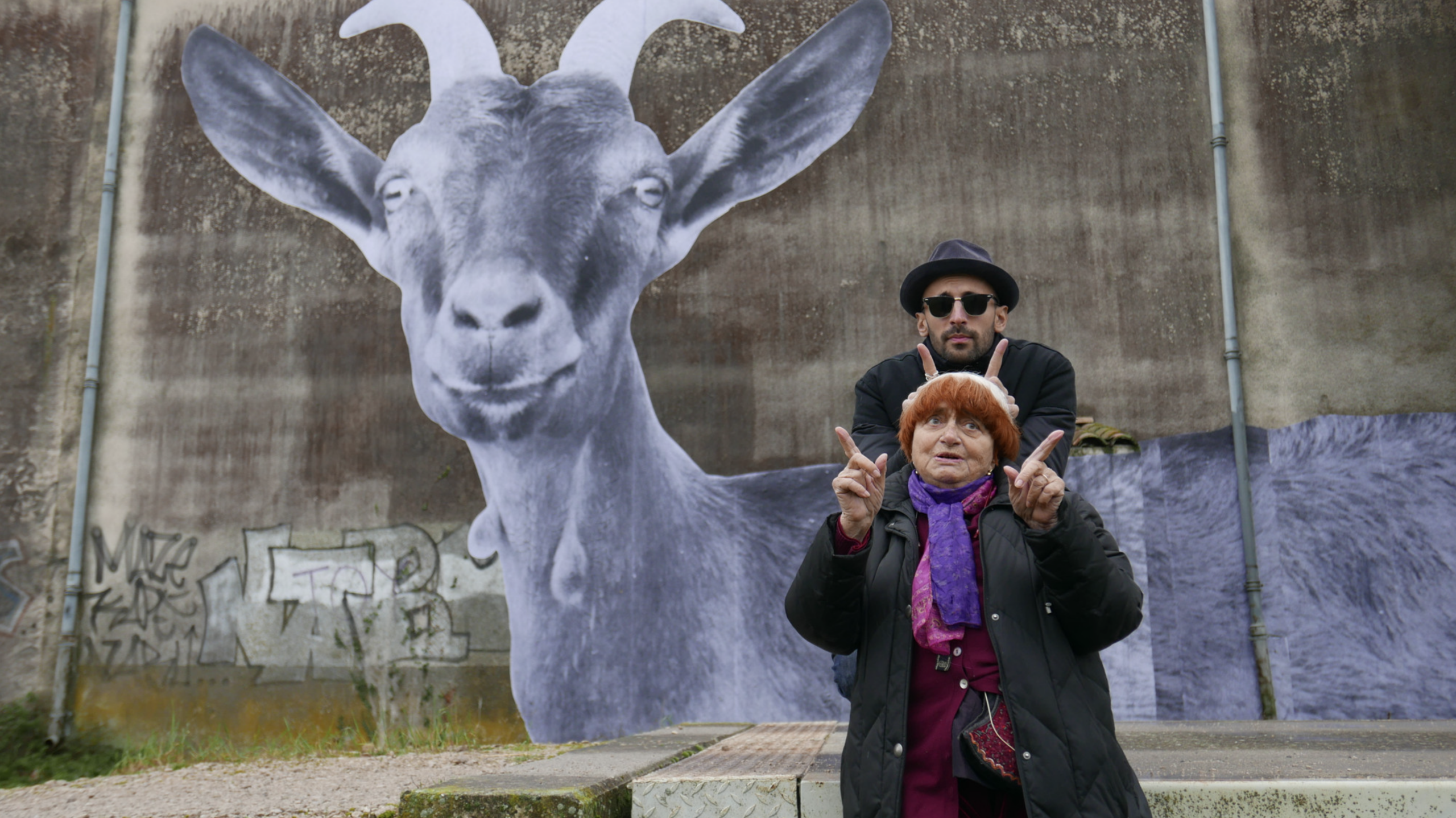
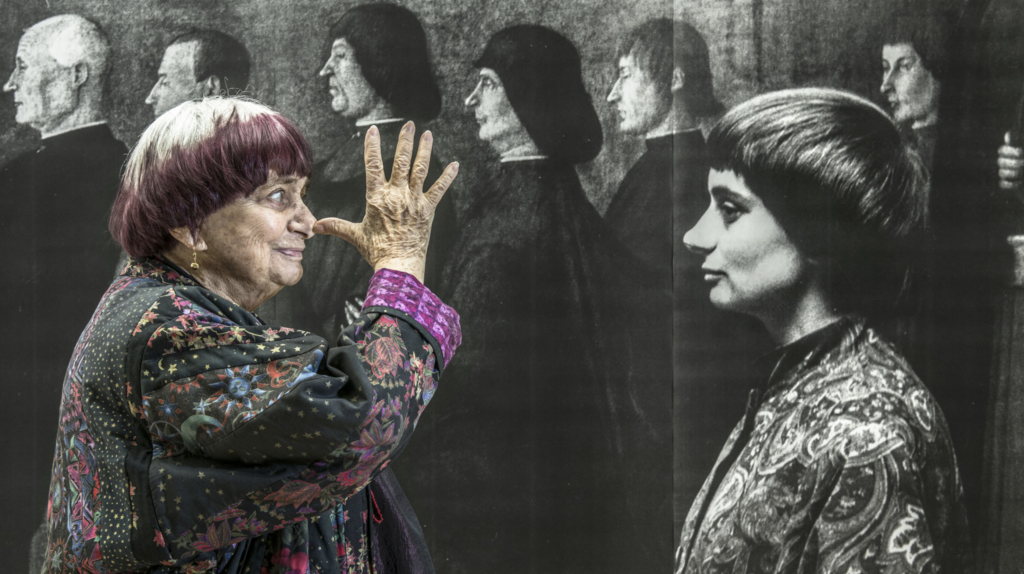
This very ability took on a more personal dimension in 2017. The documentary Faces Places was born, which JR made together with legendary director Agnès Varda. Together they traveled through the French countryside, photographing local people whose portraits they then pasted onto grain silos, water towers, and house facades. The film won the Golden Eye for Best Documentary at Cannes and was nominated for an Oscar.

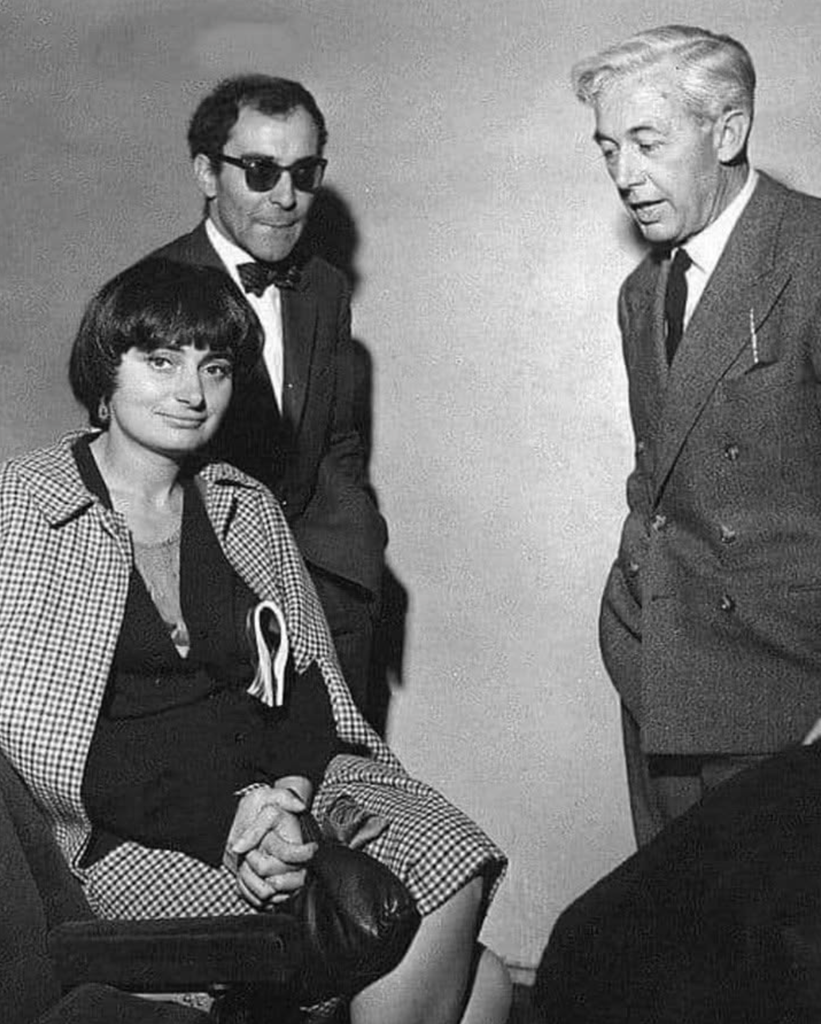
Throughout the film, Varda asks JR to take off his sunglasses. He refuses. She sees in this a striking parallel to another old friend from the days of the Nouvelle Vague: Jean-Luc Godard. Godard ultimately becomes the film’s emotional climax. Varda and JR set out to visit him at his home in Rolle, Switzerland. Godard doesn’t open the door. Instead, they find only a locked door and a cryptic message scratched onto the window, the very same words Godard once wrote to her when her husband, director Jacques Demy, died. Varda is moved to tears right in front of the camera. It’s in this fragile moment that she finally convinces JR to show his face without the glasses.
JR and the Legacy of Christo and Jeanne-Claude
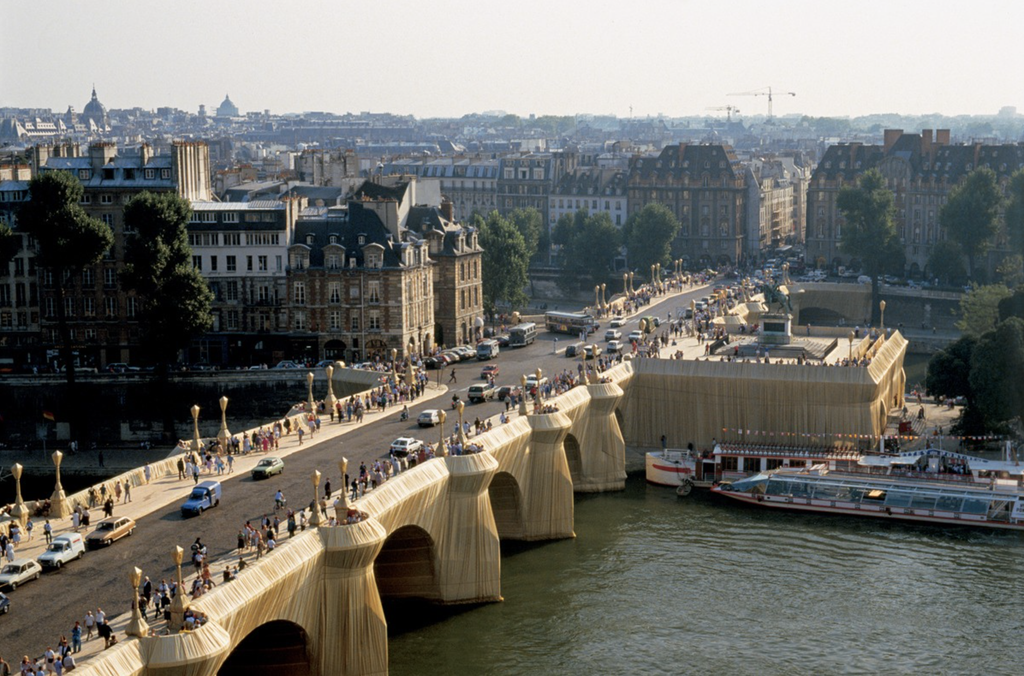
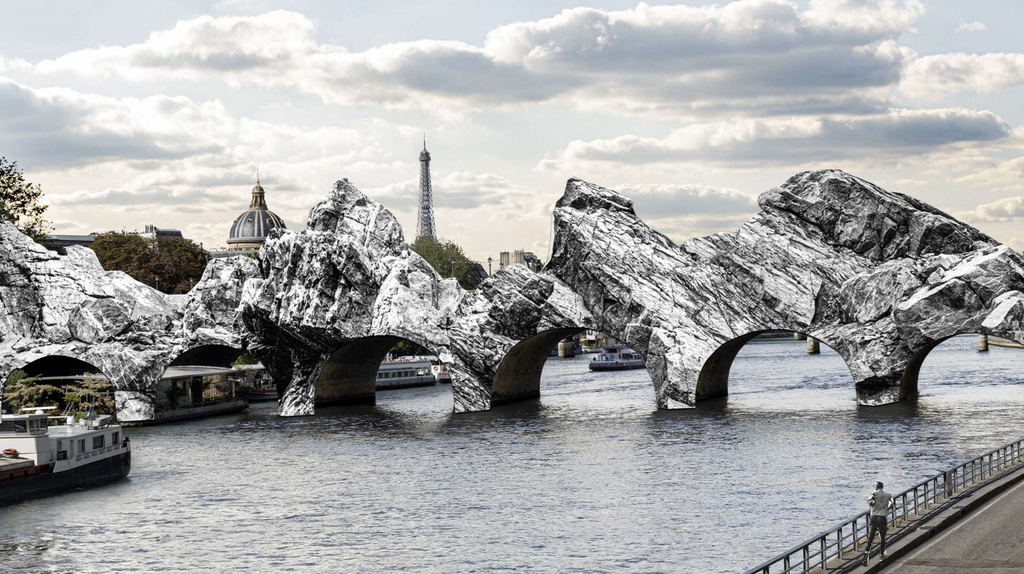
JR doesn’t only draw inspiration from Varda. In June 2026, he wrapped the Pont Neuf in Paris, in honor of the famous work The Pont Neuf Wrapped by Christo and Jeanne-Claude from 1985. A book was also published for the project by Taschen, titled La Caverne Du Pont Neuf. JR thus continues the tradition of artists who turn urban landmarks into temporary, monumental gestures, just as he did at the Louvre.
Venice 2026: Il Gesto
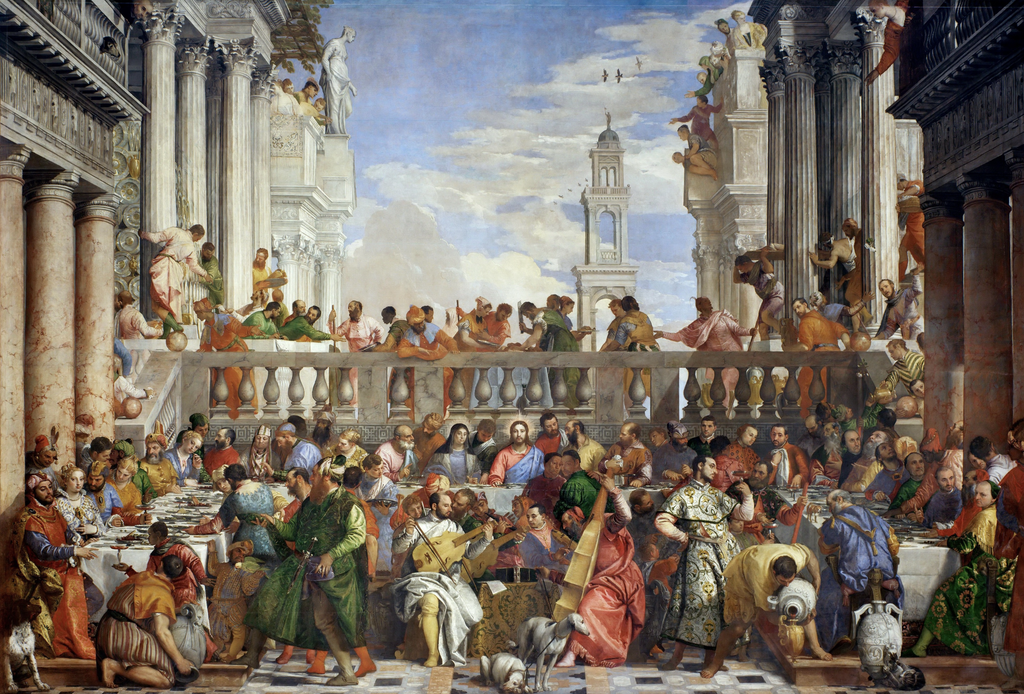
At the current, 61st edition of the Venice Biennale, curated by Koyo Kouoh under the title “In Minor Keys” (May 9 – November 22, 2026), JR has moved toward an even bolder gesture. His project Il Gesto transforms the facade of Palazzo Ca’ da Mosto into a contemporary reinterpretation of Paolo Veronese’s painting The Wedding at Cana.
The Painting the City Never Got Back
This choice is no coincidence. It’s actually a direct continuation of his own past. Veronese painted the work in 1563 for the San Giorgio Maggiore monastery in Venice. It measured over 32 feet in length and depicted the biblical miracle of water turning into wine.
In 1797, Napoleon’s soldiers tore it from the wall. They rolled it around a cylinder and carried it off to Paris as war booty. In fact, they even had to cut it into pieces along the way, just to fit it onto the ship, and then sew it back together in France.
After Napoleon’s defeat, the French were supposed to return the looted art under the peace treaty. However, in Veronese’s case, they refused, claiming the canvas was too large and fragile for the journey. Instead, they sent a different painting to Venice as a replacement. Today, Veronese’s Wedding at Cana still hangs in the Louvre, as the largest painting in the entire collection.
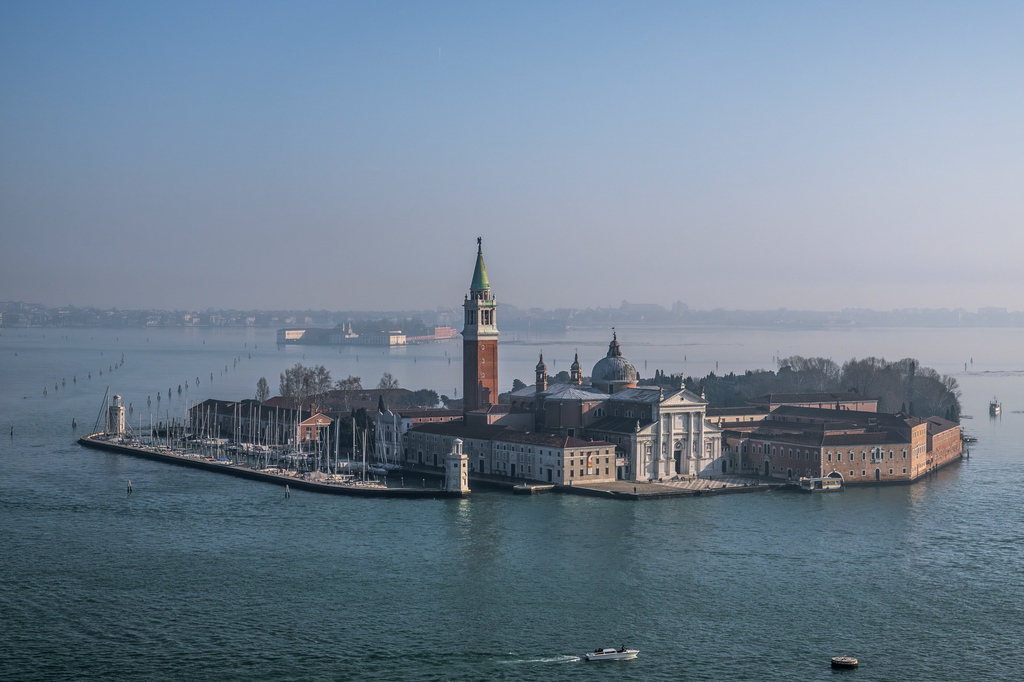
JR knows this history intimately, because he himself once artistically addressed the fate of that very building. He chose a painting whose museum home, the Louvre, he had already reshaped twice with his own hands. He also had a personal stay right at the San Giorgio Maggiore monastery, where the painting originally hung for two centuries.
Yet the work doesn’t copy the biblical scene literally. JR replaced the figures with 174 members of the Refettorio Paris community, a project against food waste that he co-founded himself. Every evening, a three-course meal is cooked there from surplus food for people in need. The miracle of water turning into wine thus becomes a metaphor for a real, social transformation.
Inside the building, the project continues with a monumental tapestry created by master weaver Giovanni Bonotto for his Fondazione Bonotto. JR himself describes the entire work as a “social pact” with the city of Venice.
Who Owns the Palace JR Chose
Ca’ da Mosto is no random location, either architecturally or historically. It’s the oldest palace on the Grand Canal, built as early as the 13th century in Venetian-Byzantine style. The famous explorer Alvise Cadamosto, discoverer of the Cape Verde Islands, was born and died here; he made his name sailing along the West African coast in the service of the Portuguese prince Henry the Navigator.
From the 16th to the 18th century, the palace housed the Albergo Leon Bianco, one of the very first hotels in Europe and an important stop on the Grand Tour. Among its guests were Voltaire, writer John Ruskin, and even Holy Roman Emperor Joseph II himself, who stayed here in 1769 and 1775.
After decades of decay, the palace was bought by Alessandro Gallo and Francesca Rinaldo, the husband-and-wife team behind the luxury sneaker brand Golden Goose. They transformed it into today’s The Venice Venice Hotel, opened in 2022, which from the start functioned as a cultural hub full of art, not just an ordinary luxury hotel.
That’s exactly why it’s a logical setting for JR’s project during the Biennale. The artist is represented by the Parisian Galerie Perrotin, whose roster also includes major names like Takashi Murakami, Maurizio Cattelan, and Hans Hartung. In Venice, JR thus continues the thread of his work with the memory of places, a line running from the Louvre through the Mexican border to this historic palace on the Grand Canal.
Il Gesto, JR
Palazzo Ca’ da Mosto, The Venice Venice Hotel
May 9 – November 22, 2026, as part of the 61st Venice Biennale