

Fondation Maeght dedicates a major exhibition this year to one of the 20th century’s most influential American painters. From June 27 to November 15, 2026, it hosts Ellsworth Kelly – At the Edge of Water. The curator is Éric de Chassey. The exhibition also explores, for the first time, the role of water in Kelly’s work.
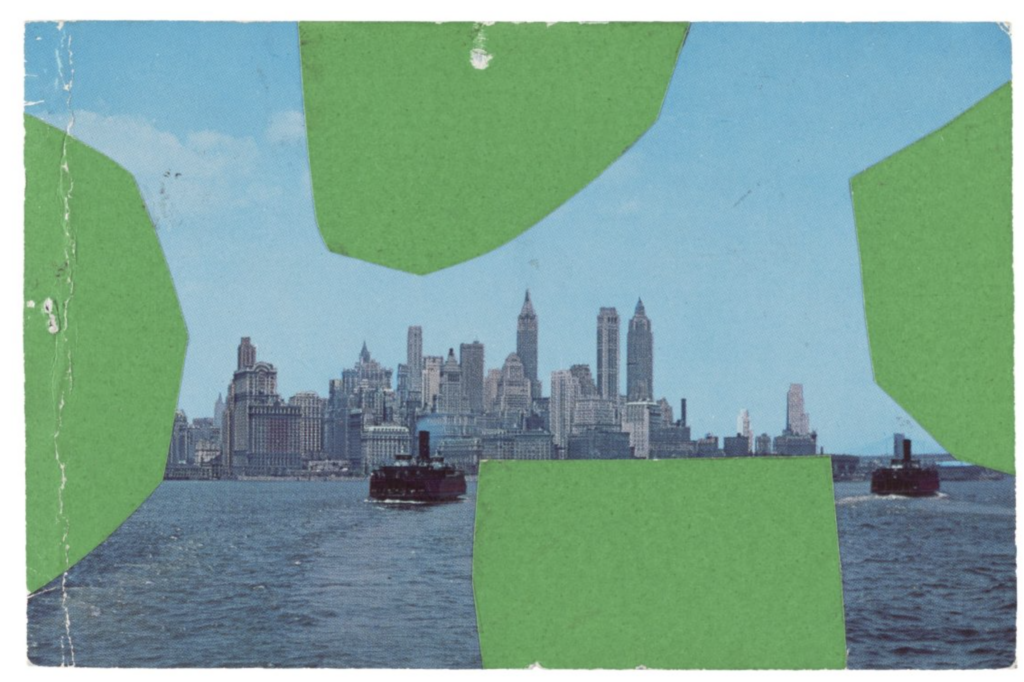
Who was Ellsworth Kelly
Kelly was born in 1923 in Newburgh, New York. He died in 2015 at the age of ninety-two. He was shy, gay, and a passionate bird-watcher since childhood. As a child, he had an experience he later described as pivotal: while trick-or-treating one Halloween, he was captivated by an illuminated window divided into red, blue, and black sections. When he got closer, he realized the colors came only from curtains, a couch, and a fireplace, but that first impression of pure light and color stayed with him for the rest of his life.
Before becoming a painter, he served in the so-called “Ghost Army,” a unit of camouflage experts who deceived the enemy with fake military positions before and after the Normandy landings.
Thanks to the G.I. Bill, he spent six years in Paris, from 1948 to 1954. It was this stay that allowed him to escape the dominance of New York’s Abstract Expressionism, then ruled by Jackson Pollock, Willem de Kooning, and Mark Rothko. Kelly himself admitted that in Paris he turned down a chance to speak with Pablo Picasso, simply because he was embarrassed by his poor French. Instead, he was influenced by entirely different giants: Henri Matisse, Piet Mondrian, Constantin Brâncuși, and Jean Arp. From Arp, he took above all a method of composition based on chance.
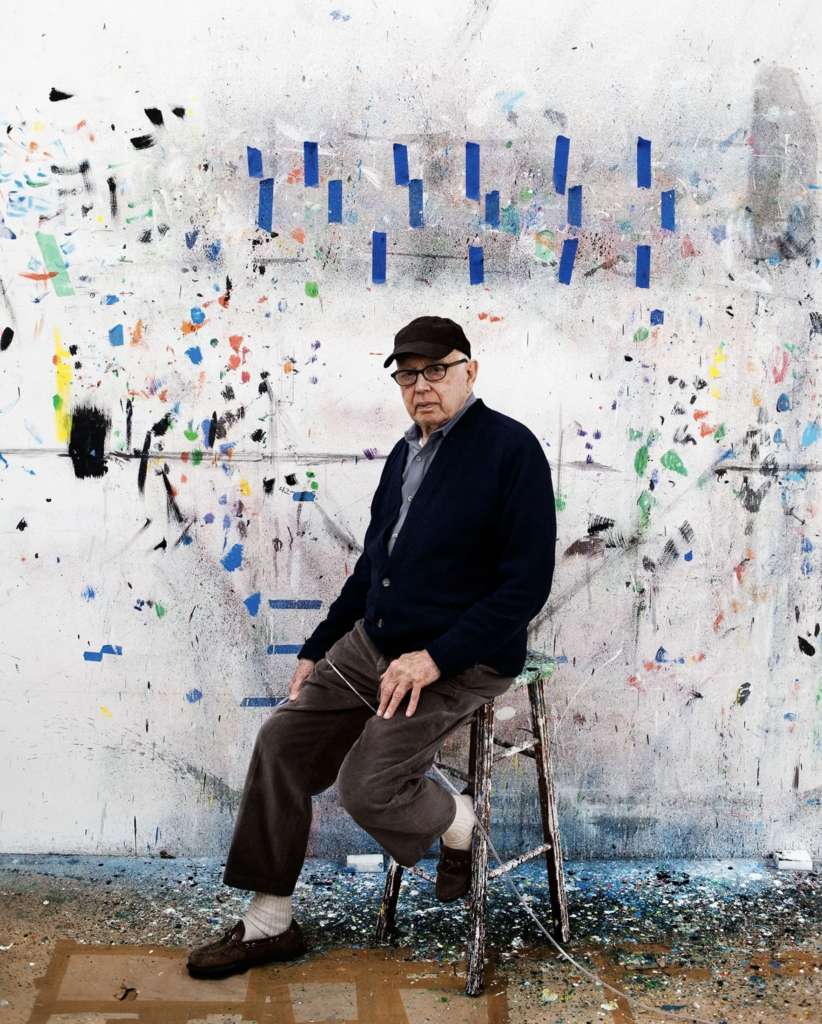
Kelly and Pop Art: a surprising connection
Although Kelly himself resisted any classification, critics still point to his closeness to Pop Art. In 2003, New York’s Whitney Museum dedicated an exhibition to him, Red Green Blue, built around a series of paintings in those three colors from the late 1950s and early 1960s. Critic Ken Johnson wrote at the time in the New York Times that Kelly’s colors look more like a product of modern chemistry than traditional paint, and that the light in his canvases seems more electric than natural.
Art historian Sarah K. Rich went even further: according to her, the combination of green, blue, and red isn’t accidental, since these are exactly the colors that make up a television screen image. Kelly also moved in the same New York circles as Andy Warhol and James Rosenquist, though he himself rejected any direct connection to Pop Art.
He saw it differently himself. He claimed his greatest inspiration was watching birds, not other paintings. His abstraction came from real observation, from shadows, architecture, and light, not from inner emotion. It’s precisely this ability to notice reality around him that ultimately became the heart of the exhibition at Fondation Maeght.
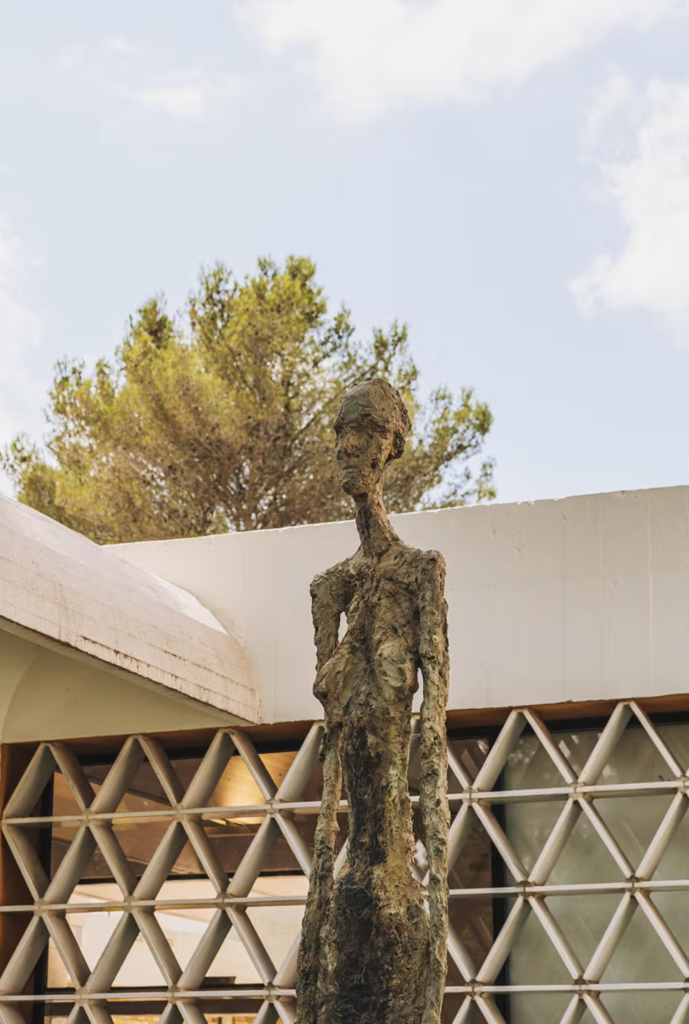

Kelly and the Maeght family
After returning to France, Kelly exhibited directly at Galerie Maeght in Paris. He also regularly stayed with the Maeght family in Saint-Paul-de-Vence. This gave rise to a lifelong friendship with Adrien Maeght, today the chairman of the Fondation’s board.
Water as the exhibition’s theme
Kelly was drawn to aquatic environments his whole life. These included Belle-Île, the French Riviera, New York, and the Caribbean. Yet he never painted classic landscapes. Instead, he translated the perception of water itself, its shifting color, light, and surface, into pure abstract form.
He put it simply himself: “In my paintings, I do not invent; my ideas come from a constant investigation of the appearance of things.”
After his death in 2015, American critic Peter Schjeldahl wrote in The New Yorker that Kelly’s paintings have the suddenness of miracles. According to him, no major 20th-century movement, not minimalism, not Pop Art, not Op Art, can fully contain them. Their secret, Schjeldahl wrote, is innocence, sustained at a fantastic level of talent and craft.
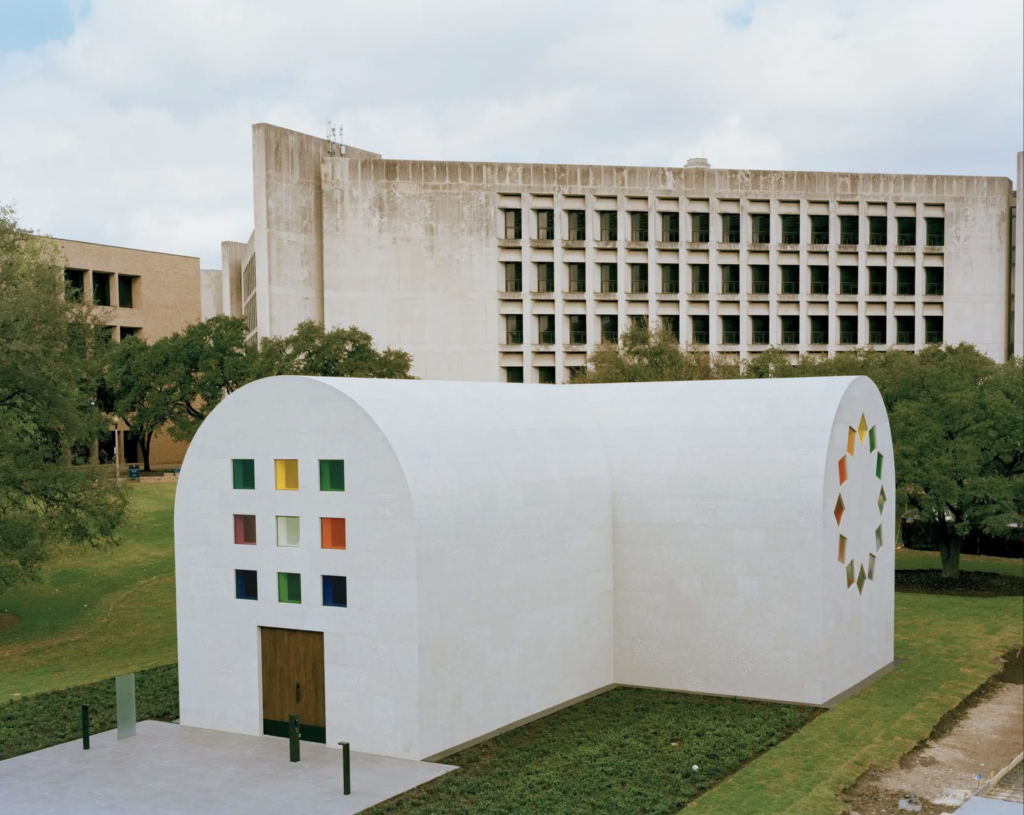
Fondation Maeght: a story of loss and art
The Fondation was born out of tragedy. Aimé and Marguerite Maeght’s youngest son, Bernard, died in 1953 of leukemia. It was the painter Georges Braque who convinced the grieving parents to turn their sorrow into something lasting: a place for art.
The Fondation was opened in 1964 by the legendary French Minister of Culture André Malraux. It became France’s first private art institution. It was inspired by American museums such as the Guggenheim, the Barnes Collection, and the Phillips Collection, which the Maeghts visited during their trips to the US in the 1950s.
Architecture that breathes like Kelly’s paintings
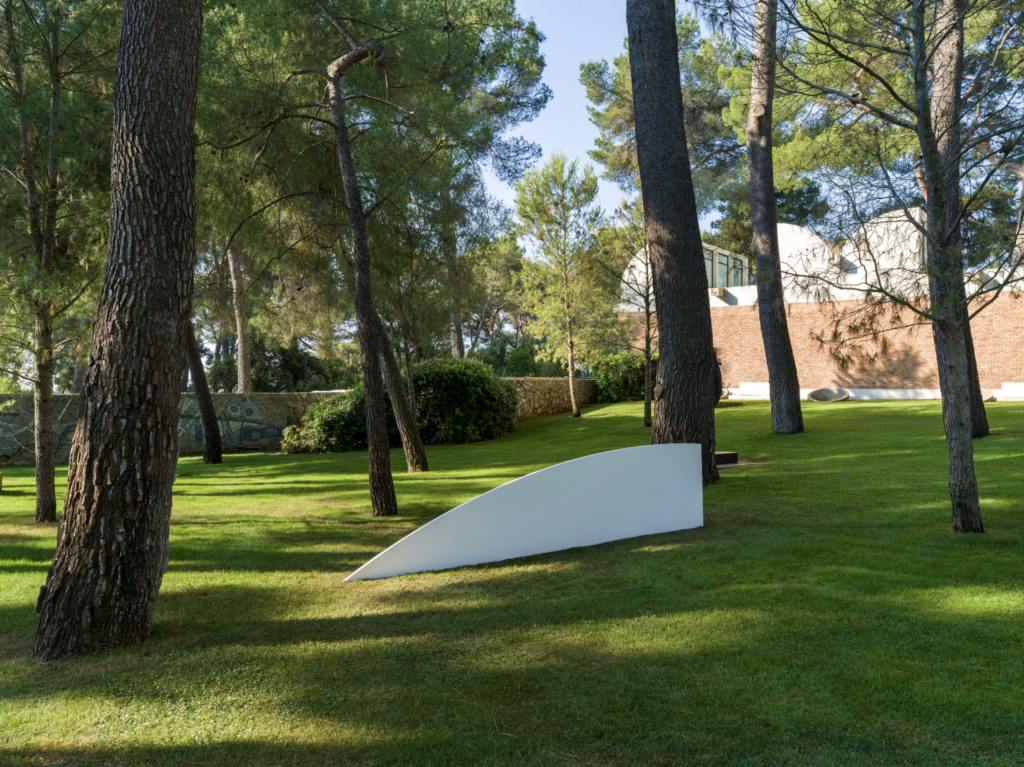
The building was designed by Catalan architect Josep Lluís Sert. He created a kind of “village architecture,” full of natural light, white walls, and inner courtyards. He had previously built a studio for Joan Miró in Mallorca, which ultimately convinced Maeght to entrust him with this project too. Sert later succeeded Walter Gropius as dean of architecture at Harvard.
Sert literally built nature into the structure itself. Visitors discover the works inside and the beauty of the surrounding landscape in a single movement. It’s exactly this idea, the connection of light, nature, and form, that links Sert’s architecture to Kelly’s paintings of water.
A collection of world-renowned names
Kelly’s work now enters into dialogue with the Fondation’s permanent collection, one of the largest collections of modern art in Europe. It includes names such as Pierre Bonnard, Georges Braque, Joan Miró, Alberto Giacometti, Marc Chagall, Alexander Calder, and Wassily Kandinsky. The collection today holds around 13,000 works, of which the original bequest from Marguerite and Aimé Maeght comprised 1,000 pieces.
