Rome just opened one of the season’s most significant fashion exhibitions. Maria Grazia Chiuri revisits one of luxury fashion’s most important creative partnerships. Fendi / Karl Lagerfeld 1985 runs at the Galleria Nazionale d’Arte Moderna e Contemporanea. The show runs from July 9 to October 25, 2026.
A Palace That Blends Art Nouveau With Classicism
The exhibition takes place inside a building designed by Italian architect Cesare Bazzani. Builders completed it between 1911 and 1915. It originally marked the exhibition celebrating Italy’s fiftieth anniversary of unification. The Palazzo delle Belle Arti combines austere classical forms with Art Nouveau decorative elements. Its facade even carries Masonic symbols. Bazzani expanded the building once more in 1934. He wanted to accommodate the gallery’s growing collection. Fittingly, this space itself balances between two distinct styles. Today it hosts an exhibition about Fendi and Lagerfeld. Their partnership similarly united Roman craftsmanship with German discipline.
Rome as a Recurring Stage for Fendi
This marks the third couture show Fendi has staged directly in Rome, where the house is headquartered. In 2016, Karl Lagerfeld designed the Haute Fourrure show to mark the brand’s ninetieth anniversary. The show took place directly on the surface of Rome’s Trevi Fountain. It became the first fashion show ever held at this baroque landmark. At the time, Fendi also funded its restoration. Then, in 2019, Silvia Venturini Fendi presented a couture collection near the Temple of Venus. She accompanied it with a €2.5 million donation toward restoring the site.
Notably, this current exhibition and show also mark something new. It’s the first couture collection Maria Grazia Chiuri designed for Fendi. She became the house’s creative director last October. A private evening preview took place on July 9. The space opened to the public on July 10.
Interestingly, Chiuri also chose Rome, her hometown, for another project. It became the setting for her final collection for Dior, presented at Villa Albani Torlonia. Additionally, she has personally worked for five years now on restoring Rome’s Teatro della Cometa.
Four Decades of Creative Dialogue
Maria Grazia Chiuri conceived the exhibition. Maria Luisa Frisa curated it. The show echoes a legendary 1985 retrospective. At the time, that show celebrated Lagerfeld’s first twenty years at Fendi. The word “After” in the new title deliberately points to the passage of time. It also points to a present-day view of one of fashion history’s most influential collaborations.
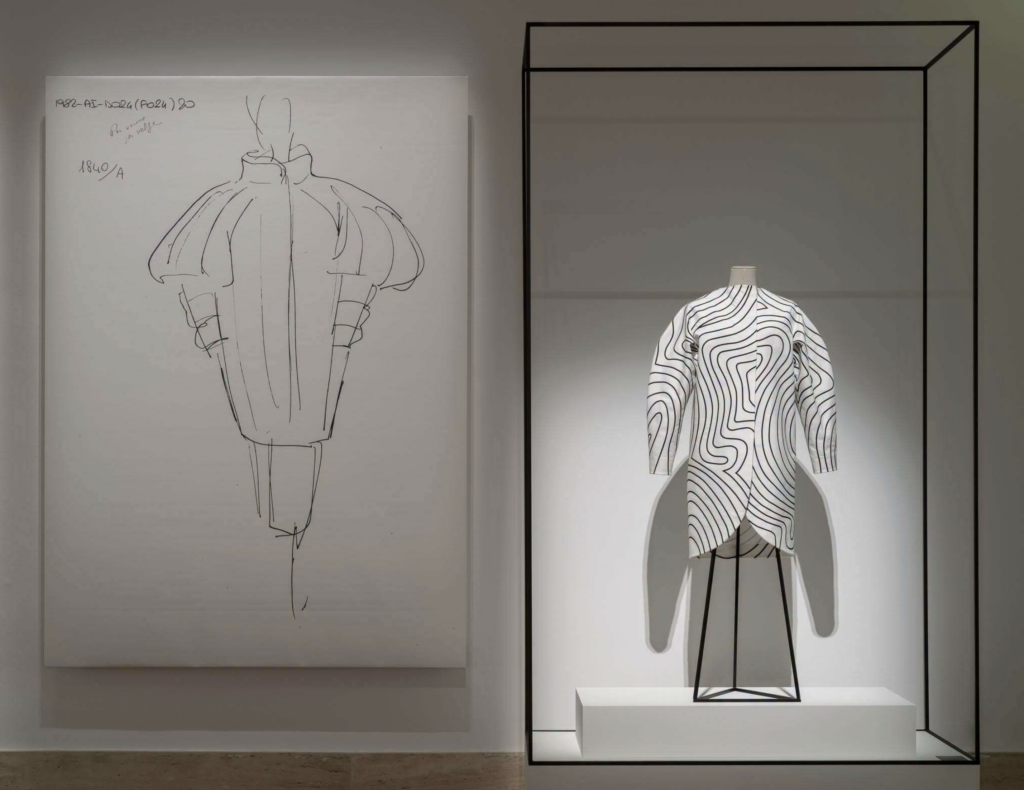
The exhibition follows Lagerfeld’s original exhibition concept. It traces the process behind haute couture, from early sketches and technical experiments through to finished garments. The show is organized into thematic sections: Tablets, Kaleidoscope, Design Matrices, Theatre, Sketches, and Computer. Each section reveals the creative process behind Fendi’s innovations in craftsmanship.
Film as Part of the Fashion Archive
The exhibition also includes the 1977 short film Histoire d’Eau, directed by Jacques de Bascher, Lagerfeld’s longtime companion and muse. This film demonstrates that Lagerfeld’s circle of collaborators extended well beyond garment design alone, reaching into filmmaking too, which fits neatly within his lifelong interest in photography, publishing, and book culture.
A Look Inside the Fendi Atelier
At the heart of the exhibition sits a reconstructed Tablet Room, featuring fifty experimental panels documenting decades of research into tanning, dyeing, weaving, and material processing. Roman landscapes, floral motifs, and geometric studies together present craftsmanship as both technical practice and artistic expression.
The exhibition also includes one hundred eighty original drawings, twenty-two paper patterns, seven toile prototypes, twenty-five fur creations, and archival press materials. Archival interviews with Paola Fendi, Ida Panicelli, and Arturo Carlo Quintavalle add further context, drawn directly from the original 1985 exhibition.
Karl Lagerfeld’s Legacy
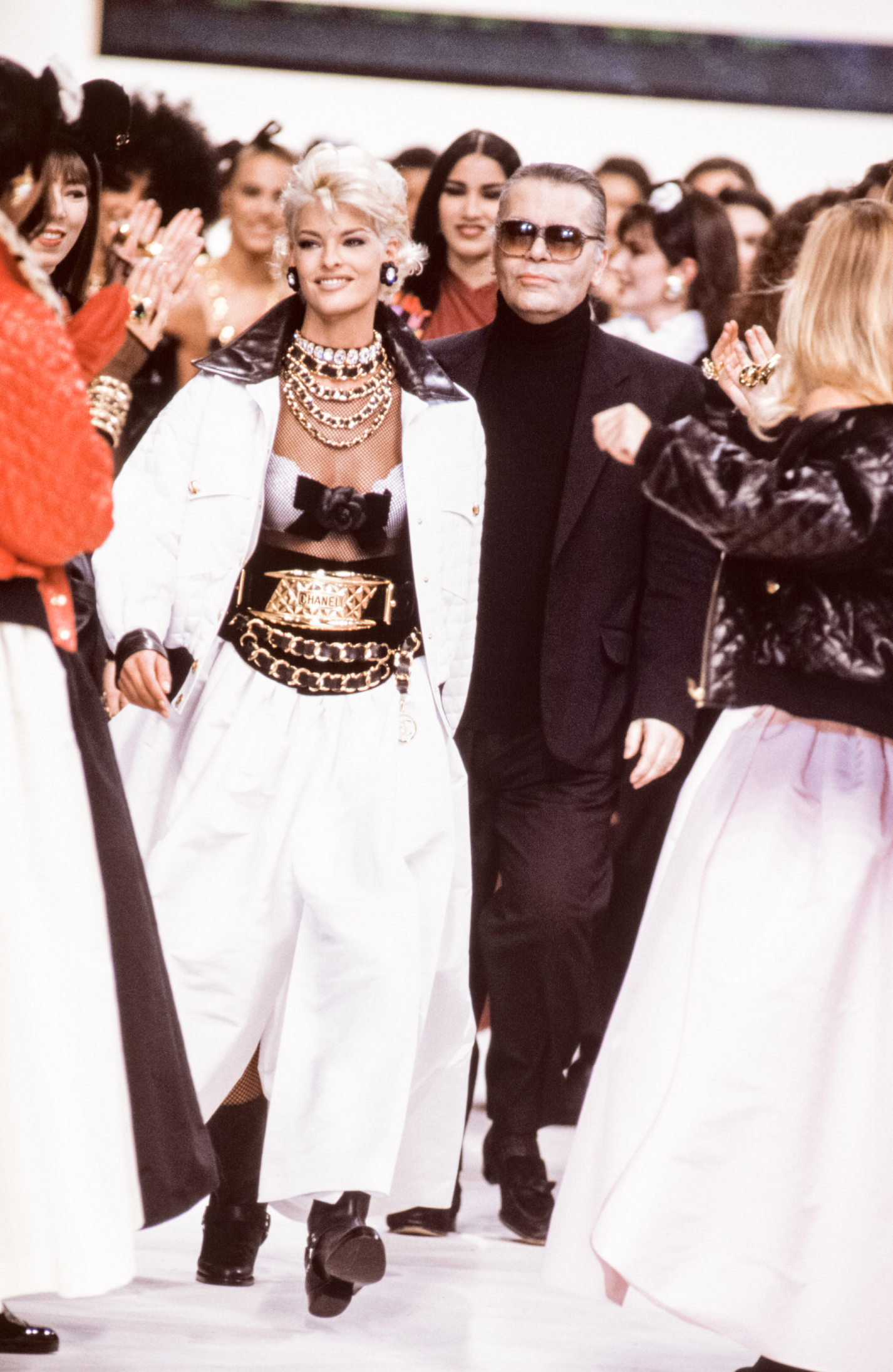
Above all, the exhibition pays tribute to an extraordinary collaboration between Fendi and Karl Lagerfeld, one that began in 1965 and continued until his death in 2019. Over five decades, Lagerfeld transformed the Roman house’s approach to both couture and fur, turning traditional craftsmanship into a laboratory for material innovation. Through this project, Chiuri places his legacy directly in dialogue with the present.enil na laboratórium materiálových inovácií. Chiuri týmto projektom stavia jeho odkaz priamo do dialógu so súčasnosťou.