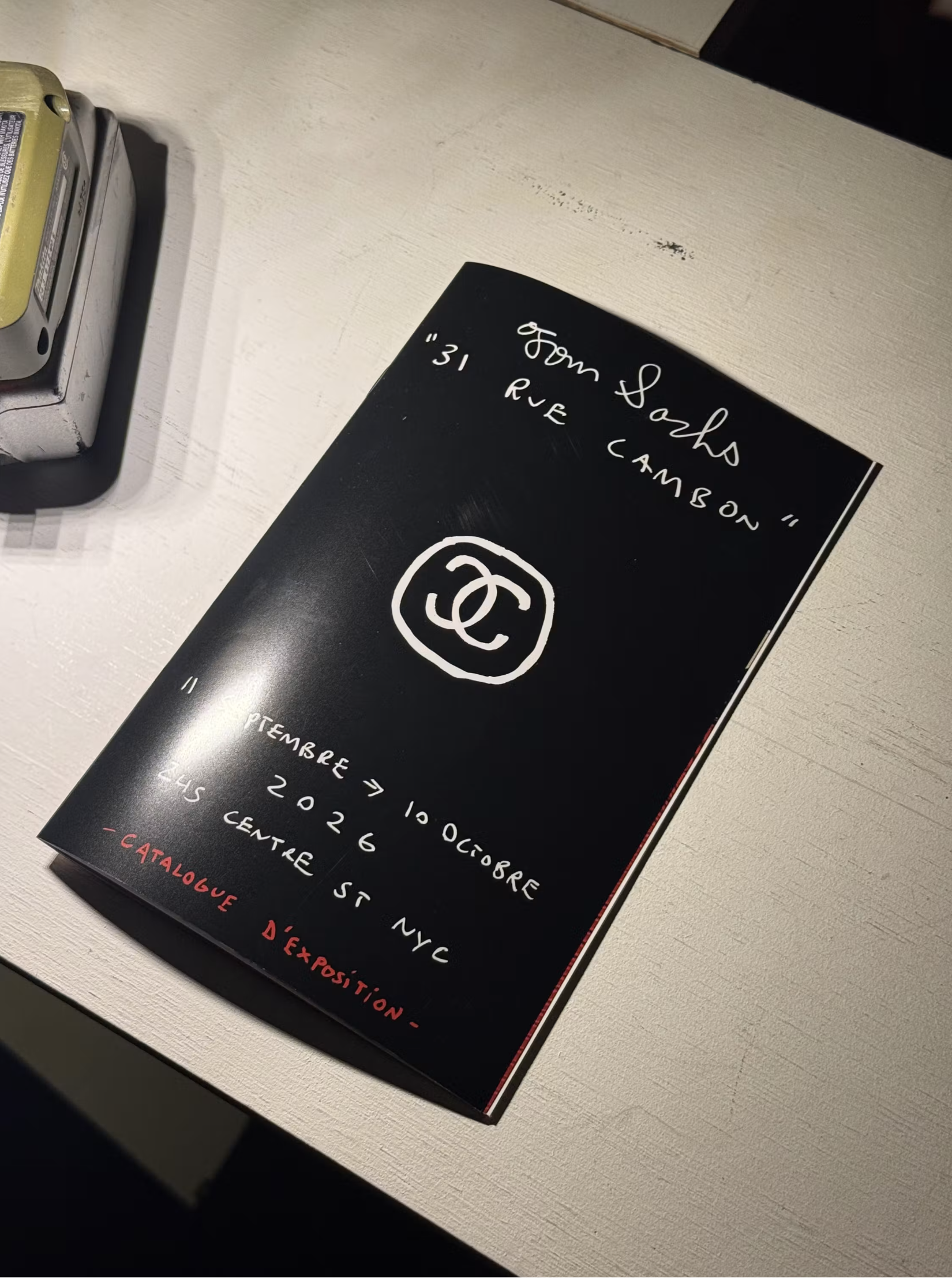
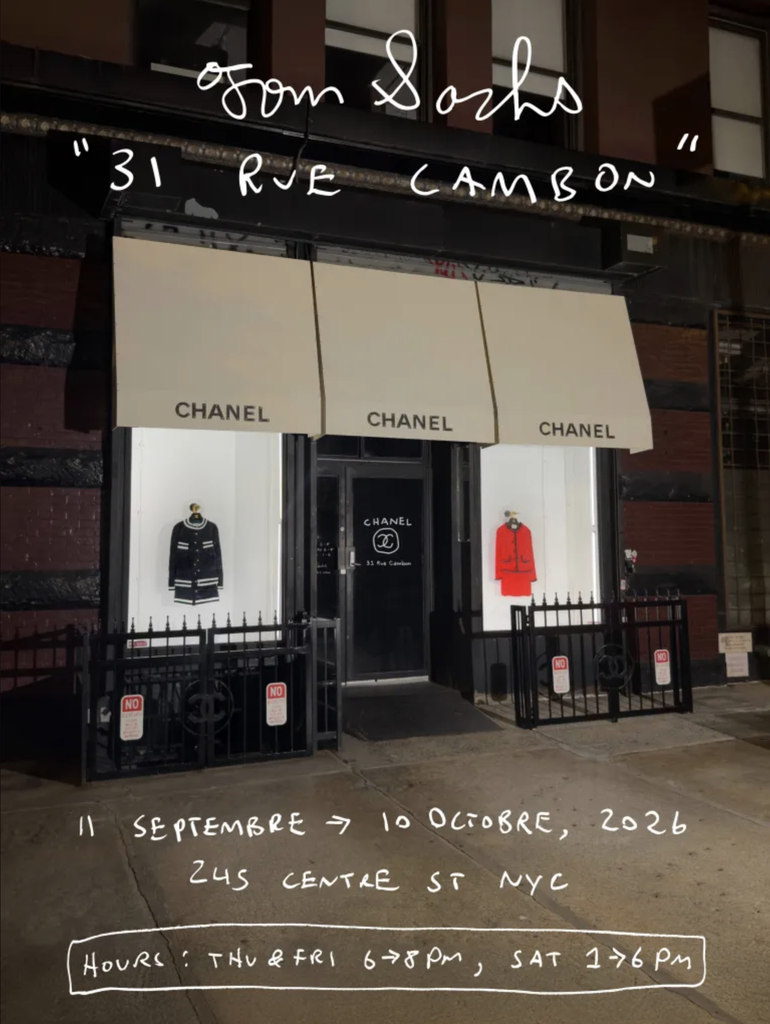
Tom Sachs’s studio on Centre Street in New York’s SoHo turned, on September 11th during New York Fashion Week, into a fully immersive replica of Chanel‘s flagship Paris boutique, “31 Rue Cambon.” The exhibition shares the same name. It raises the question of where value actually lies, in a logo, a material, an object, a cultural myth, or in the labor required to make something by hand.
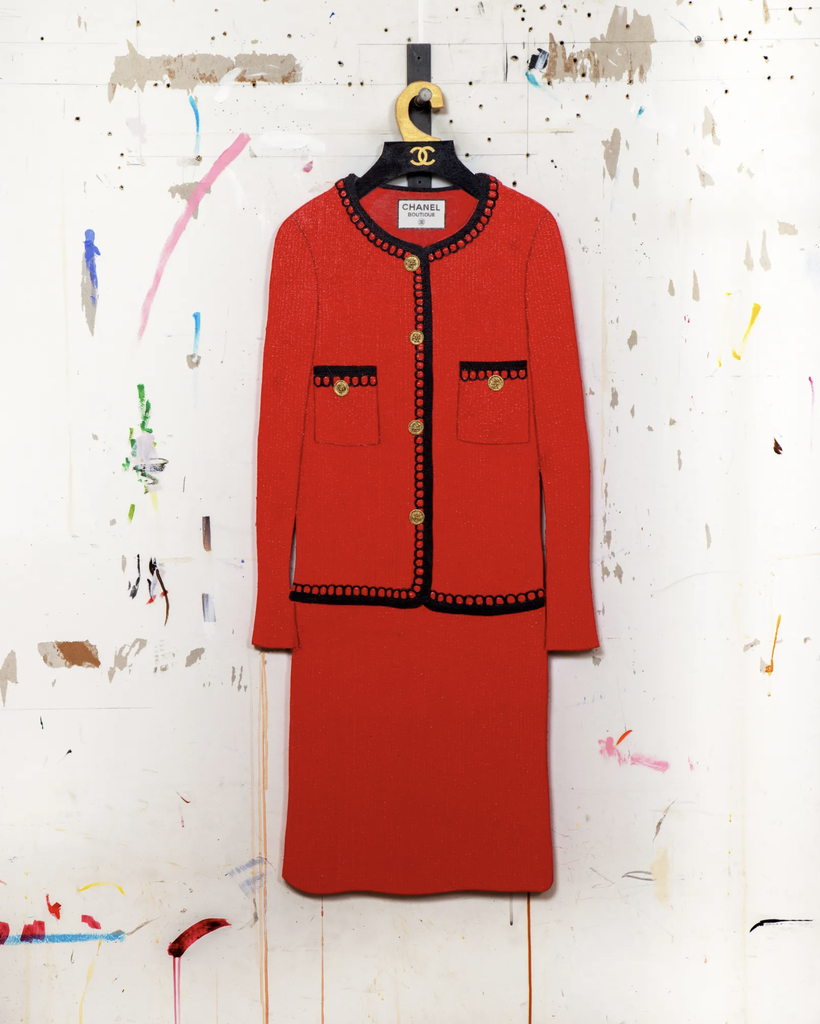
Visitors enter straight off the street through plywood awnings and wrought-iron gates bearing the interlocking “C” logo. Inside, a mirrored entrance hall and showroom await, filled with handbags, shoes, and the house’s iconic two-piece suits. All of it, however, is handmade from everyday materials, namely cardboard, paper, plywood, and broken glass.
The exhibition was curated by Colby Mugrabi, an independent fashion historian and founder of the research platform Minnie Muse. She has long focused on the connections between art, fashion, architecture, and design. According to her, the show turns one of fashion’s most recognizable brands into a meditation on authorship, value, labor, envy, and the cultural machinery of luxury.
Tom Sachs and Chanel: critique and celebration of a brand, made from trash
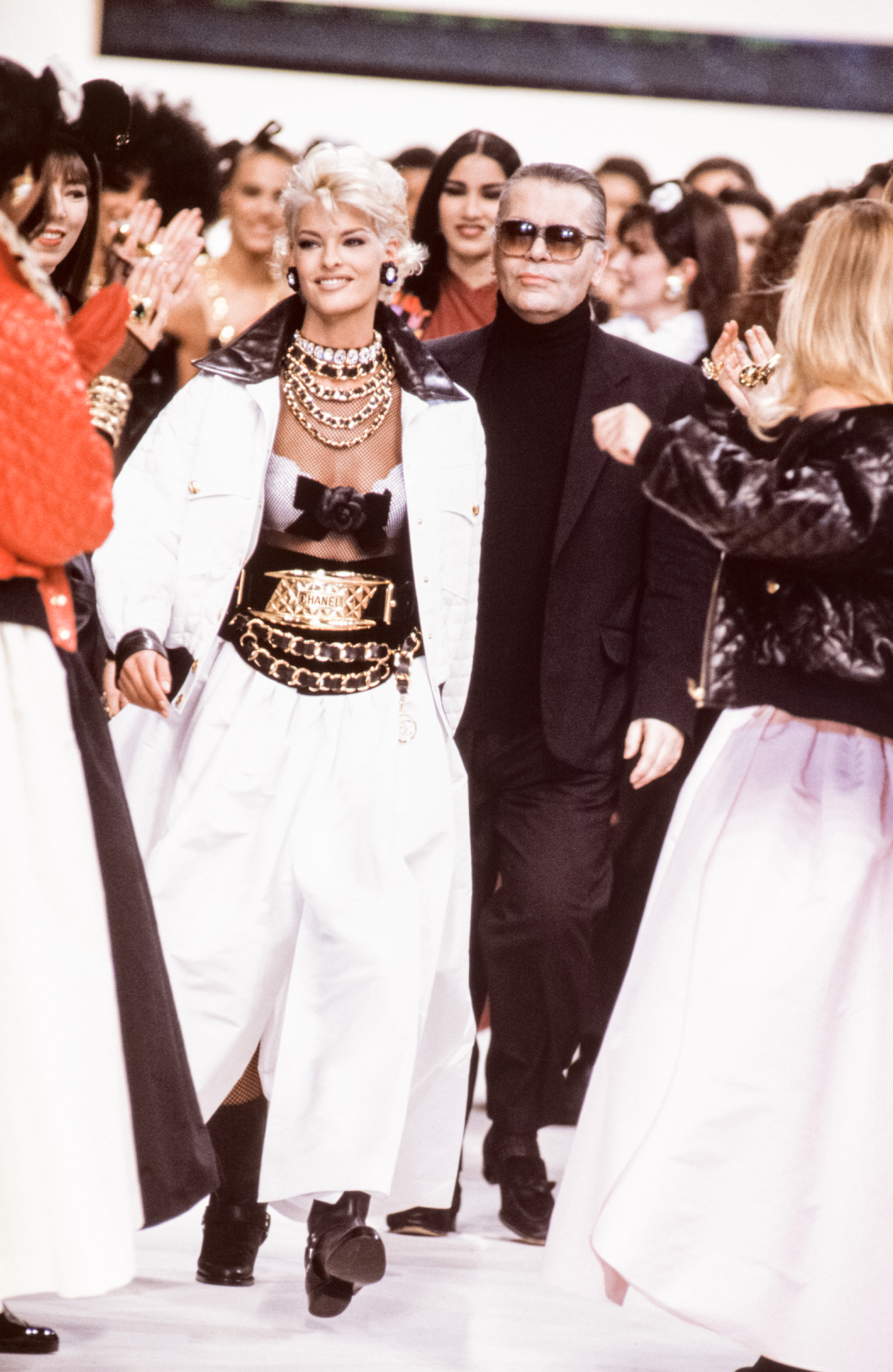
Sachs himself describes his relationship to fashion and luxury as a paradoxical mix of critique and affection toward brands (New Yorker, 2026). He’s used the logos of luxury corporations since the 1990s. Through them, he examines consumer obsession and status anxiety. In his own words, he also sees in it a brush with “cultural fascism” (New Yorker, 2026). He does this through bricolage, the craft of building things from readily available, often discarded materials, plywood, cardboard, duct tape, even LEGO bricks.
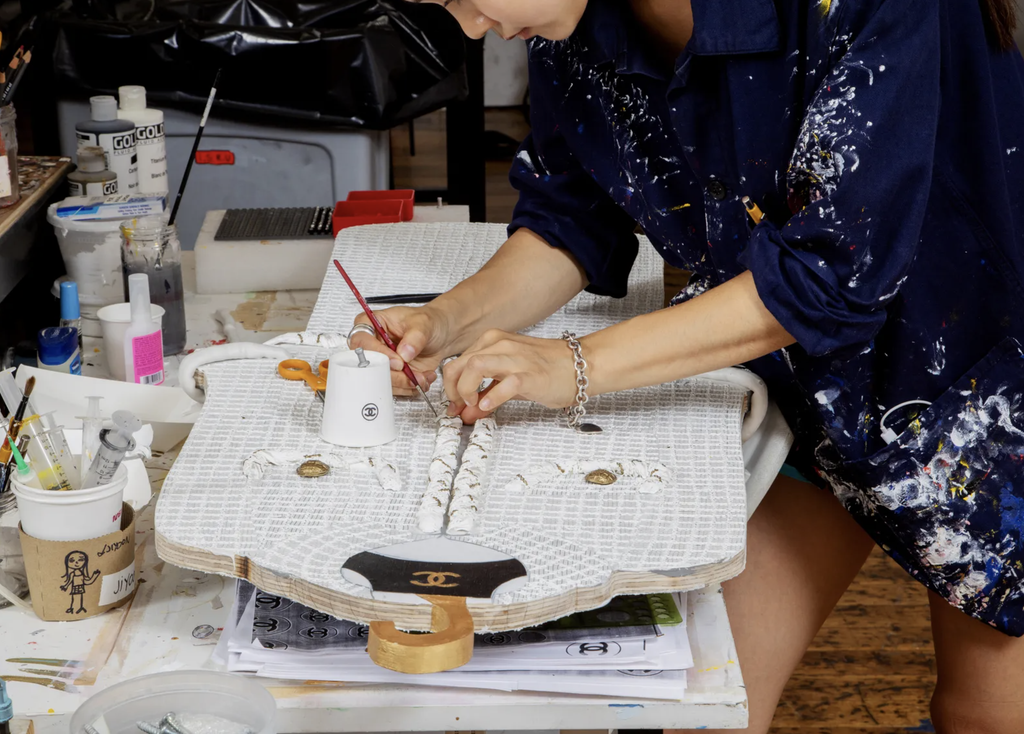
Tom Sachs, “Anna,” 2026
The specific techniques are surprisingly elaborate. One of the thirty-one reconstructed suits is a piece in ivory, navy, and red that Coco Chanel herself once wore. The team recreated its texture using combs from Walmart, while the hand-painted gold buttons, adorned with laurel wreaths, are themselves tiny sculptures, shaped from sculptor’s polymer. The soundtrack, in turn, blends ambient and horror-film music with archival Chanel advertising.
Crossover: the guillotine that Lagerfeld loved
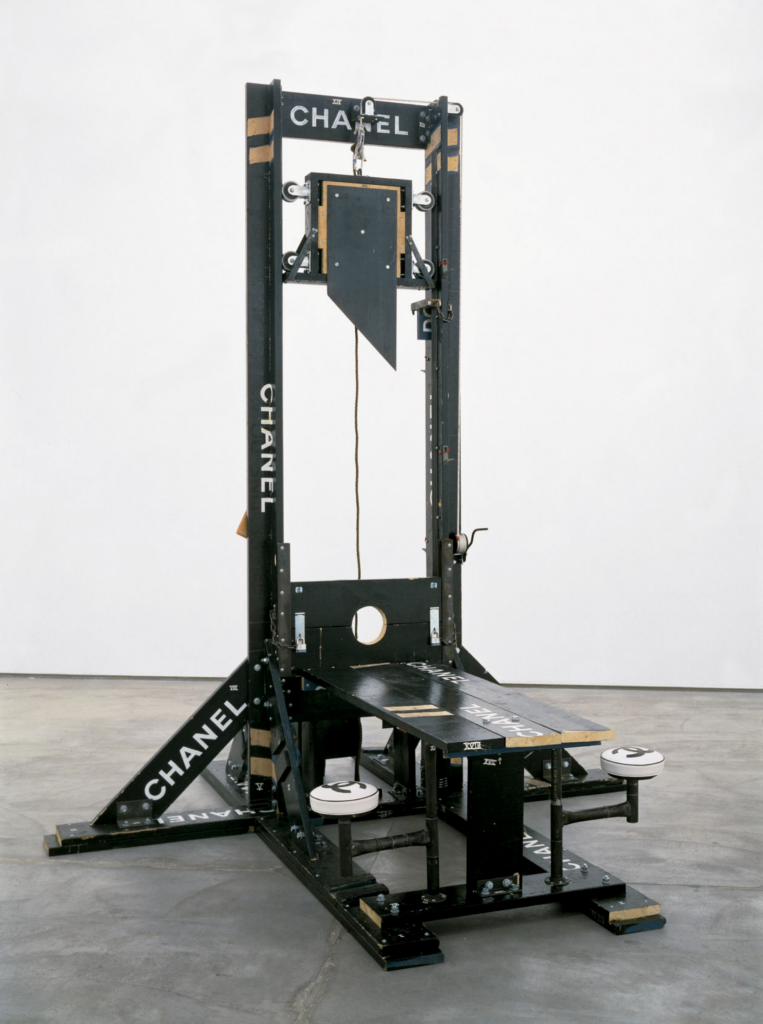
This isn’t the first time Sachs has drawn on Chanel’s iconography. In 1998, he built a fully functional, life-size guillotine. He covered it in Chanel logos and assembled it from old police barricades and wood. The piece paired a tool of revolutionary violence with the ultimate symbol of luxury.
When Chanel’s lawyers threatened legal action, the gallery Thaddaeus Ropac faxed a photo of the piece directly to Karl Lagerfeld. He replied with a single line: “I love it” (according to designboom). The guillotine is now part of the permanent collection at the Centre Pompidou in Paris. The same gallery, Thaddaeus Ropac, still represents Sachs today.

Colby Mugrabi
Crossover: Oldenburg’s store
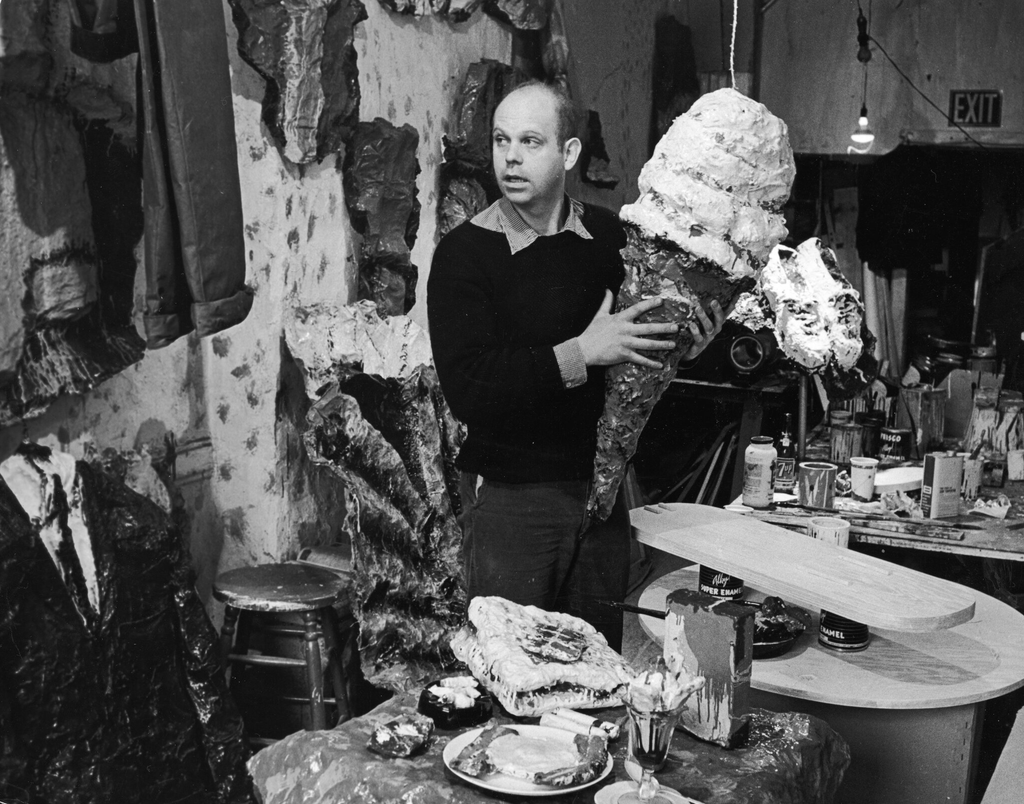
It’s worth noting a connection drawn by the magazine superfuture. In the exhibition, it sees an echo of Claes Oldenburg’s landmark work The Store, from 1961, an artist-run shop filled with handmade “goods,” here transposed into an era in which luxury brands have become dominant cultural and economic forces.
This is the magazine’s own interpretation, not a statement from Sachs himself, but it fits squarely into a broader postwar tradition of art concerned with appropriation, authenticity, and commodity culture.
Crossover: guns, a moon lander, and furniture
Sachs’s play with brands continued in later years. He made, for instance, a functioning .357 Magnum revolver out of duct tape and wood, branded with recognizable logos. In 2007, he built the project Space Program for Gagosian gallery, a complete replica of a spacesuit, NASA’s mission control, and a lunar module to scale, all made from plywood, plumbing parts, and found materials.
It was his first exhibition with that gallery. Sachs had spent more than a decade before that immersed in the homespun technical ingenuity behind the Apollo program, experimenting with models at various scales before arriving at this life-size version.
Space Program belongs, in the same lineage as Chanel Guillotine (Breakfast Nook) from 1998, to works exploring the commodification of abstract concepts like originality, shock, and novelty. He recently exhibited a collection of his own furniture design at the gallery Salon 94.

Where the value comes from
Skutočný Chanel kostým dnes stojí vyše 10 000 dolárov. Sachsova sochárska verzia stojí podľa jeho odhadu len asi sedem dolárov v materiáli, no jej výroba trvá vyše desať dní tímovej práce. V tomto rozdiele vidí Sachs jadro celého projektu, teda hodnota sa nerodí z ceny materiálu, ale z množstva vloženého ľudského času.
Haute couture achieves its value through unlimited budgets and expensive materials. Sachs follows the same principle, only with next-to-nothing materials, here it’s labor alone that creates the value.

A total of 31 suits are on view. They’re based on real-life predecessors worn by the likes of Naomi Campbell, Elizabeth Taylor, Olivia Rodrigo, and Princess Diana. Sachs, for his part, never communicated with Chanel itself about the project.
Where and when
Tom Sachs Studio, 245 Centre Street, SoHo, New York. Thursday and Friday, 6–8pm, Saturday, 1–6pm. The exhibition runs through October 10th.