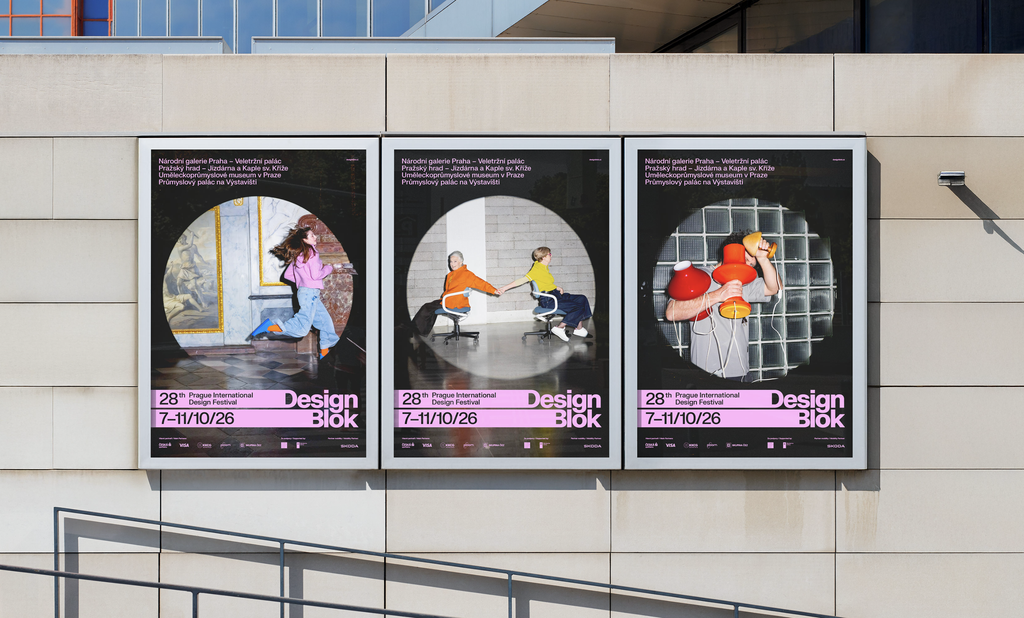
After more than twenty years, President Václav Havel’s office is returning to Prague Castle. It was designed for him by Bořek Šípek between 1993 and 1994. Its return is the central moment of the exhibition Design for Václav Havel, prepared by DesignBlok and Prague Castle to mark the 90th anniversary of Havel’s birth. The curators are Andrea Běhounková and Jana Zielinski.

Pracovňa Václava Havla, Bořek Šípek. Zdroj: DesignBlok.
The office that spent 24 years in an attic
After the interior was dismantled in 2003, the entire space was rescued by the Kolek family. They took it to their chateau near Opava. Covered with a tarp, it waited there for 24 years. Now, after minor restoration work, it’s returning.
Curator Jana Zielinski says they managed to borrow it for the exhibition from that same family. The interior includes a desk, a chest of drawers, and a bookcase, along with a Cab armchair by Mario Bellini. It was from here that Havel’s New Year’s addresses were delivered.

Crossover: an Italian chair beside Czech craft
The Cab chair ranks among the icons of Italian design from the late 1970s. Bellini stretched leather directly over a steel frame, in a way reminiscent of a suitcase. Alongside Šípek’s custom-made local craftsmanship stood a piece of internationally recognized design. This mix of domestic craft and global design, according to the curators, runs through the whole exhibition.

A co-creator, not just a client
Curator Andrea Běhounková emphasizes that Havel took an active interest in the shape of individual works, not just as the person commissioning them. Visitors will also see several of his own sketches, for instance for the legendary Olga chair. The same name, Olga, belongs to a chair by Bořek Šípek, which will also be on view.
Crossover: when rock showed up instead of protocol
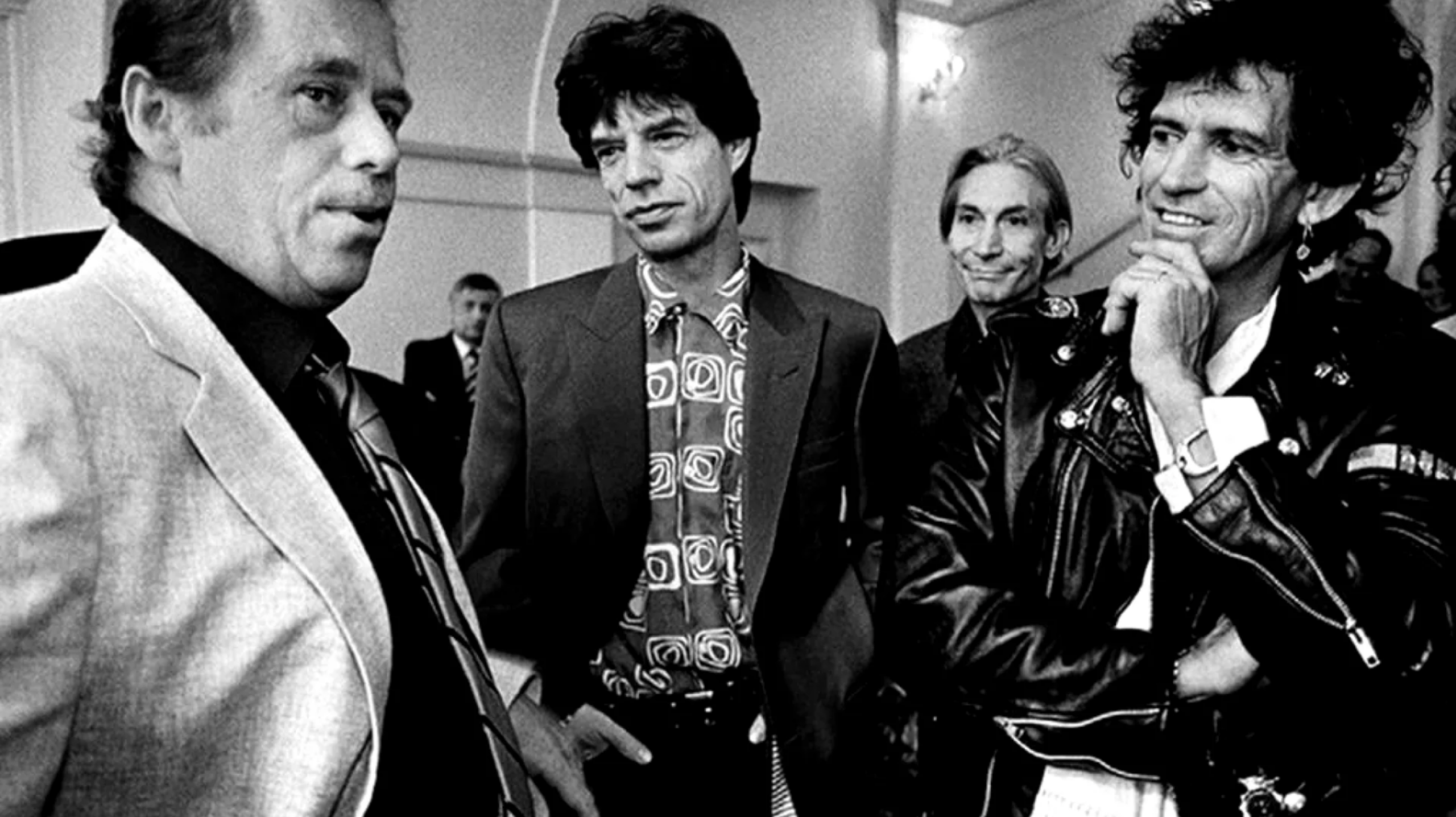
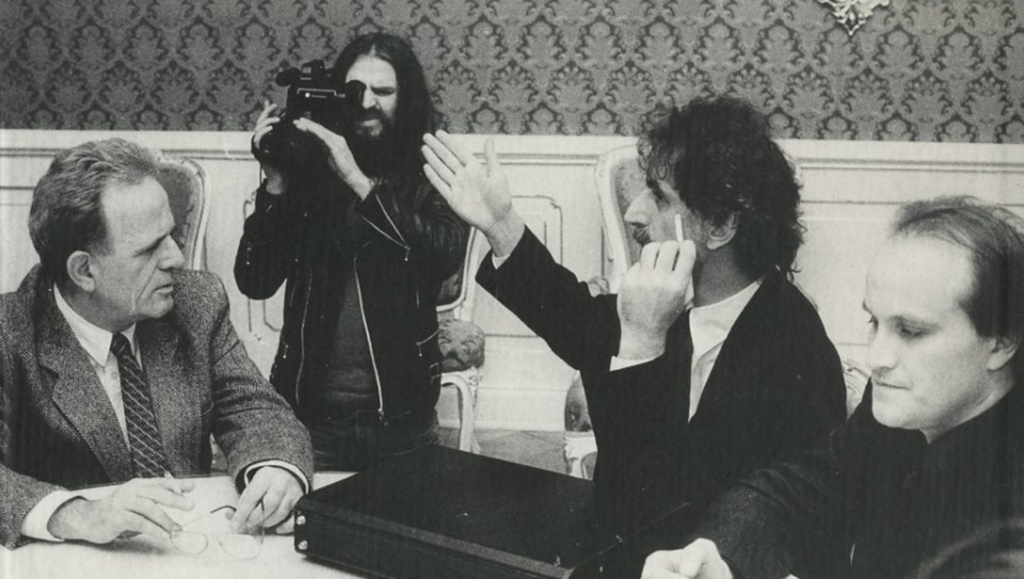
Havel had been a longtime rock music fan well before 1989. After taking office, he gradually invited Frank Zappa, Velvet Underground, Joan Baez, Pink Floyd, and the Rolling Stones to the Castle. Zappa was the first among them, arriving in January 1990, with the Rolling Stones following a few months later, in August of that same year.

Music manager Lubomír Šmitmajer says that without Havel, it would never have occurred to him to invite a band like that at all. Producer Jakub Mejdřický recalls that, despite the chaotic organization at the time, the Rolling Stones genuinely wanted to play in Prague. This wasn’t a one-off anecdote, then, but a broader pattern, one through which Havel paired official protocol with an informal, personal gesture.
The names behind the transformation
Several prominent figures in Czech architecture, design, and art came together in the transformation of the Castle after 1989. Among them were Eva Jiřičná, Josef Pleskot, Theodor Pištěk, and above all Bořek Šípek, with whom Havel maintained a long and intensive collaboration.
Visitors will also see uniforms of the Castle Guard and the uniform of the President of the Republic by Theodor Pištěk, the President dinner service by Jiří Laštovička, and a bust by Michal Gabriel.
The architect who returned from exile
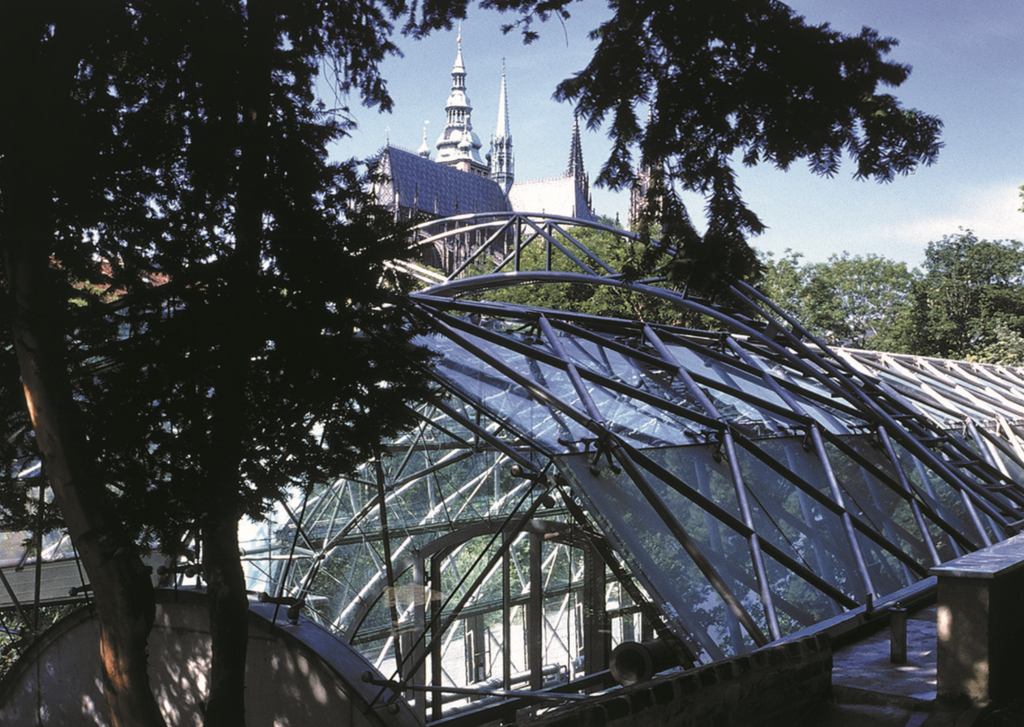
Eva Jiřičná ranks among the most important Czech-British architects, known for her glass-and-steel staircases for the London store Joseph. At Prague Castle itself, she designed the Orangery, a glass-and-steel structure that gently ripples across the terrain of the garden. Her involvement in the Castle’s transformation reflects a broader pattern, Havel deliberately drew back to the country people who had previously lived in exile or abroad.
The wider context of the exhibition
This year’s DesignBlok will also include the fourth edition of the High Craft exhibition, prepared in collaboration with Vogue CS. It will feature more than twenty Czech makers and brands who are developing traditional crafts through contemporary technologies and ecological approaches. DesignBlok will also, for the first time, open the Chapel of the Holy Cross in the Castle’s second courtyard to the public, transformed by Eva Eisler’s installation Circle of Silence.

The exhibition is also part of the Havel ALIVE festival, which Prague Castle is holding from October 2026 to January 2027. It will offer theater, film, music, design, public discussions, and educational programs.
Practical information
The Riding School of Prague Castle, October 7–11, 2026, with a DesignBlok festival ticket, and then from October 21, 2026, to January 17, 2027. (Note: confirm the exact admission terms for the second period before publishing, as sources differ slightly on this detail.) DesignBlok itself runs across several venues in Prague, including the Trade Fair Palace of the National Gallery, the Museum of Decorative Arts, and the Industrial Palace at the Exhibition Grounds.