


KHAITE celebrated its tenth anniversary with a spring/summer 2027 show during New York Fashion Week. It was held at the Brooklyn Storehouse, an industrial warehouse in the Brooklyn Navy Yard. The collection carries the official title “Feeling the Romance.” According to Catherine Holstein, many people who know her called it her most personal collection to date after the show.
Despite the round-number anniversary, this wasn’t about a grand celebration. Holstein said afterward that she and her husband got married at City Hall alone, big fanfare simply isn’t her style. Instead, the collection grew out of a return to her own personal style after years of motherhood. For the past four years, by her own account, she’d just been throwing on whatever was at hand, without giving it much thought. Now that her body and routine have entered a different phase, she felt the need to shrink her silhouettes and return to detail.
A husband-architect as a lasting collaborator
Griffin Frazen, Catherine Holstein’s husband, is an architect and actor. He designed both of Khaite’s flagship stores, in SoHo and Los Angeles. Their brutalist, industrial style was partly inspired by Richard Serra. The SoHo interior, opened in 2023, combines rolled steel, troweled cement plaster, and concrete into a monochromatic, deep space. For the previous fall/winter 2026 show, he also designed the set, with scrolling LED text that seemed to tumble onto the audience. This isn’t a one-off collaboration, then. It’s an ongoing visual dialogue between two creatives under one roof, one that keeps reappearing across the brand’s stores and its runway shows alike.
Venice as an emotional starting point
The collection’s inspiration was time spent with her husband at the Gritti Palace hotel in Venice, where, according to Holstein, the two of them spend a lot of time. She’s drawn there by the contrast between the old city and contemporary art. She recalls a specific moment, looking up at the hotel’s ornate ceiling over a martini. From there came the highly detailed, hand-worked embroideries of flowers and horses, placed on the bibs of airy, robe de style-inspired dresses.
A contrast between architecture and clothing
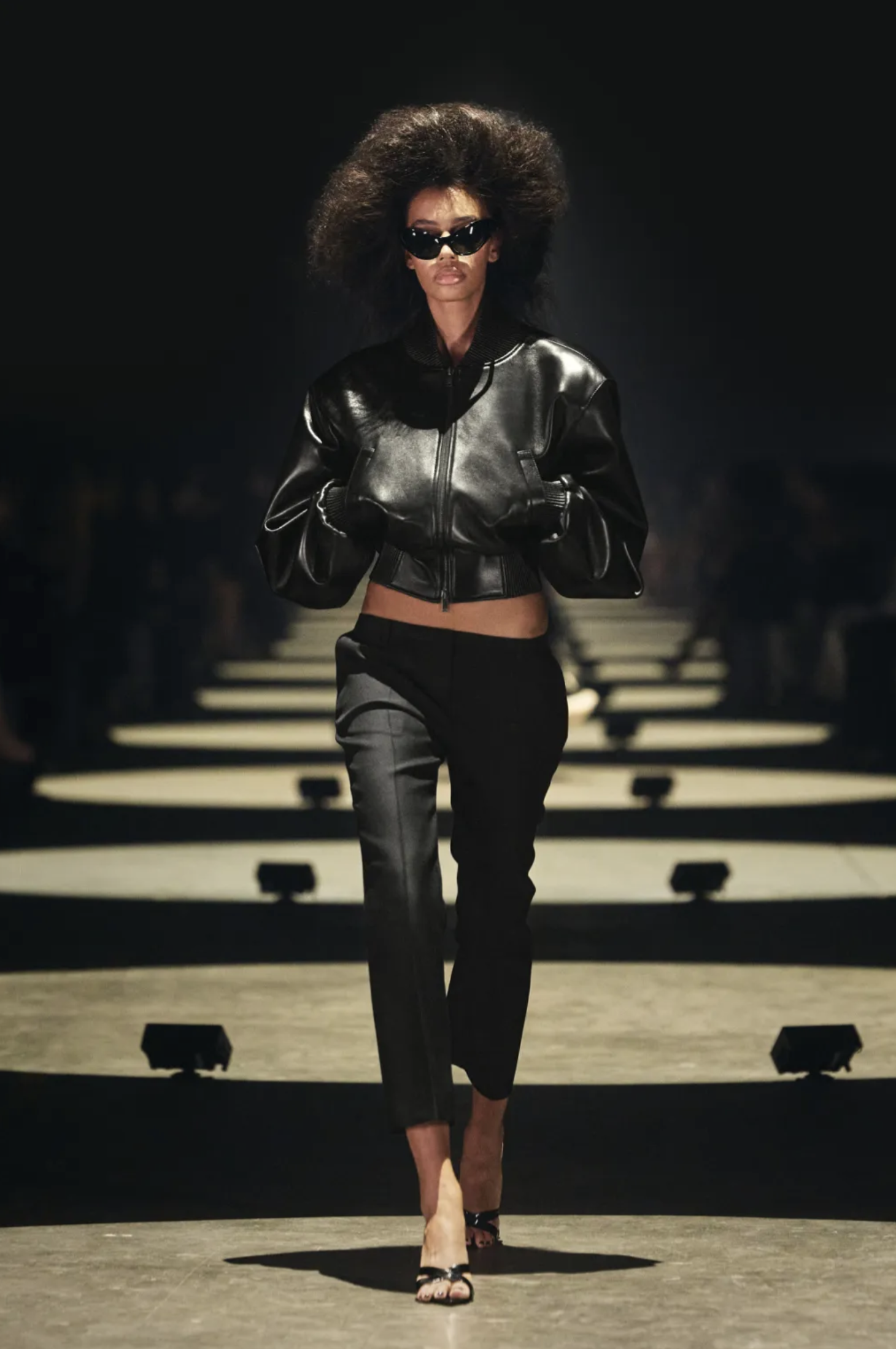
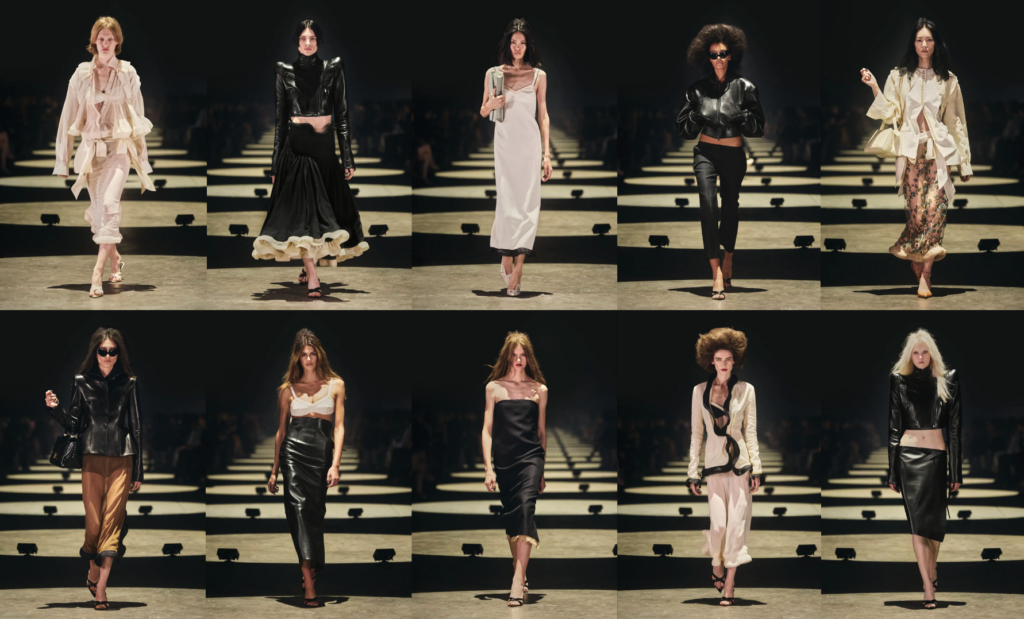
The cool, minimalist industrial warehouse served as a backdrop for the collection’s historically inspired, delicate pieces. The silhouettes ranged from the 1920s to the 1940s, with cuts inspired by corsetry and lingerie. Models with tousled, just-out-of-bed hair appeared in exposed bras, mini dresses deliberately slipping off one shoulder, and loose nightgowns that looked as if they were being pulled on over the body. It’s the same principle Frazen applies in the stores’ architecture, raw material as a frame for something softer within.
A visible skeleton as a craft gesture
Corsets, bras, and crinolines had their supporting stitches and internal structure deliberately left exposed. Holstein described it by saying she wanted all those special moments you can’t see from the outside to be finished by hand once you open up the garment, literally everything. Kaia Gerber’s opening skirt had its entire back panel of corsetry made by hand, with a revealing slit at the waist.
The crinoline as a modern question
The crinoline, according to Holstein, was a major theme this season. What would a modern crinoline look like today, she asked herself, if it still existed? She built it into peplum belts and layered it directly into dresses, where it lifted airy, sheer blouses and ruffled skirts. Her team, she joked, never wants to hear the word “crinoline” again.
Music as an emotional undertone
The show opened to PJ Harvey’s “Rid of Me,” as Kaia Gerber walked in a leather midi skirt with back lacing and a sculptural white bra. The song’s sharp, furious tone stood in contrast to the romantic, fragile silhouettes on the runway. Model Julia Nobis closed the show.
