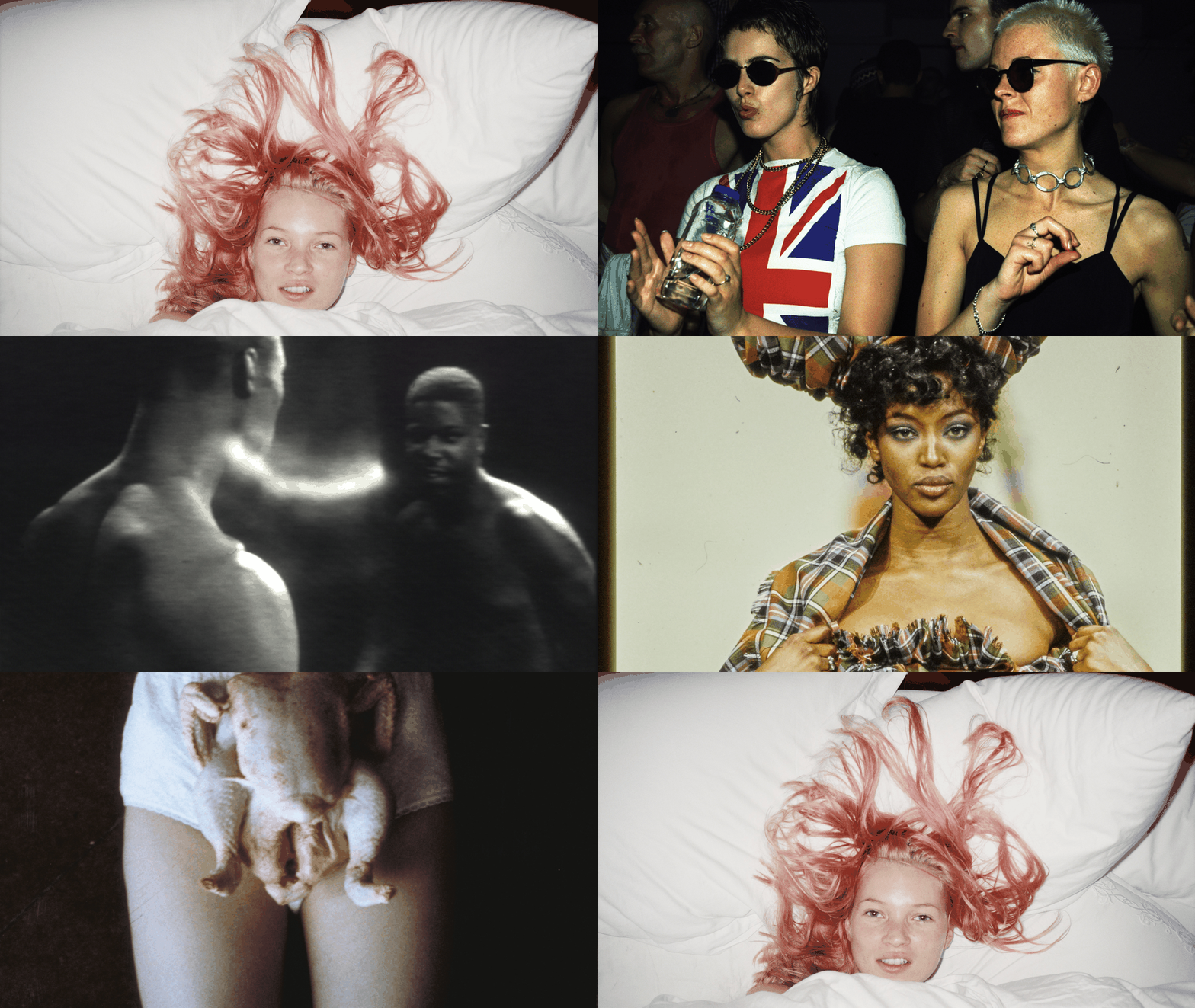
The 90s: Art and Fashion at Tate Britain is an exhibition about a decade that is often reduced to Cool Britannia. It runs from 8 October 2026 to 14 February 2027. It brings together about 70 artists, photographers and designers and more than 100 works: paintings, sculptures, photographs, films and garments. It is curated by Edward Enninful with the Tate Britain team. The sponsor is Alexander McQueen and the media partner is Dazed.
You can look at the exhibition through a list of names. I am more interested in what happened in Britain in a single year, and in which buildings it all took place.
1993: everything at once
1993 is a good way into the decade. Within a few months, this happened:
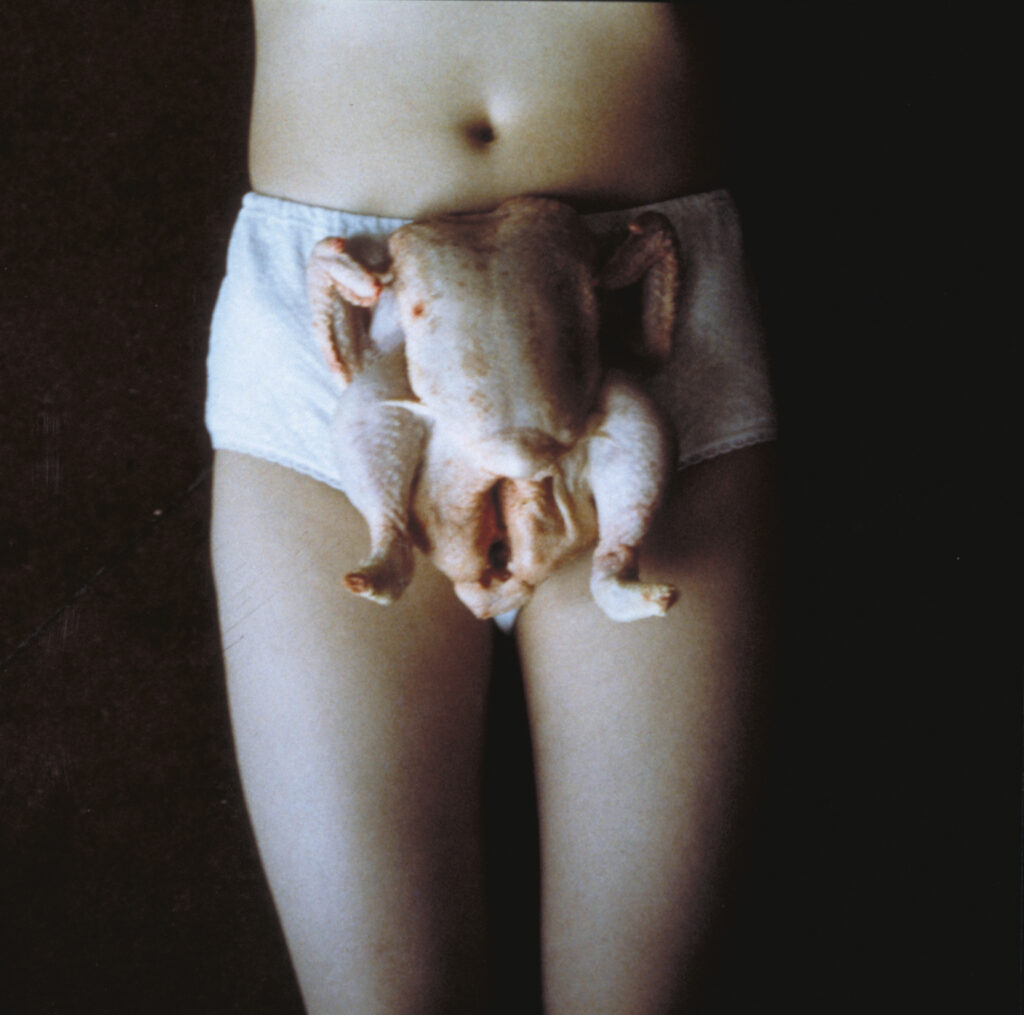
First half of 1993: Tracey Emin and Sarah Lucas open The Shop in Bethnal Green, a shop-installation at 103 Bethnal Green Road. According to the London Museum, it ran for the first six months of 1993.
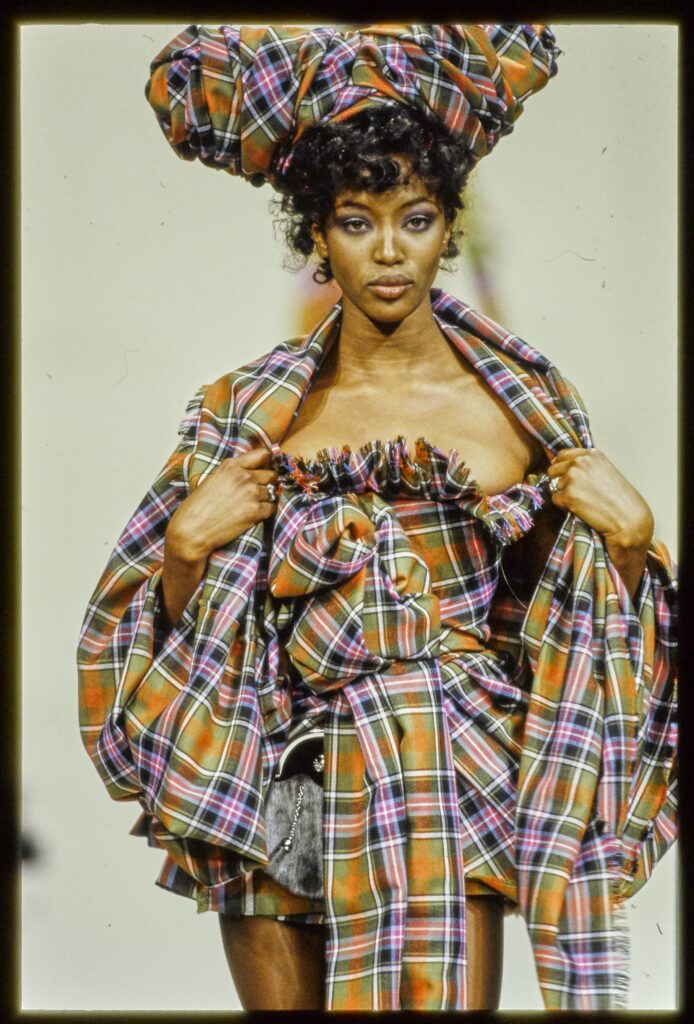
Autumn 1993: Vivienne Westwood shows the Anglomania collection, fashion built on British history and tradition, and on turning them upside down.
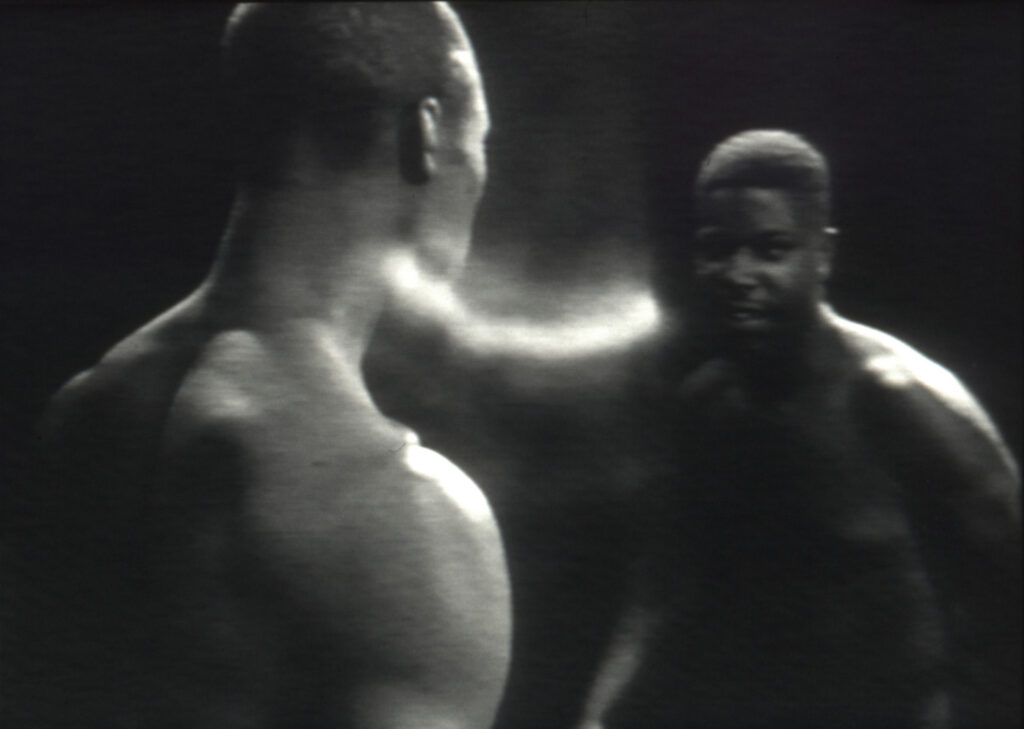
1993: Steve McQueen makes Bear, his first major film, about an intimate encounter between two men. Tate quotes it with the phrase “go where the pain is”.
1993: Corinne Day photographs Kate Moss for Vogue and the magazine is hit by a scandal. Moss stopped working with her afterwards. Day had already started at The Face in 1990.
22 April 1993: Stephen Lawrence is murdered in London. The Macpherson report, which names the police failure as institutional racism, does not come until February 1999.
25 October 1993: Rachel Whiteread completes House. In November she wins the Turner Prize as the first woman.
None of these events happened in a gallery.
Buildings nobody wanted
The British 1990s were written in buildings that were meant to be demolished, forgotten or turned into something else. That is why I don’t want to write about this exhibition without the architecture.
Freeze (summer 1988). Damien Hirst, still a student at the time, organised an exhibition of 16 artists in an empty office building in London’s Docklands. It wasn’t a gallery but a space nobody needed. The generation we now call the YBAs emerged from exactly this kind of setting.
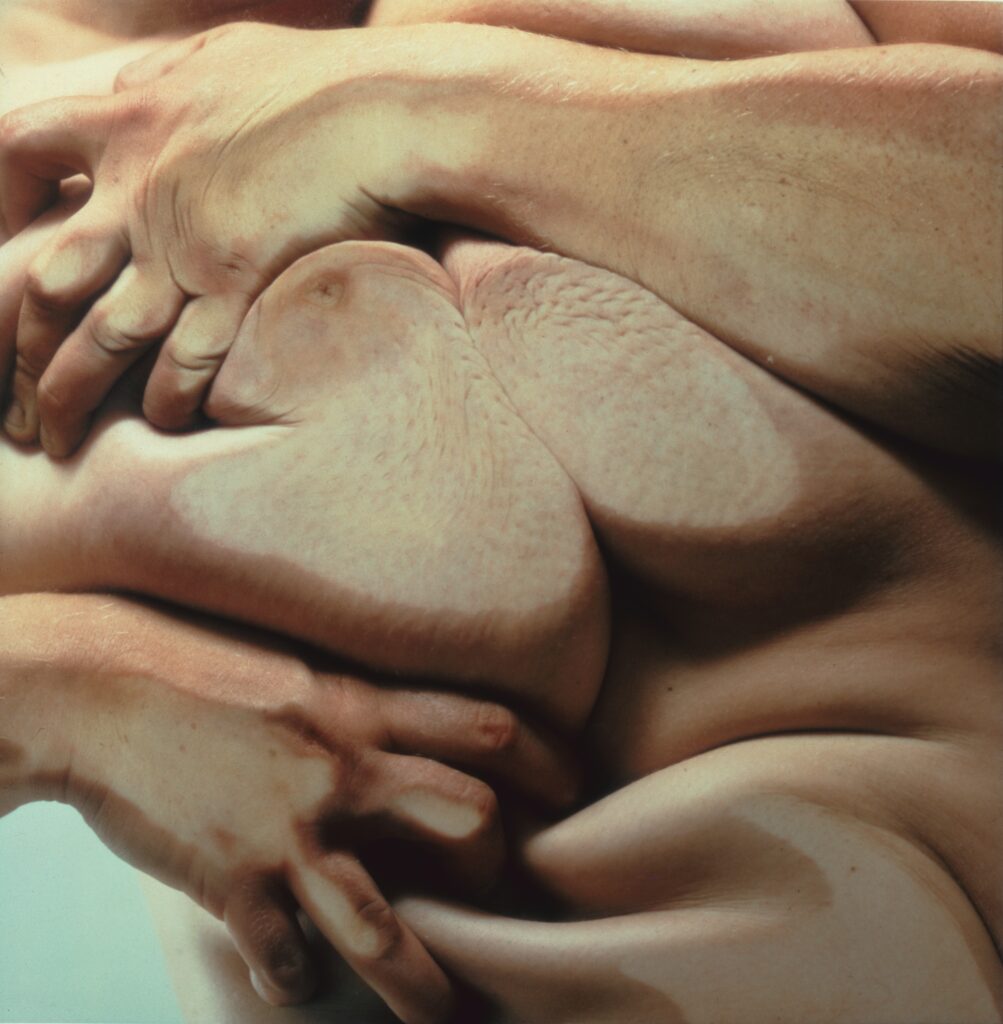
House (1993). Whiteread cast the interior of a Victorian terraced house on Grove Road in East London in concrete. The result was a negative form of living space, literally a cast of the emptiness left inside the house. It stood from 25 October 1993 to 11 January 1994 and was then demolished. It is one of the most famous works of 1990s British art, and it survived for less than three months.
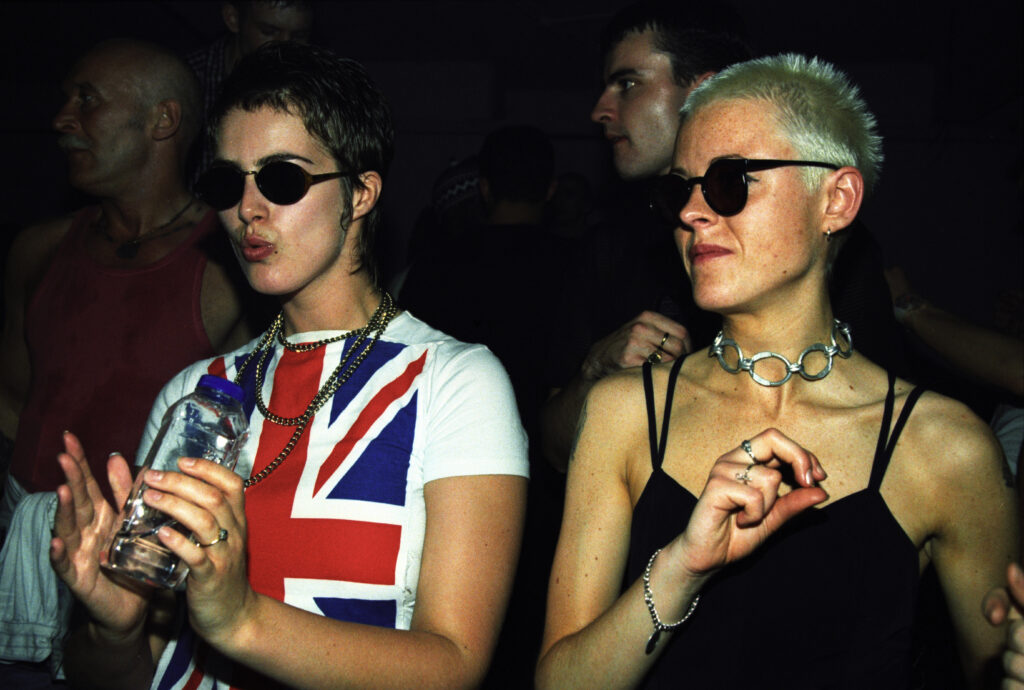
Haçienda (1982–1997). The Manchester club was designed by Ben Kelly in a former yacht showroom. It opened on 21 May 1982 and closed in June 1997. From October 1991 to 30 October 1996 it hosted Flesh, a gay and lesbian night. Jon Shard photographed it, and one of his pictures hangs in the exhibition.
Tate Modern. In April 1994 Tate announced that a former power station on the bank of the Thames would become a new gallery. Herzog & de Meuron won the competition in early 1995, and Tate Modern opened on 11 May 2000. Within ten years, an industrial ruin had become the headquarters of contemporary art.
The only thing they have in common is that each space was left over from a previous era. What happened to them, however, was very different. Freeze was a one-summer show, House was demolished after less than three months, and the Haçienda closed in 1997. Of these places, only the one that became a museum is still standing: Tate Modern.
Vogue: from scandal to curator
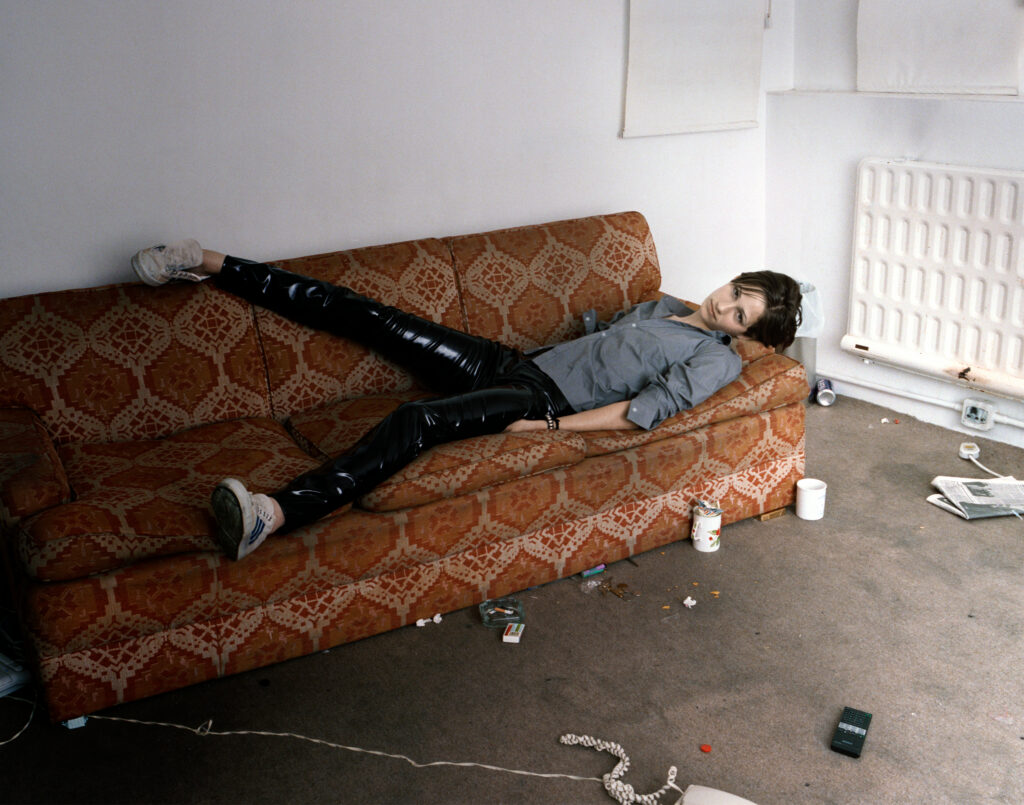
Corinne Day is one of the most important names in the exhibition. In 1990 she was shooting for The Face, and in 1993 her pictures of Kate Moss for Vogue became a scandal. Her photographs from her flat on Brewer Street in Soho, taken in 1992, show a world that fashion photography had not wanted to see until then.
The exhibition’s curator today is Edward Enninful, who later led British Vogue. So the magazine that Day once outraged now provides the exhibition with its curator. Enninful himself describes it as a chance to reassess the 1990s beyond the familiar mythology of Cool Britannia.
Two Turners, two Britains
In this exhibition Tate shows not only the famous names but also who didn’t fit into the celebratory story of the 1990s.
Chris Ofili, No Woman, No Cry (1998): The painting commemorates Doreen and Stephen Lawrence. Ofili won the Turner Prize with it in 1998.
Steve McQueen won the Turner Prize in 1999, a year later. His Bear from 1993 is the first major film in the exhibition.
So two of the five Turner Prize winners I mention (1993 Whiteread, 1995 Hirst, 1997 Wearing, 1998 Ofili, 1999 McQueen) open up a subject that Cool Britannia usually avoids.
K Foundation: a prize for the worst artist
In November 1993 the Turner Prize took place at Tate. Two months earlier, the K Foundation announced a prize of its own: £40,000 for the worst artist of the year, twice what the Turner Prize winner received. The candidates were the same four artists shortlisted for the Turner Prize. Anyone could vote, and 3,500 people did. The result was announced during the live television broadcast of the Turner Prize, in the commercial break.
The winner was Rachel Whiteread. On the same evening, she won both the prize for the best artwork of the year and the prize for the worst.
At first she refused the money. She only accepted it when she was told it would otherwise be burned. She later announced that the money would go to artists in need.
Two centuries, two questions
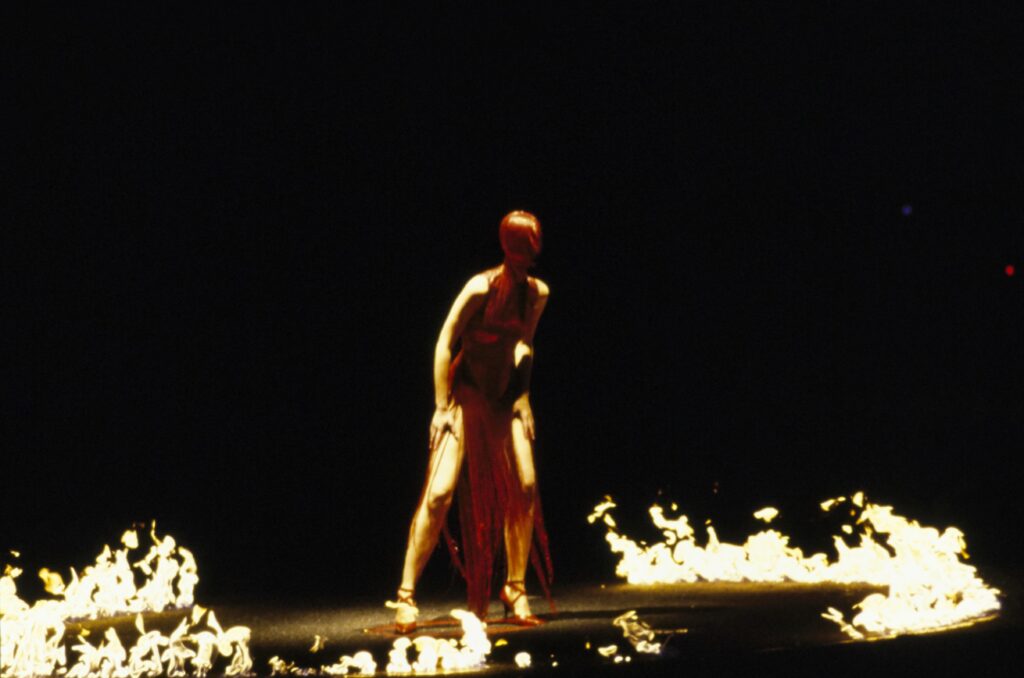
According to Tate, the exhibition closes by looking back and forward. Vivienne Westwood and John Galliano draw on history and use anachronism to question ideas of style, class and British identity. Westwood put it this way: “All my ideas come from studying the ideas of the past…”.
Next to her stands Yinka Shonibare’s The Swing (after Fragonard) from 2001. He takes a Rococo painting of aristocratic leisure and dresses it in African textiles. Westwood turns history into fashion; Shonibare turns fashion into a critique of history.
Galliano and Dior
John Galliano graduated from Central Saint Martins in 1984. His graduate collection, Les Incroyables, inspired by the French Revolution, was bought in its entirety by the boutique Browns. In 1995 he became head designer at Givenchy, and from 1996 he worked for Dior. In March 2011 Dior announced that it had begun proceedings to dismiss him.
In the exhibition, Galliano belongs to the historicist line alongside Westwood. This line sees fashion as a dialogue with art history. If you’re interested in how it returns to Dior today, see my article on Dior Cruise 2027 at LACMA, where Jonathan Anderson works with paintings from the museum’s collection.
Who’s where
Tate has arranged the exhibition into thematic sections.
The YBAs and their circle: Damien Hirst, Tracey Emin, Sarah Lucas, Rachel Whiteread, Gillian Wearing, Sam Taylor-Johnson, Jake and Dinos Chapman, Jenny Saville, Gary Hume, Abigail Lane, Cathy de Monchaux, Helen Chadwick
Photographers: Wolfgang Tillmans, Juergen Teller, David Sims, Craig McDean, Nick Knight, Corinne Day, Nigel Shafran
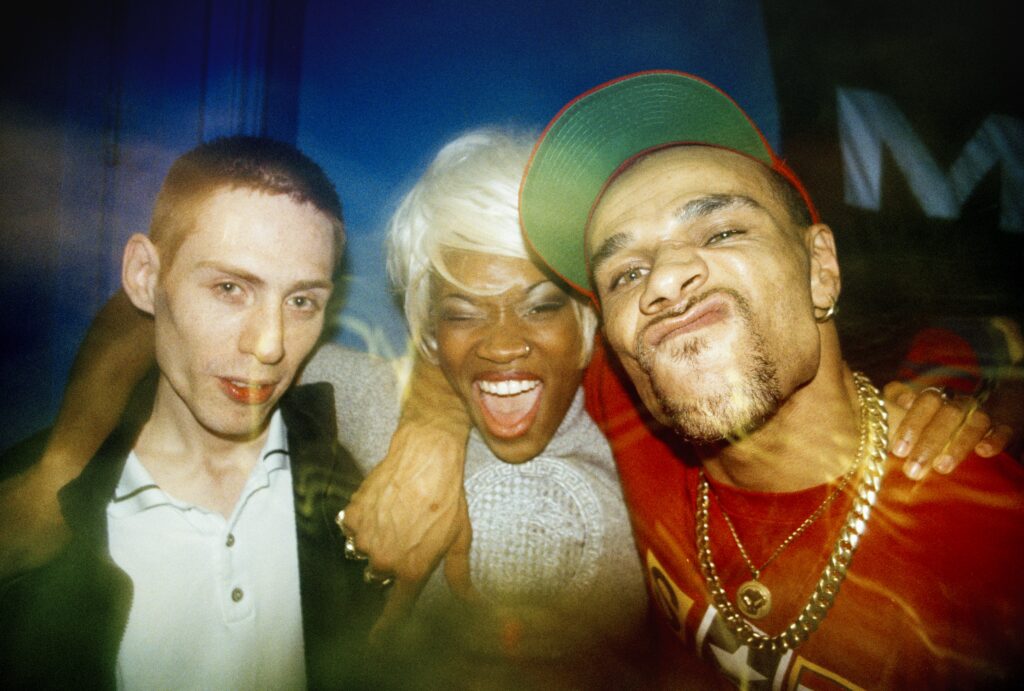
Club culture: Mark Leckey, Normski, Eddie Otchere, Ewen Spencer, Dave Swindells, Seana Gavin, Vinca Petersen, Jon Shard
Black British creativity: Ozwald Boateng, Joe Casely-Hayford, Koto Bolofo, Barbara Walker, Maud Sulter, Roshini Kempadoo, Eileen Perrier, Keith Piper
Fashion: Alexander McQueen, Vivienne Westwood, John Galliano, Hussein Chalayan
What the critics say
Culturalee calls it the first major exhibition to bring together 1990s art, photography and fashion. According to Tate, it will also look at those whom the celebratory Cool Britannia narrative left out.
Tate and its 1990s
Mark Leckey’s film Fiorucci Made Me Hardcore (1999) captures the intensity of British dance culture. Tate acquired it in 2003 through the Film and Video Special Acquisitions Fund.
Tracey Emin was shortlisted for the Turner Prize in 1999 with My Bed (1998). This year Tate Modern gave her a major retrospective, A Second Life (27 February – 31 August 2026).

Practical info
The 90s: Art and Fashion, 8 October 2026 – 14 February 2027
Tate Britain, Millbank, London SW1P 4RG, daily 10:00–18:00
Late at Tate Britain: 13 November, 18:00–22:00, free entry
Sources: Tate (press release and exhibition guide), Culturalee (Lee Sharrock), Because It’s Fashion! (Amelia McGarvey), southlondon.co.uk, Frieze – K Foundation, Biography.com – Galliano, Artangel, London Museum, Apollo, British Culture Archive, eachother.org.uk, DMU, Dave Haslam.