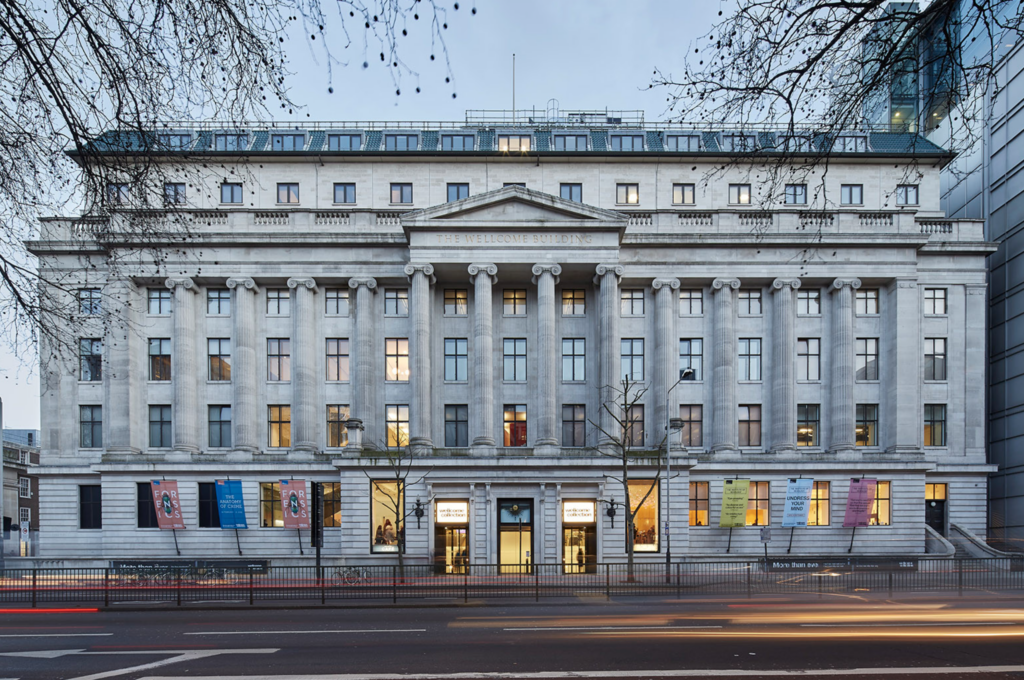
Wellcome Collection is a free museum and library in London that has explored health and human experience through art, science, and history since 2007, as part of the Wellcome charitable foundation. In its new exhibition, Coming of Age, it examines how we perceive ageing, from adolescence through adulthood to later life. It poses an urgent question along the way: who actually gets to “age well”? The exhibition is free and runs from 26 March to 29 November 2026.
The subject has never felt more relevant. In the UK, one in ten children born today is expected to live beyond a hundred years old. The exhibition therefore challenges the idea that life follows a fixed, linear path, bringing together 150 works and objects spanning centuries.
It opens symbolically, with a silver sake cup, the kind Japan presented to its centenarians between 1963 and 2014. Due to a sharp rise in their numbers, the cup’s material was later downgraded to a cheaper alloy, literally cutting the cost of longevity.
William Utermohlen: Painting His Own Forgetting
One of the most powerful works on display is a series of self-portraits by American painter William Utermohlen. He was diagnosed with Alzheimer’s disease in 1995, at the age of 61. He immediately began painting himself as a way to understand his own condition.
The progression of the disease is literally legible in his paintings. They move from detailed, realistic portraits to increasingly flat, abstract faces. His final self-portrait is little more than a scrawled skull with the barest hint of features.
He kept painting for a surprisingly long time, until 2001. This is because the parts of the brain responsible for vision are affected more slowly by the disease than memory. His wife, Patricia, later said that although William didn’t die until 2007, he truly died the moment he could no longer paint, in 2002.
Paula Rego: The Body, Power, and Women’s Experience
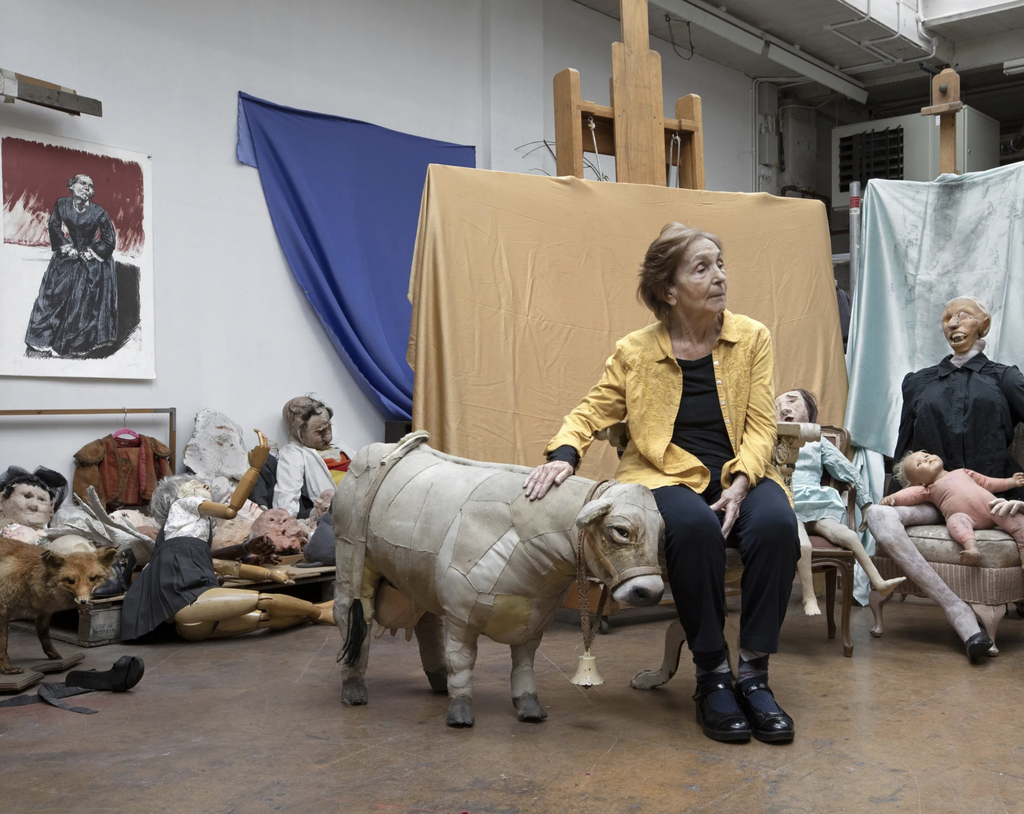
The exhibition also features work by Portuguese-British painter Paula Rego (1935–2022), whose art has long engaged with power, the body, and women’s experience across different stages of life. Her late self-portraits were made at the age of 81, after a fall. Her series Untitled: The Abortion Pastels (1998–99) directly contributed to the successful referendum legalising abortion in Portugal in 2007, proof that her art could shape real social change.
What the Exhibition Proposes
Alongside the works of Utermohlen and Rego, the exhibition features other artists as well. Serena Korda, in her piece Wild Apples (2024), frames menopause as a period of transformation. Rory Pilgrim’s film Software Garden (2018), meanwhile, opens with a testimony from a disability rights activist who, following cuts to support services, longs for a robotic companion.
Coming of Age doesn’t treat ageing as merely a personal process. It asks how society itself should adapt, from healthcare to the job market to community life. The point, after all, isn’t just to add years to life, but to make those years meaningful.
Coming of Age
Wellcome Collection, London, 26 March – 29 November 2026, free admission