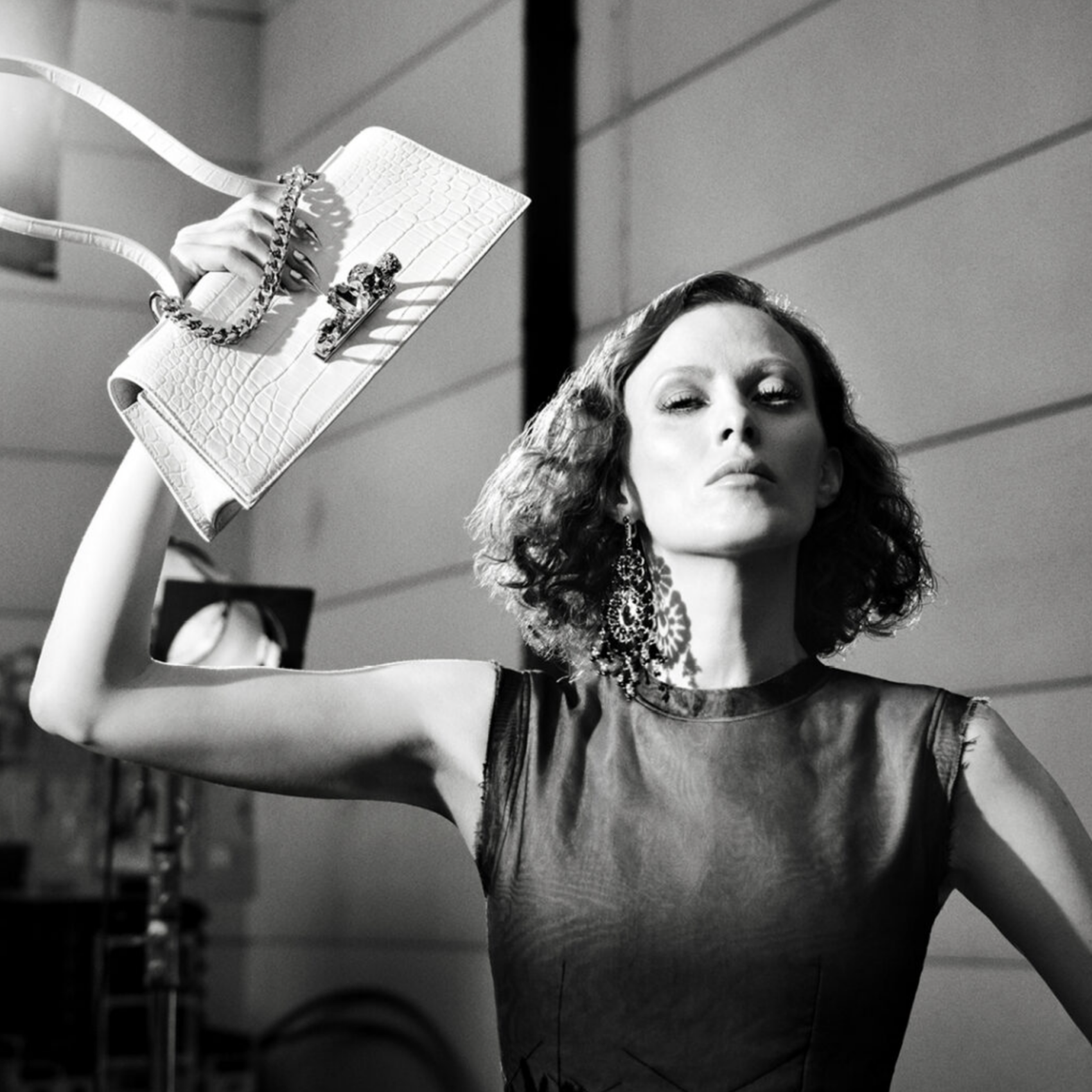
Alexander McQueen’s new campaign for fall/winter 2026 doesn’t look like a typical bag and coat advertisement. Instead, creative director Seán McGirr built it as a series of cinematic scenes, blurring the line between actor and character, while paying tribute to both film and the house’s own history.
What Happens in the Campaign
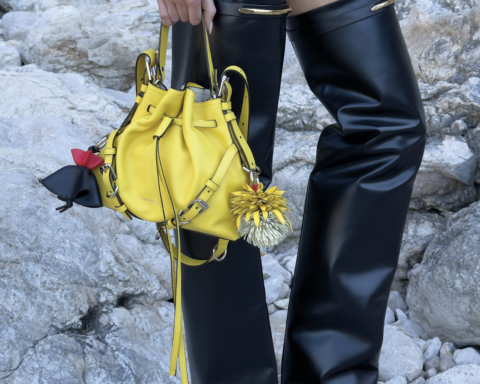
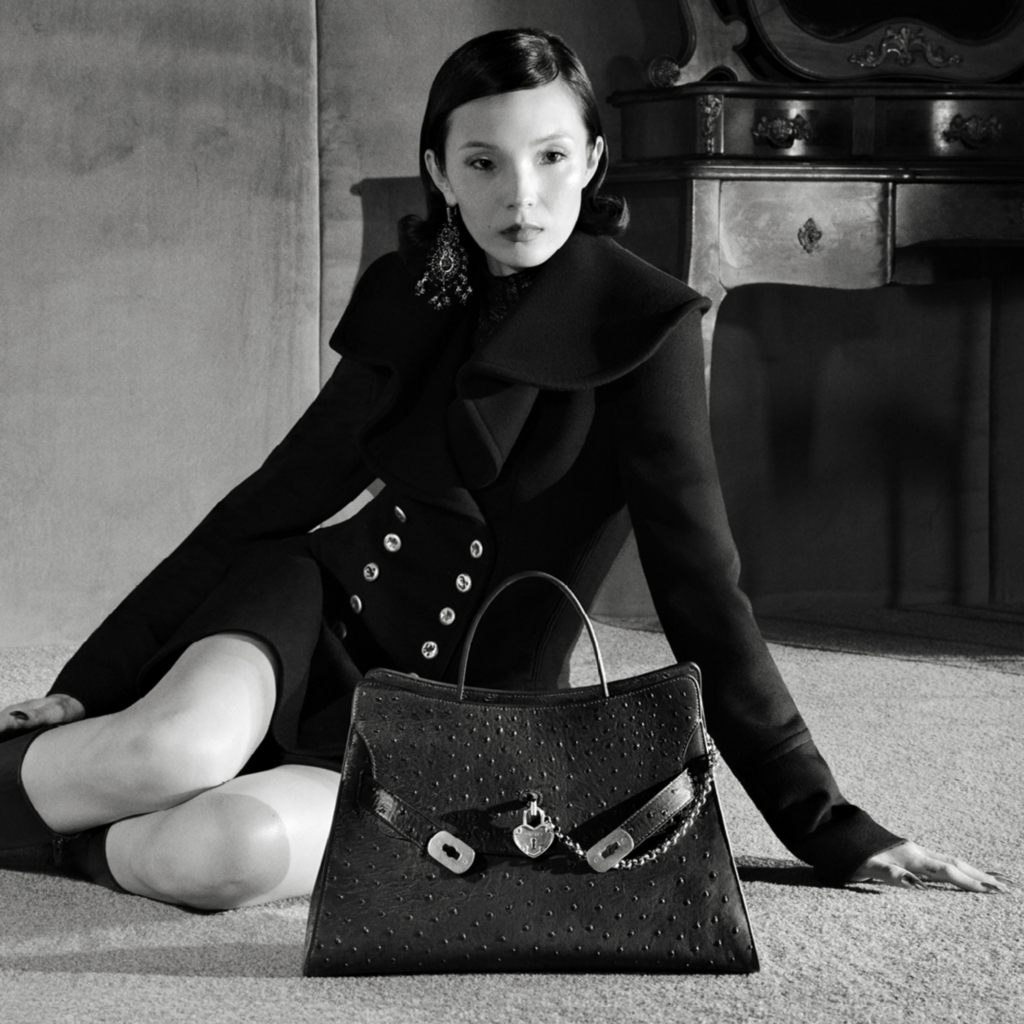
The campaign unfolds like a series of scenes cut straight from a film noir. Xiao Wen appears with her hair pulled back, evoking the 1920s. She holds the Locke leather bag, printed with ostrich texture and finished with an archival heart charm. Meanwhile, Paloma Elsesser confronts her own reflections. She wears lace and a corseted bodice.
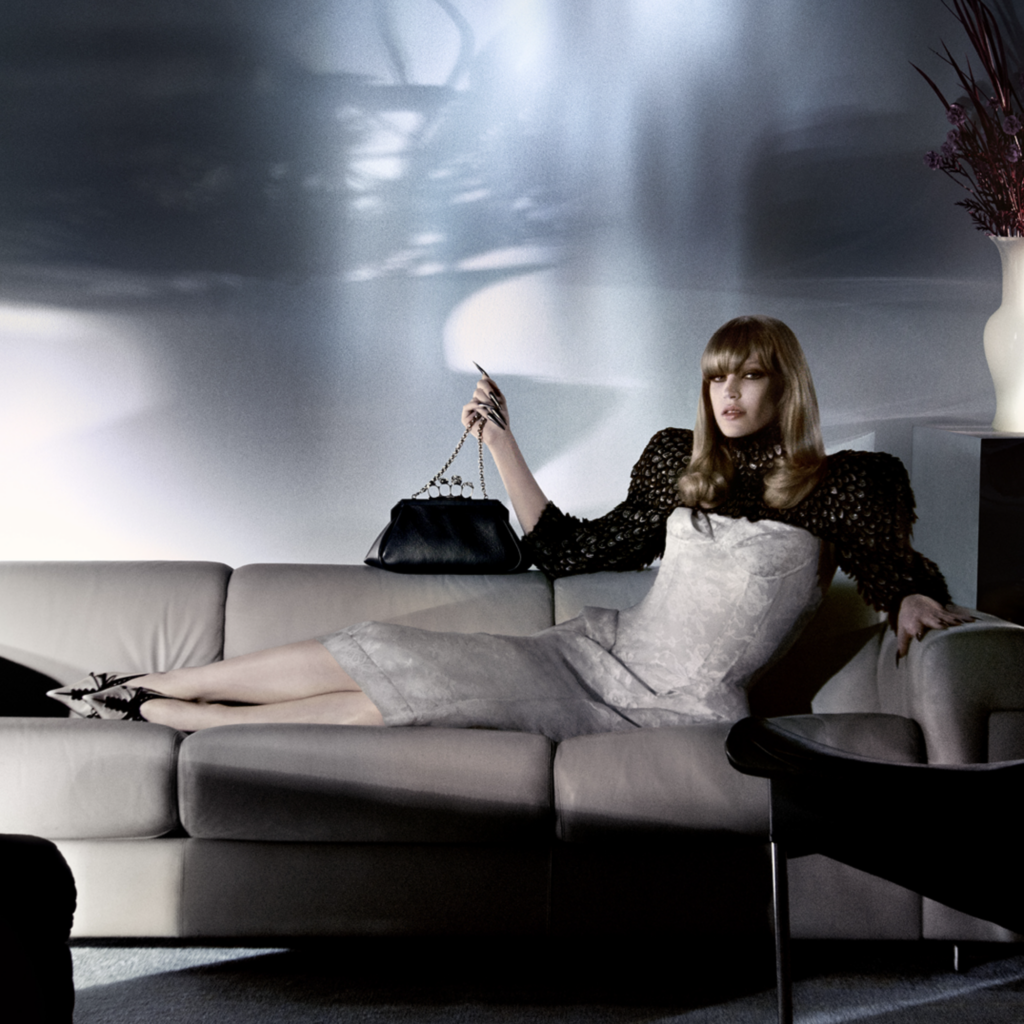
She grips the crystal-embellished Manta bag tightly. A small McQueen skull scarf hangs from its handle. The most tension builds in an industrial apartment scene. There, longtime house muse Karen Elson leans over Jacqui Hooper. The scene builds to a kiss and tears, before the cut breaks into empty space.

Karen Elson Is No Coincidence
Elson doesn’t just appear here as another campaign face. She shares a long personal history with the house. In fact, she was a close friend and muse to Alexander McQueen himself, before his death in 2010. Her presence in the campaign therefore ties directly back to the brand’s history, not only to its current aesthetic.
Drama Was Always Part of McQueen
McGirr’s mini-theater approach isn’t a departure from the house’s vision. Rather, it marks a return to its roots. Alexander McQueen was famous for turning his runway shows into full theatrical performances. Just think of VOSS (2001), where models posed inside a mirrored box. Or consider Widows of Culloden (2006), filled with gothic symbolism and staged mourning. For McQueen, drama, tears, and spectacle always mattered just as much as the cut of the clothes.
The Skull as Signature
One small detail stands out: the skull scarf wrapped around the Manta bag’s strap. It references one of the house’s oldest and most recognizable motifs. The skull has appeared in McQueen collections since the early 2000s. There, it functions as a memento mori, a reminder of impermanence, placed beside delicate floral patterns. This same contrast, between fragility and death, flowers and skull, repeats visually throughout the campaign.
A New Voice for the House
Seán McGirr became McQueen’s creative director after Sarah Burton departed. Burton had led the house for thirteen years following Alexander’s death. While Burton steered the house toward a more romantic, craft-driven direction, McGirr chooses a darker, more cinematic language for his campaigns. This campaign shows exactly that shift in tone.
Ultimately, the campaign works on two levels at once. It functions as a tribute to film, and at the same time, it serves as a reminder: drama, symbolism, and performance lived in McQueen’s DNA long before they became a “campaign.”