
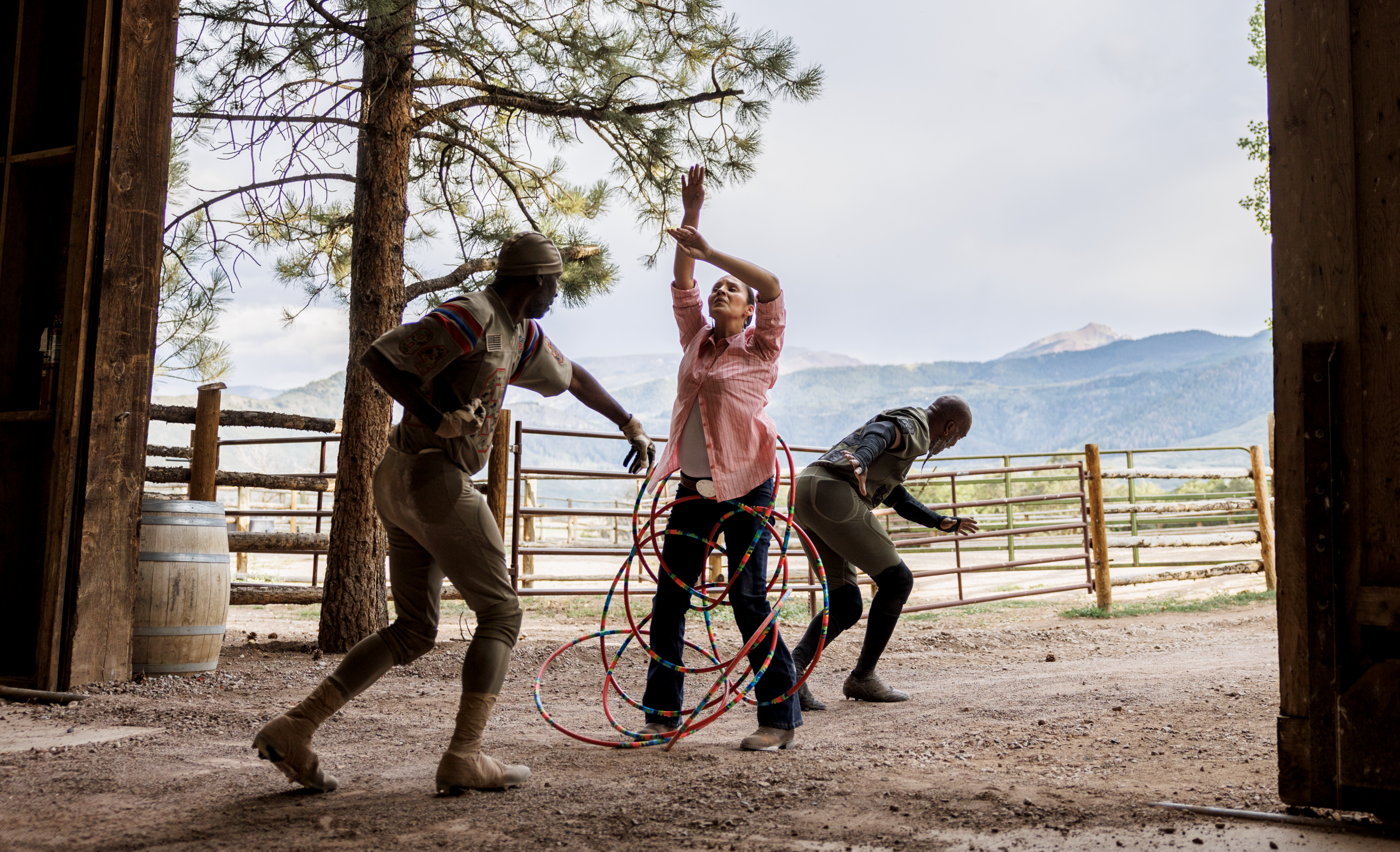
Aspens, the trees that gave the city its name, only grow at altitudes above 2,000 meters, where the air runs thin. This month, artist Lyle Ashton Harris is preparing a new performance here. According to him, this altitude and rugged landscape give Aspen its own kind of power. In fact, he says they directly shape how it feels to breathe here.

Over the past decade, this small mountain town in Colorado has become one of the art world’s most sought-after summer destinations. Collectors and artists alike travel here for Aspen Art Week, a loose collection of exhibitions, performances, panel discussions, and fairs. Each year, it takes over the entire town in late July and early August. The week builds to its peak with the ArtCrush gala, held directly at the Aspen Art Museum (AAM).
A Ten-Year Project, Not a One-Time Event
One of the newest additions is AIR, an interdisciplinary festival AAM only launched last year. From the very beginning, museum director Nicola Lees planned it as a ten-year commitment. She never intended it as a single summer event. Instead, she envisioned an ongoing dialogue between artists, one that evolves year after year.
This year’s edition, AIR 2026: Figures in a Landscape, stretches across the town and deep into the surrounding mountains. It includes the historic Wheeler Opera House as well as the rustic T-Lazy-7 Ranch near the Maroon Bells peaks. Within this same framework, Matthew Barney created a new sculpture, ZONE DEFENSE: Old Snowmass Parallax, set directly into the landscape near Rose Ranch.
The Architecture of Aspen Art Museum (AAM)
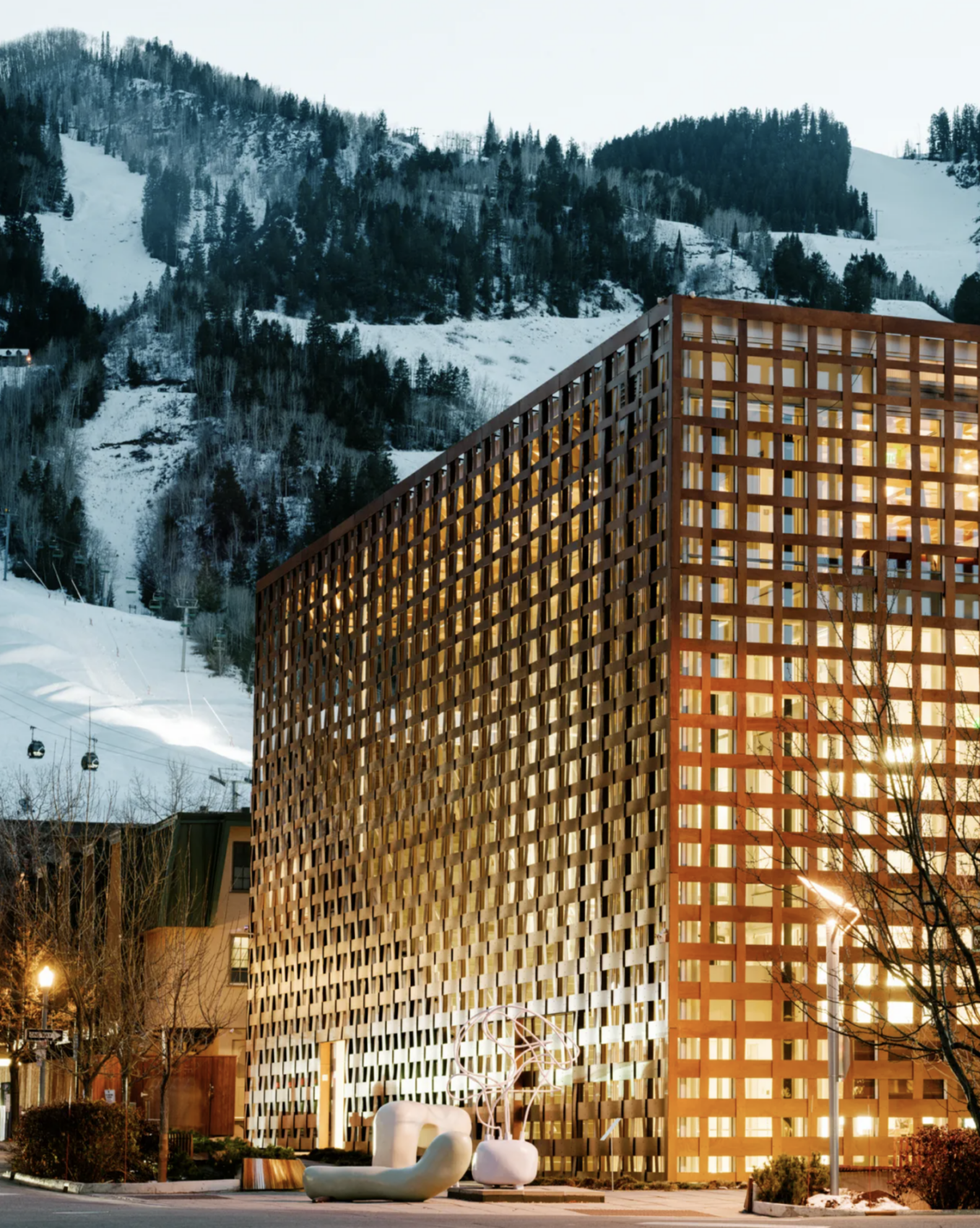
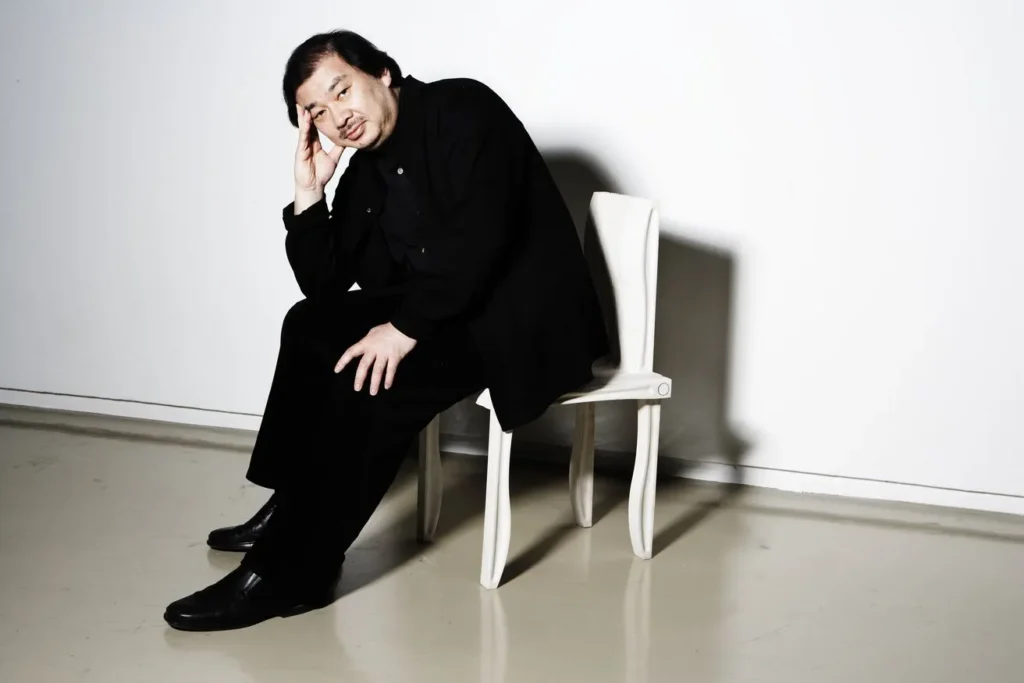
Since its new building opened in 2014, the museum itself has served as the town’s cultural epicenter. Pritzker Prize-winning architect Shigeru Ban designed it. The building replaced an old power plant, which had previously housed the museum’s original location.

Ban built a hybrid structure combining concrete, steel, and wood. The facade consists of woven wooden strips, echoing the brick buildings nearby. As a result, an interesting optical effect emerges: from a distance, the Aspen Art Museum reads as a closed, monolithic form. Up close, however, visitors can see straight through the gaps in the wooden “skin” into the interior. At night, once the building lights up, the interior itself becomes the main character.
What’s on View Right Now
Visitors can enter the museum in two different ways. The classic route leads through an opening in the base, straight into the reception area and six exhibition halls. The second option offers a “ritual path”: a staircase set between the outer wooden facade and the inner glass wall leads directly up to the rooftop sculpture garden. From there, visitors can see nearby Red Mountain, before making their way back down again, not unlike skiing down a slope.

This year, alongside Villar Rojas’s exhibition First Gods, Lost Animals, the museum also hosts a retrospective dedicated to Arch Connelly, a radical East Village artist from the 1980s. Additionally, the program includes Kerstin Brätsch’s Fossil Psychic Stone Mimicry and Anthea Hamilton’s Cauliflower Sundial. Notably, the Aspen Art Museum holds no permanent collection, and admission remains free. The entire program centers on what artists are working on right now, rather than on building an archive.
Roots That Reach Back Further Than 2026
Aspen’s art scene didn’t emerge overnight. Its roots stretch all the way back to 1949. That year, a festival celebrating the 200th anniversary of Goethe’s birth drew around 2,000 intellectuals to the town. At the time, they arrived in what was still a remote mountain town, home mainly to skiers and war veterans. This gathering ultimately gave rise to the Aspen Institute for Humanistic Studies, which later founded the International Design Conference. Over the years, figures like designers Charles and Ray Eames, architect and artist Maya Lin, and later technologists such as Steve Jobs all attended.
Bauhaus designer Herbert Bayer settled in the town during the 1940s. His aesthetic philosophy still echoes today throughout the Aspen Meadows Resort complex. During the 1970s, Andy Warhol regularly visited the town too, drawn by local collectors John and Kimiko Powers. Today, their collection lives on as part of the Powers Art Center.
Beyond the museum, the town’s art scene also includes the Anderson Ranch Arts Center, which celebrates its 60th anniversary this year. Ceramicist Paul Soldner founded it in the hills of Snowmass Village, just outside Aspen. Each year, more than a thousand students and dozens of visiting artists pass through its doors.
Aspens as a Metaphor
Aspen trees actually share a single root system. What looks like a forest of individual trees is, in reality, one single organism. Director Lees draws a direct comparison to the art community itself: each tree in an aspen grove grows in its own way and at its own pace, yet something shared nourishes all of them.
This same network explains why works like Barney’s ZONE DEFENSE don’t emerge in a vacuum. Instead, they grow out of a town that has spent eighty years deliberately building its own root system for art. Much like the aspens themselves, the week’s individual events aren’t isolated trees standing alone. They’re shoots growing from that same, deeper, interconnected structure.
AIR 2026: Figures in a Landscape runs in Aspen from July 27 to August 1, 2026, at the Aspen Art Museum (AAM), 637 East Hyman Avenue, Aspen, Colorado. Admission is free.
