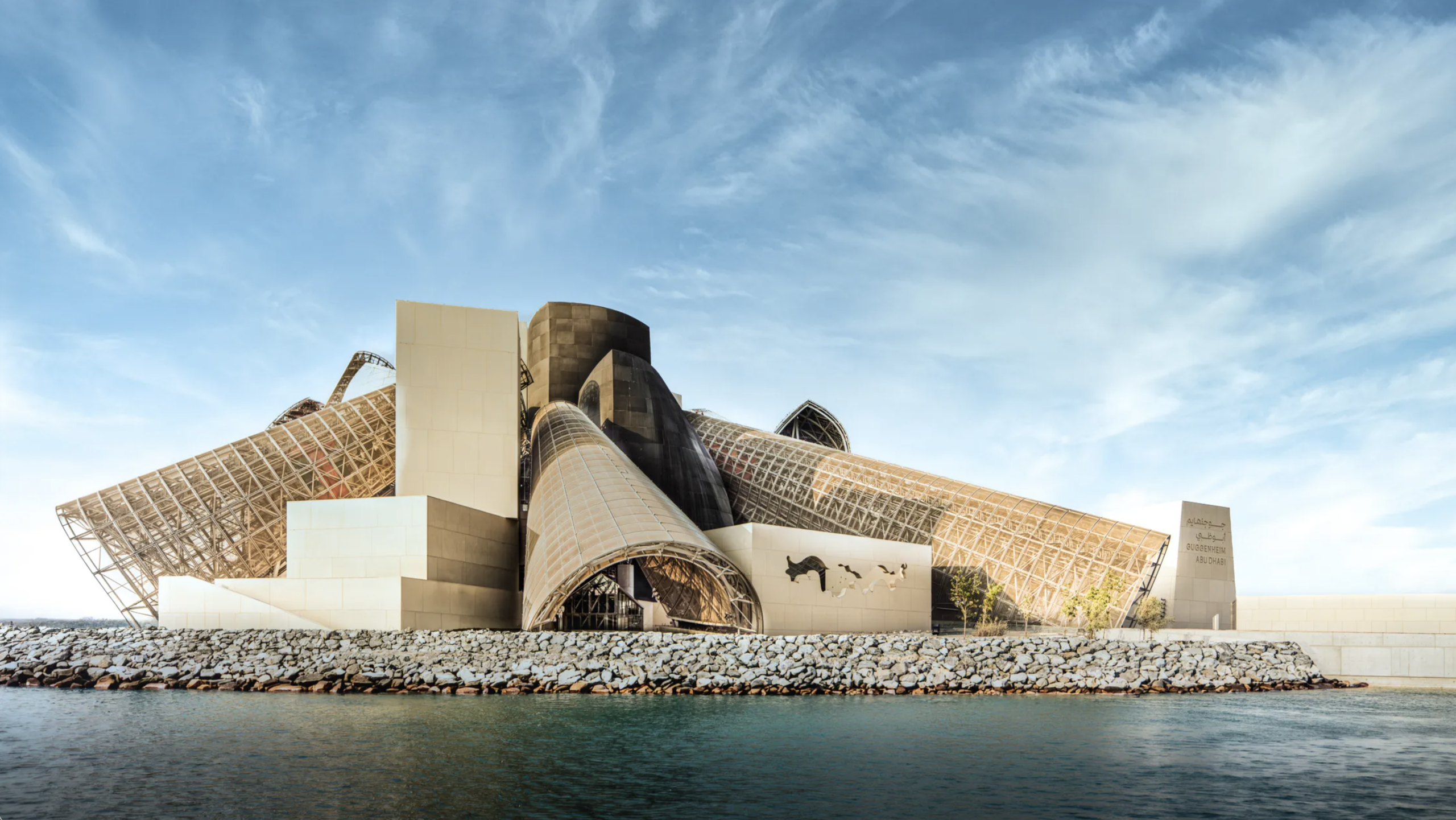
December 11, 2026 marks the date that will finally place Abu Dhabi among the world’s cultural capitals. On that day, Guggenheim Abu Dhabi opens its doors, a museum built right at the boundary between desert and sea, on Saadiyat Island.
Guggenheim Abu Dhabi functions as a museum of modern and contemporary art, connecting cultures and celebrating creative work from the 1960s to today. It sits on Saadiyat Island, precisely at the point where land meets sea.
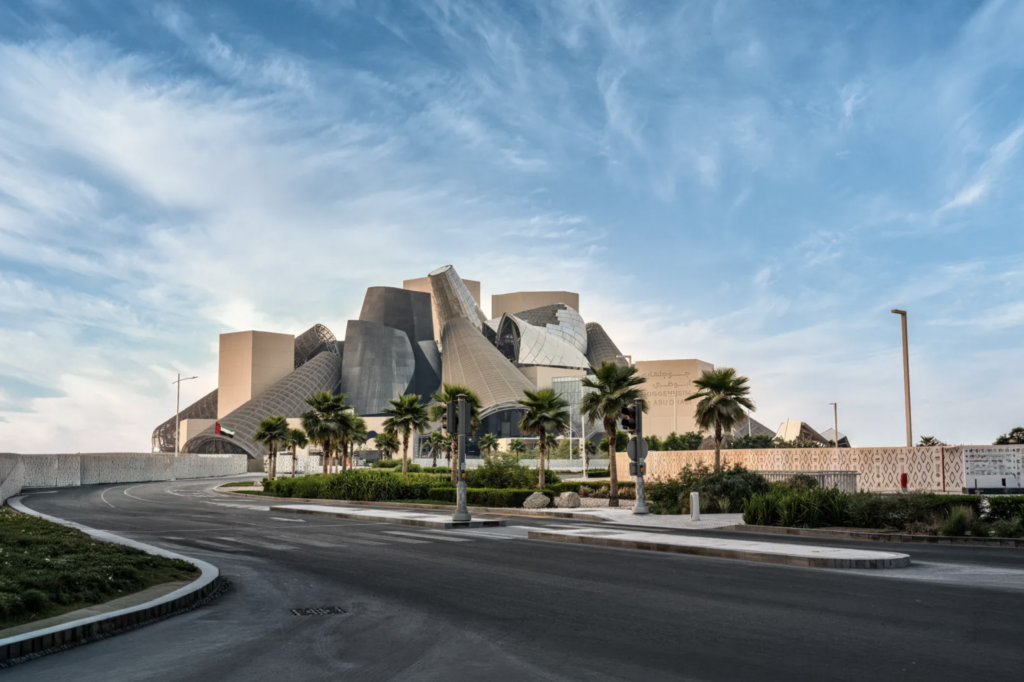
Frank Gehry’s Final Major Building
Pritzker Prize-winning architect Frank Gehry designed the museum, and he spent essentially the rest of his career working on this single project. Ten sculptural cones rise above it to a height of 88 meters, nine built from stainless steel and one from onyx and glass. Once complete, it will become the largest Guggenheim in the world.
The project waited twenty years for its opening. Developers first announced it in 2006, and construction came to a complete halt for several years in between. Ultimately, Gehry didn’t live to see it finished. He passed away in December 2025, at the age of 96.
Naturally, comparisons to his most famous work, Guggenheim Bilbao (1997), come to mind. That building literally transformed the fate of an entire city and gave rise to the term “Bilbao effect.” The question remains whether Abu Dhabi can expect something similar. However, unlike Bilbao, this project isn’t about rescuing a declining economy. Instead, it’s about distinguishing the emirate from its oil-rich neighbors.
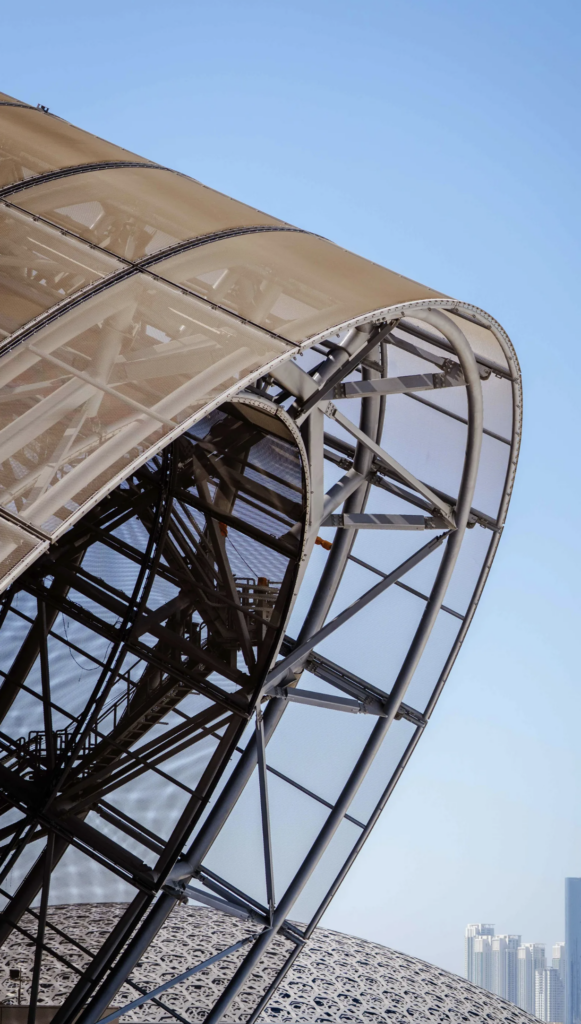
The cones themselves aren’t just a gesture. They evoke shifting sand and sea waves, yet they also serve a practical function, providing natural ventilation and shade. As a result, the building essentially breathes together with the landscape it stands on.
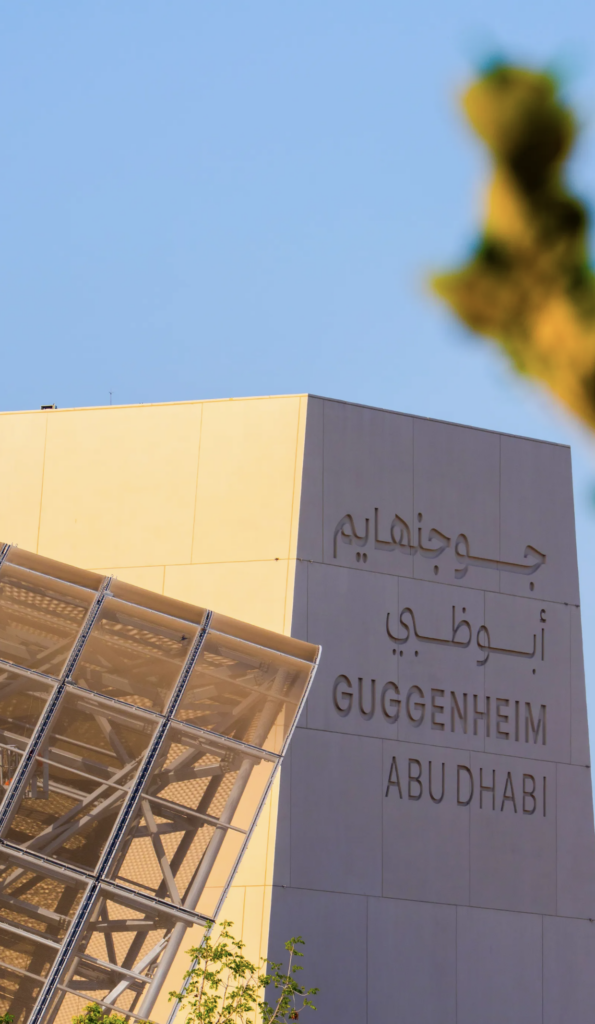
An Archipelago of Guggenheims
Guggenheim Abu Dhabi now joins a broader “archipelago” family of Guggenheim museums. Alongside the original New York museum designed by Frank Lloyd Wright (1959) and the Peggy Guggenheim Collection in Venice, this new branch follows the model established by Guggenheim Bilbao.
Each of these branches maintains its own identity, shaped by local context. Still, they all share the same underlying philosophy: art from the 1960s to the present. Accordingly, Abu Dhabi gains its own, locally rooted version of this global brand.
At the same time, this expansion strategy has long drawn criticism. Much of it centers on licensing the Guggenheim name abroad, as well as the working conditions of laborers who built cultural institutions on Saadiyat Island. Organizations like Human Rights Watch have tracked this issue closely in connection with construction across the entire island.
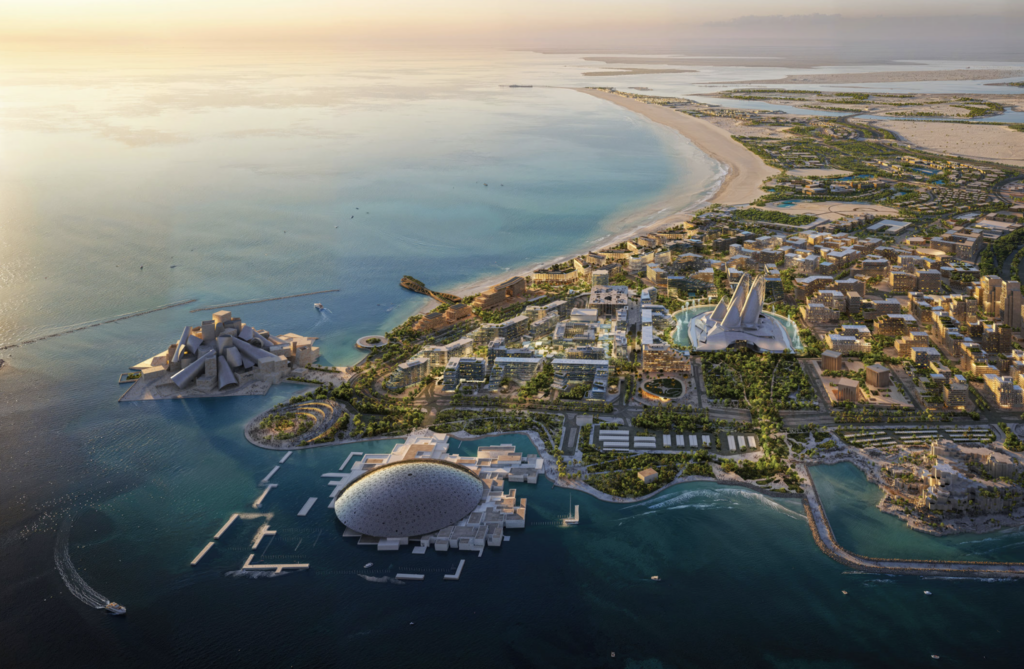
Saadiyat Cultural District: The Neighbors
Guggenheim Abu Dhabi doesn’t stand alone on Saadiyat Island. Rather, it joins an existing community of museums and cultural institutions, including the Louvre Abu Dhabi (architect Jean Nouvel, 2017), the Zayed National Museum, the Natural History Museum Abu Dhabi, and teamLab Phenomena Abu Dhabi.
This exact combination of institutions makes Saadiyat Cultural District one of the most ambitious artificially created cultural clusters in the world. In some ways, it recalls Museum Island in Berlin, where a cluster of museums gradually took shape in one location starting in the 19th century. The key difference, however, lies in timing: Saadiyat emerged all at once, over the course of a single decade, as part of a deliberate state plan.
Why Abu Dhabi
A clear strategy drives the entire project: diversifying the economy beyond oil through culture and tourism. Here, art becomes a tool of “soft power” and economic future, much like oil fields once served as tools of economic power.
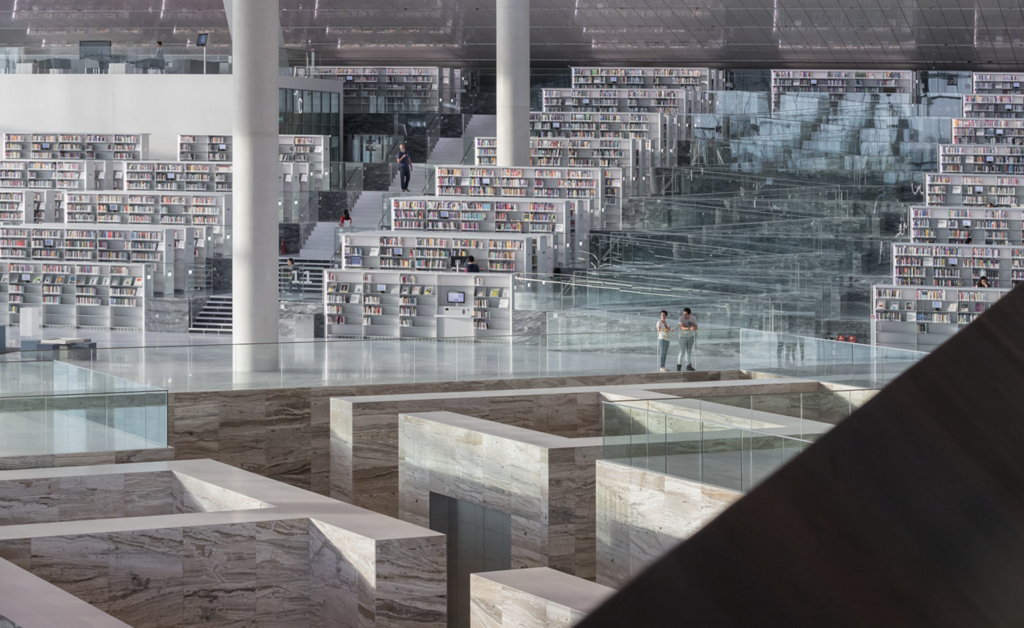
In this sense, Abu Dhabi directly competes with neighboring Qatar, which committed to a similar strategy somewhat earlier. Qatar pursued this path through projects like the Qatar National Library (architect Rem Koolhaas / OMA) and the M7 education and innovation center. In recent years, Gulf states have engaged in a kind of “art diplomacy” among themselves. Iconic architecture and major international brands like the Louvre and Guggenheim serve as tools for international visibility and prestige.

Practical Information
📍 Saadiyat Cultural District, Abu Dhabi
🗓️ Opening: December 11, 2026
Source: Guggenheim Abu Dhabi / DCT Abu Dhabi / Saadiyat Cultural District. Photo: Courtesy Guggenheim Abu Dhabi.