
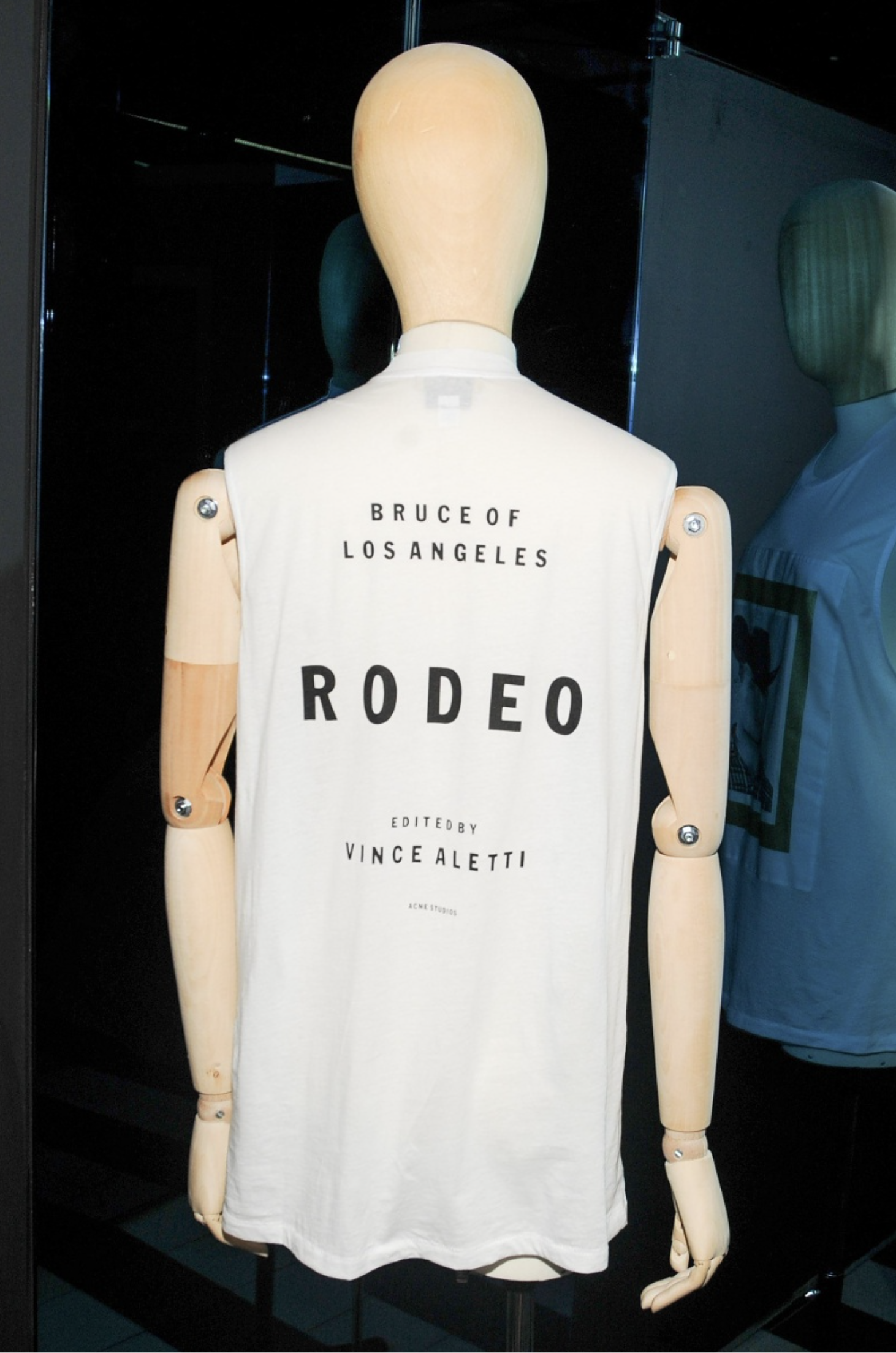
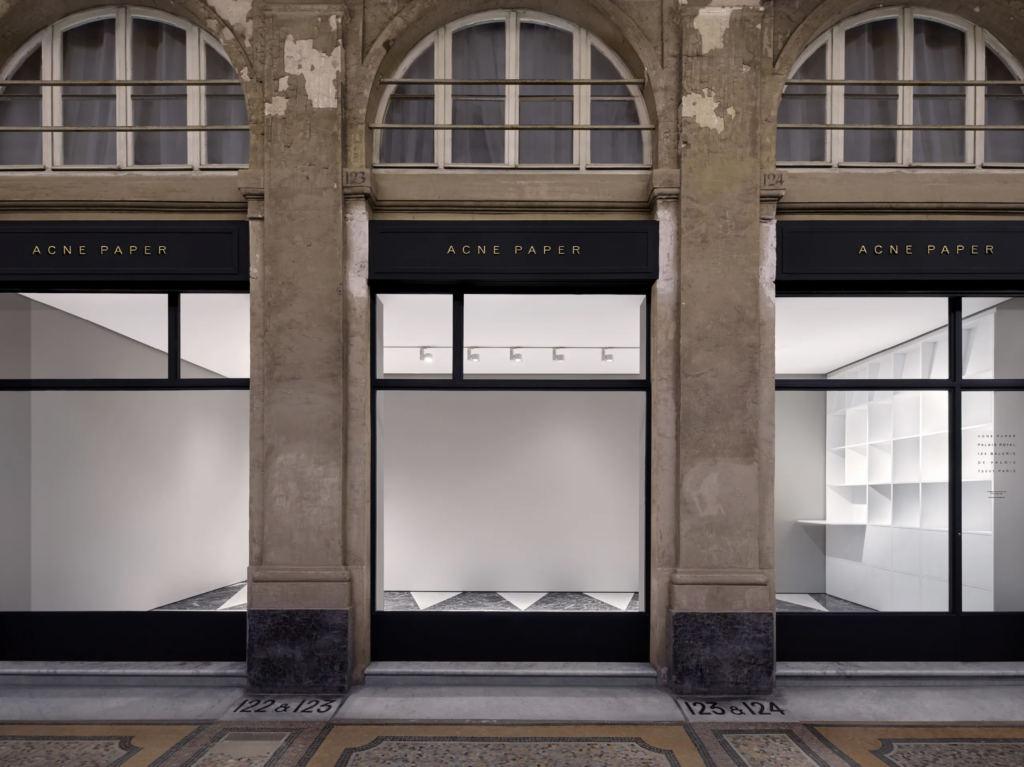
Starting in September, the Acne Paper Palais Royal gallery presents Rodeo, an exhibition of seventy-seven vintage photographs by Bruce of Los Angeles. New York critic and curator Vince Aletti will curate the show, drawing works directly from his own personal collection. At the same time, the exhibition overlaps with the release of the second edition of Rodeo: Bruce of Los Angeles, a book Aletti compiled for publisher Acne Studios.
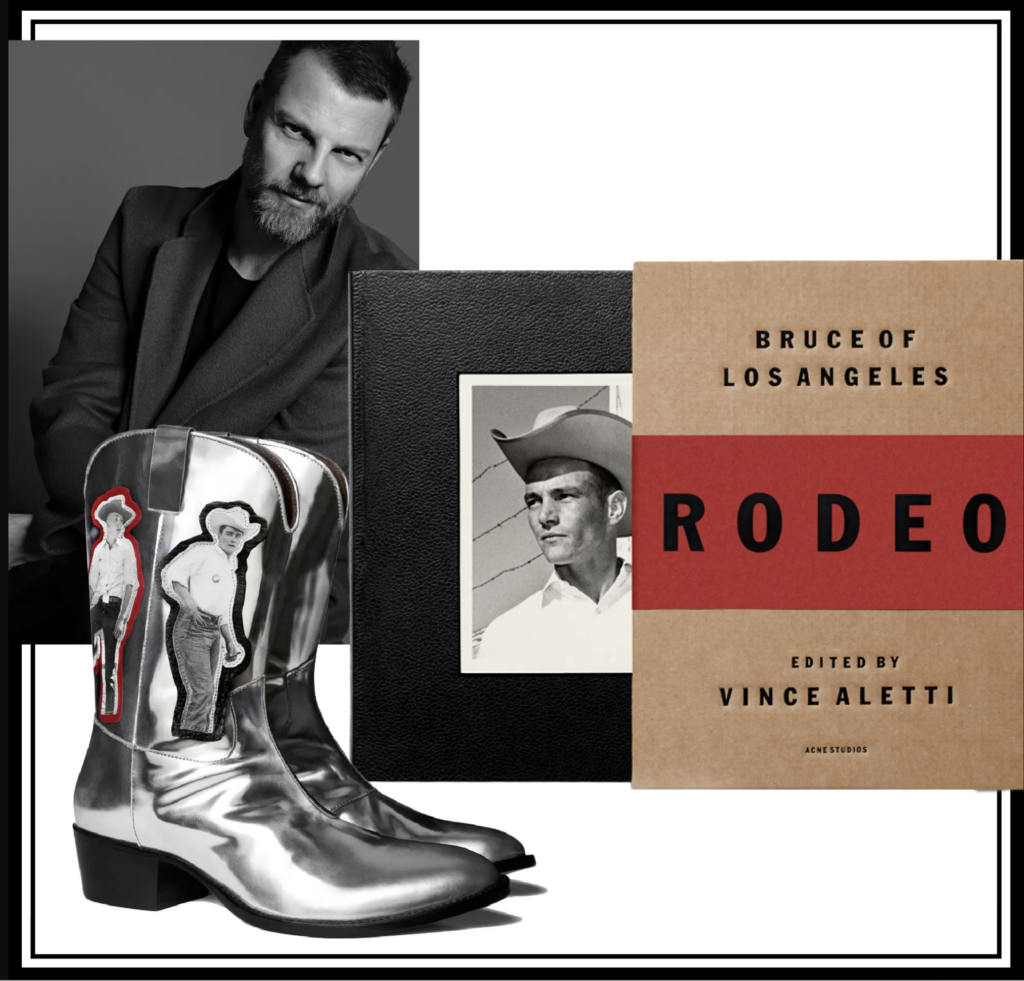
Therefore, the current Rodeo exhibition at Acne Paper Palais Royal and this second book edition are no coincidence. Rather, they continue a relationship between the brand and Bellas’s work that has existed for more than a decade now. This isn’t a one-off marketing collaboration. Instead, it reflects one creative director’s long-standing obsession with a specific photographic archive.
Who Was Bruce of Los Angeles
Bruce Bellas (1909–1974) photographed under the name Bruce of Los Angeles, and today, he stands as a significant figure in 20th-century photography history. Before establishing himself as one of the leading figures in American “physique” photography, he worked as a high school chemistry teacher in Nebraska. After relocating to Southern California in the late 1940s, he opened a studio in Los Angeles, where he devoted himself fully to photographing the male nude form.
Bellas worked during a period when homosexuality remained illegal and heavily censored in the United States. As a result, his photographs circulated covertly, disguised under the pretense of promoting health, bodybuilding, and athletics. Despite these constraints, they became an important visual record for queer audiences well before the Stonewall era.
He developed a distinctive visual language, blending the polished aesthetic of Hollywood studio portraiture with a controlled, masculine sensibility. His carefully composed shots emphasized light, form, and physical presence. Consequently, he directly influenced later generations of photographers, including Herb Ritts, Robert Mapplethorpe, and Bruce Weber.
Rodeo: A Different Side of Bellas’s Work
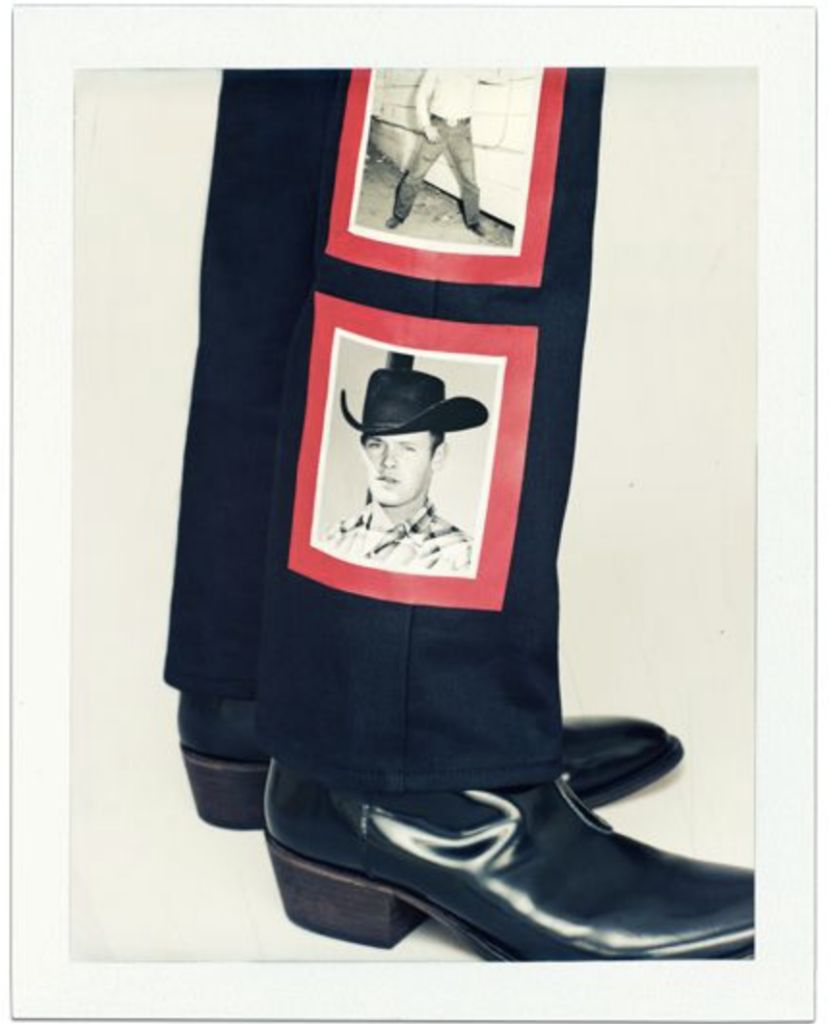
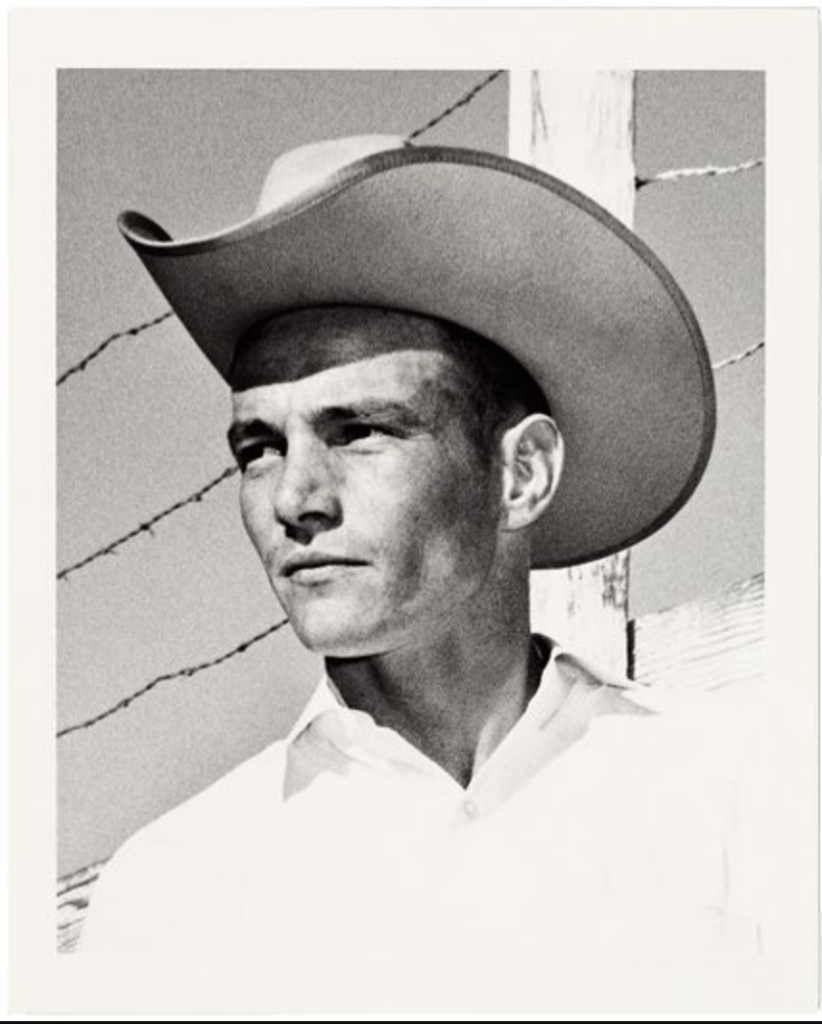
The photographs featured in Rodeo reveal a lesser-known side of his practice. He created them during trips to rodeos across Arizona, California, Oregon, Canada, and the broader American West. This series moved away from the carefully staged conventions of physique photography. Instead of professional models, Bellas turned his lens toward working cowboys and rodeo competitors. He captured them during moments of rest, preparation, and the aftermath of competition.
For a long time, the cowboy remained an idealized figure within American visual culture. Physique photography treated him the same way. However, Bellas’s images root themselves in observation rather than staging. His subjects appear within their everyday environment. He photographed them with a quiet intimacy that avoids theatricality. At the same time, the work maintains remarkable formal precision. Ultimately, the resulting portraits offer a sensitive record of masculinity. They document both the physical demands of rodeo life and the quiet self-assurance of those who lived it.
Originally, these photographs appeared alongside Bellas’s better-known physique studies. Over time, however, they came to be regarded as some of his most personal and refined work. They also carry particular significance within the arc of his career. Bellas died of a heart attack in 1974, while photographing a rodeo in Banff, Canada. As a result, Rodeo became more than a recurring theme throughout his work. It became its final chapter too.
The Curator: Vince Aletti
Vince Aletti will curate the exhibition. For more than four decades, his writing has shaped the broader discourse around photography. He has contributed extensively to Rolling Stone, The Village Voice, Artforum, Modern Painters, and Vogue Italia, and today, he writes for The New Yorker, Aperture, and Harper’s Bazaar Italia. His publication The Drawer won Photo Book of the Year at Paris Photo in 2023, and Physique, a book drawn from his own photography collection, followed in 2025.
Rodeo runs at Acne Paper Palais Royal from September 3 to October 7, 2026.

