There’s a line Claude Monet reportedly said the first time he saw Venice: that the city was too beautiful to paint. In fact, that exact line opened Monet and Venice, an exhibition that recently closed at the de Young Museum in San Francisco, tracing the artist’s late, almost breaking encounter with the city.
That’s a good starting point for something bigger. Venice connects Monet and Holzinger like the same mirror, one that the art of a century looks into and sees exactly what it is. A century and a half before Monet, Canaletto painted Venice too. He mastered precise views of palaces and canals, and his works today hang mainly in old master collections. In his paintings, the city embodied power and commerce above all.
A bit later, Monet saw something different in it: light slipping through his fingers. Today, Florentina Holzinger sees something else entirely: bodies, waste, and climate anxiety. Same city, same water, an entirely different language.

A Building in Golden Gate Park
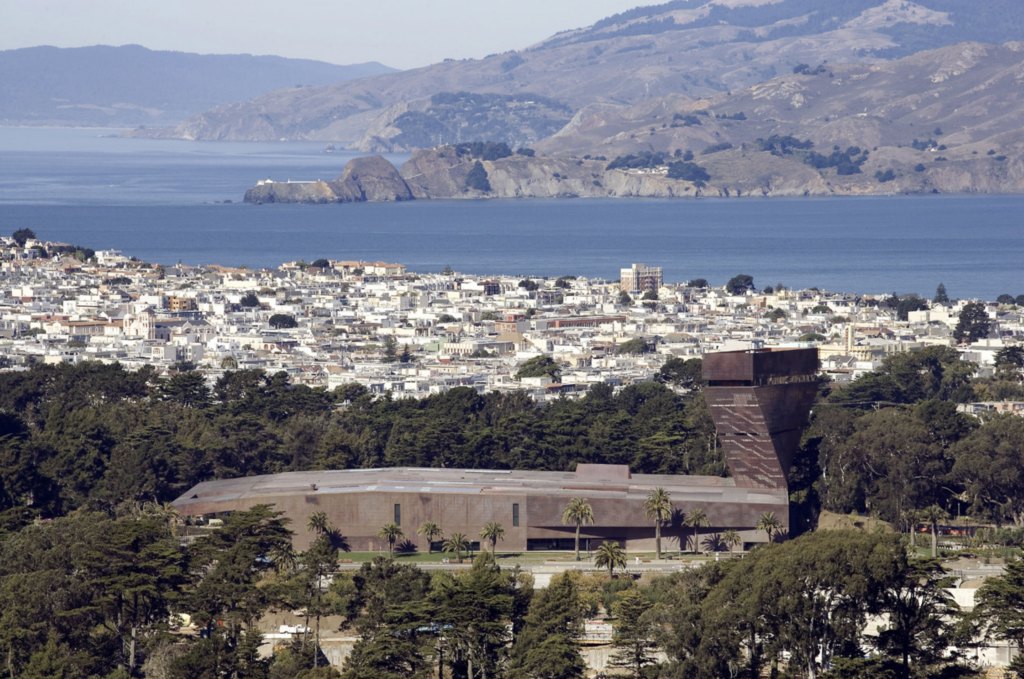
The de Young Museum hosted the exhibition. Swiss architects Jacques Herzog and Pierre de Meuron designed the building in 2005, working alongside executive architects Fong & Chan. It replaced the original museum, destroyed by the 1989 Loma Prieta earthquake.
The concept draws directly from the surrounding Golden Gate Park. The facade is made entirely of copper, perforated to mimic light filtering through tree branches. Over time, the copper will oxidize and turn green, so the building will literally blend into the color of its own surroundings. Herzog & de Meuron deliberately avoided one single iconic form. Instead, they built a collage of individual spaces for art, reflecting the diversity of the collection itself.
This turned out to be an excellent frame for Monet specifically. A building that changes color and blends with its environment over time hosted an artist obsessed with shifting light and water.
Monet in Venice: A Crisis for the Water Lilies
The period the exhibition traced wasn’t easy for Monet. He struggled with his own water lily paintings, frustrated by where his work was heading. Then came his encounter with a city so perfectly captured by painters before him that it nearly broke him. According to curators, this exact Venetian experience directly shaped his late water lilies, painted later at home in Giverny.
The exhibition also opened up a less flattering angle. Part of Monet’s Venetian series emerged under pressure from art dealers, who simply needed new work to sell. Monet was clearly fascinated by Venice, yet the works on display also revealed ambivalence, an artist caught between commercial pressure and anxiety about his own tradition.
Venice as a Shared Canvas
Monet wasn’t the only artist trying to capture the “floating city” at the time. Whistler created a series of delicate etchings depicting working-class Venice. Sargent painted glittering watercolors of wealth and shine. Turner, meanwhile, produced a set of watercolors that barely resolve into recognizable scenes at all, closer to atmospheric moods of light on water.

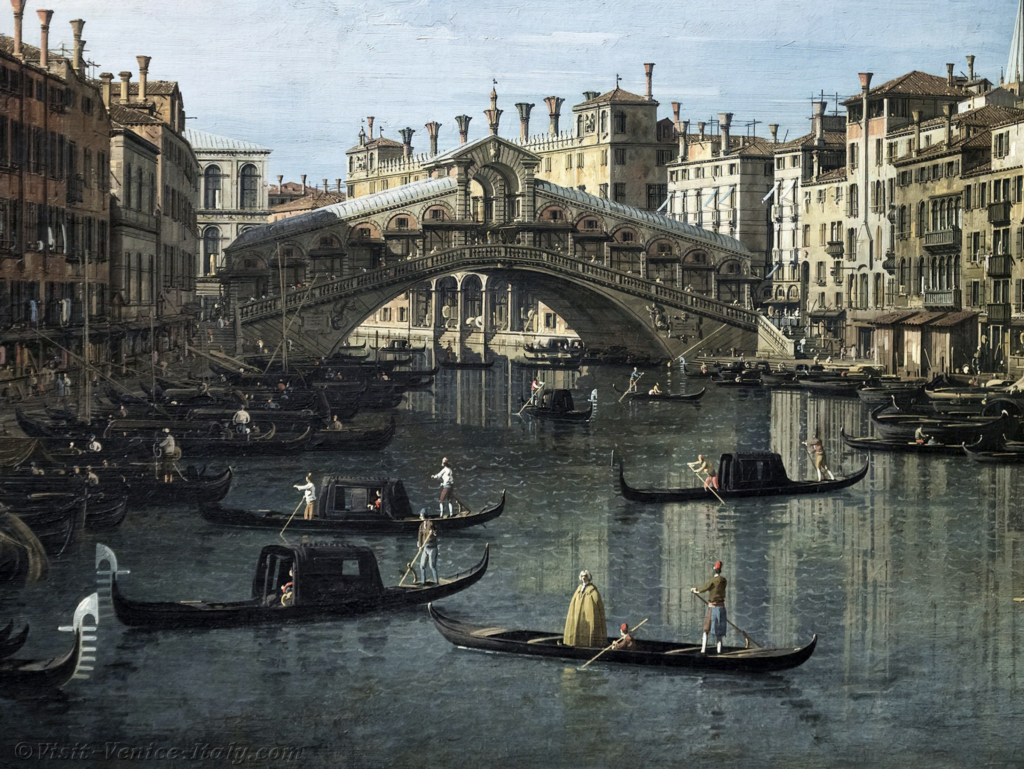
A century and a half earlier, Canaletto painted Venice in a completely different way. His works strictly follow a grid and project a kind of staged grandeur, the exact opposite of Monet’s intuitive, fleeting brushwork.
The City Becomes an Arena
Less than a decade before Monet’s visit, in 1895, the Venice Biennale was born. Over time, this cultural event grew into a kind of national arena, something like a “water colosseum.” The same thing still happens today. Venice now functions as a year-round spectacle of art, finance, and competition for attention.
Holzinger in Venice: The Body as a Wastewater Treatment Plant
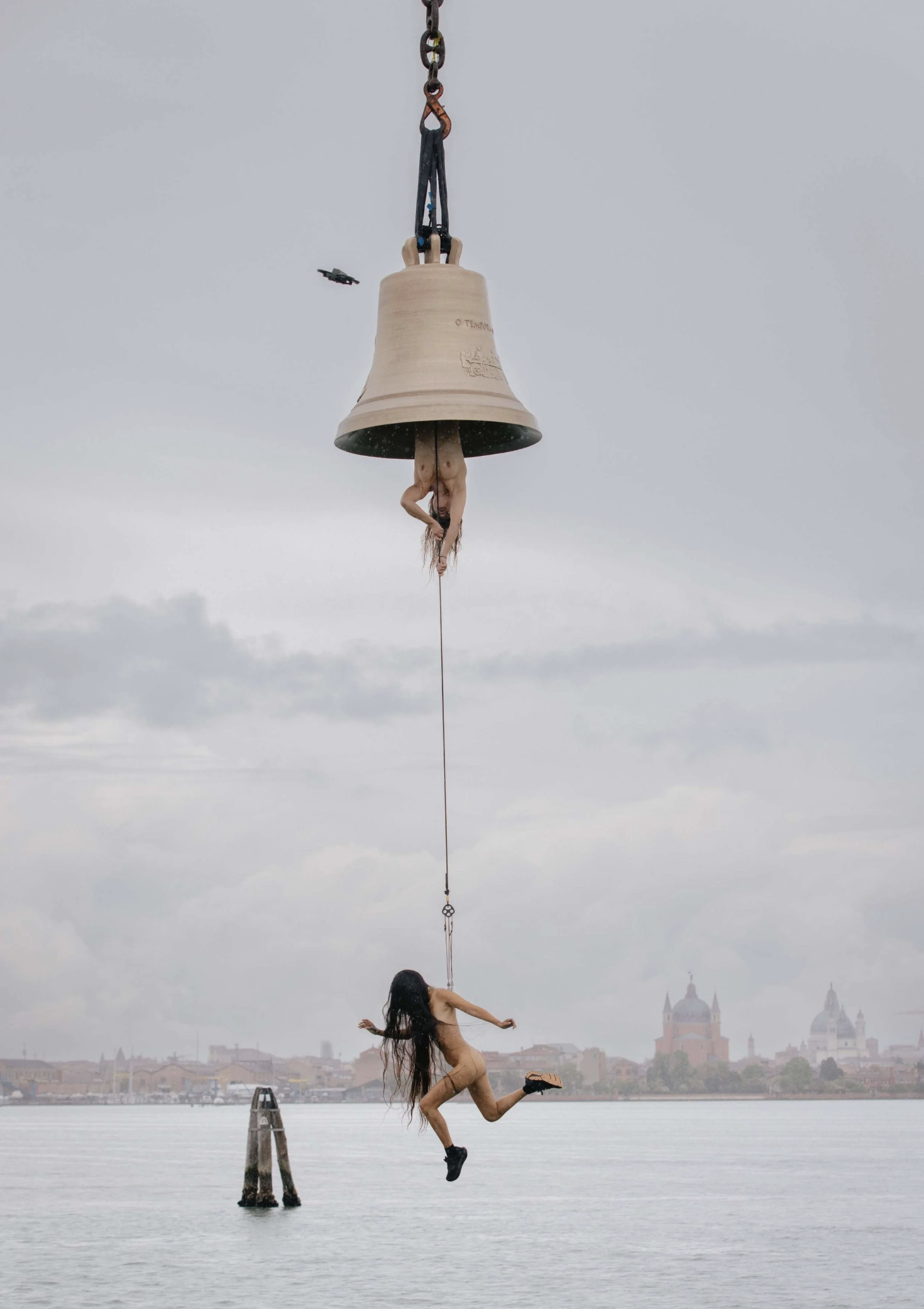
At the current, 61st edition of the Biennale, choreographer Florentina Holzinger represents Austria with SEAWORLD VENICE. Nora-Swantje Almes curates the project. This is exactly where Venice, Monet, and Holzinger collide most sharply. Monet searched the water for dissolving form and light. Holzinger, by contrast, searches that same water for disgust and the collapse of boundaries between clean and dirty.
The work draws surprisingly directly from pop culture. Its main cinematic reference is Waterworld (1995), starring Kevin Costner. Holzinger borrows its vision of Venice as a sinking, makeshift island built from waste, where humanity must live within its own filth and adapt to it.
On top of that, she adds two further layers. The first draws on mythological motifs of sirens and water creatures, moving through a city marked by “turbo-tourism” and ecological decay. The second subverts classical religious iconography. Holzinger dismantles traditional, patriarchal sacred structures through a massive rotating aerial device, which lifts nude performers through the air like distorted icons.
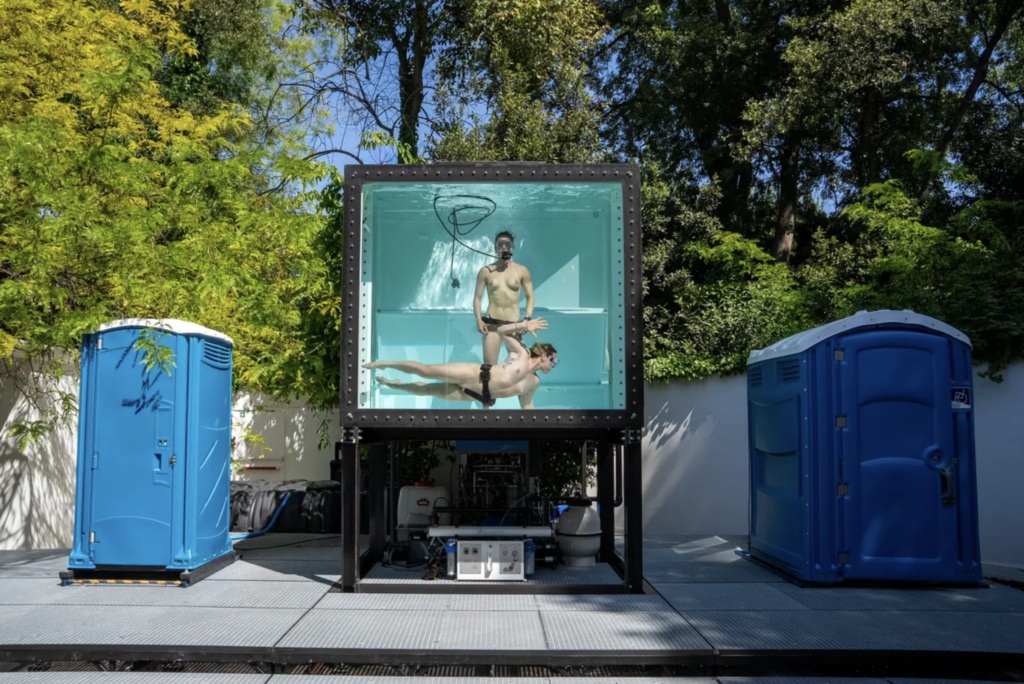
At the same time, Holzinger returns to her own long-running research into water. She draws on earlier works, such as Études and Ophelia’s Got Talent. Similarly, these pieces combine extreme stunt physicality, body modification, and structured violence.
ey Visual Elements of the Work
A human bell clapper. A massive bronze bell hangs above the entrance. The team pulled it directly from the Venetian lagoon. Holzinger and her performers hang inside it upside down, striking their bare bodies against its rim. Essentially, it functions as a literal human alarm bell warning of climate collapse.
A jet ski loop. A nude performer repeatedly circles on a jet ski in tight, violent loops inside a flooded gallery space. The piece reads like a kinetic monument to the destruction caused by mass tourism.
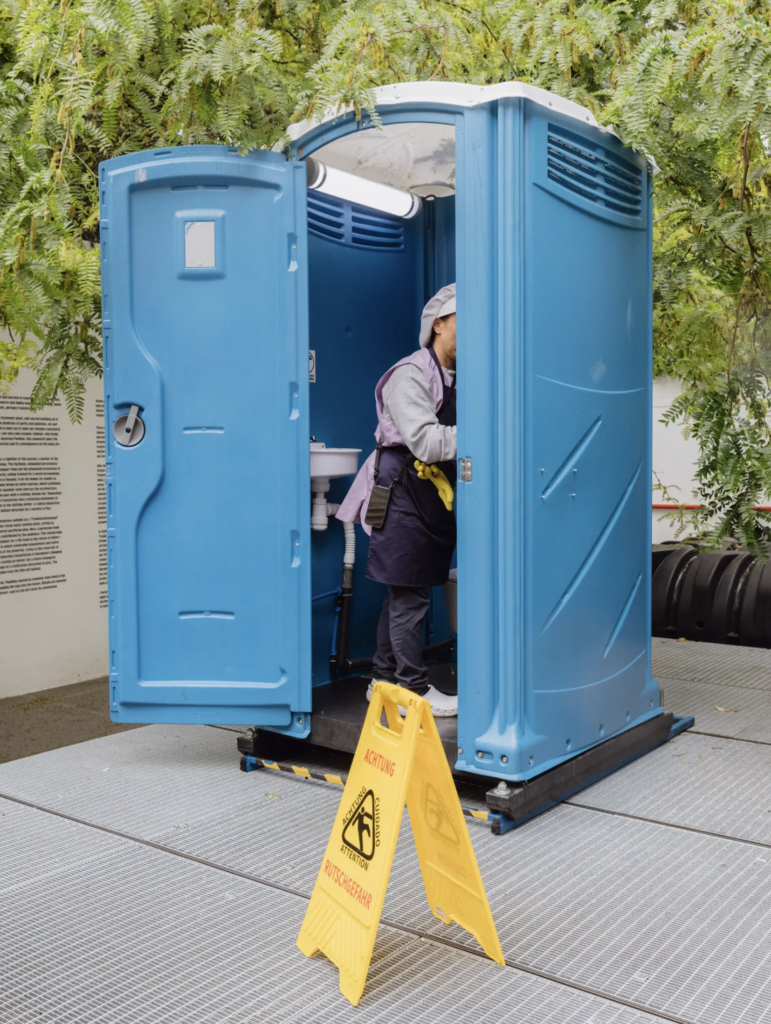
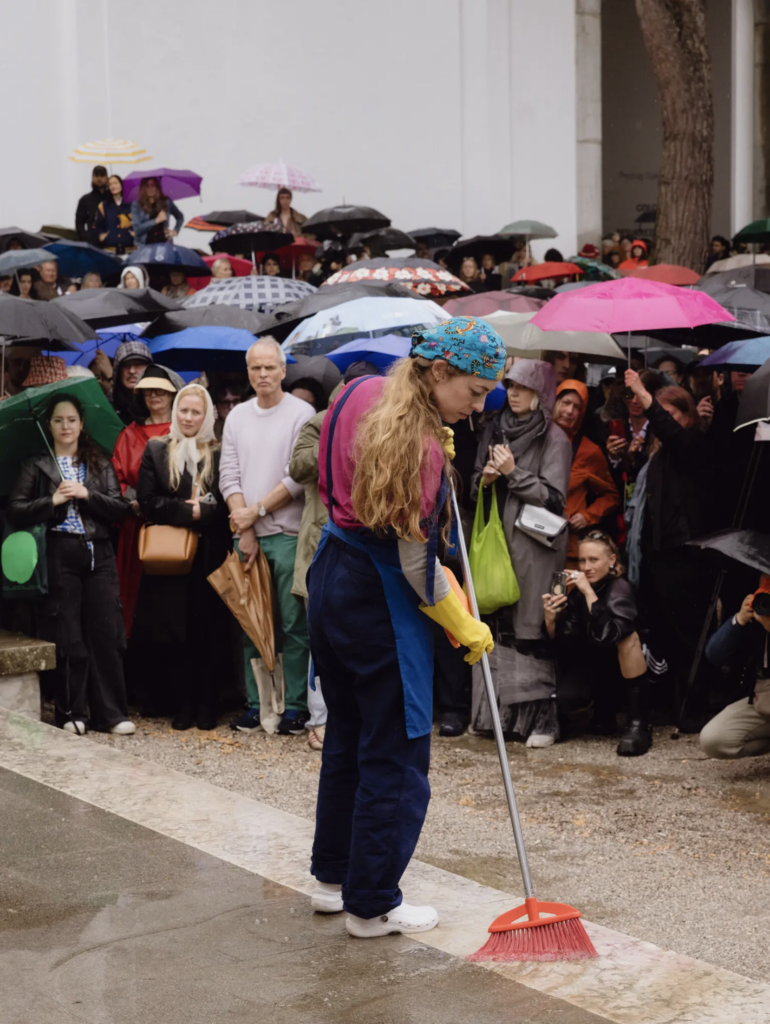
A urine-powered tank. Visitors can use functioning portable toilets set up on site. The system filters and pumps urine into a tank in real time. Inside it, a nude performer sits underwater, breathing through a diving regulator.
Conceptually, the work functions as a feminist project. Holzinger has long explored female physicality through extreme physical practice. Venice, a city directly threatened by rising water levels, offers her a fresh frame for this long-standing theme.
The Canadian Pavilion: A Greenhouse for Water Lilies
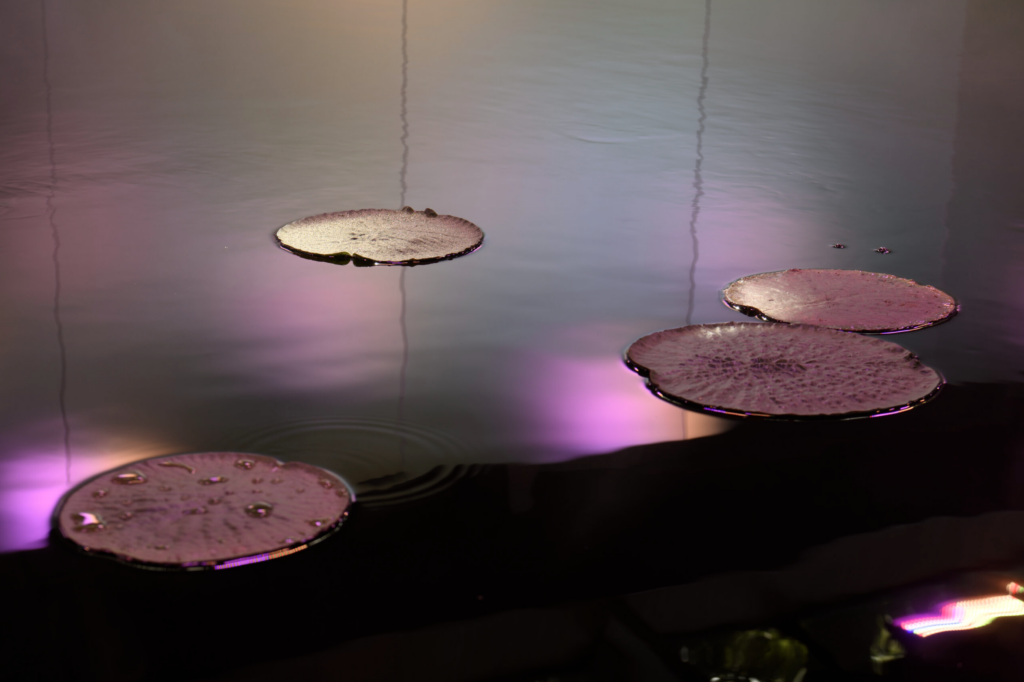
Alongside Holzinger, the Canadian pavilion deserves mention too. Abbas Akhavan transformed the pavilion into a Wardian case, an early type of portable terrarium once used to transport giant South American water lilies favored by Victorian colonial elites. It’s an unexpected yet precise bridge back to Monet: the same plant that became one painter’s lifelong obsession in Giverny appears here as a symbol of colonial ownership over nature.
Monet’s “Selfie” Before Photography Existed
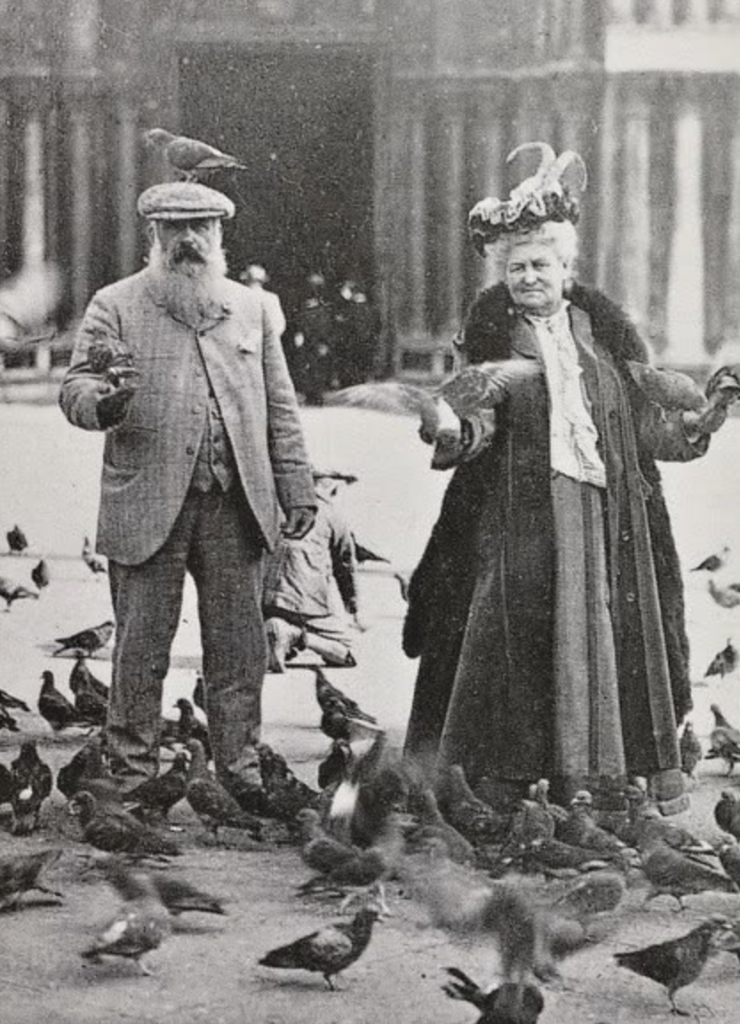
The de Young exhibition closed with a small photograph, showing Monet reflected in his own water lily garden. Beside it hung a late painting, a vivid capture of floating water lilies in harmonious balance with water, light, and space.
One Final Thread: Japan
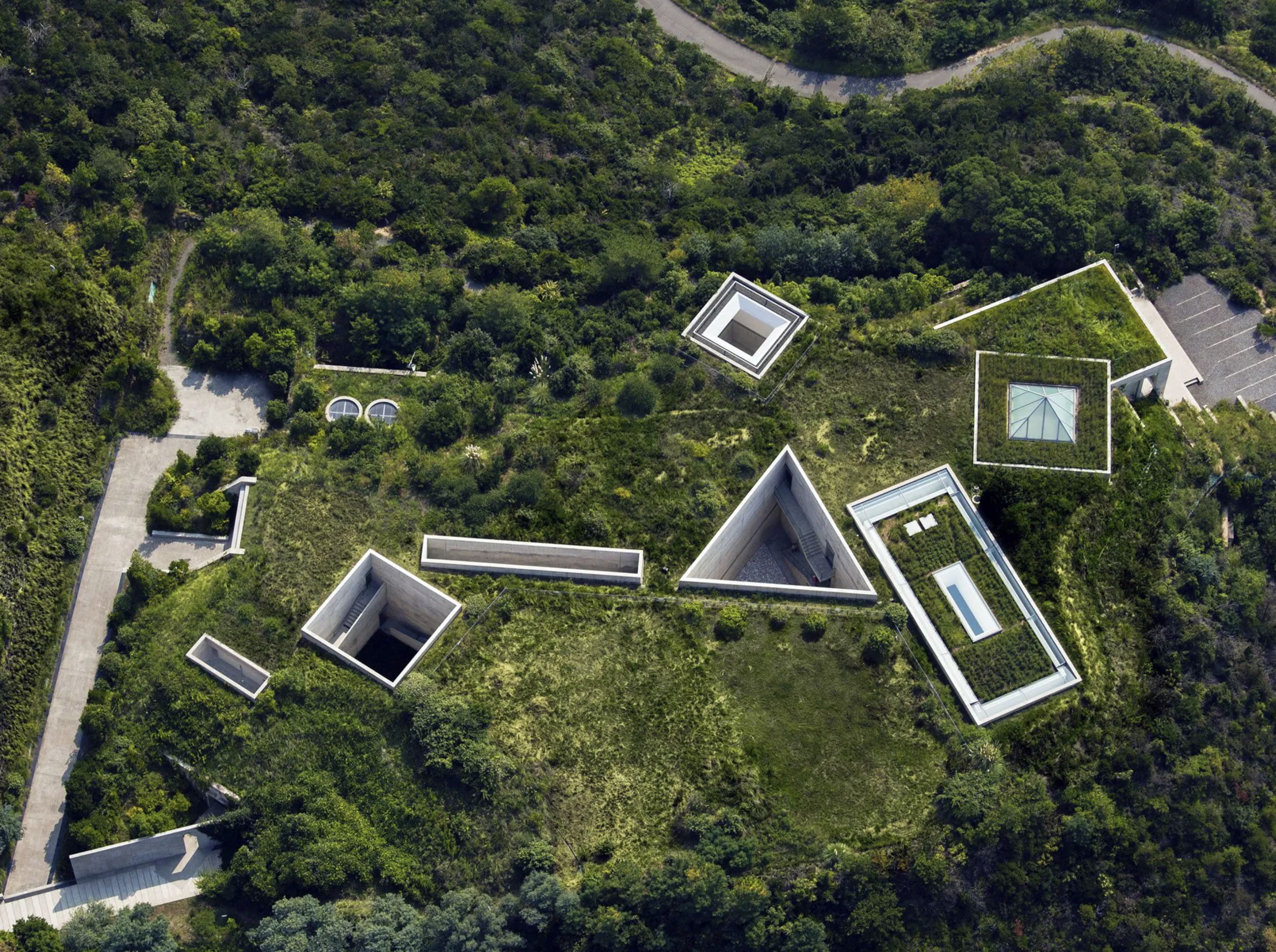
The story of the water lilies stretches even further, all the way to the other side of the world. From Honshu or Shikoku, a ferry can take you to Naoshima, home to the Chichu Art Museum by Tadao Ando, an underground space built from white concrete, designed specifically to house a collection of Monet’s large, late water lily paintings. Visitors remove their shoes at the entrance and observe, in silence, paintings created at the exact point in Monet’s career when his brushwork dissolved entirely into light and color.
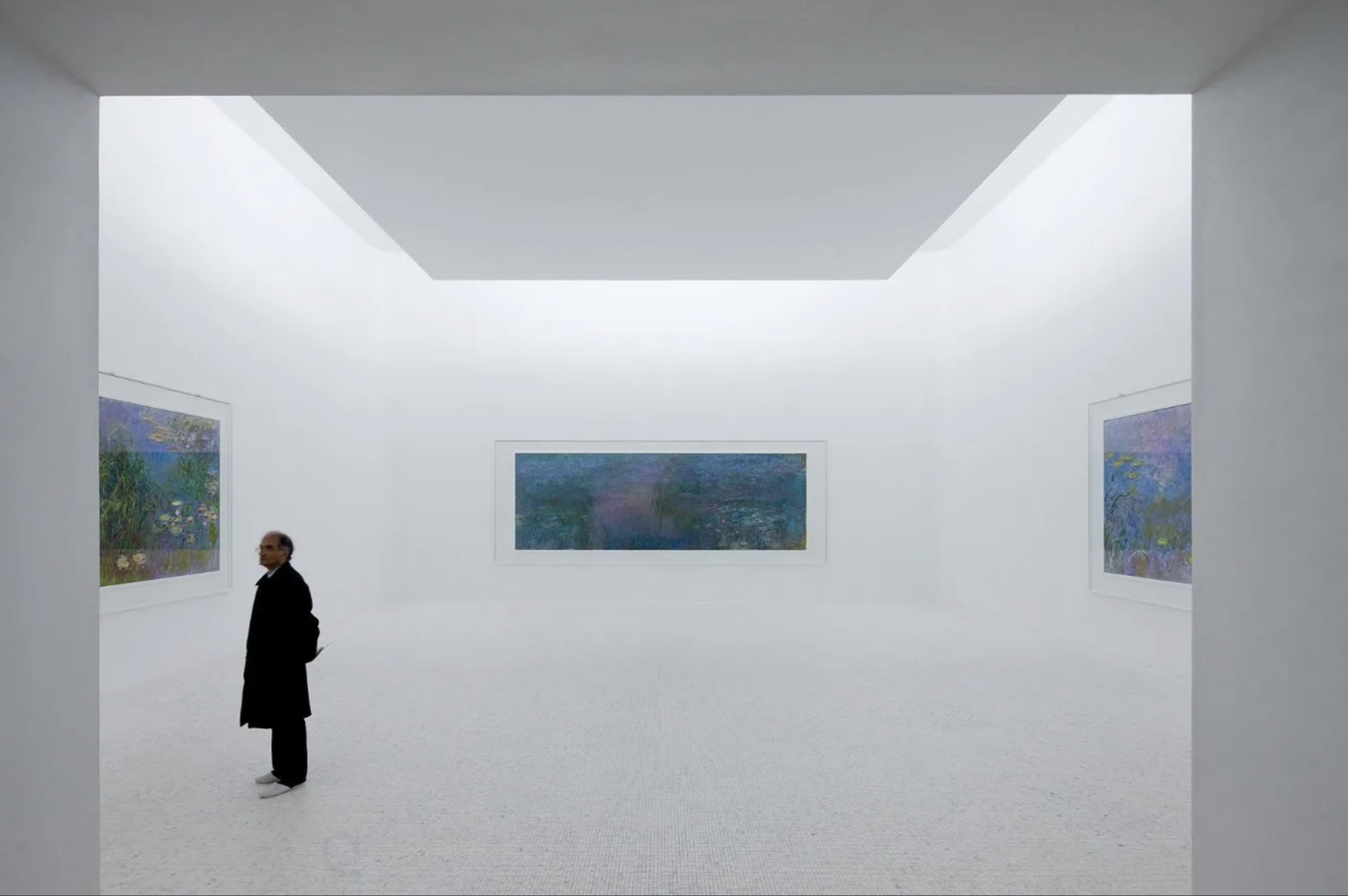
This marks the final knot in the story of Venice, Monet, and Holzinger. The same water lily that never interested Canaletto, that pushed Monet nearly to despair, and that Holzinger has now replaced with bodily fluids, ultimately ends up in a quiet, meditative cave on a Japanese island. Venice keeps changing. The art made about it keeps changing too. The only thing that stays the same is the water itself.
Monet and Venice was on view through July 26, 2026, at the de Young Museum in San Francisco.