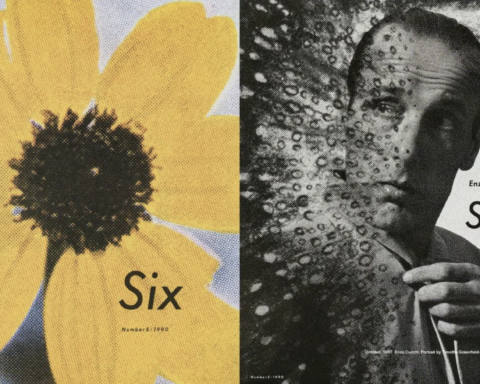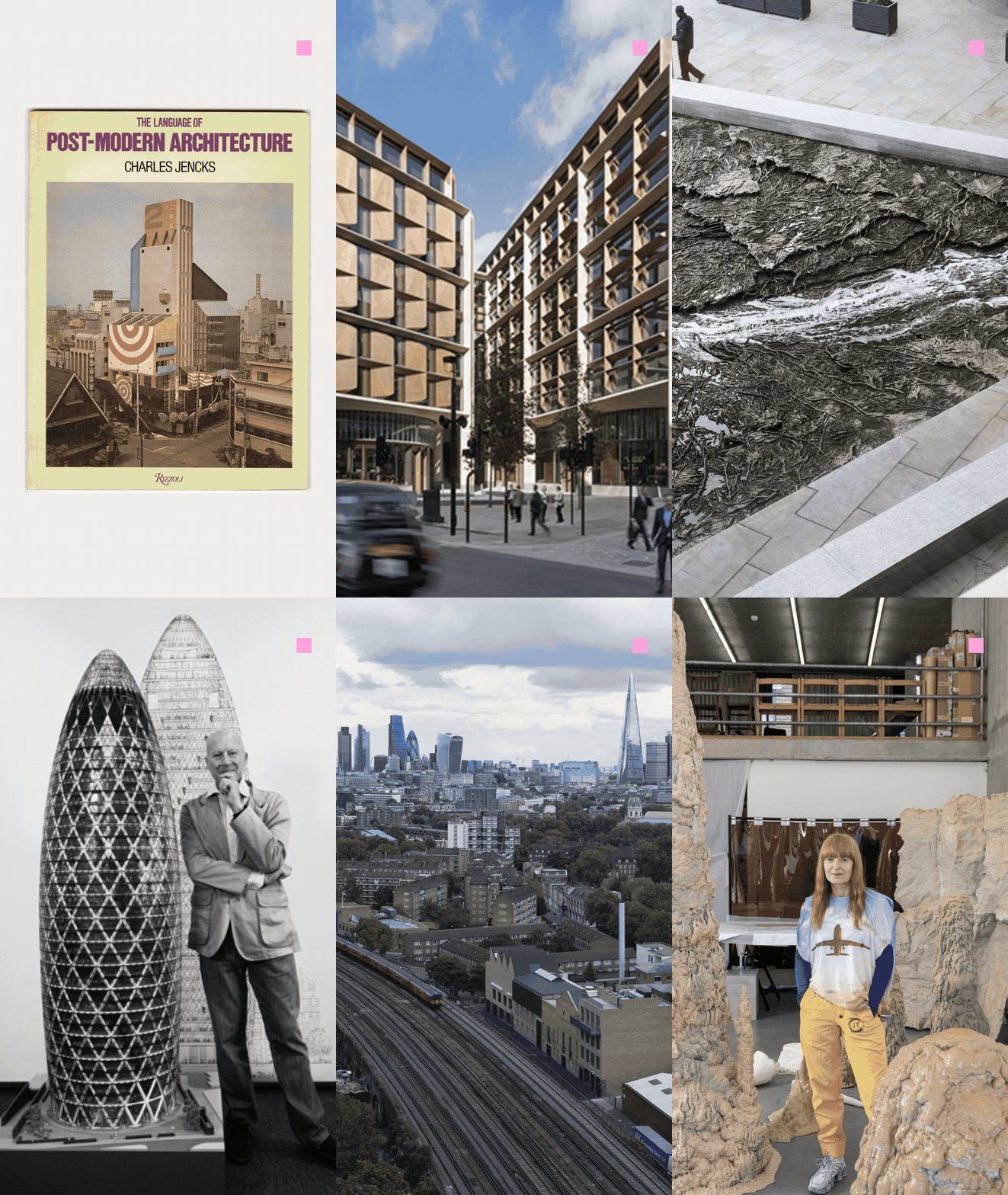
Architecture in London meets art this year at Frieze Masters too. One of its sections draws on two homes. The Reflections section was curated by Abby Bangser. It draws on Casa Luis Barragán in Mexico City and The Cosmic House in London. Both were family homes for about forty years. At Frieze, it shows works and design pieces from the collections of the Barragán and Jencks families.
Why is this interesting? A home that becomes a museum lives a second life. London has more such stories. Here are six buildings and two galleries. Some were homes, power stations or warehouses and now belong to art. Others show how one style follows another in the city.
The Cosmic House: a postmodernist’s home
Charles Jencks was a theorist of postmodernism. His 1977 book The Language of Post-Modern Architecture claimed that modern architecture died on 15 July 1972, at 3:32 pm. He meant the demolition of the Pruitt-Igoe housing complex in St. Louis. The exact time is his symbolic claim. The complex was demolished over several years.
A year later, in May 1978, he bought a Victorian villa in London with Maggie Keswick. He remodelled it until 1983. The house is full of symbols, such as the Solar Stair and the Moonwell. Today it is Grade I listed and has been open to the public since 2021.
Frieze Masters draws on this house too. Luis Barragán was a Mexican architect and a Pritzker Prize laureate in 1980. The Reflections section shows works and design pieces from the collections of the Jencks and Barragán families. The home of a postmodernist has thus become a source for a fair of old and modernist art.
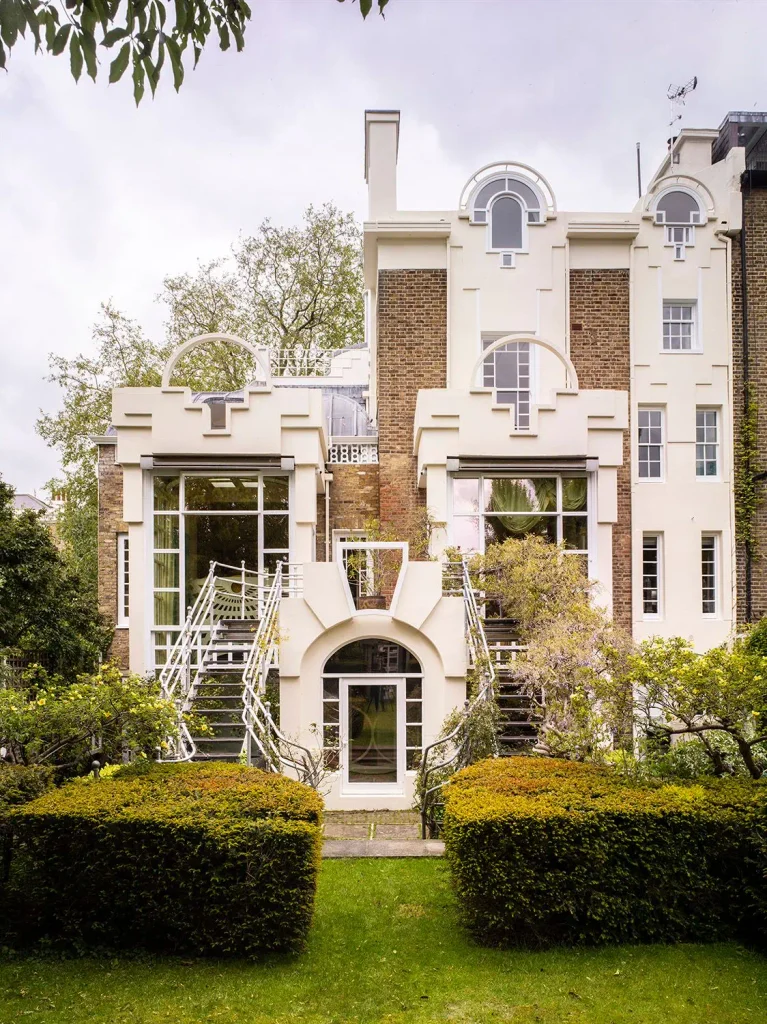
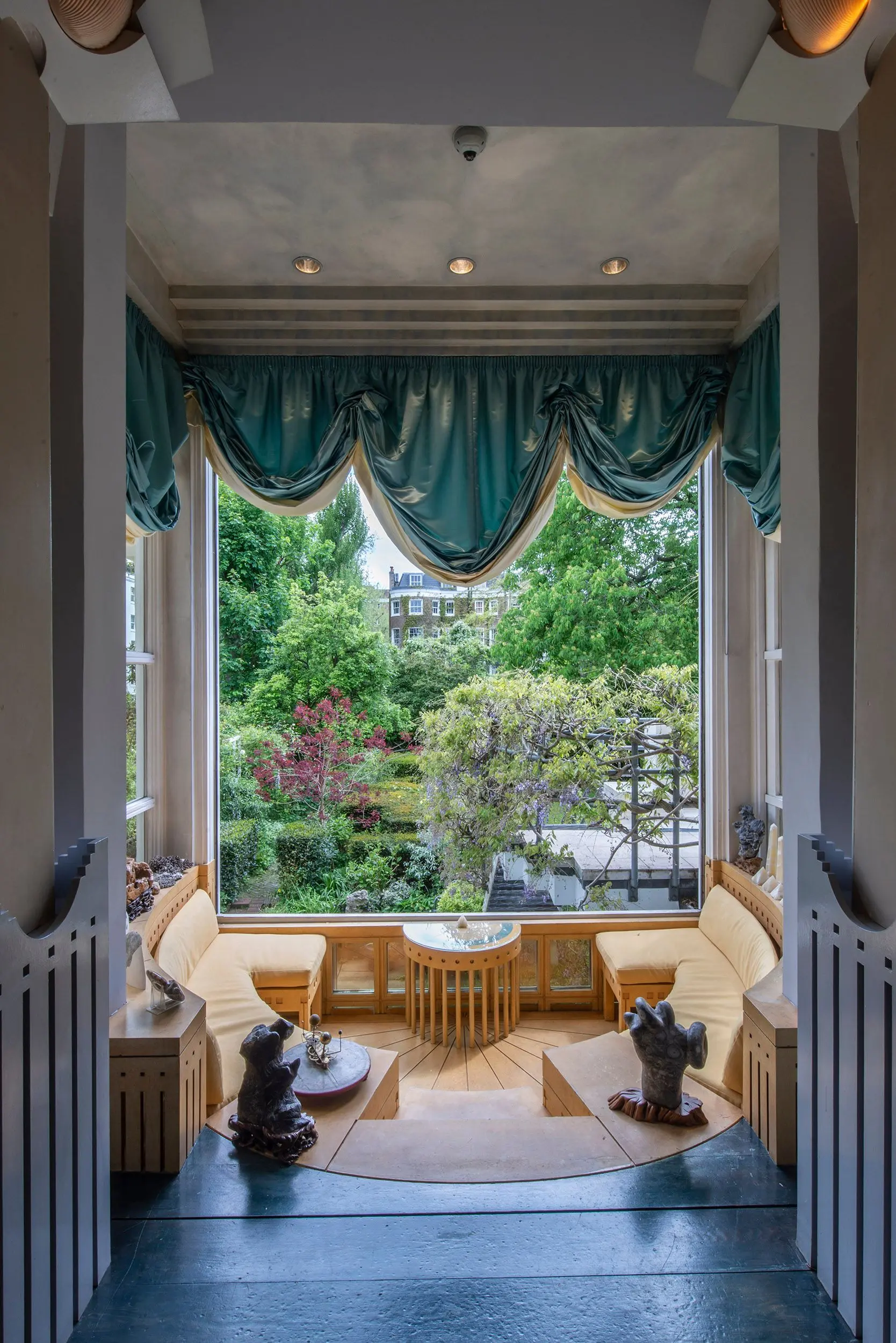
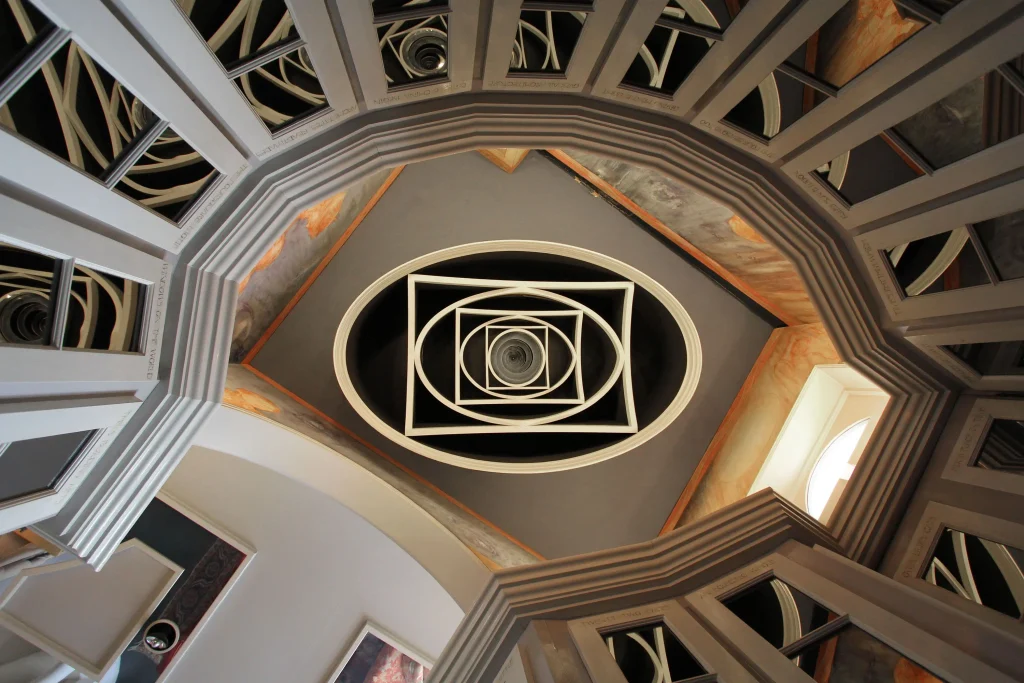
The Sundial Arcade in The Cosmic House, with a view into the Time Garden designed by Maggie Keswick. Photo: Sue Barr.Sir John Soane’s Museum: the architect as collector
Soane, too, built his own home as an architect’s manifesto. He remodelled it gradually at Lincoln’s Inn Fields. He rebuilt No. 12 in 1792 to 1794 and No. 13 in 1808 to 1812. No. 14 followed in 1823 to 1824.
In 1833, an Act of Parliament handed the house and collection to trustees on behalf of the nation. The museum opened in 1837. The house remains almost as Soane left it. It holds about 45,000 objects, including more than 30,000 drawings and 252 models.
You will find Hogarth’s A Rake’s Progress, four Canaletto paintings and works by Turner. Soane did what Jencks did two centuries later. He turned his own home into a work of art.
Fun fact: Soane bought the sarcophagus of Seti I in 1824 for £2,000.
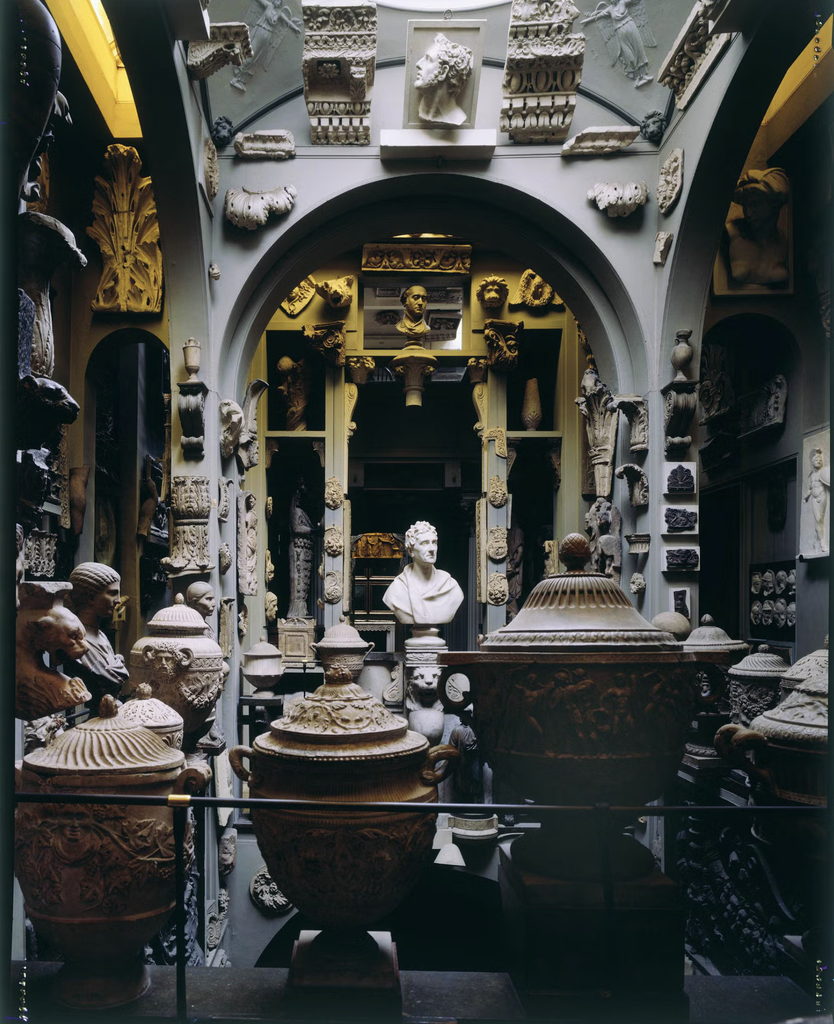
A bust of the architect Sir John Soane sits atop a lion's head in the middle of the domed space at Sir John Soane's Museum in London. Soane lived here and collected art. Photo: Derry Moore, The New York Times, 2014.Battersea Power Station: from power station to city
he first part of the power station was built between 1929 and 1935. The second followed between 1937 and 1941 and was completed in 1955. Giles Gilbert Scott worked on the exterior. The building is Grade II* listed.
Even people who have never been to London know the power station. It is on the cover of Pink Floyd’s 1977 album Animals. The shoot did not succeed at first. On 3 December 1976, the inflatable pig broke free from its moorings. It rose towards Heathrow Airport and flights were halted. It landed in Kent. The final cover is a composite of two shots. The pig was added to an earlier photo of the power station.
For almost four decades it stood closed. After restoration, it reopened on 14 October 2022. Today it houses a shopping area, restaurants, offices and a riverside park. The offices include Apple’s London headquarters. The Chimney Lift rises to a height of 109 metres.
Foster + Partners also worked on the new district around the power station. The same practice designed Bloomberg HQ, the next stop on this route.
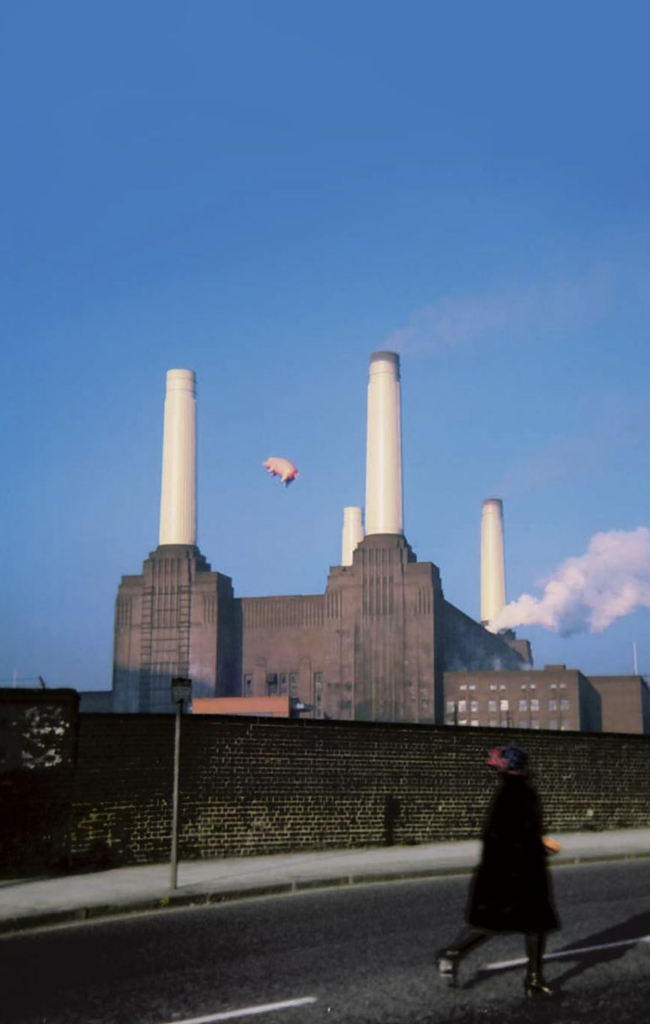
The inflatable pig above Battersea Power Station during the photo shoot for Pink Floyd's Animals album cover, 1976. Photo: Carinthia WestDesign Museum: from pavilion to design museum
It was originally the Commonwealth Institute from the 1960s, designed by the studio RMJM. Its copper roof in the shape of a hyperbolic paraboloid is Grade II* listed. The conversion cost £83 million. It increased the floor area from 6,000 to 10,000 square metres. The museum opened on 24 November 2016.
OMA carried out the conversion with Allies and Morrison, and John Pawson designed the interior. The roof stayed. Almost everything under it was built anew. This is what the 20th Century Society criticised. In 2018, the museum won the European Museum of the Year award.
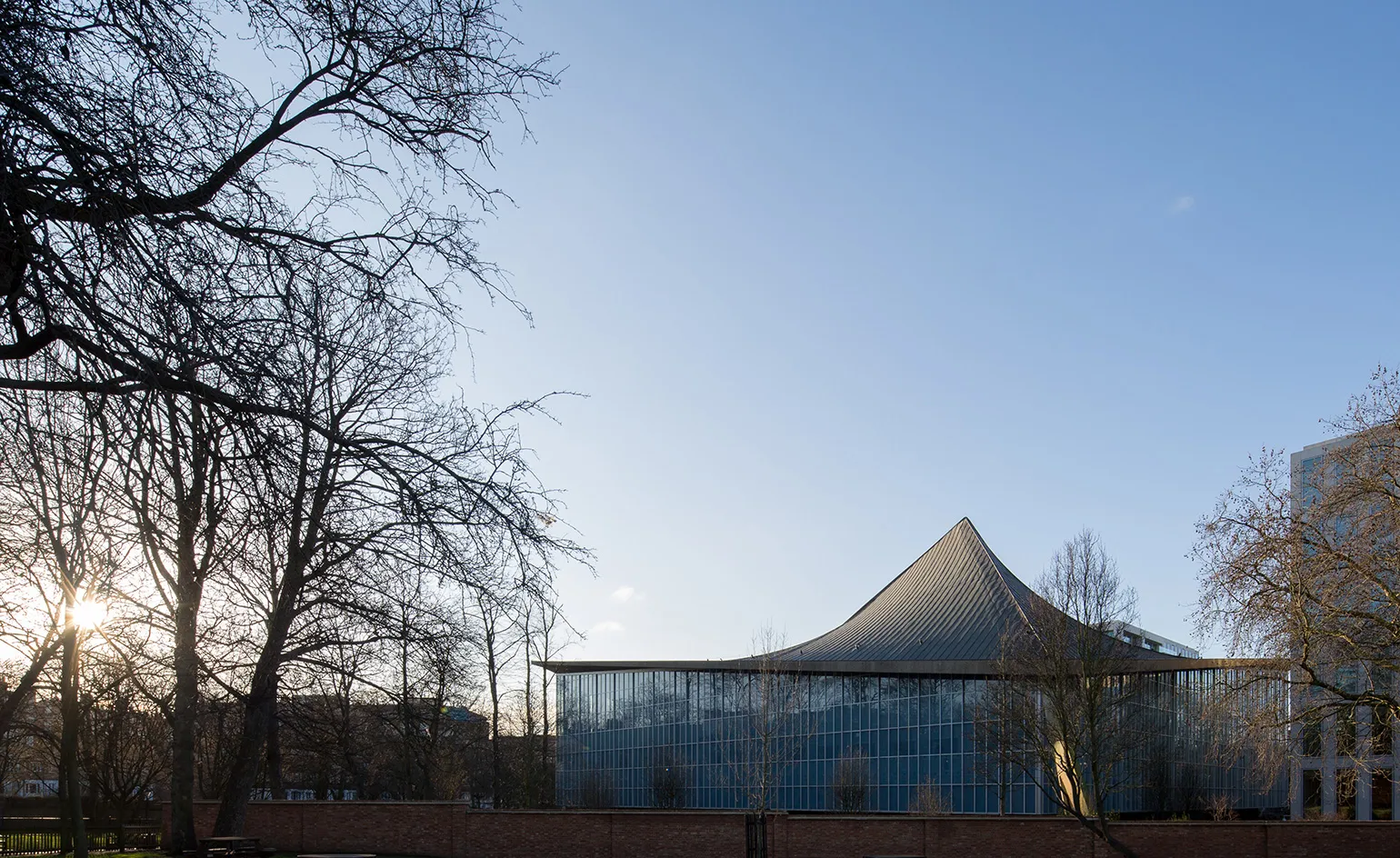
The Design Museum in London is housed in a modernist building with Grade II* listing. Its most striking feature is a curved roof in the shape of a paraboloid. The building stands south of Holland Park, in Kensington's museum district. Photo: Luke Hayes.OMA also appears in our article on Artist-to-Artist. It added a glass extension to the roof of the Tiffany building in New York.
Today, the museum is worth visiting for the exhibition Es Devlin: Other Worlds. It runs from 2 October 2026 to 4 April 2027. We write about it in a separate article on Es Devlin.
Bloomberg HQ and London Mithraeum: a temple beneath the offices
Foster + Partners designed Bloomberg’s headquarters at 12 Walbrook. It stands between Bank station and St Paul’s Cathedral, on a 3.2-acre site. It was completed in 2017 and about 4,000 people work there. The facade is Derbyshire sandstone with bronze fins. BREEAM assessors gave it the top rating, Outstanding. In 2018 it won the Stirling Prize.
The heart of the building is the Vortex. It is a spiral bronze ramp across six floors, wide enough for three people. A glass roof in the shape of a triple helix shines above it. The ramp is not an ordinary staircase but a meeting place.
Foster also returned Watling Street, an old Roman road, to the public. Three public squares were created around the building.
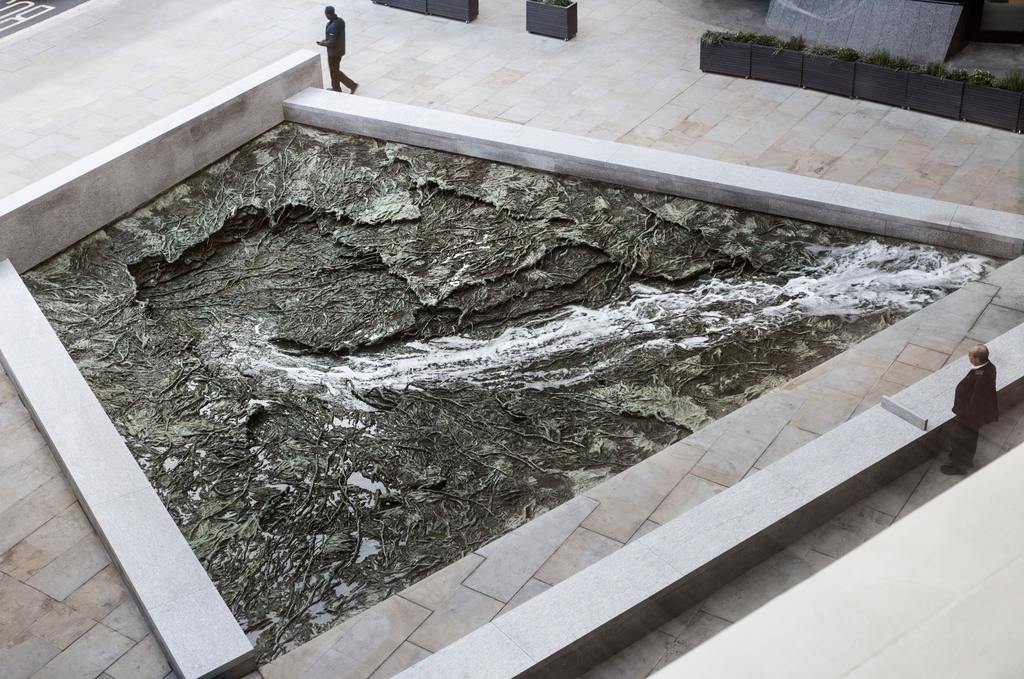
Forgotten Streams (2017) is a permanent installation by Spanish artist Cristina Iglesias at the Bloomberg building in London. It is made of bronze, water, stone, stainless steel and a hydraulic mechanism. The artist is represented by Hauser & Wirth. © Cristina Iglesias. Photo: Thierry Bal.Mithraeum
The main story, however, unfolds underground. In the basement stands the London Mithraeum, a Roman temple from the 3rd century. It was discovered in 1954 and now stands again at the site of its discovery. Admission is free and about 600 Roman objects are on display.
Excavations beneath the building also uncovered 405 wooden writing tablets. Eighty-eight were legible. The oldest dated one is from 8 January in the year 57. It is a promissory note and the oldest dated document from Roman Britain. A fragment from the years 65 to 80 bears the word Londinio, meaning London. It is fifty years older than Tacitus’s mention.
The first London documents are thus about money. Where a financial firm sits today, debts were written down almost two thousand years ago. It is one of the best examples of how history layers up in London.
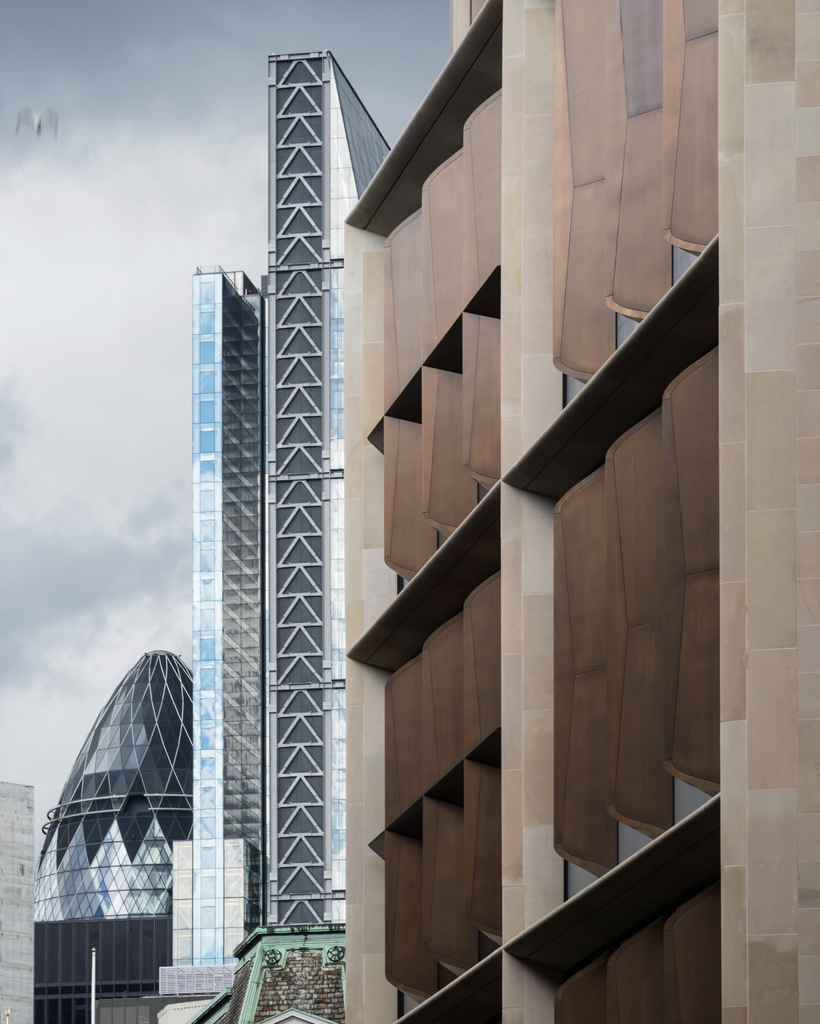
Bloomberg HQ in London by Foster + PartnersNo. 1 Poultry: postmodernism in the City
Near Bloomberg stands a building that looks completely different. James Stirling designed No. 1 Poultry with Michael Wilford. It was completed in 1997. The facades are stripes of pink and yellow limestone. It has a ship-like prow and a cylindrical clock tower.
An 18-storey glass skyscraper by Mies van der Rohe was originally planned for the same site. Developer Peter Palumbo championed it for over twenty years. In the end, something quite different was built. A symbol of modernism gave way to postmodernism. It is a good answer to Jencks’s claim from the introduction.
In 2015, changes to the facades were planned. The Twentieth Century Society opposed them. In November 2016, the building received Grade II* listing. Even postmodernism is now a heritage monument.
Fun fact: Prince Charles compared it to a 1930s radio.
James Stirling’s name is also borne by the RIBA Stirling Prize. Newport Street Gallery and Bloomberg HQ, both in this article, won it.
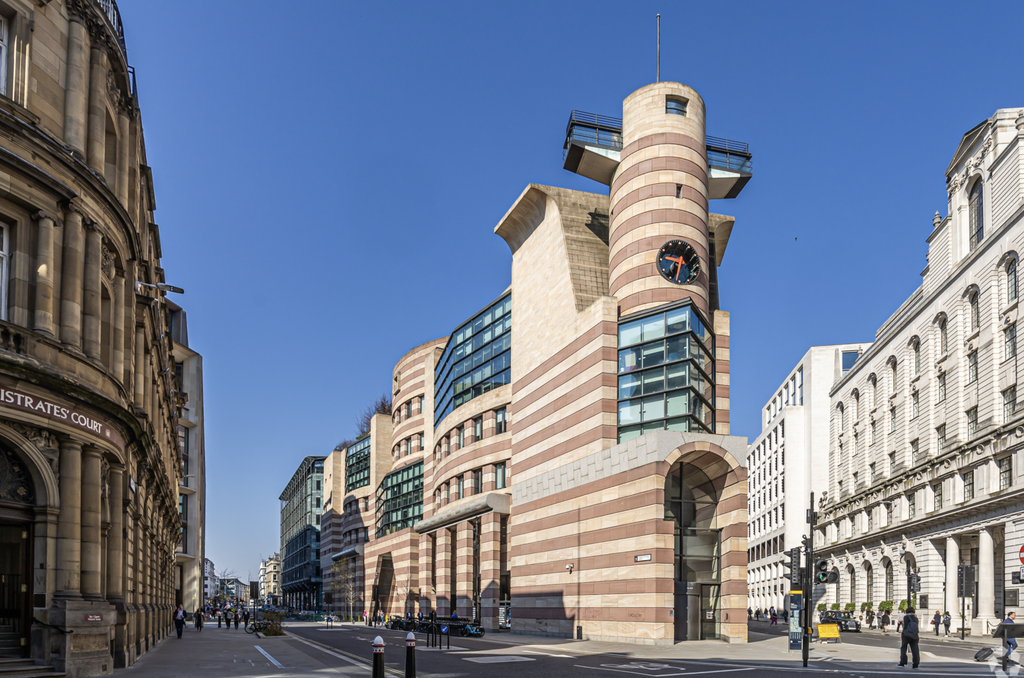
No. 1 Poultry in the City of London was designed by James Stirling. In 2016, Historic England granted it Grade II* listed status. The building is an icon of British postmodernism and cannot be demolished, extended or altered without special consent.Finally: two galleries from industrial buildings
Two galleries that grew out of industrial buildings complete the story of a second life.
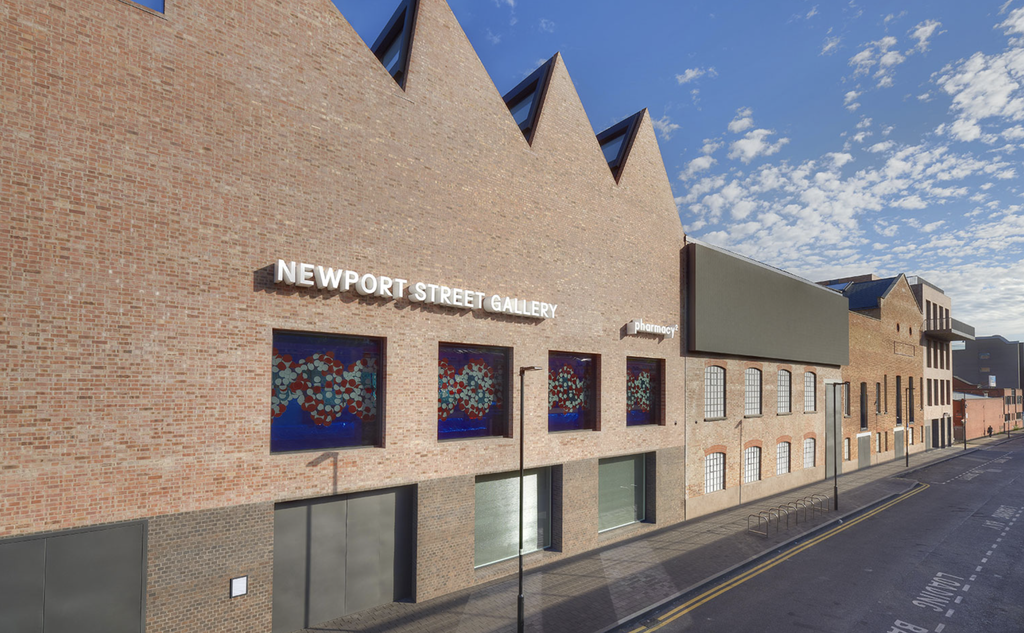
Newport Street Gallery in Vauxhall was opened by Damien Hirst on 8 October 2015. It was originally a set of scenery workshops from 1913. Caruso St John converted them and won the Stirling Prize for it in 2016. Three original workshops and two new brick buildings contain six galleries on two floors. Admission is free. The gallery shows exhibitions from Damien Hirst’s collection. It is currently closed, but worth keeping on your list for later.
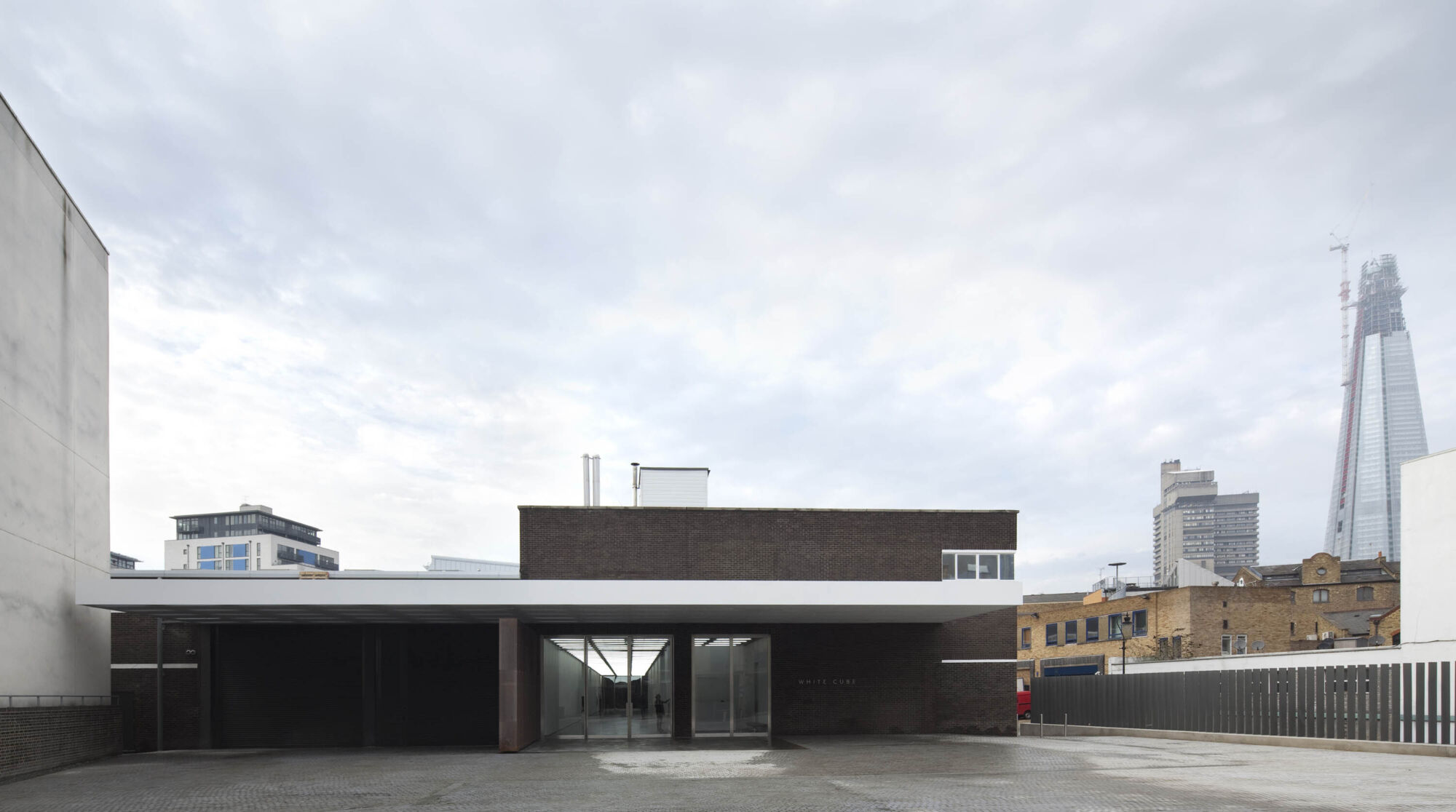
White Cube Bermondsey in south-east London covers more than 5,440 square metres. Casper Mueller Kneer Architects converted it in 2011 from a 1970s warehouse. Photo: Paul Riddle.White Cube
White Cube Bermondsey is a former warehouse and offices from the 1970s, in dark brick. Casper Mueller Kneer Architects converted it in 2011. It became the third London White Cube gallery. It covers more than 5,440 square metres. According to the official website, it is the largest commercial gallery space in Europe.
Inside you will find a cubic 9x9x9 hall with a nine-metre ceiling. The south galleries cover 780 square metres without columns. 151 vertical steel fins line the entrance from Bermondsey Street. Until 8 November 2026, an exhibition by Gabriel Orozco runs here.
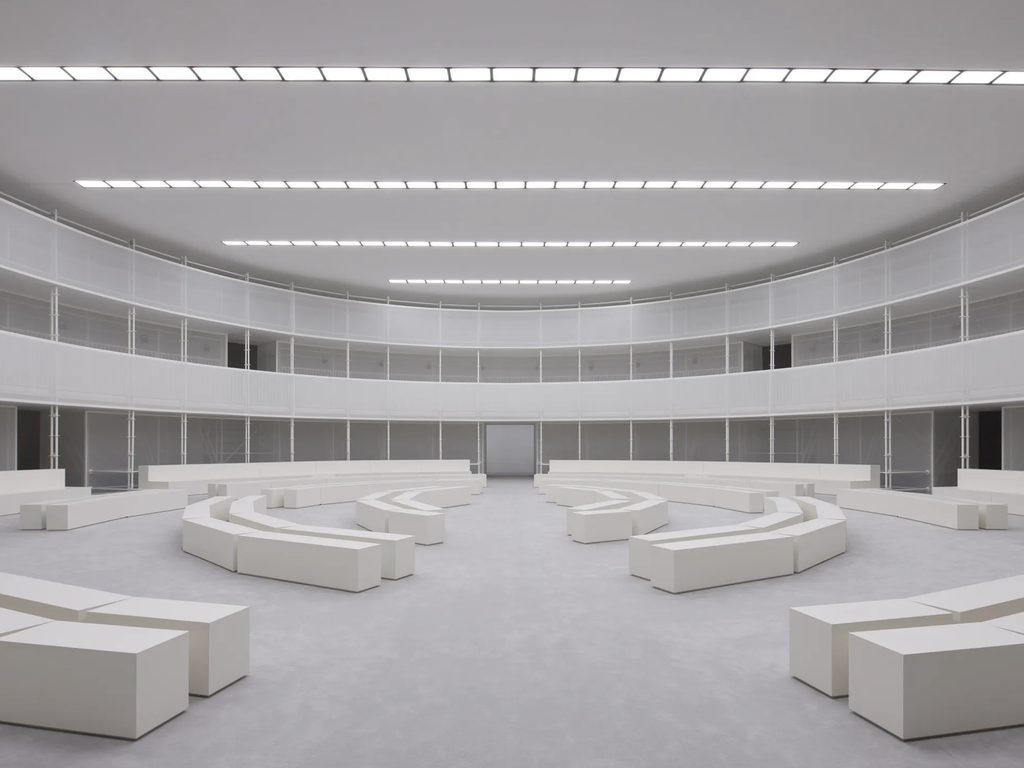
Loewe's latest show was presented by Jack McCollough and Lazaro Hernandez on 2 October 2026 in a circular space designed by Casper Mueller Kneer. The arena stands inside a purpose-built white box on the grounds of the Château de Vincennes in Paris. Photo: Paul Riddle.The same practice also works regularly in fashion. For Saint Laurent, it designed shows and shops on the Champs-Élysées and Avenue Montaigne. For Céline, it made flagship stores in Tokyo and Seoul. For Loewe, it prepared a show for summer 2026 already.
The latest came on 2 October 2026 at Château de Vincennes in Paris. Jack McCollough and Lazaro Hernandez presented their spring/summer 2027 collection there. It took place in a double-height circular arena inside a white box. They were inspired by theatres where the audience sits close to the action, such as the anatomical theatre in Padua. The designers put it this way: “You’re very close to one another. You’re very close to the collection.”
The gallery and fashion thus share an author. The architects who converted a warehouse into a gallery now also shape a space for fashion.
Why go
Frieze lasts five days, but London offers much more. Every one of these buildings once had a different purpose. You can still feel the layers of time in them.
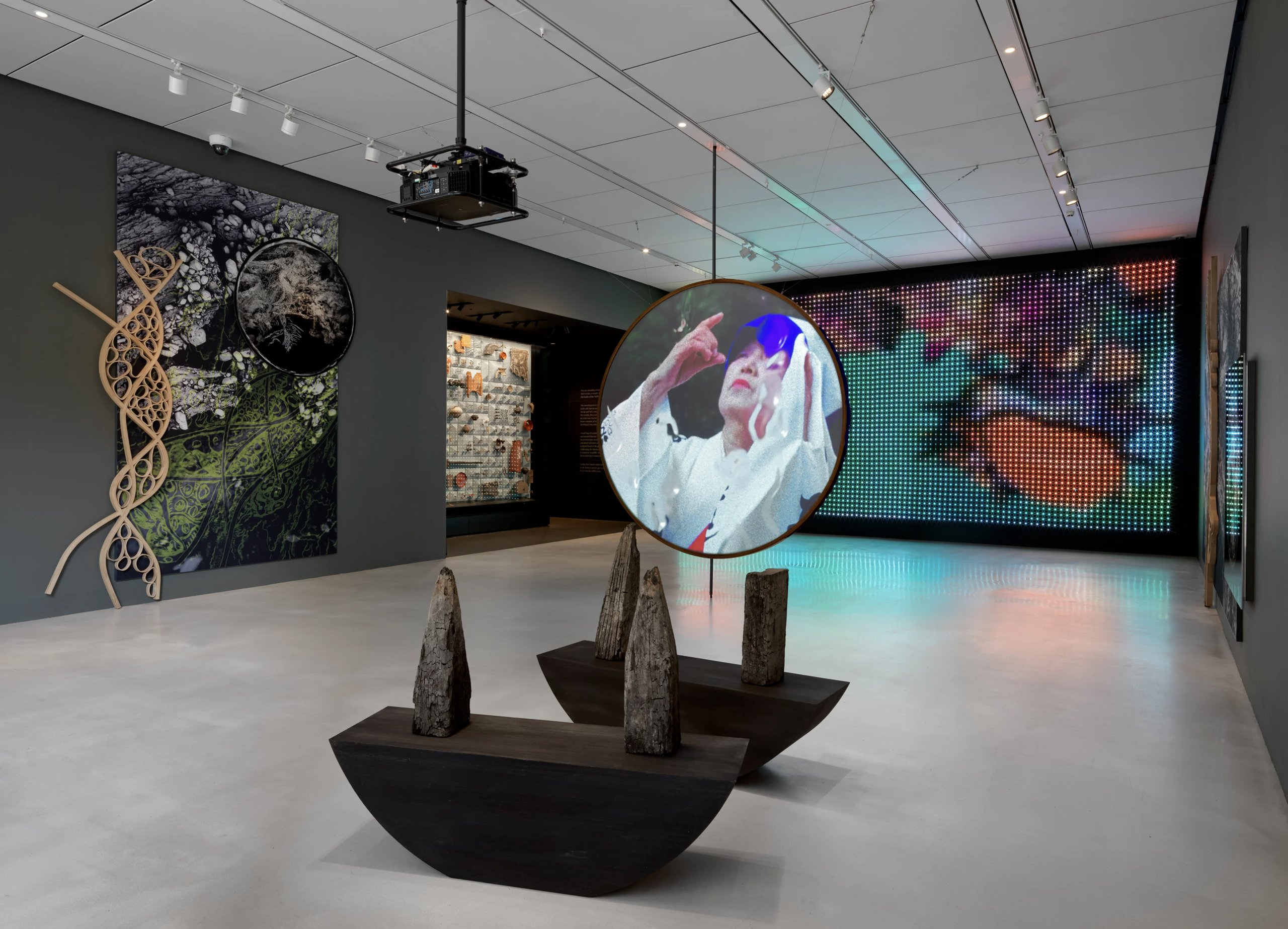
London Mithraeum Bloomberg SPACE returns the Roman temple of Mithras to the site where it was discovered, in the heart of the City of London. Photo: London Mithraeum Bloomberg SPACEPractical information
Information is from 6 October 2026. Check the official websites before you travel.
- The Cosmic House: tickets £8, in advance. Open Wednesday to Friday 15:30 to 17:00, maximum 15 visitors. Tickets are released on the third Friday of the month at 12:00.
- Sir John Soane’s Museum: free, Wednesday to Sunday 10:00 to 17:00. On 30 October 2026 there is an evening candlelit opening.
- Battersea Power Station: the grounds are open. Check the price and booking for the Chimney Lift on the official website.
- Design Museum: the permanent collection is free. Es Devlin: Other Worlds is ticketed, in 15-minute time slots.
- London Mithraeum: free, Tuesday to Saturday 10:00 to 18:00, Sunday 12:00 to 17:00, closed on Monday.
- White Cube Bermondsey: free, Tuesday to Saturday 10:00 to 18:00, Sunday 12:00 to 18:00, closed on Monday.
- Newport Street Gallery: free, currently closed. Check the programme before visiting.
Sources: Frieze, Curated Programme, The Cosmic House, Sir John Soane’s Museum, Newport Street Gallery, Caruso St John, Battersea Power Station, Design Museum, Dezeen, Design Museum / OMA, London Mithraeum, Dezeen, White Cube Bermondsey, White Cube, Wallpaper*, Loewe a Casper Mueller Kneer, Wikipedia, Bloomberg London