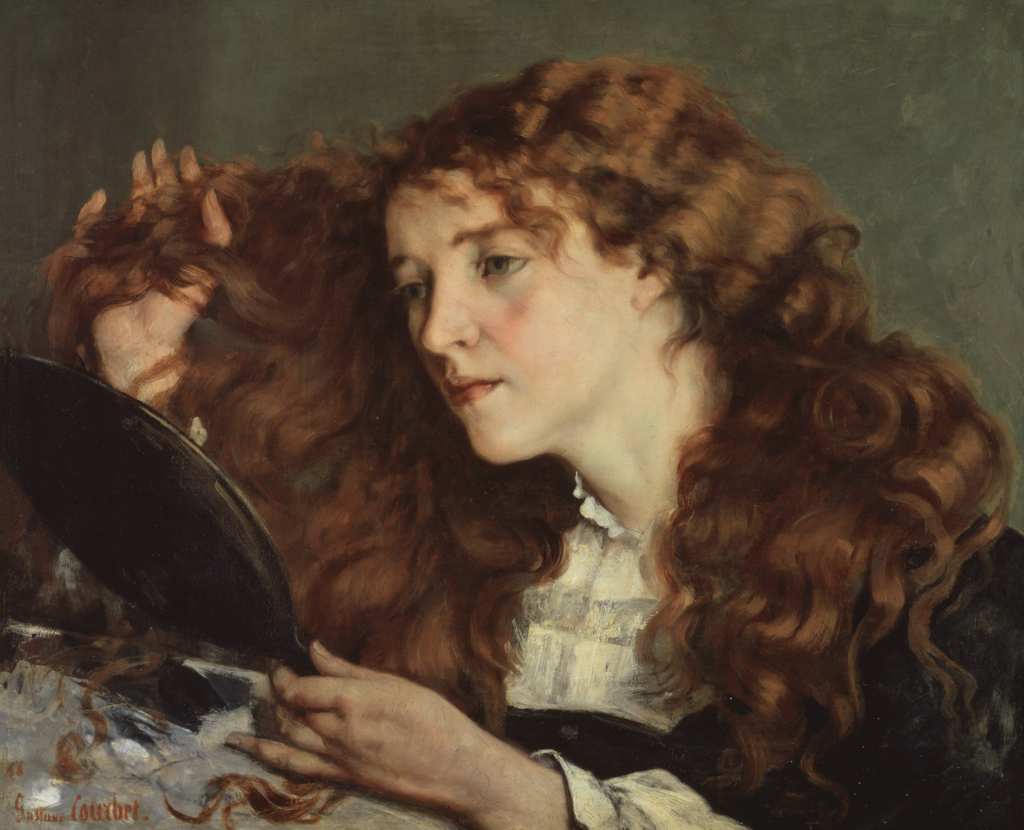
Gustave Courbet: Painter and Rebel runs at Museum Folkwang in Essen from July 17 to November 8, 2026. More than one hundred fifty years after Courbet declared that painting should depict only what an artist actually sees, he still ranks among modern art’s greatest disruptors of convention. Across nine hundred square meters, the exhibition presents approximately ninety works.

Realism as a Political Stance
Courbet (1819–1877) refused to follow the idealized history paintings and academic conventions of his time. Instead, he painted workers, landscapes, friends, and himself, in other words, the reality of everyday life. His realism wasn’t just a style. It functioned as a political stance, one that challenged artistic hierarchy while responding directly to the social tensions of his era. Ultimately, this same political engagement forced him to leave Paris in 1873 and flee to Switzerland as a political refugee.
The exhibition brings together exceptional loans from the Musée d’Orsay, the Metropolitan Museum, Kunstmuseum Bern, Alte Nationalgalerie, Leopold Museum, and Musée Fabre. Among the most anticipated works is L’Origine du monde from 1866, a painting rarely loaned outside France, and one that still sparks debate today.
A Name From the Realm of the Dead
The name Folkwang doesn’t come from anything contemporary. Instead, it draws on Old Norse mythology. Fólkvangr was a meadow of the dead, ruled over by the goddess Freya. The museum inherited this name from its founder, collector and patron Karl Ernst Osthaus, who established the original private museum in the city of Hagen in 1902. Today’s Museum Folkwang only came into being in 1922, when this private collection merged with what was then the Essen Museum of Art.
A Museum the Nazis Nearly Destroyed
During the 1930s, Folkwang ranked among the most significant modern art collections in the world. When the Nazis rose to power, they removed more than 1,200 works from the museum, including pieces by Cézanne, Matisse, and Munch, as part of a nationwide purge targeting so-called degenerate art. Roughly five thousand works that couldn’t be sold ultimately went up in flames. To this day, the museum makes no legal effort to reclaim these works, since their removal was technically legal under German law at the time.
An Exhibition Inside a David Chipperfield Building
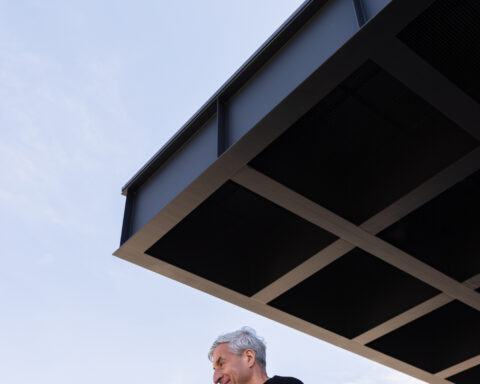
British architect David Chipperfield designed the current building, where the exhibition now runs. In a 2007 international competition, he beat out proposals from David Adjaye, Volker Staab, and Zaha Hadid. His new wing added sixteen thousand square meters to the museum and opened in January 2010, the same year Essen and the entire Ruhr region became European Capital of Culture. The Krupp family foundation funded the fifty-five million euro renovation. Notably, this is the same architect who later led the renovation of Berlin’s Neue Nationalgalerie, where a Brancusi exhibition recently closed.

Courbet’s Painting Alongside Photography
collection of its own, now numbering more than fifty thousand images. That’s exactly why historical photographs by pioneers like Gustave Le Gray and Henri Le Secq hang directly beside Courbet’s landscapes and still lifes. This pairing shows something important: realism emerged simultaneously, through both the painter’s brush and the photographer’s lens.
Additionally, a digital guide called Courbetorial accompanies the exhibition. The museum created it in collaboration with Vienna’s Leopold Museum. It offers an in-depth companion perspective on individual works and themes throughout the show.

An Architect Museums Around the World Want
David Chipperfield ranks among today’s most sought-after architects. Beyond Museum Folkwang and Berlin’s Neue Nationalgalerie, his portfolio includes several major projects. These include the renovation of the Neues Museum on Berlin’s Museum Island and the Saint Louis Art Museum in the US. His work also spans China’s Liangzhu Museum and the expansion of Zurich’s Kunsthaus. Across all these projects, the same signature repeats: spare, quiet architecture that gives space to the artworks themselves.