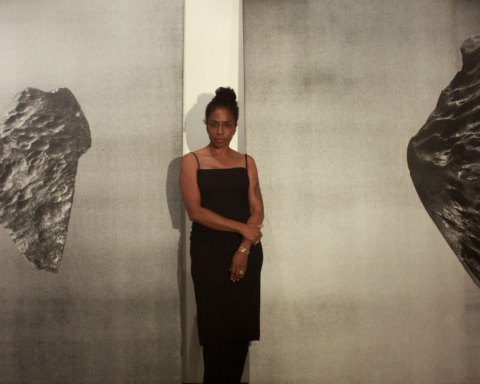
Christian Marclay (b. 1955), a Swiss-American artist working between visual art and music, has a new show at White Cube Paris. Its story begins in a completely different city and time. The late 1970s. A young Marclay finds a children’s record about Batman on the street. He hangs it up at school and notices the shadows, reflections and shapes on its surface. In that moment, the record becomes material, not a carrier of sound. And this decides the rest of his career.

Photo by Steven Gross
He was born in California, raised in Switzerland and studied sculpture in Geneva. Then came Boston, punk, rock, performance, his own band and a festival where these genres meet without asking permission. Finally, New York, Cooper Union and a scene with no borders between disciplines.
From The Clock to Vinyl
White Cube and Marclay share a long history. It was at the London branch in Mason’s Yard that his cult 24-hour installation The Clock premiered in October 2010. The film is synchronised with the real time of the place where it is screened. It won him the Golden Lion at the 2011 Venice Biennale. The work is now owned by New York’s MoMA, where it returned on view in 2024–2025 as part of the collection.
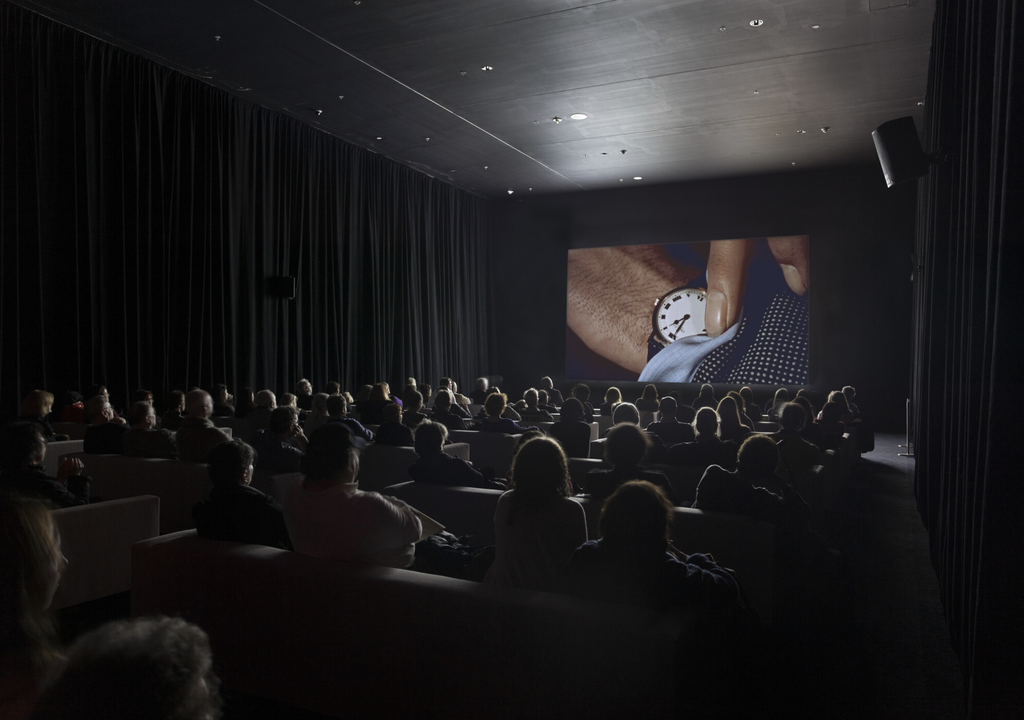
November 10, 2024 – May 11, 2025
After years of large video installations, he now returns to physical material in Paris. To the record. To its paper sleeve. To something you can hold in your hand.
Oculi: Eyes from Vinyl
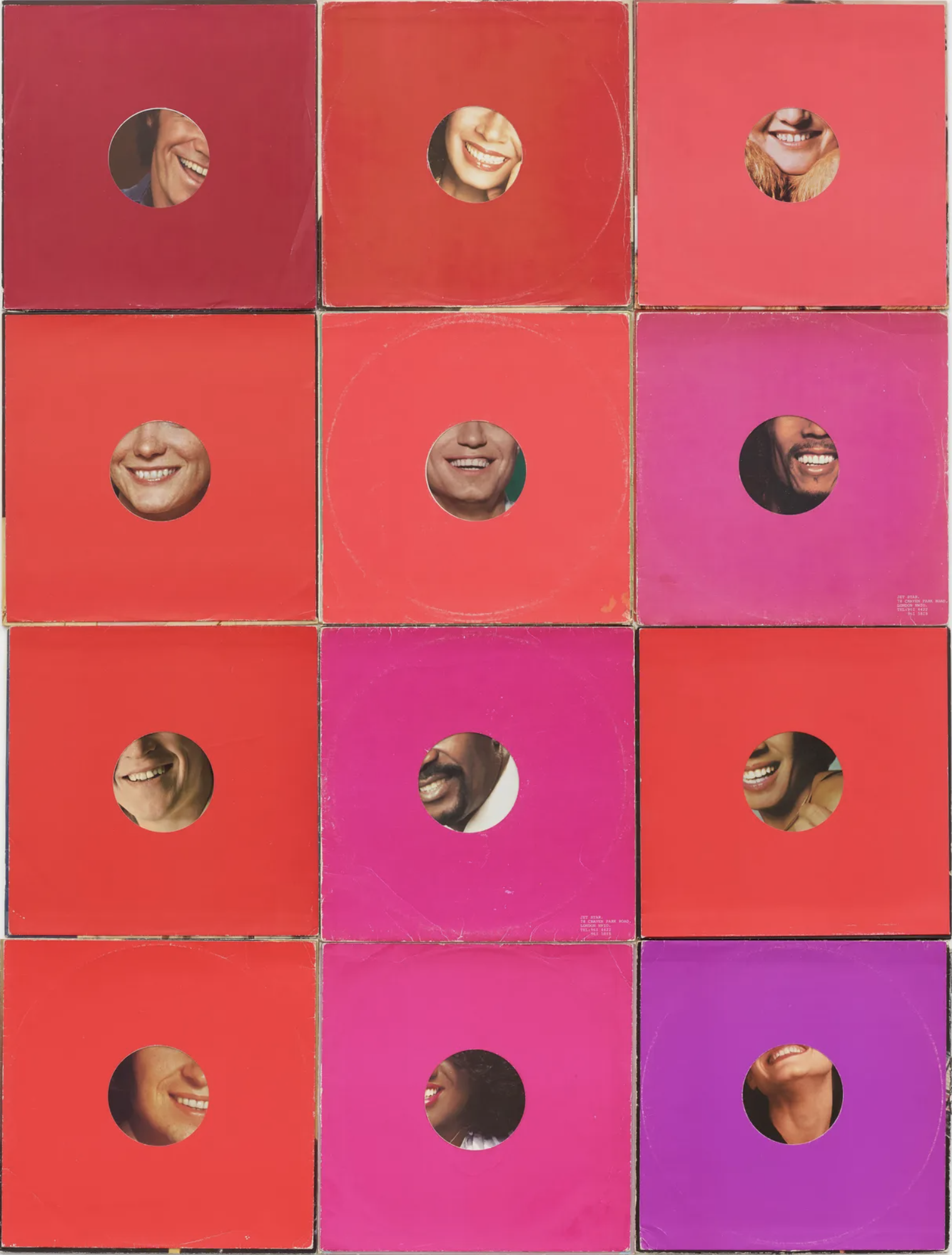
The main draw of the Paris show is the Oculi series. Marclay takes old record sleeves and uses their central circular cutouts, originally meant to show the record’s label. He turns these holes into peepholes. Through them, a detail from the layer beneath peeks out: someone’s eye, a mouth, a hand from a completely different album.
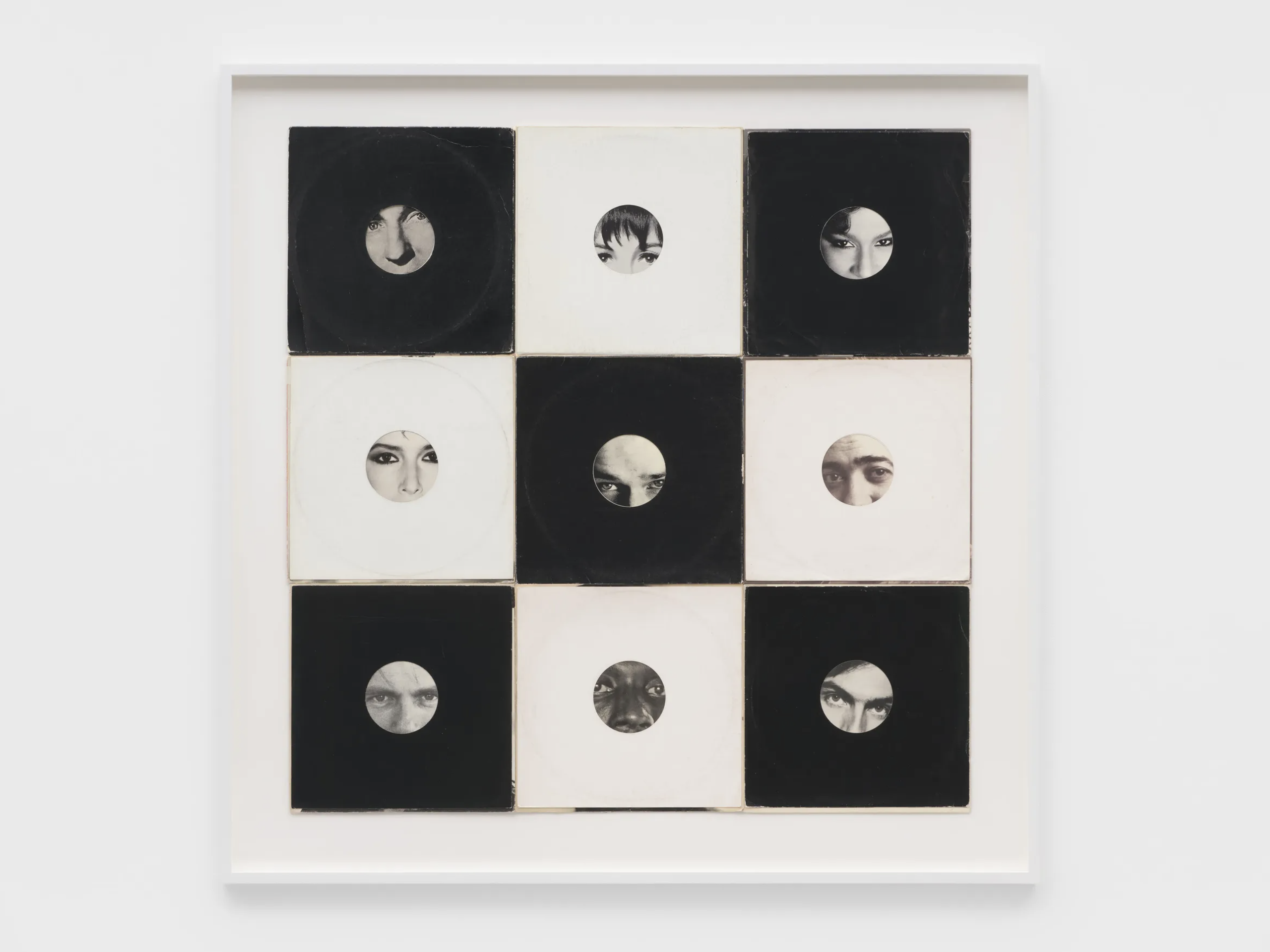
Nine record covers and sleeves, 94.6 × 94.6 cm
Courtesy White Cube
A Press Instead of a Brush
The second series, Sleeves and Covers, is made differently. Marclay runs paper sleeves through a real printing press. Under pressure, the ink transfers, bleeds and shifts onto the paper. The result depends on a thousand factors at once, so it cannot be repeated. Each work is therefore an absolute original.
→ Crossover: The Beauty of the Insignificant
Marclay’s older collages worked with megastars, Bowie, R.E.M., Sonic Youth. For Paris, however, he chose the opposite. He bought records with no collector’s value at all: promo copies, maxi-singles, DJ records from the 1980s and 1990s, pressed quickly and cheaply.
This anonymous pop-culture debris now hangs on gallery walls as full-fledged art. The same mechanism also drives the return of vinyl as a trend. Streaming was supposed to kill the record. Instead, a new generation of collectors is coming back and the sleeve sells again. Sometimes it sells before the buyer has even heard what is on it.
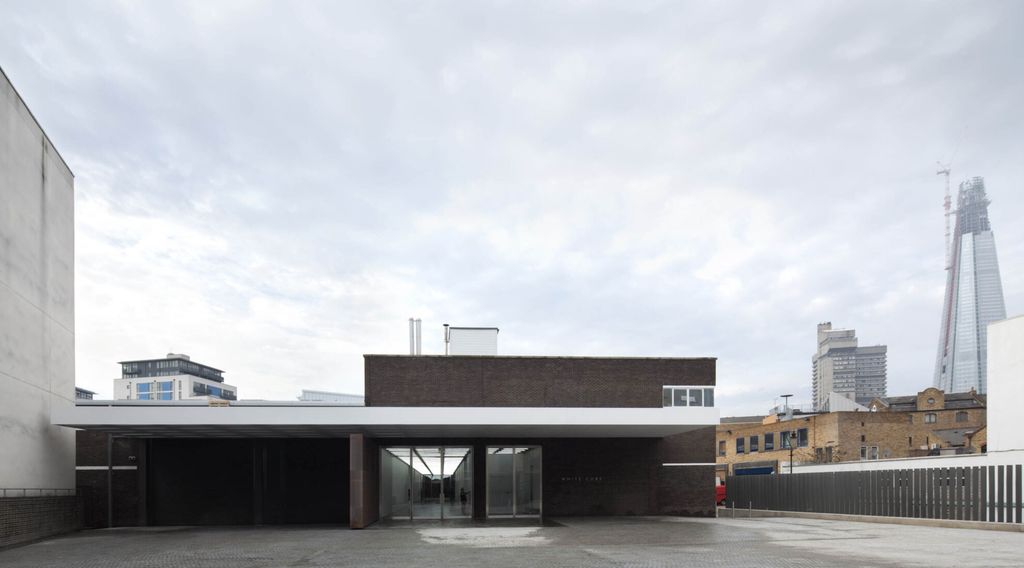
Architects: Casper Mueller Kneer Architects
An Apartment Instead of a Museum
White Cube in London resembles a huge industrial museum. The Paris branch, by contrast, is a converted residential building from the early 19th century. It is just over 200 m², with four interconnected rooms and natural light. Marclay’s vinyl squares feel surprisingly intimate here, almost like the private collection of someone who has invited you for coffee.
When and Where
White Cube Paris, 10 Avenue Matignon, 75008 Paris. September 9 – October 10, 2026.