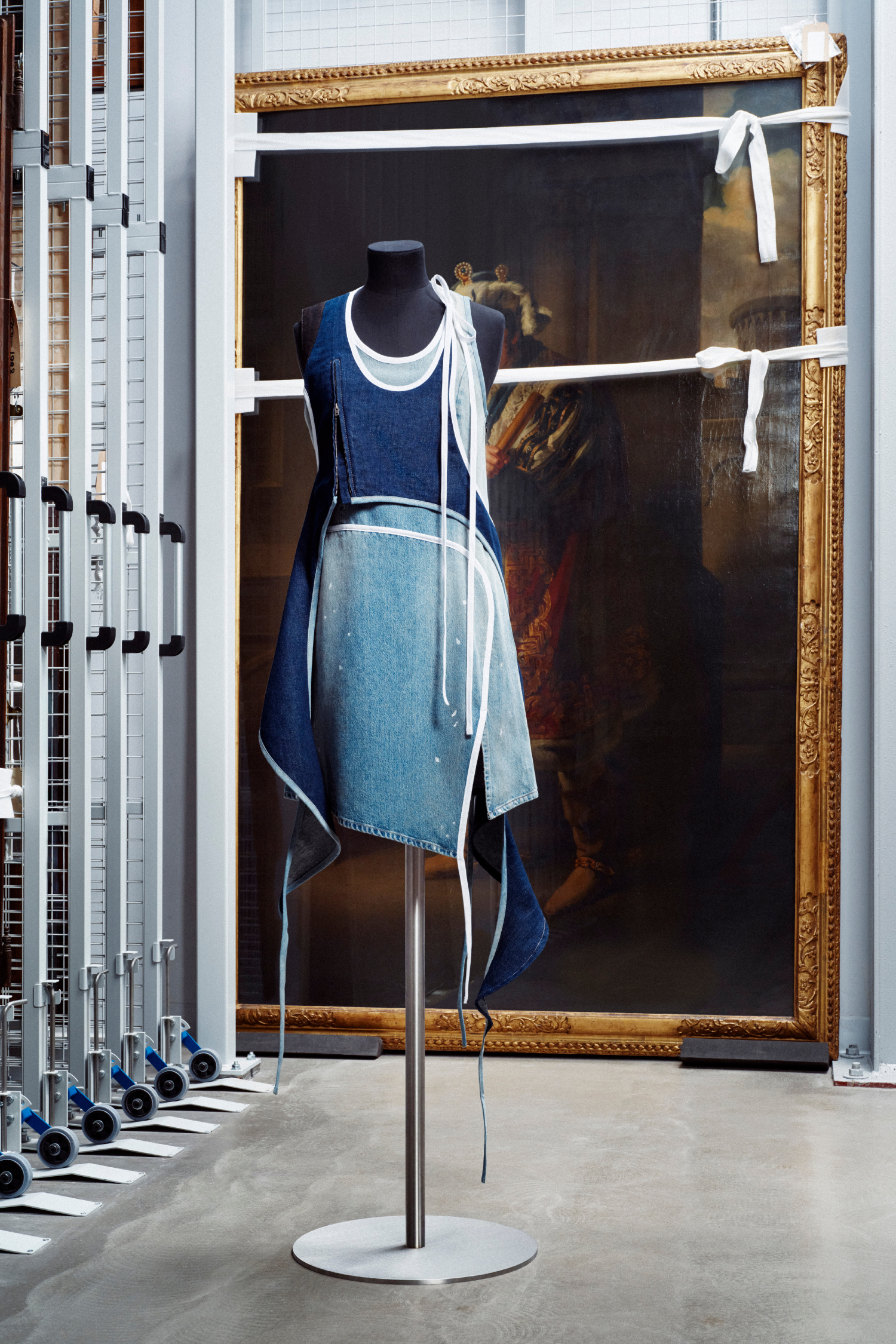
Acne Studios invited Hussein Chalayan to collaborate. The result is a 12-piece capsule in denim, jersey and leather, a book printed in 1,000 copies and a campaign shot at London’s V&A East Storehouse, among Chalayan’s dresses from the museum’s collection.


The designer who called his garments monuments
Hussein Chalayan is a British-Cypriot designer whose conceptual approach helped reshape fashion in the 1990s. He treats fashion as a philosophical practice and has described his garments as monuments – a means to explore technology, displacement and the passing of time. His work revolves around transformation, regeneration and experimental construction.

Three collections from the early 2000s
The collection draws on three of Chalayan’s shows from the early 2000s. Ventriloquy (2001) introduced rigid cast dresses, now in the collection of the National Gallery of Victoria in Melbourne. Medea (2002), also referred to as Medea of Sandys, in reference to the Pre-Raphaelite painter Frederick Sandys, was staged in a historic convent rather than on a runway. Curator Fatoş Üstek, now known as the curator of Frieze Sculpture in London, described it in 2004 as an archaeological excavation of the layers of time. Manifest Destiny (2003) worked with layering and elastic materials. Acne Studios translated these methods into denim, jersey and leather, the brand’s foundational materials.

The Acne Studios Hussein Chalayan collection
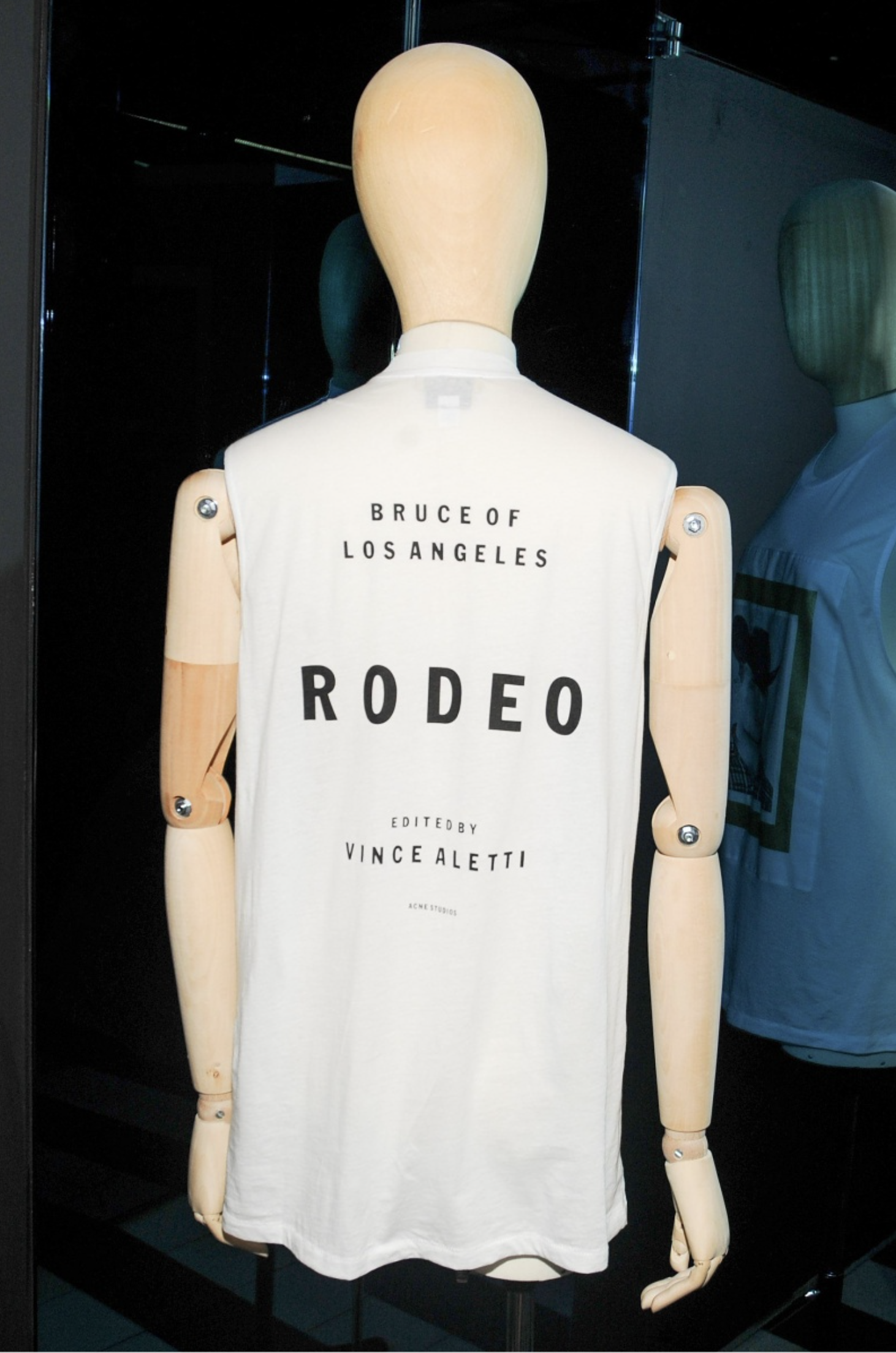
The capsule brings together Chalayan’s methods and those of Jonny Johansson, co-founder and creative director of Acne Studios. It includes patchworked jeans in the 1996 and 2009 cuts, a new “twisted” style with a trompe l’oeil python print and a patchworked denim shirt. An asymmetrical denim vest and dress recall the layered construction of Manifest Destiny. The same principle returns in jersey T-shirts and vests. The Camero bag, one of the brand’s signatures, comes in a new version in patchworked leather in denim hues. A slogan T-shirt celebrating the collaboration completes the collection.
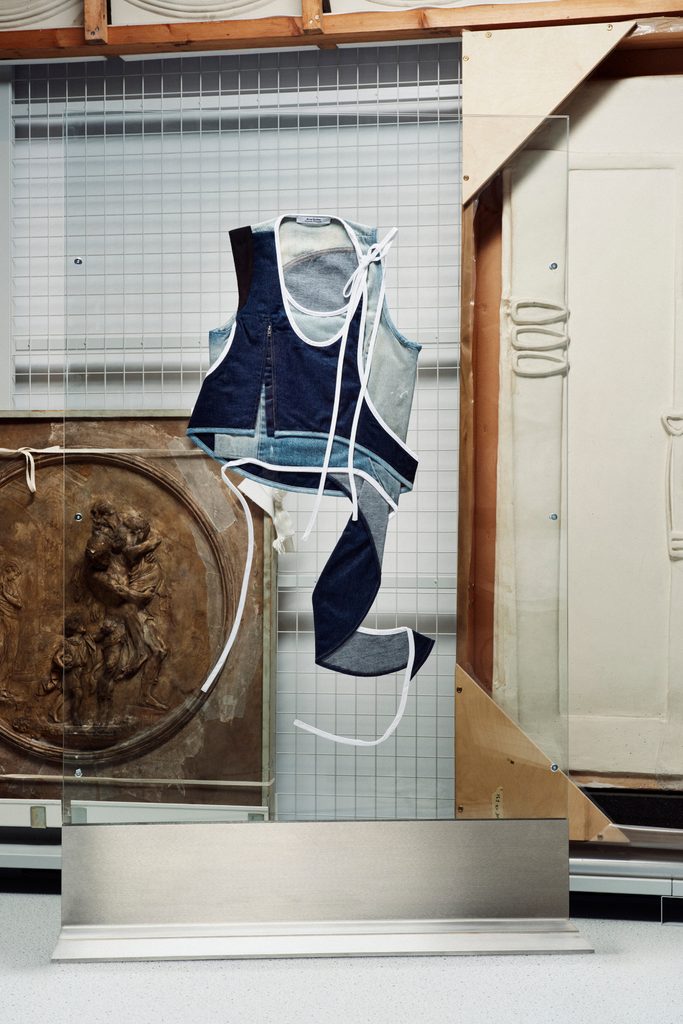
“It’s a very special feeling when you work with someone you look up to – all you can do is to let them be free to do what they do,” says Johansson. Chalayan adds that the Acne Studios team came from a different generation and saw his language with fresh eyes. The collaboration showed him that certain ideas can continue beyond their original context.

A campaign in the V&A storehouse
The campaign was shot at the V&A East Storehouse in London’s Queen Elizabeth Olympic Park, which also holds Chalayan’s garments from the museum’s collection. The storehouse opened in May 2025, designed by Diller Scofidio + Renfro. It operates as a working store, where visitors walk among the shelving and hundreds of thousands of objects.
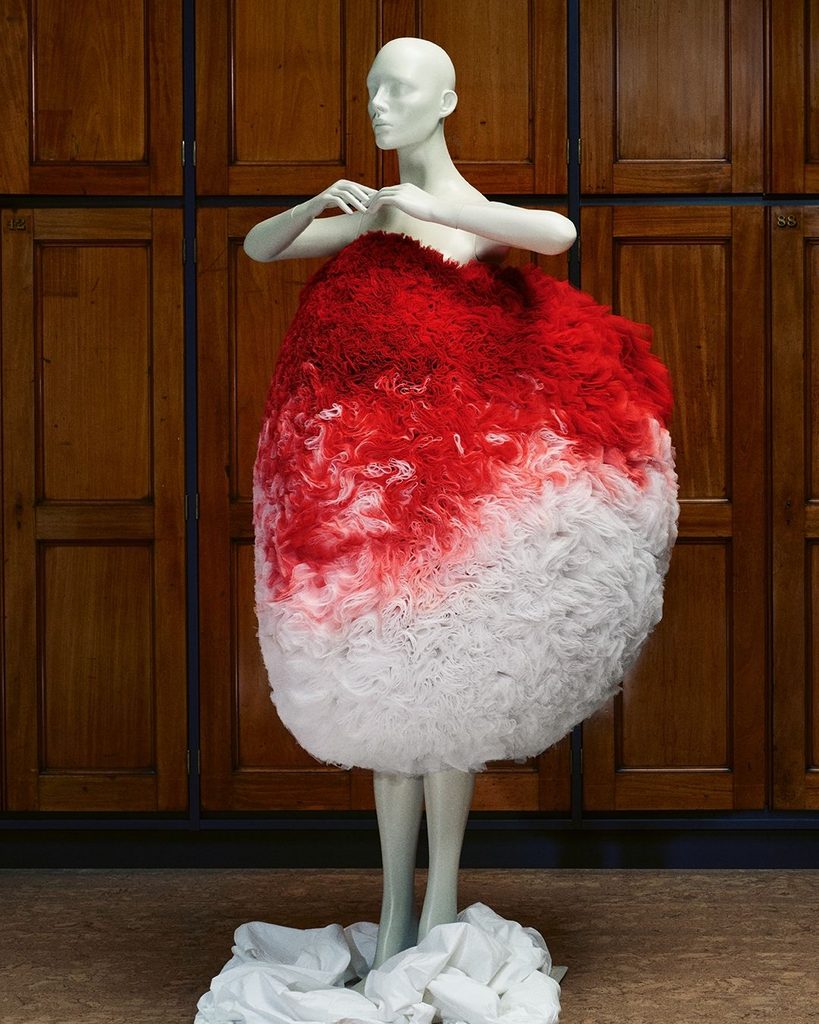
In the photographs, the new pieces stand alongside some of Chalayan’s best-known works: the Tulle Dress (2011), commissioned by the museum for the exhibition British Design 1948–2012: Innovation in the Modern Age, and the Haiku Dress from the Sakoko collection (SS 2011).

The book Reference: Hussein Chalayan
The project includes the book Reference: Hussein Chalayan, published by Acne Studios. It was editorially directed by London-based curator and editor Charlene Prempeh. The book examines the continuing influence of Chalayan’s work on fashion and design. Archival illustrations, photographs and texts are assembled as learning material for those who seek out Chalayan as a way to learn about the world. It is printed in an edition of 1,000 copies.

Both the collection and the book are available online and in selected stores. The capsule can be found in Acne Studios stores including Beijing, Shanghai, Tokyo, Paris, Stockholm, London, New York and Los Angeles, the book also through partners.