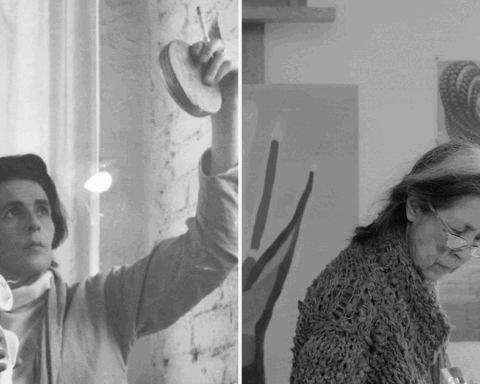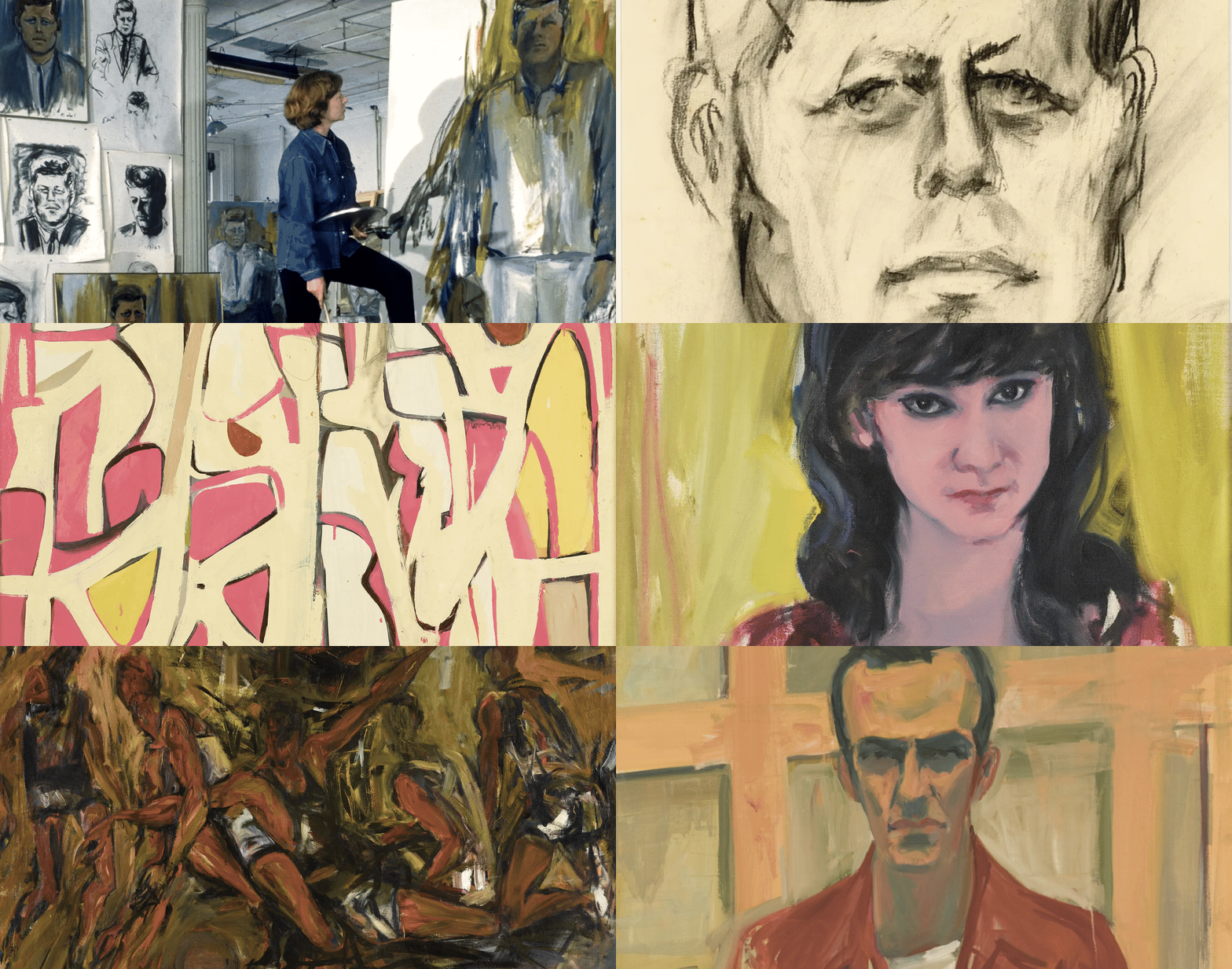
What do a presidential portrait, an abstraction eleven feet wide and art criticism in ARTnews have in common? Elaine de Kooning played several games at once. An exhibition at Berry Campbell in New York brings them together again.
Elaine de Kooning at Berry Campbell
Berry Campbell in Manhattan’s Chelsea neighborhood opened Elaine de Kooning on October 29, 2026. It runs through December 19. Nearly thirty paintings and works on paper span four decades of her career, from 1948 to 1988.
It is the first major solo presentation of her work since the retrospective Elaine de Kooning: Portraits (2015–2016) at the National Portrait Gallery in Washington. Some of the works are for sale, most of them from her nephew Chris Luyckx. Others are on loan from collectors for the exhibition only.
The gallery’s founders, Christine Berry and Martha Campbell, have long championed women abstract painters of her generation. According to Campbell, her work still lacks a retrospective that shows its full through line. For Campbell, that line is the gestural brushwork of Abstract Expressionism, which allowed her to bring together everything she painted.
he Painter
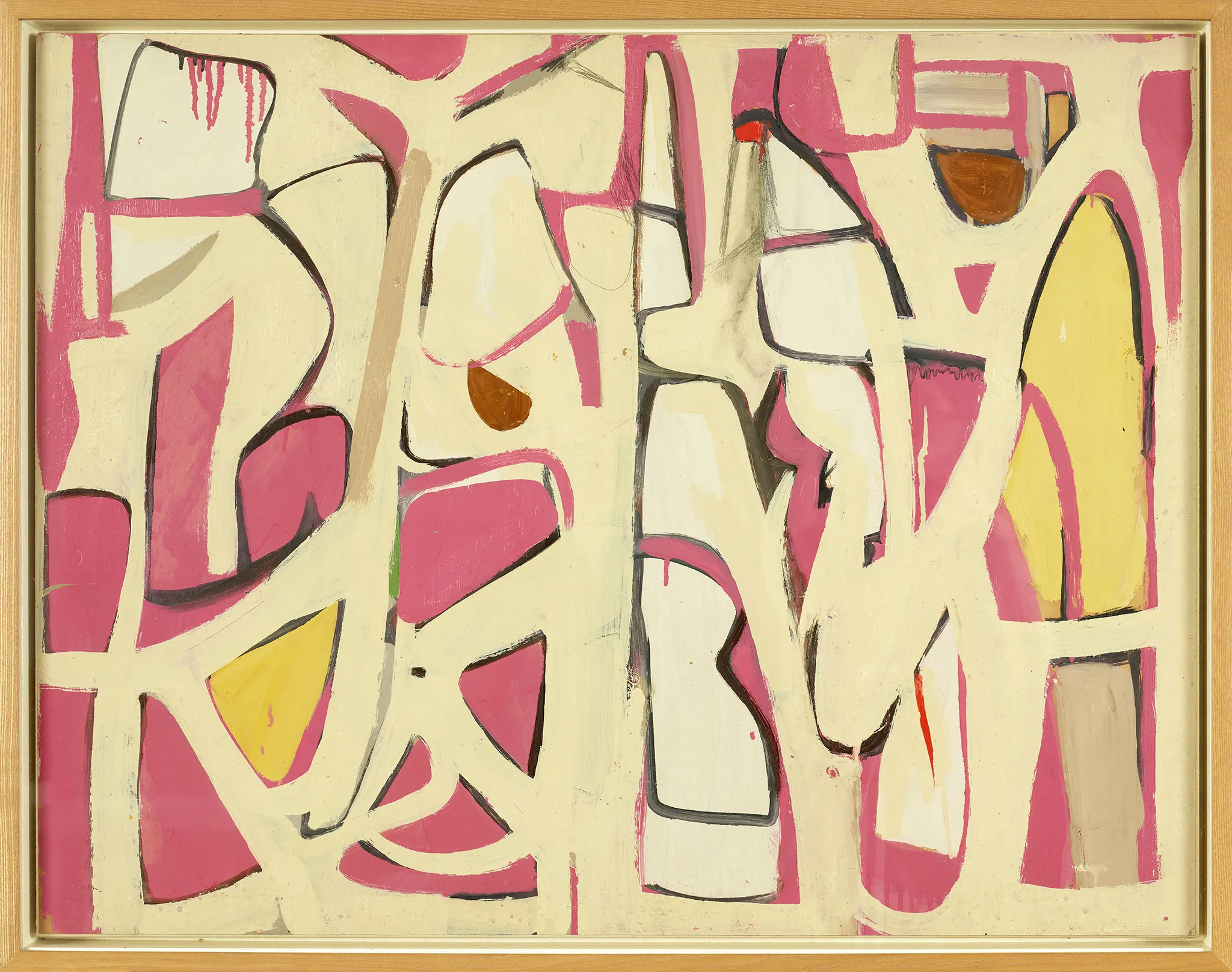
The earliest works in the show date from the summer of 1948 at Black Mountain College in North Carolina, where both de Koonings were staying. The abstraction Black Mountain #10 (1948) bears traces of Arshile Gorky and a shade of pink that Willem also favored. According to Christine Berry, it shows that the two shared their paints.
The same year produced Scrimmage (Basketball #3), one of her first canvases about athletes in motion. Movement fascinated her throughout her life. At the other end of the show, it drives Bacchus #20-G (1983), a large canvas full of twisting forms.
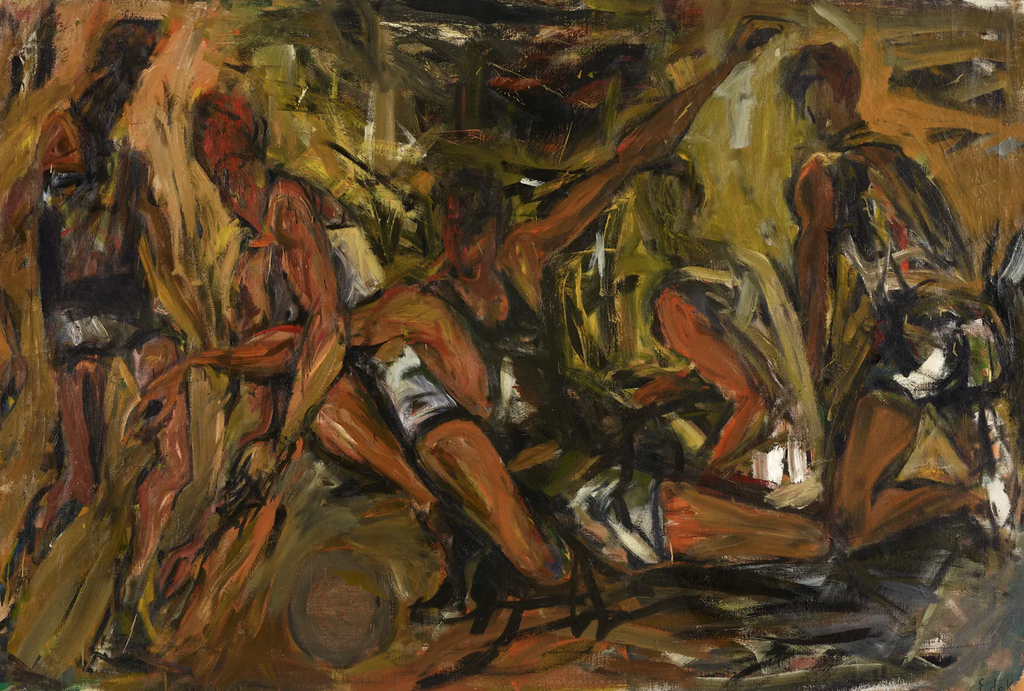
At the center of the exhibition is California (1958–60). The 11-foot-wide oil painting is one of her largest abstractions. It shows that she was not only a portraitist but a full participant in Abstract Expressionism, a movement she helped shape.

Portrait as Relationship
Portraits make up most of the exhibition. She painted mainly people she knew. Her brushwork is sure and unlabored, and she often left parts of the canvas untouched.
Alex Katz told The New York Times how she surprised him at the Tanager Gallery in 1959. She bought his cutout portrait of the poet Frank O’Hara for $150, the most he had ever been paid for a work. A few years later, she painted him. Alex Katz II (1967) is in the show.

The portrait Tom Hess (1963) depicts her friend and editor at ARTnews. Behind him, a storm of colorful brushstrokes spreads out.
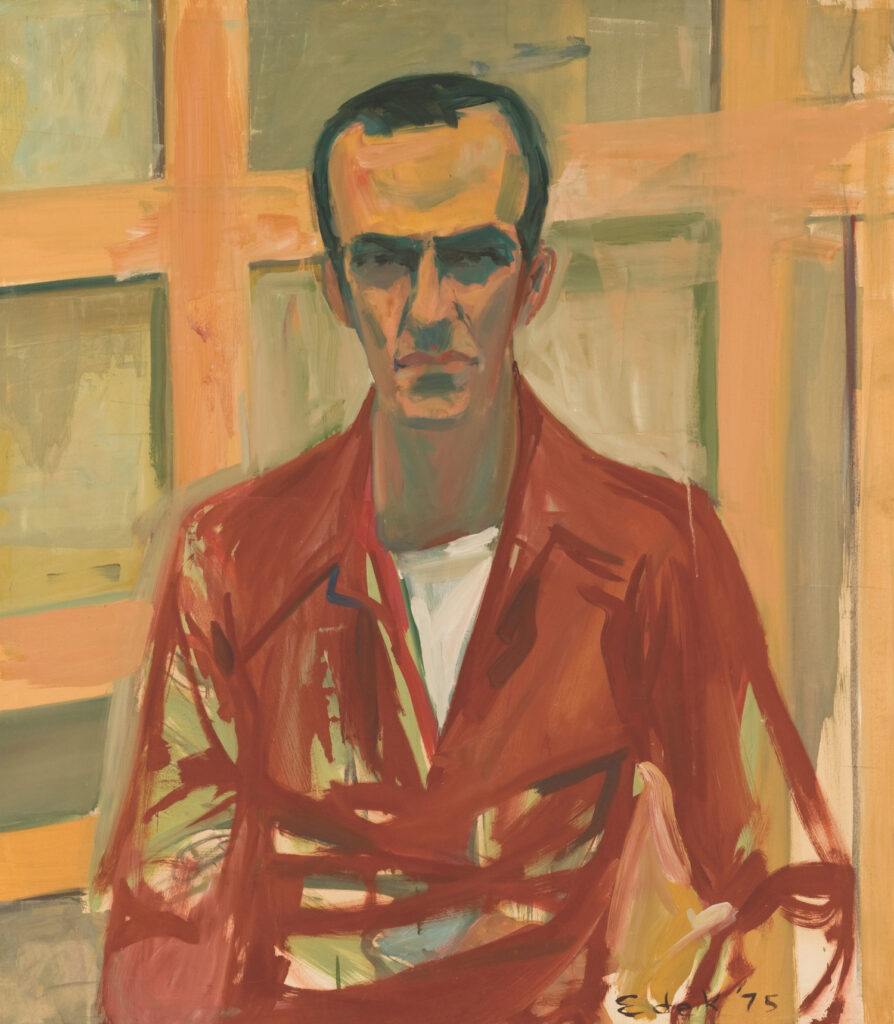
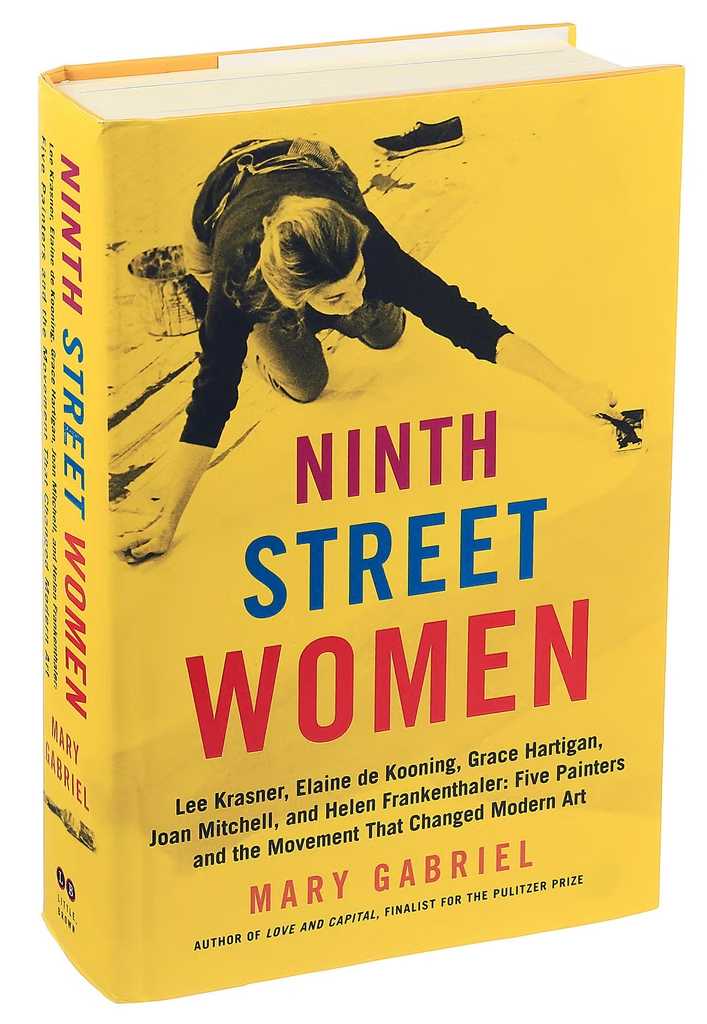
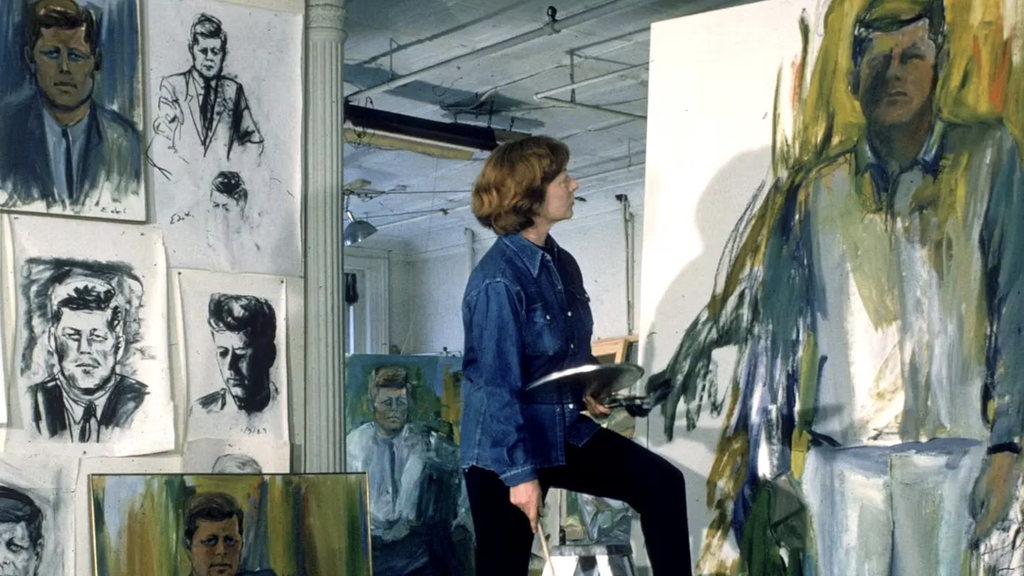
The most powerful story belongs to John F. Kennedy. In the early 1960s, she received a commission from the Harry S. Truman Presidential Library. Kennedy sat for her in Palm Beach over two weeks, and she produced hundreds of drawings, studies and paintings. Several of them are in the exhibition. According to Mary Gabriel’s book Ninth Street Women, on the day of the assassination, November 22, 1963, she wrote the date on the work, set her brush aside and stopped painting for a year.
The Critic
Elaine de Kooning wrote about art as intensely as she painted. Thomas Hess brought her onto ARTnews as an editorial associate. According to Mary Gabriel, artists considered her writing key to understanding modern painting.
She was a founding member of The Club, a members-only meeting place for artists in Greenwich Village where the direction of new American painting was debated. She had her first solo show in 1954 at the Stable Gallery. Berry Campbell believes it included the portrait of her brother, Peter (Peter Fried) (1956), which opens the current exhibition.
As a critic and as a portraitist, she moved the people around her forward. Martha Campbell puts it simply: she lifted them up through her writing and her paintings.

Mrs. de Kooning
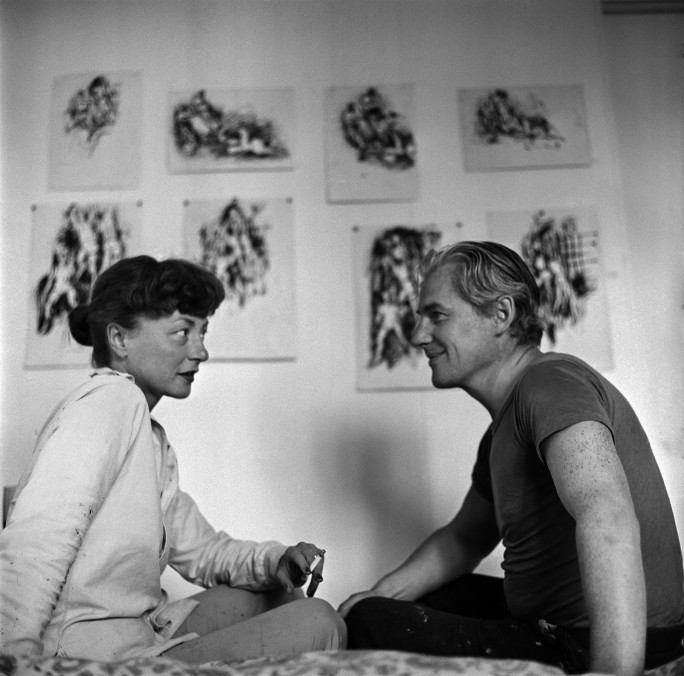
She was born Elaine Fried in Brooklyn in 1918. In the late 1930s, she met Willem de Kooning, 14 years her senior, and they married in 1943. They separated in the late 1950s and reunited some twenty years later. She signed her portraits “E de K” so that no one would confuse them with his work.
She supported his career as steadily as her own. As a result, part of the art world saw her as “the wife” rather than an artist in her own right. Once asked what it was like to work in his shadow, she replied, according to curator Brandon Brame Fortune, that she had worked not in his shadow but in his light.
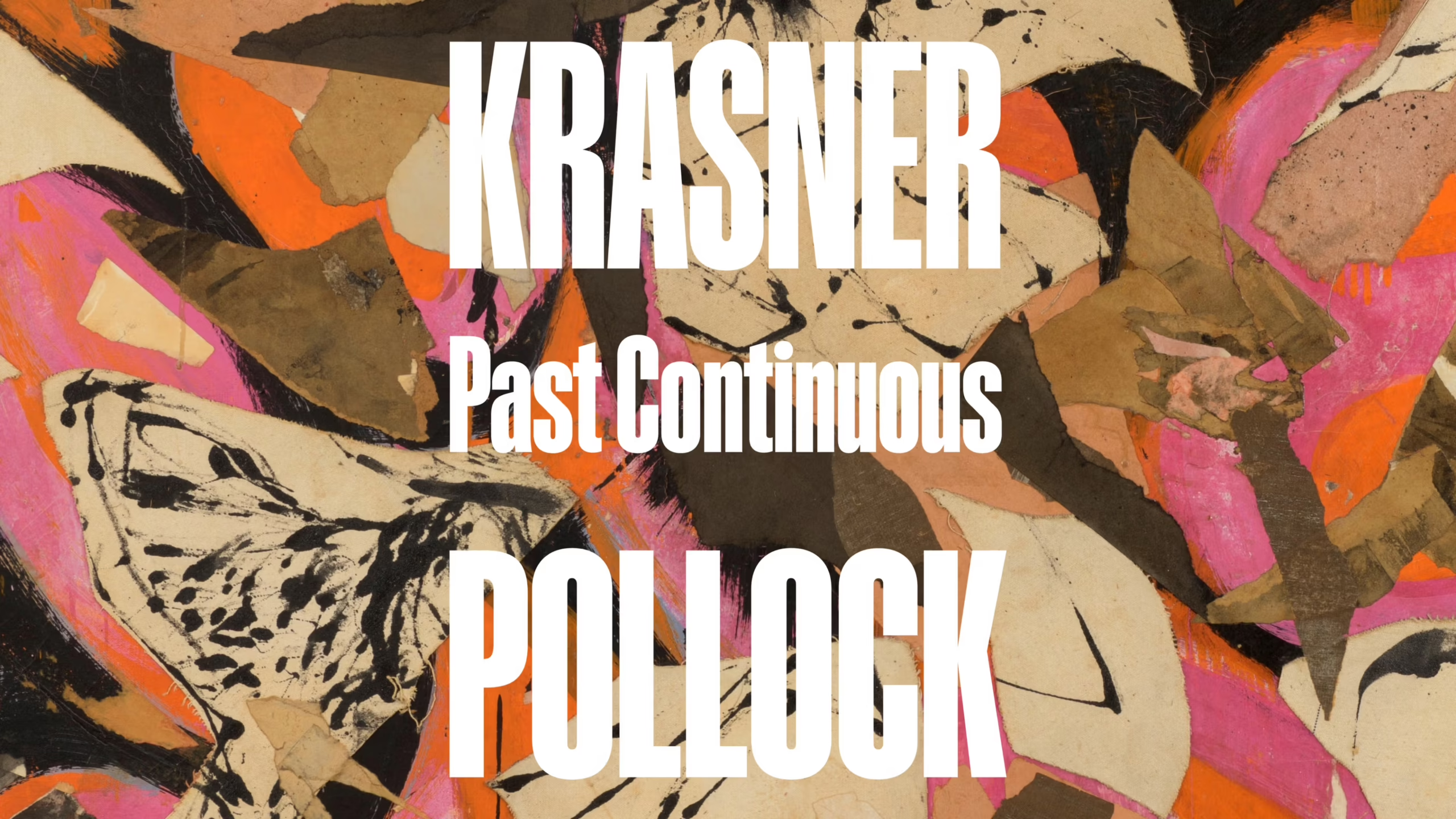
Lee Krasner faced a similar fate alongside Jackson Pollock. The Metropolitan Museum of Art now presents the couple as equal partners in Krasner and Pollock: Past Continuous (through January 31, 2027). Christine Berry observes that the art world so far seems able to give its attention to only one woman at a time. She hopes it is now Elaine’s turn.
The Final Move
The latest works in the exhibition are watercolors of horses. In the last decade of her life, she was fascinated by cave painting. With Toni Ross, she visited the Altamira cave in Spain to see its prehistoric images of animals. Christine Berry sees in this an artist reflecting on art history and her own place in it. She died in 1989.
Her market still lags behind her significance. Her record is Charge (1960), which sold at Sotheby’s in 2022 for just over $1 million. Works by her male contemporaries sell for many times that.
Sources
- Ted Loos: Elaine de Kooning Gets Her Time in the Spotlight, The New York Times
- Berry Campbell – Elaine de Kooning
- Galleries Now – Elaine de Kooning, Berry Campbell
- See Great Art – Elaine de Kooning at Berry Campbell
- Cultured – Independent 20th Century
- The Washington Diplomat – Elaine de Kooning: Portraits
- Sotheby’s – Charge
- Sotheby’s – Elaine de Kooning: Escaping Definition From the Shadows
- The Met – Krasner and Pollock: Past Continuous
- Parrish Art Museum – Abstract Expressionism: The East End, 1940 to Today
- Grinnell College Museum of Art
- Mary Gabriel: Ninth Street Women, Little, Brown, 2018