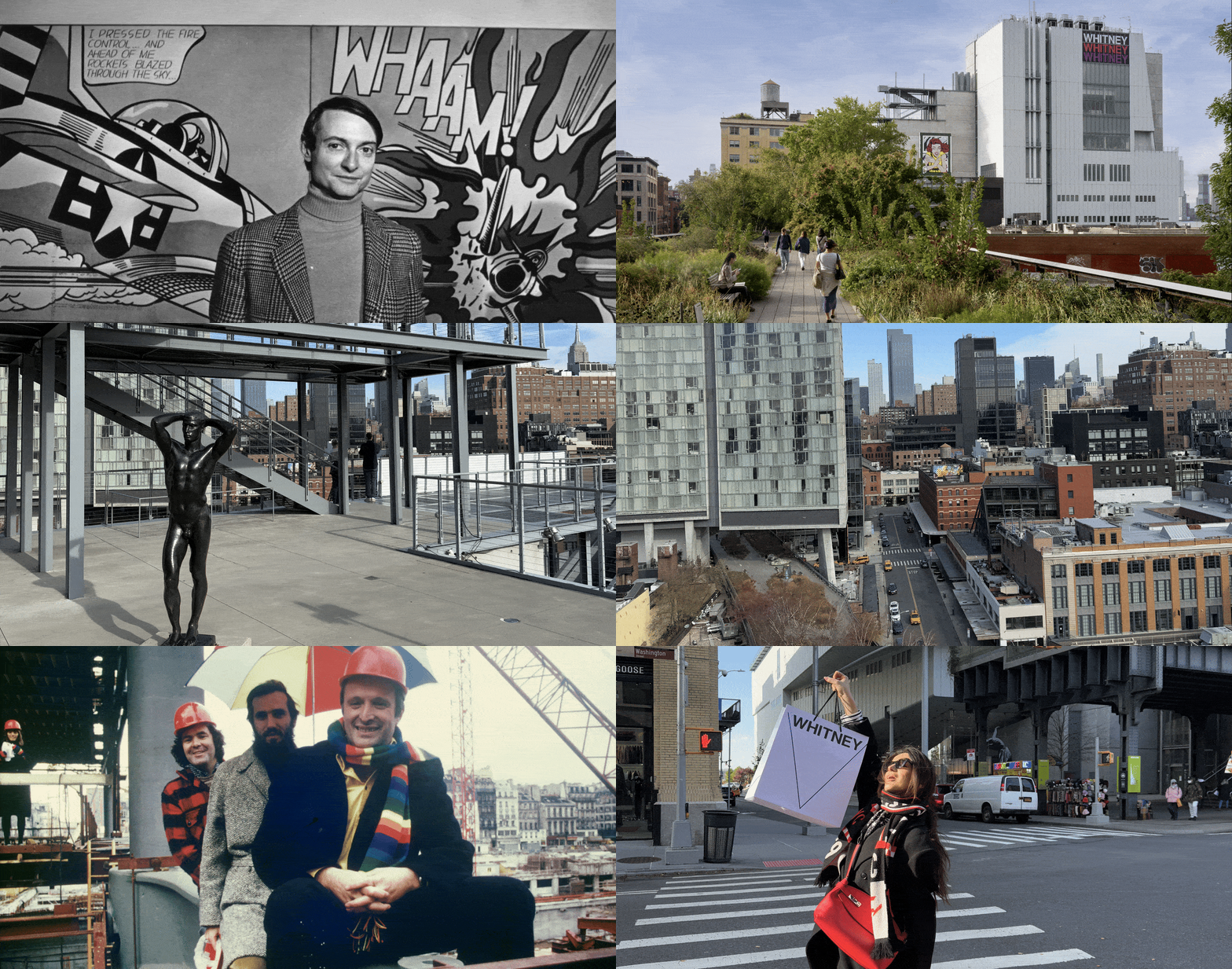
What could one artist, one museum, one architect and one brand possibly have in common? Roy Lichtenstein, the Whitney Museum, Renzo Piano and Gap are meeting in New York this fall: at a major retrospective, in a building by the High Line.
This fall in New York, Lichtenstein is something you can not only look at, but also wear. Roy Lichtenstein: Like New is on view at the Whitney Museum from October 11, 2026, to May 10, 2027. On October 7, a limited 18-piece collection, Gap – Lichtenstein – Whitney, created in collaboration with the artist’s estate, went on sale.
An exhibition that asks what an original is
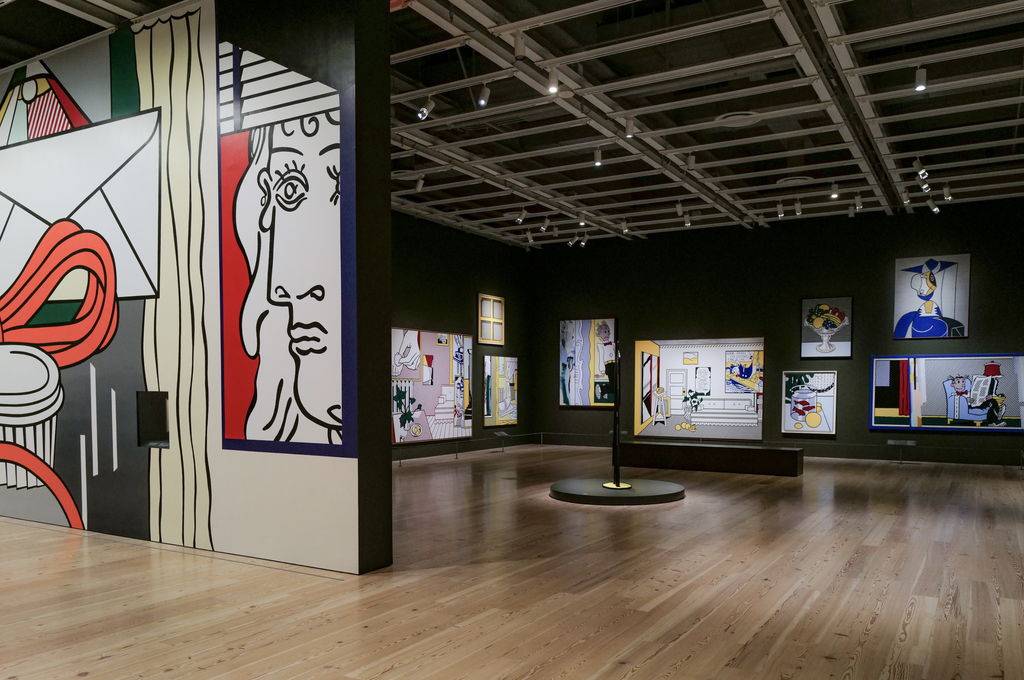
Like New brings together more than 130 works, from the early 1940s through the 1990s: paintings, drawings, collages, prints, sculpture and film. Many of Lichtenstein’s best-known pictures appear in one place, which rarely happens.
But the show is more than a greatest-hits survey. It traces Lichtenstein’s lifelong preoccupation with copying, perception, imitation and authorship. It presents an artist who understood that an image is never finished: it is copied, enlarged, circulated, and made “like new” again and again.
In an age when every photo is endlessly cropped, filtered and reposted, that feels surprisingly current. Lichtenstein sensed it decades before Instagram.
A curator dressed as the Pink Panther
The exhibition is curated by Meg Onli, curator at the Whitney Museum, and guest curator Alex Da Corte. Da Corte is a Venezuelan American artist, born in 1980 in Camden, New Jersey, whose work blends high and popular culture.
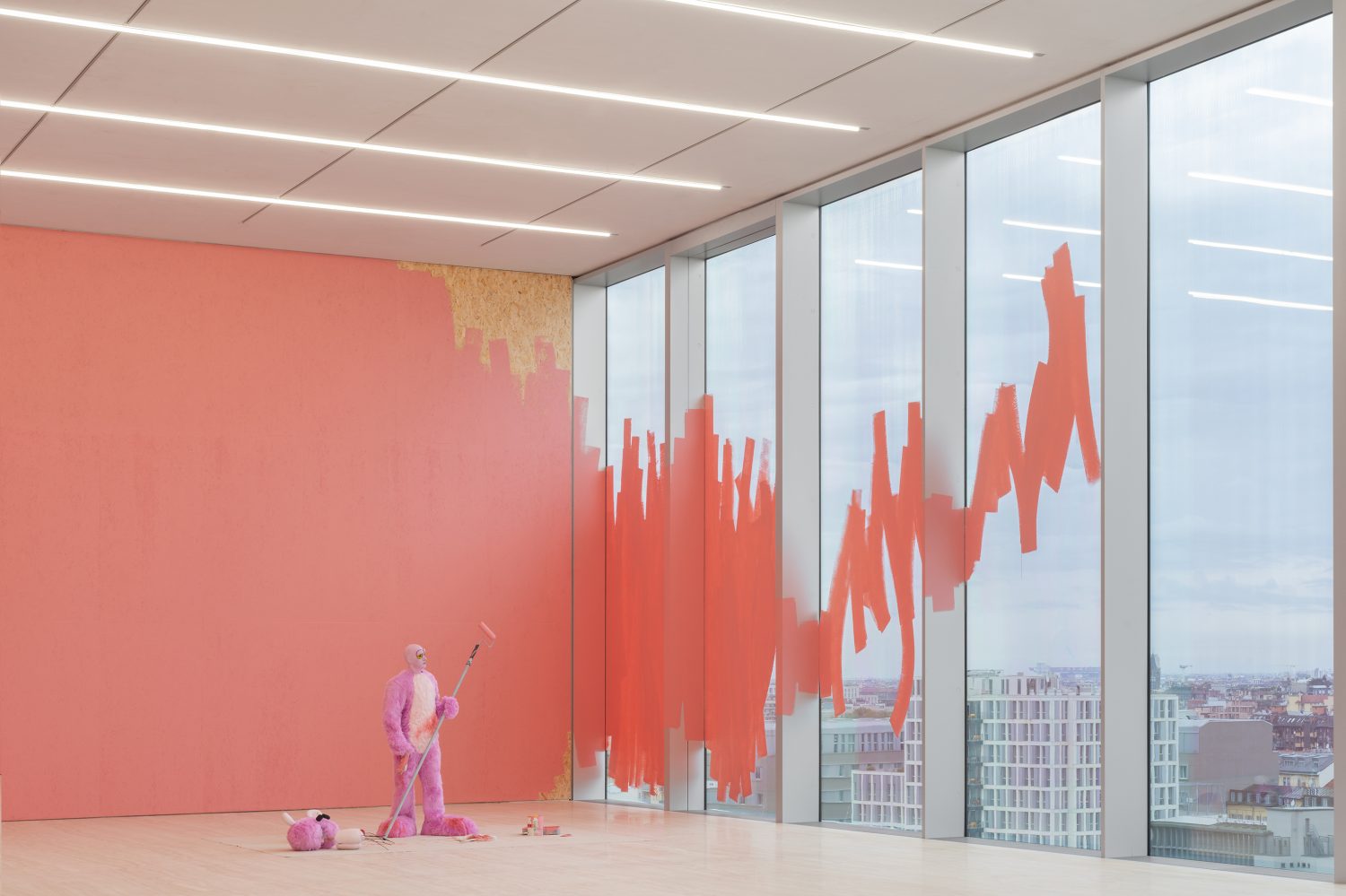
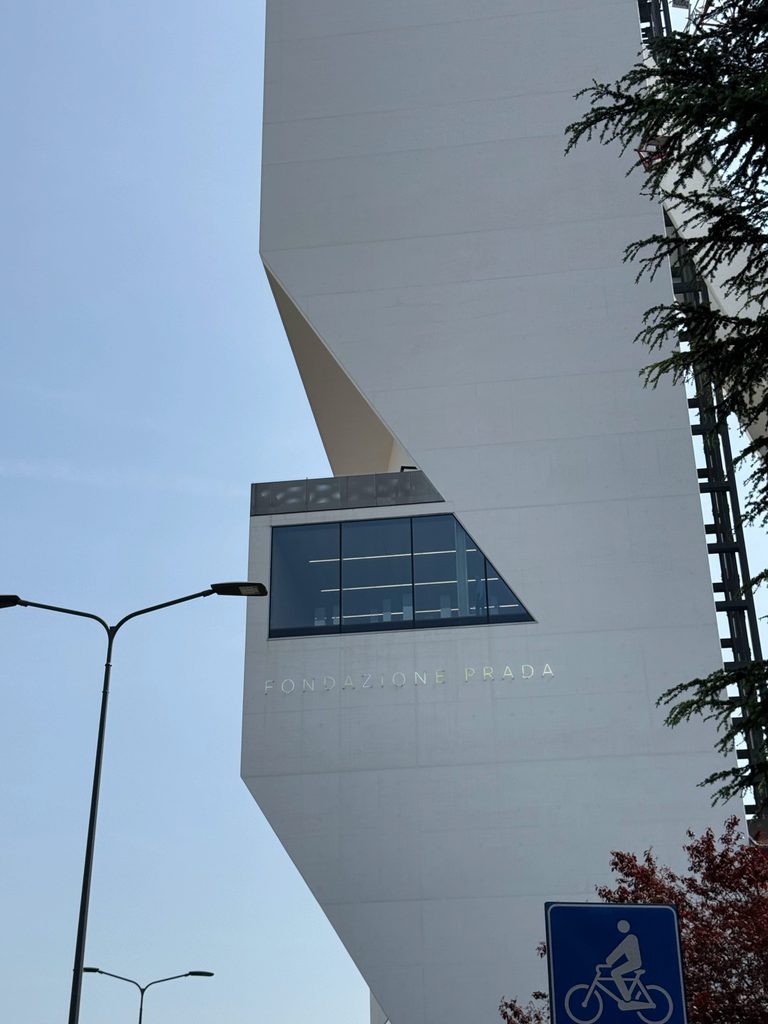
Right now, he can also be seen in Milan: as of October 28, two of his works are part of the permanent Atlas project at Fondazione Prada. In the installation Housepainter II (2025), he dresses up as the Pink Panther. Next to it stands Mouse Museum (Van Gogh Ear), his version of Claes Oldenburg’s famous work shaped like Mickey Mouse’s head, with one ear missing.

In New York, his hand is visible right on the street. Across from the museum on Gansevoort Street hangs his billboard Hot Dog with Ketchup (2026). Da Corte took a printout of Lichtenstein’s painting Hot Dog (1963) and “doused” it with ketchup, a nod to the hot dog vendors across from the museum. An artist who remakes the work of others is the ideal guide to Lichtenstein.
Why the Whitney
The Whitney Museum of American Art was founded in 1930 by sculptor and patron Gertrude Vanderbilt Whitney. She supported living American artists at a time when collectors were mostly interested in the Old Masters.

For nearly 50 years, the museum was housed in Marcel Breuer’s Brutalist building on Madison Avenue, completed in 1966. But the collection kept growing, and the building gradually became too small. The museum planned an expansion, and Rem Koolhaas designed a futuristic addition. After September 11, everything changed, and in 2003 the Whitney cancelled the project.

Today, the Breuer Building is home to the auction house Sotheby’s. The renovation was designed by the Swiss studio Herzog & de Meuron and opened in November 2025.
Meanwhile, the Whitney started over elsewhere. In 2015, it opened a new building by the High Line in the Meatpacking District. It was designed by Renzo Piano, co-architect of the Centre Pompidou in Paris and architect of The New York Times Building in New York.

The man who changed the way we look at images
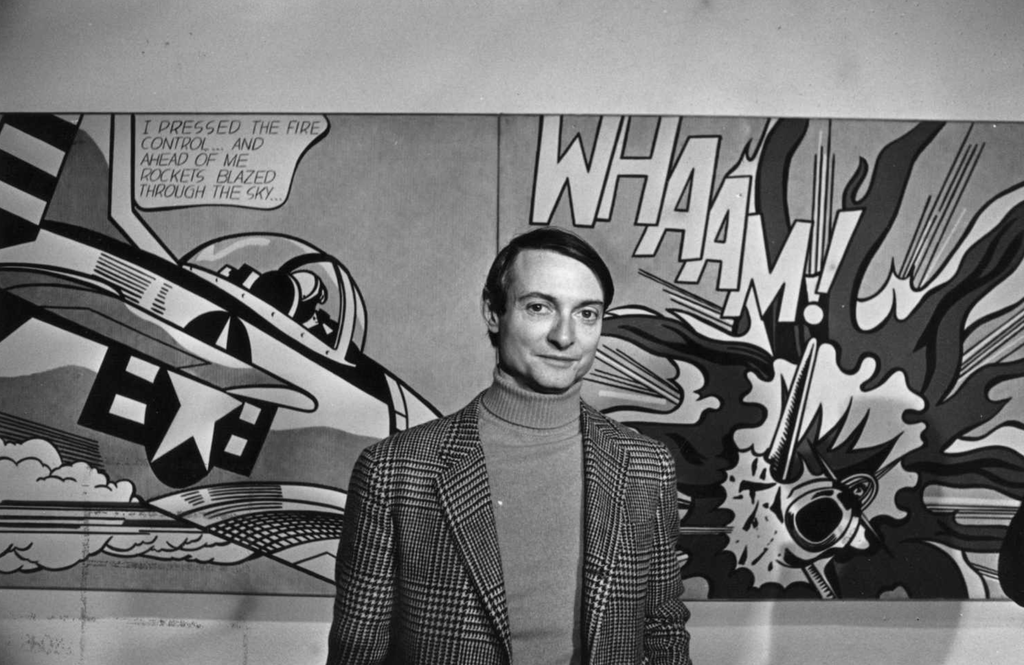
Roy Lichtenstein (1923–1997) was born in New York and was one of the founders of American Pop art. He started out painting from advertisements and comic-strip characters, and later moved on to landscapes, still lifes, figures and even the history of painting itself.
His paintings look cool, crisp and machine-printed. In fact, they are meticulously painted by hand, including his signature Ben-Day dots borrowed from cheap commercial printing. That tension between the mechanical and the handmade, between copy and original, is where his wit lies.
Over his lifetime, he created more than 5,000 works: paintings, sculptures, drawings, prints and objects ranging from dinner plates to the design of a BMW. A collaboration with a fashion brand is therefore not a novelty in his case, but a logical continuation.
Roy Lichtenstein and Gap: a gallery in your wardrobe
The limited collection has 18 pieces priced from $28 to $138. It is sold at select Gap stores, on Gap.com, at the Whitney’s online shop and in the museum store. Three pieces are available only at the Whitney.
Each piece is based on a specific work. The sweater features the cat from Laughing Cat (1961); the shirt, varsity jacket and hoodie carry the explosion from Standing Explosion (Black) (1965); and the sherpa pullover shows enlarged dots from Cathedral #2 (1969). The collection also includes T-shirts, caps, a scarf, a blanket and socks based on the painting Sock (1962).
Art, merch, or both?
The Whitney openly describes the collaboration as a way to bring conversations from its galleries beyond the museum’s walls. Jack Sachs, Director of Retail & Licensing at the Whitney, says the collection poses the question of what Lichtenstein’s work means to consumer culture today. The artist’s estate, in turn, emphasizes his fun and accessible spirit.
You could look at it skeptically: a museum selling T-shirts, a brand borrowing the prestige of a big name. But with Lichtenstein, the loop has its own logic. He took images from commercial printing and turned them into expensive paintings in galleries. Now, through Gap, those images are returning to stores and to the street, once again as copies.
That is exactly what the exhibition is about. In its view, an image is never finished; it only changes as it moves through the world. The explosion hoodie is, in that sense, just another chapter.

Like new
In the end, the exhibition title Like New fits everything this story is about. Lichtenstein’s paintings, copied and read differently again and again. A museum that left an iconic building and started over by the High Line. And a hoodie that turns a painting into part of an everyday wardrobe.
If you’re heading to New York, the exhibition is at the Whitney Museum, 99 Gansevoort Street, through May 10, 2027. The museum is open every day except Tuesday, until 10 pm on Fridays. Visitors 25 and under get in free, and admission is free for everyone on Fridays from 5 to 10 pm.

Sources
- Press release, Whitney Museum, Gap and the Estate of Roy Lichtenstein, October 7, 2026
- Whitney: Alex Da Corte, Hot Dog with Ketchup
- Fondazione Prada: Atlas
- Il Giornale dell’Arte: Alex Da Corte at Fondazione Prada
- Sotheby’s: A First Look at Sotheby’s New Home
- Dezeen: Herzog & de Meuron transforms the Breuer Building
- P55: Sotheby’s buys the Breuer Building
- American Builders Quarterly: the history of the Whitney’s expansion
- ArtsJournal: the Whitney cancels the Koolhaas project