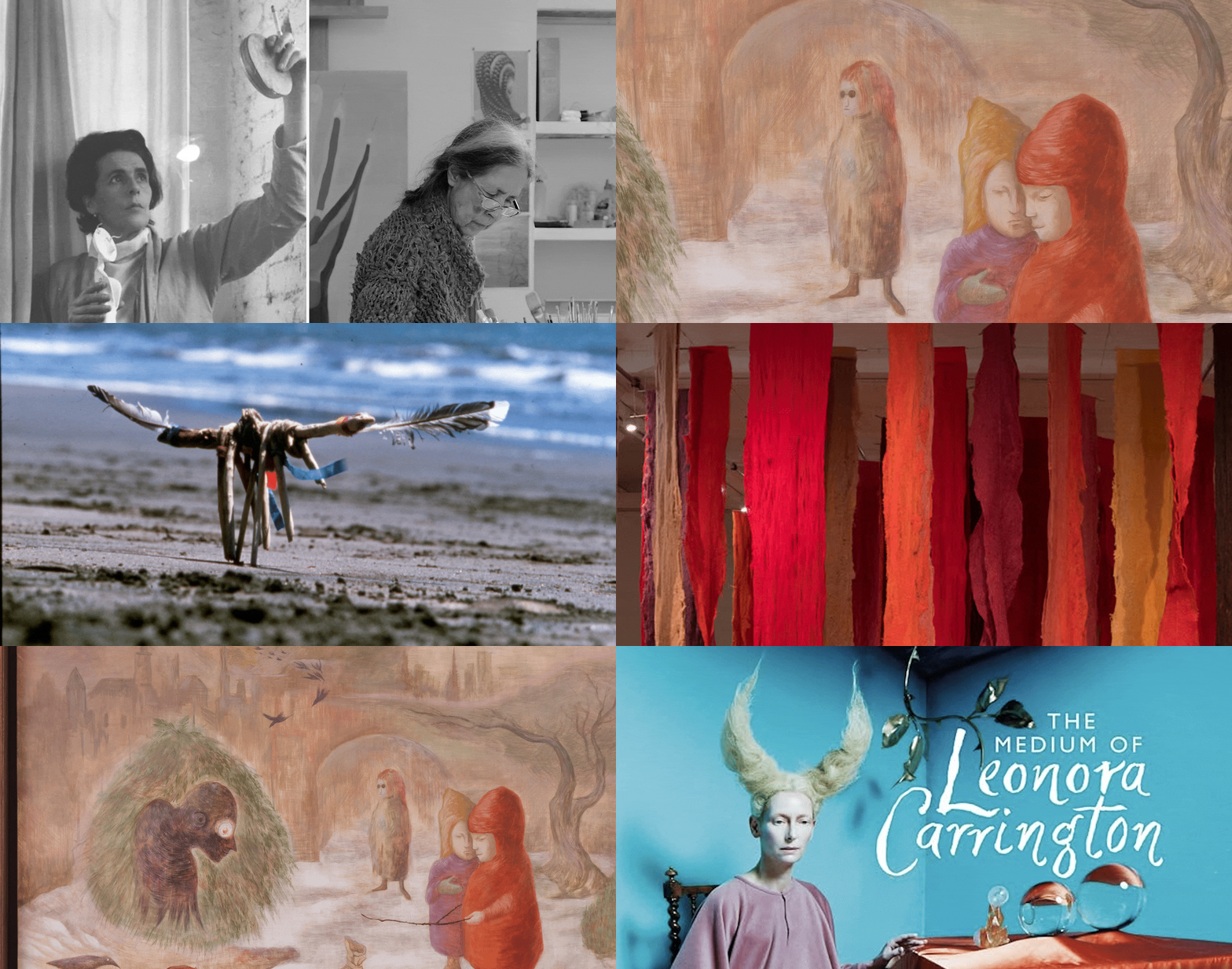
What connects a British Surrealist who spent her life in Mexico and a Chilean poet who works with wool, dust and words? A single encounter in 1969. New York gallery Lehmann Maupin is now showing their work side by side for the first time.
VýstaThe exhibition
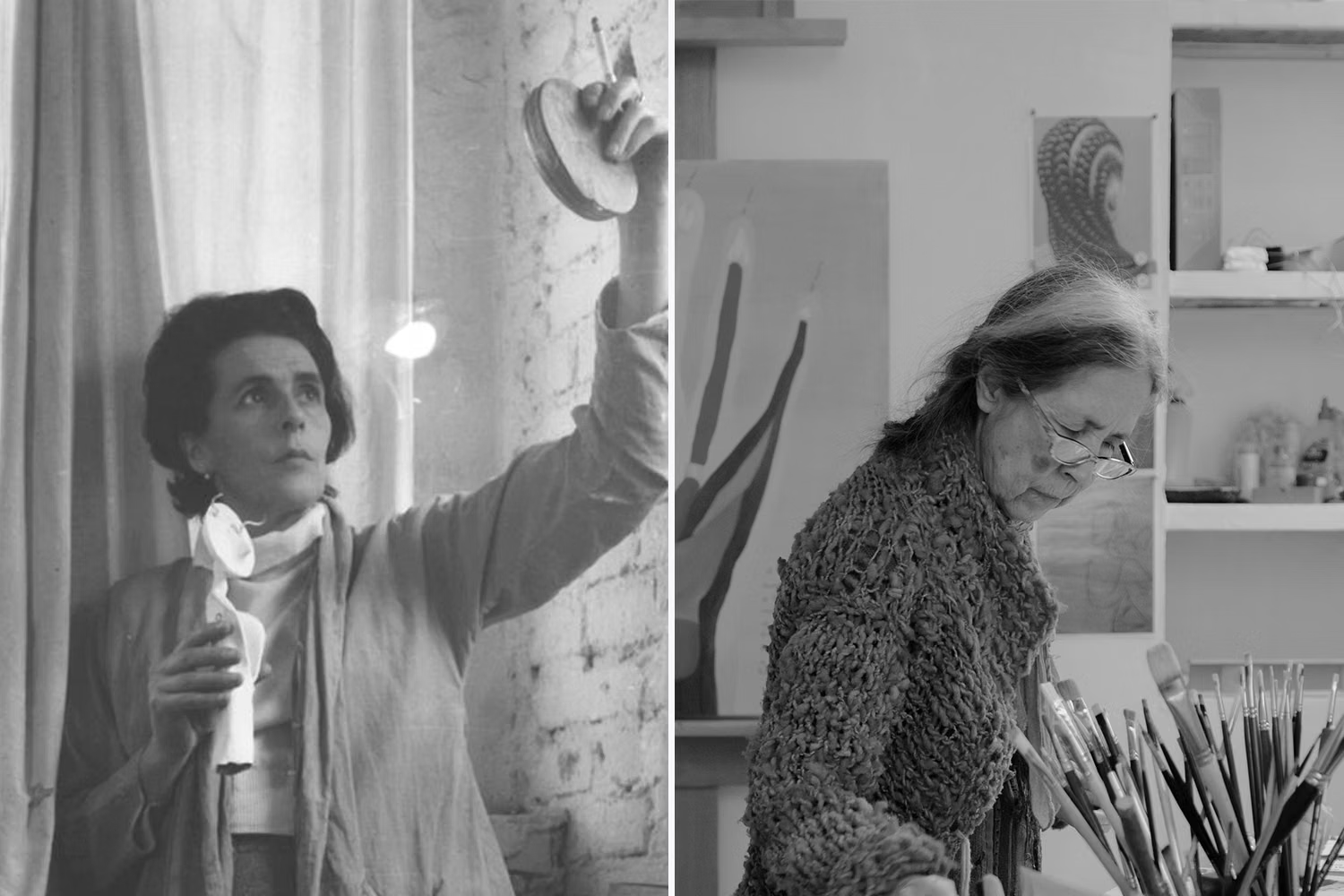
Leonora Carrington & Cecilia Vicuña opens on Thursday, November 19, at Lehmann Maupin in New York’s Chelsea neighborhood. Vicuña will attend the opening in person. The exhibition runs through December 19. In January 2027 it travels to Gallery Wendi Norris in San Francisco, with which the gallery organized it.

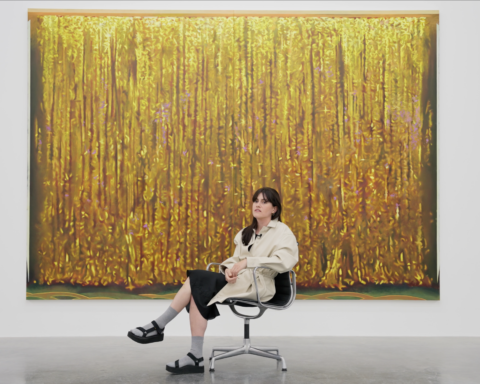
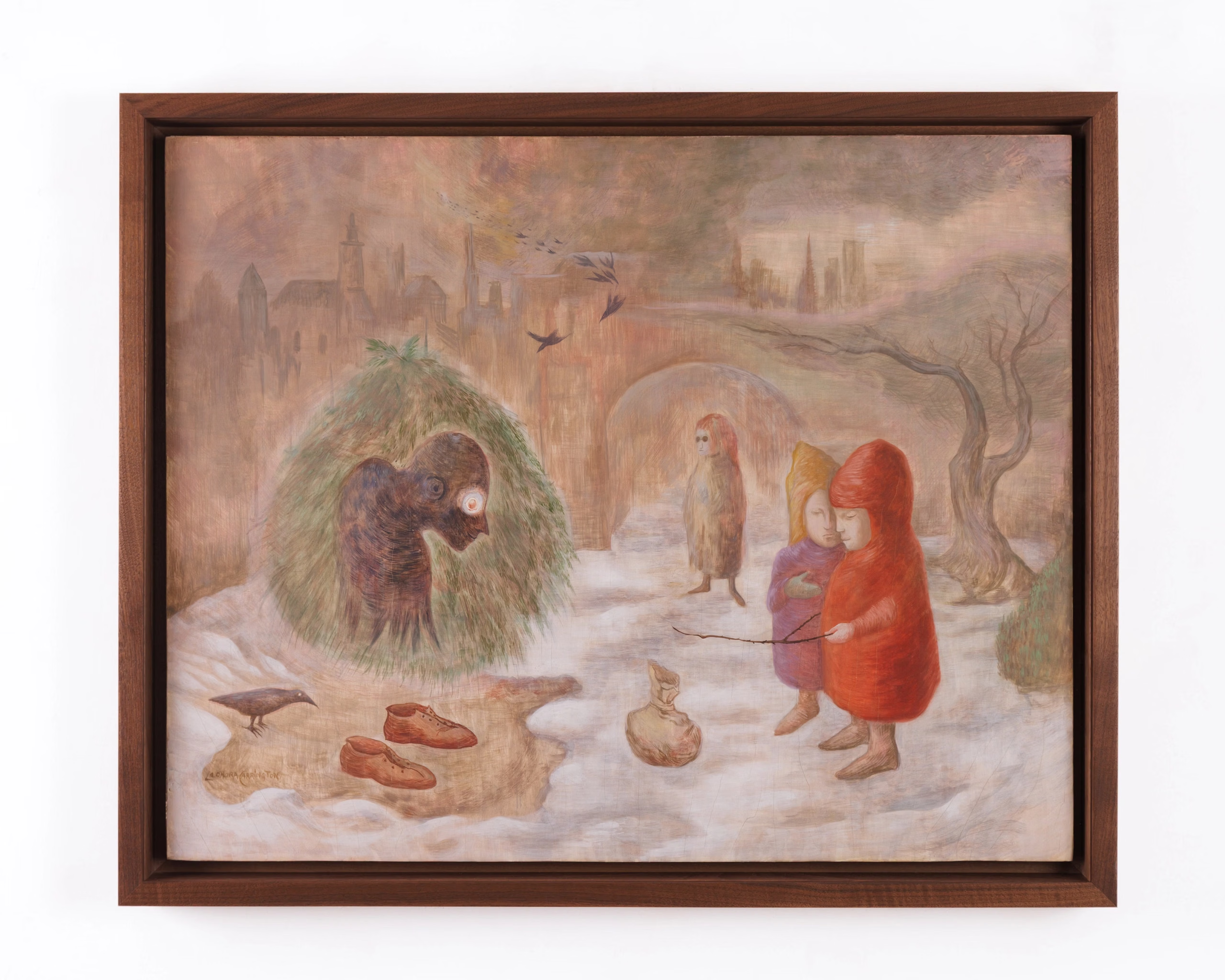
Carrington’s historical works hang alongside new works by Vicuña. The centerpiece is Eye Witness (1987), a painting not seen in New York for decades: a wintry landscape with the outline of a city, hooded figures and a line of ravens. Vicuña presents a series of new paintings in which personal and political figures become dreamlike symbols.
How to read it
This is not just a curatorial parallel, however; behind the exhibition lies a personal story. Vicuña first met Carrington in 1969. On her way from New York back to Chile, she spent several days with her in Mexico City. It is from this relationship that a painting method Vicuña calls calcomanías, or transfers, comes. It was passed on to her by Carrington’s friend Coca Roccatagliata. Vicuña has used it ever since, and she says that her poetry, too, ultimately grew out of that encounter.
What also connects them is a way of seeing. Both turn to myth, transformation and the imagination. And although generation and geography separate them, in both the boundary between the human, the natural and the fantastic dissolves. At the same time, each takes her own path: Carrington populates her paintings with hybrid creatures, while Vicuña works with overlooked materials, ancestral knowledge and ecology.
“I feel a kinship with [Carrington’s] rebel spirit, in the sense that she did not want to be associated with a society, to a given movement, to a given label, and I share that desire,” says Vicuña. It is precisely this stance that connects them most.
Lehmann Maupin
The gallery was founded by Rachel Lehmann and David Maupin in 1996 in SoHo and has been based in Chelsea since 2002. Today it has spaces in New York, Seoul and London, and this year it celebrates its 30th anniversary. It has long represented Vicuña, whose most recent New York show there was La Migranta Blue Nipple (2024).
The artists
Leonora Carrington (1917–2011) was born in Lancashire, England. During the war she fled occupied France and subsequently survived hospitalization in a sanatorium in Santander. She then made her way through New York to Mexico, where she lived from 1942 until her death. Today she is one of the central figures of Surrealism, not as a muse but above all as the author of her own myths.

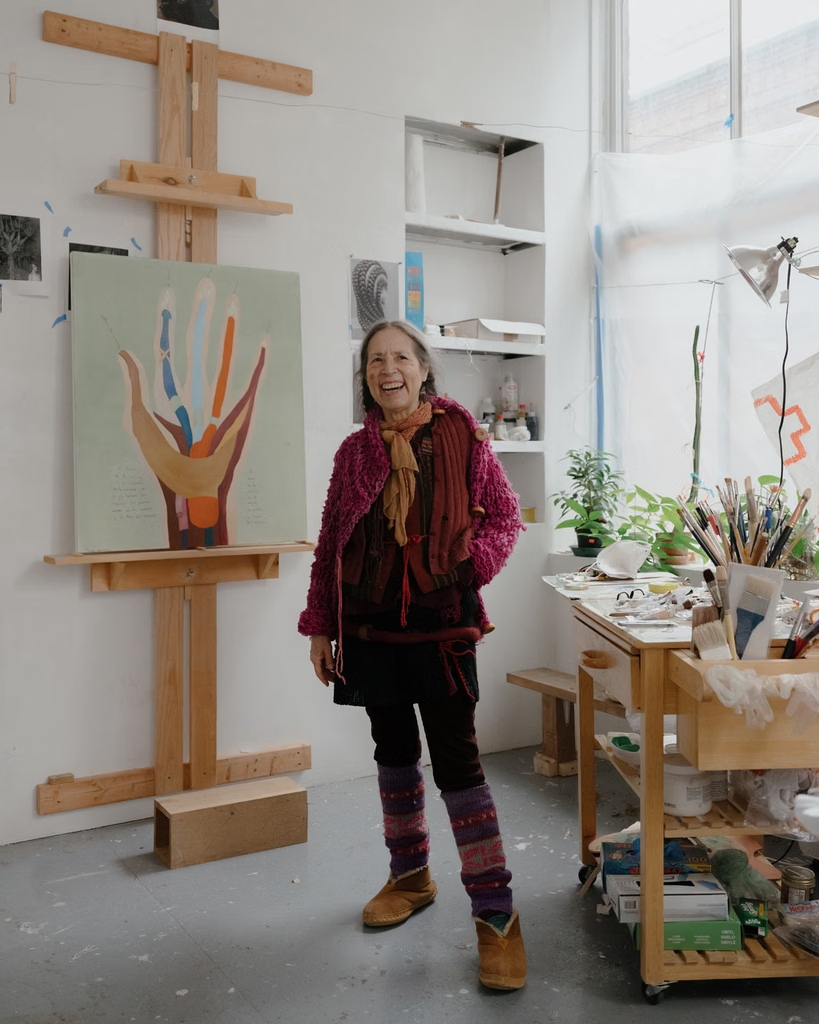
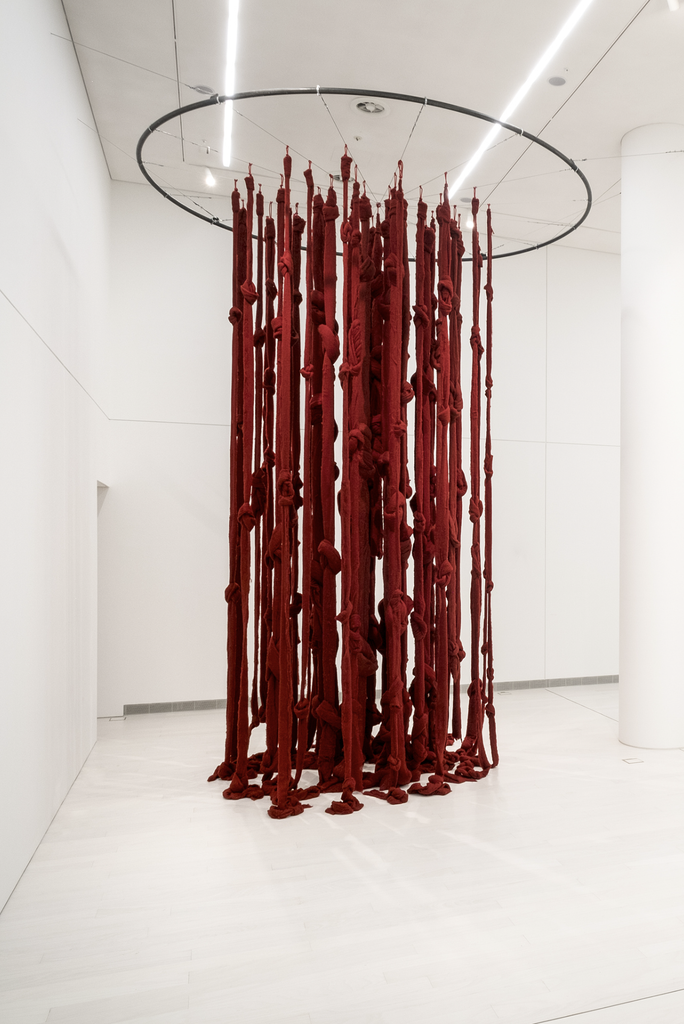
Cecilia Vicuña (b. 1948, Santiago, Chile) is an artist, poet and feminist activist. In 1972 she came to London to study at the Slade School of Fine Art. After the 1973 coup in Chile she remained in exile, and since 1980 she has lived in New York. She is known for her quipus, suspended installations of unspun wool, and her precarios, fragile objects made from found materials. She calls her own practice arte precario. In 2022 she created the commission for Tate Modern’s Turbine Hall and had an exhibition at the Guggenheim Museum in New York.
Institutional exhibitions
For Carrington, 2026 was a year of major exhibitions. First, the Musée du Luxembourg in Paris devoted her first major exhibition in France to her from February to July, with 126 works. It was curated by Tere Arcq and Carlos Martín. At the same time, London’s Freud Museum showed drawings from her Santander sketchbooks in the exhibition The Symptomatic Surreal. From July they were joined by the painting Villa Pilar, which had never before been on public display.
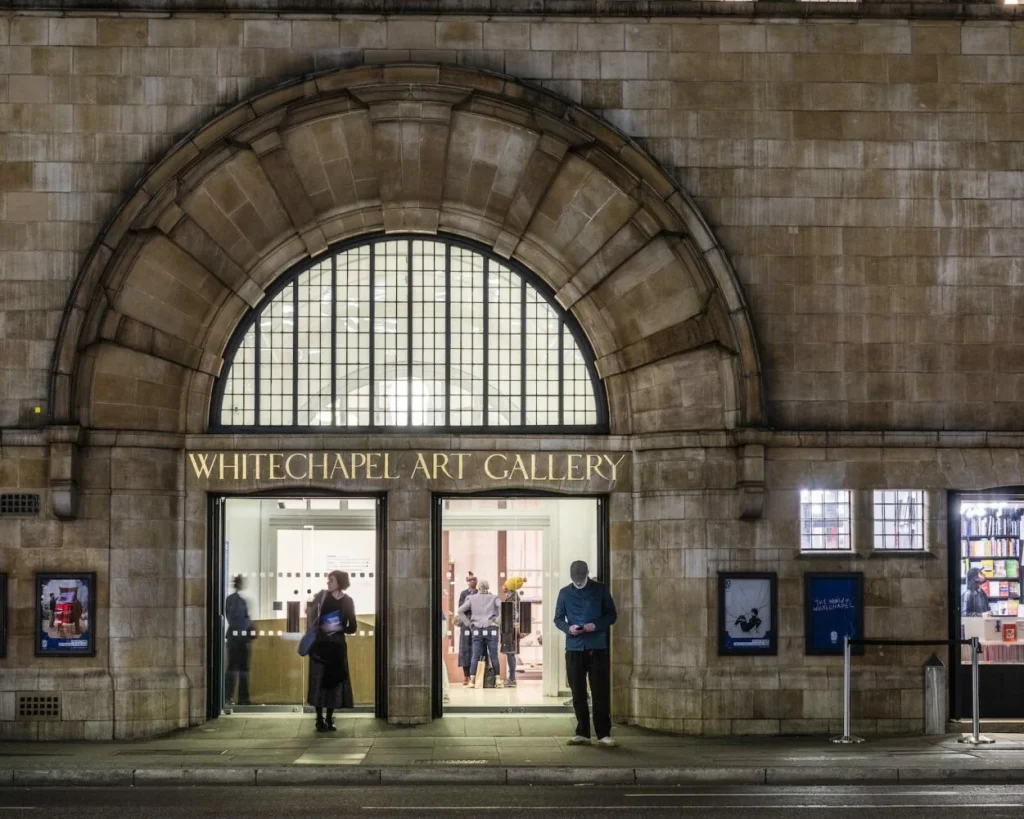
Right now, Vicuña has the exhibition Living Threads at Whitechapel Gallery. It is her first major exhibition in the UK and spans six decades of her work. It was organized in partnership with IMMA in Dublin. It opens with the installation Quipu Menstrual (2006–2024), made of wool in shades of red and brown. It closes with the participatory installation Foraging Quipu (2025–2026), made of plants and objects gathered by local communities. London is also personal for Vicuña, because during her studies she had a studio here in Stepney Green. The exhibition runs through February 14, 2027.
Leonora Carrington & Cecilia Vicuña, Lehmann Maupin, 501 West 24th Street, New York, November 19–December 19, 2026. From January 2027 at Gallery Wendi Norris, San Francisco.