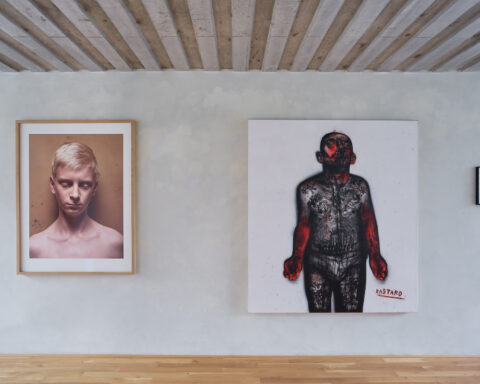
Some images are made for no one. For six years, Dušan Kochol took Polaroids that nobody was meant to see. There was no audience, no exhibition plan and no addressee. Now, for the first time, he is letting them out. On 20 October 2026, the Slovak Institute in Vienna opened the exhibition Postcards from Cacti Falls and, at the same time, launched a book of the same name. The curator is Domenico de Chirico.
Dušan Kochol and the Photography of Others
For years, Dušan Kochol lived through other people’s photography. As the founder of the OFF Bratislava festival, he gives space to new names alongside the Month of Photography. As a curator, he selects, compares and shows.
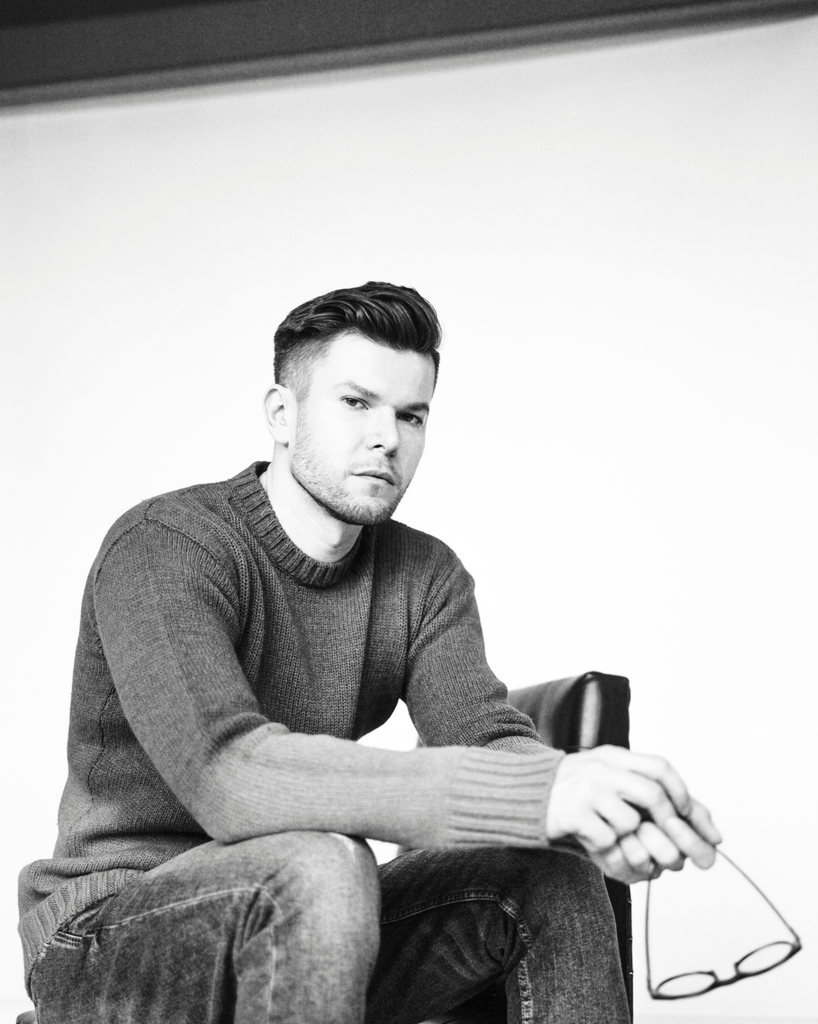
Behind him are London and courses at Central Saint Martins and the London College of Fashion. He earned his doctorate at the Institute of Creative Photography at the Silesian University in Opava. He has exhibited in Slovakia, the USA, Mexico and South America. In 2016, the Central European House of Photography in Bratislava named him Photographer of the Year. He says of his own work that it is “every time about ego.”
In 2019, however, things changed. Instead of exhibitions for others, he began collecting images for himself.

Silence as a Medium
After years of exhibitions and projects, he started photographing slowly. There was no brief and no audience. As a result, a private archive took shape: Polaroids, notebooks, notes and scraps of sentences.
The curator Domenico de Chirico writes about the moment when an image stops obeying the logic of visibility. It stops performing. Instead, it becomes a gesture turned inward. This is exactly where Postcards from Cacti Falls begins. It is not a project for a gallery, but an inner retrospective. A practice that grew in the shadows is only now being shown to others.

One Shot, One Object
Meanwhile, the world is flooded with an endless stream of images. Every photo can be copied, sent, deleted and forgotten. A Polaroid, however, does not allow this. It exists only once.
Kochol’s pictures were not made to circulate. Rather, they are traces of moments of solitude, travel and reflection. The colours drift slightly, the surface is dense, and the light does not always obey. Yet it is precisely in these imperfections that the moment stays caught. The photo behaves like a memory that refuses to fade.
Dušan Kochol and the Polaroid as a Diary
Kochol is not the first for whom the Polaroid became a private diary. Wim Wenders, the director of Paris, Texas, took thousands of Polaroids on his travels through Europe and America. London’s The Photographers’ Gallery showed them in the exhibition Instant Stories. Wenders said of the Polaroid: “It was a real THING, a unique object. Not a copy, not a print, it could not be multiplied or repeated.” In fact, he still returns to the memory of places today, for example in his film about Peter Zumthor.
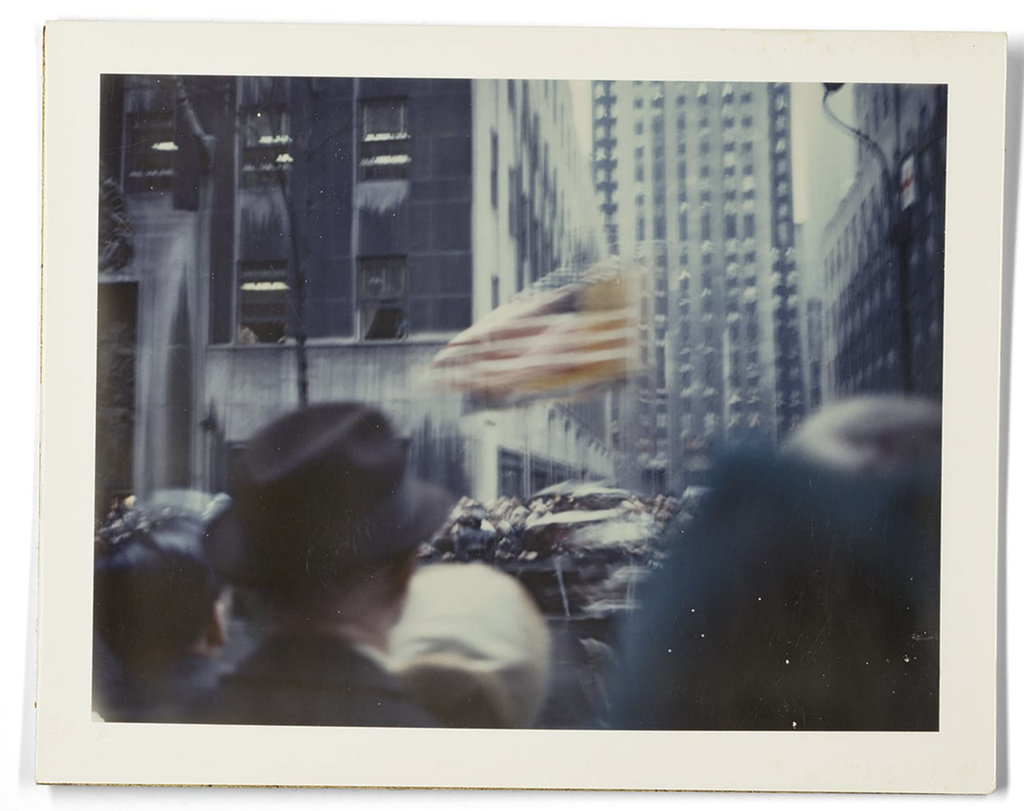
Kochol, however, is closer to Andrei Tarkovsky. The director of Solaris and Stalker photographed his family and the misty landscapes around his house with a Polaroid camera. These pictures were meant for no one. In the end, the world saw them only after his death, in the book Instant Light. Kochol does what Tarkovsky did not live to do: he shows his private archive himself.
The curator puts it precisely. In his view, the journey here is presented neither as a linear story nor as a purely geographical one. Instead, it is “a constellation of interrupted scenes.” In this way, the project comes close to the tradition of travel writing. There, travelling does not mean only moving through space, but also a tool of knowledge.

Postcards from Cacti Falls: A Map That Does Not Exist
As the curator writes, these postcards have no distant addressee. Kochol sent them to himself, to a future version of his own gaze, across the years. Only now have they arrived.
Cacti Falls sounds like a place on a map, like a natural landmark you could look up. In reality, however, it is a mental space. It is an imaginary oasis between desert and subtropical green. It is also a landscape that turns into a new visual vocabulary, intense and intimate at the same time.
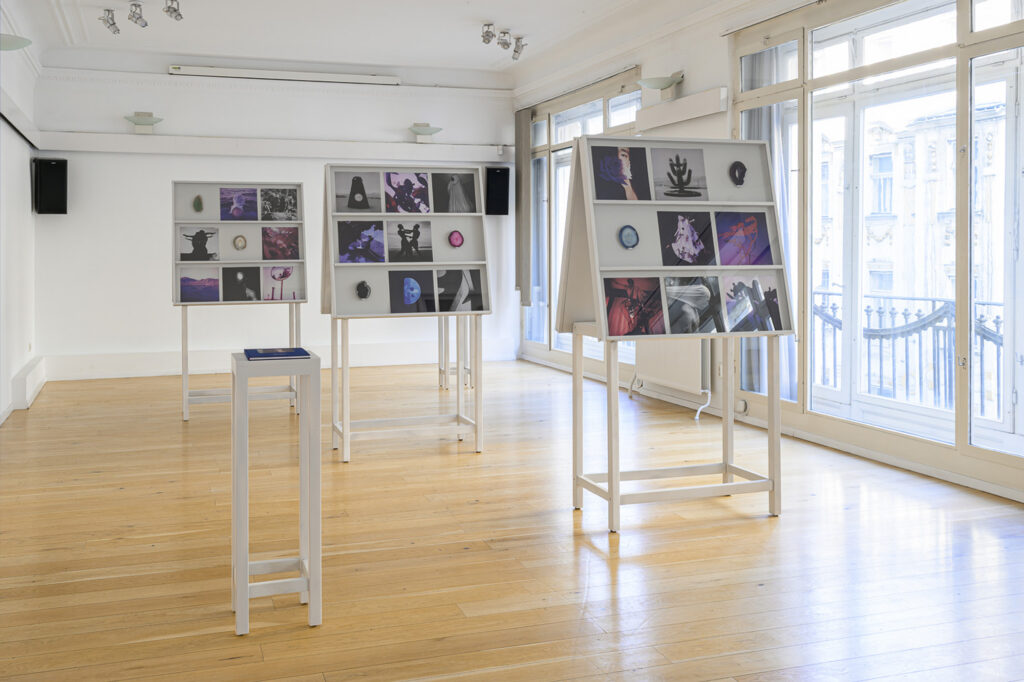
Opening hours: Monday to Thursday 10 am to 12 pm and 1 pm to 5 pm, Friday 10 am to 3 pm
Where: Slovak Institute in Vienna, Wipplingerstraße 24–26, 1010 Vienna