Zola píše Cézannovi
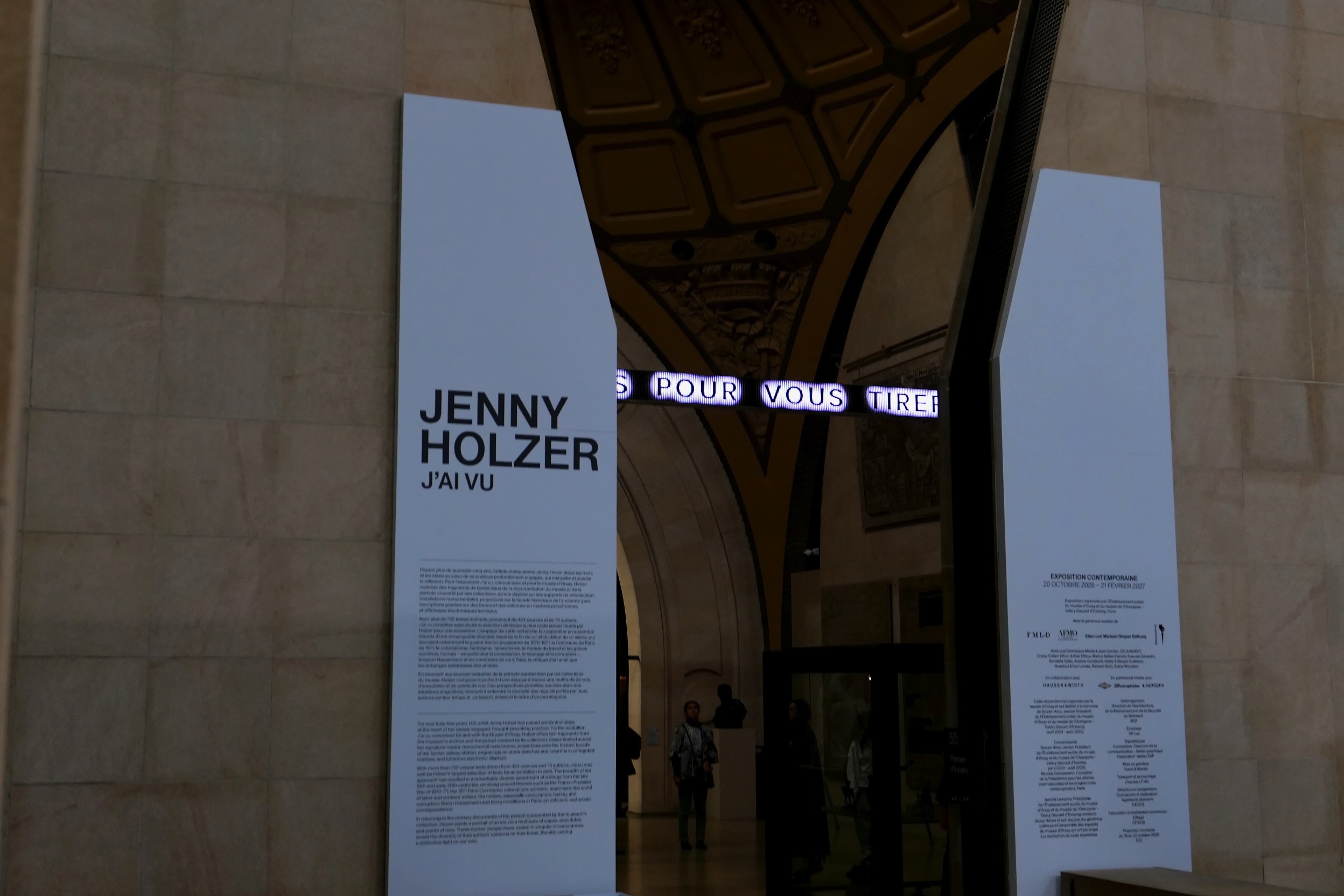
In February 1860, nineteen-year-old Émile Zola writes a letter to his childhood friend Paul Cézanne. “I think of the future and see it so dark, so dark that I shrink back terrified.” 166 years later, that line runs in blue light above the galleries. This is how the exhibition begins, the one with which Jenny Holzer has set the Musée d’Orsay in motion.
The American artist titled the show J’ai vu (I Have Seen). It runs from 20 October 2026 to 21 February 2027. It is not an exhibition in a single room. Holzer takes over the entire museum: the façade, the central nave, the galleries and even the pedestals of the sculptures.
Holzer has worked with language for almost fifty years. At the Orsay, for the first time, she did not use a single sentence of her own. From the museum’s archives she selected more than 750 texts by 73 authors, written between 1838 and 1927. Louise Michel of the Paris Commune speaks in them, as do Camille Claudel and Vincent van Gogh. They write about war, strikes, housing and violence against women. Holzer herself admits that the shock was how contemporary these issues are.
That is why I read the exhibition in a wider context. Alongside Tracey Emin at the Trocadéro, the Venice Biennale and Holzer’s collaboration with Helmut Lang. At pinkpink.space, I call this 3D chess.
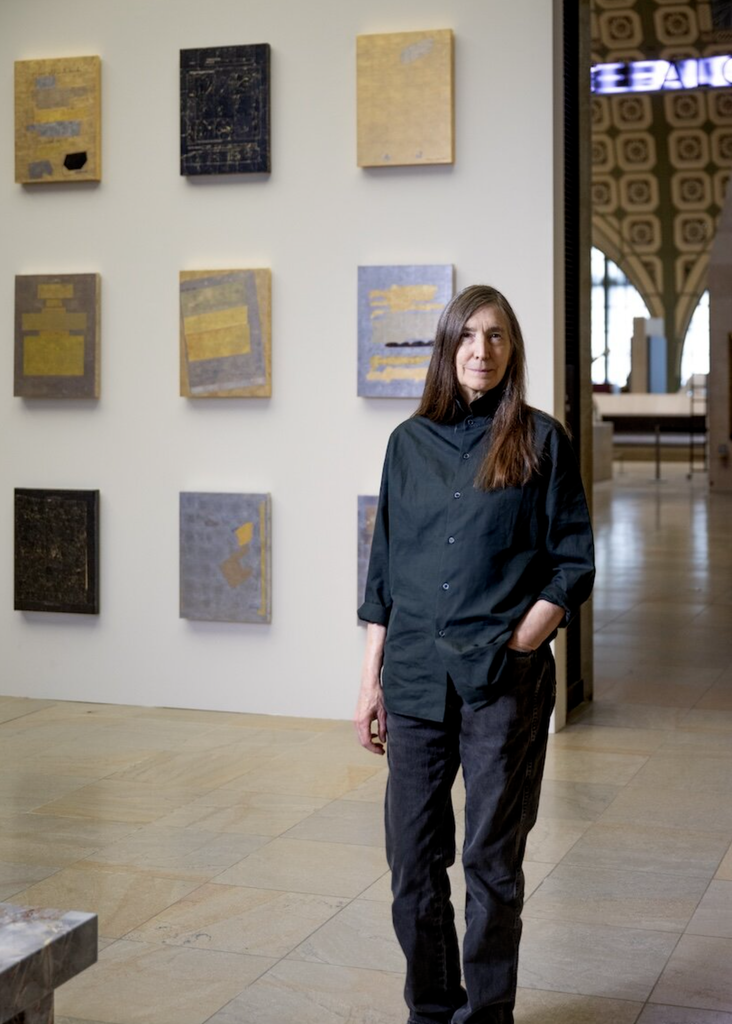
Jenny Holzer, for the First Time Without Her Own Words
Jenny Holzer became famous for her own sentences. In the late 1970s she pasted anonymous posters, the Truisms, on the streets of New York. Later her texts ran on billboards in Times Square, on T-shirts, benches and façades.
At the Orsay she does the opposite. In an interview for the museum’s press kit, she says she is tired of her limited self. She would rather look outward and bring in what she could not create herself. She calls it a collaboration across time.
The project was born in the archive. Holzer reviewed some 985 text sources from 91 writers, journals and institutions. She selected 753 texts from 424 sources. The themes read like today’s news: the Franco-Prussian War, the Paris Commune, colonialism, feminism, strikes, conscription and hazing in the army, Haussmann’s rebuilding of Paris and the housing of the poor.
And why J’ai vu? Speaking to T Magazine, Holzer recalls her childhood in Ohio. On long drives, her mother kept pointing out the window and saying: “Look!” For the museum, she adds what she wants to name: joy, reciprocity, revelation, beauty, understanding, warning. And, with luck, prevention.
A Station That Announces Departures Again
The Musée d’Orsay stands in the former Gare d’Orsay railway station. Holzer takes this literally. Her LED sign ÉCRIT (Written) spans four galleries. It passes through history painting, naturalism and symbolism, and descends into the Gustave Courbet room.
Text runs along it as on a departures board. The museum calls it a tribute to the building’s original function. The programme mimics the movement of people who once caught trains and now come for paintings.
Moreover, the numbers are staggering. ÉCRIT runs in a 24-hour loop and shows more than 650 texts by 73 authors. It also has almost 50 light effects. The programming alone took six months. Together with the façade projection, it comprises 945 separate text files.
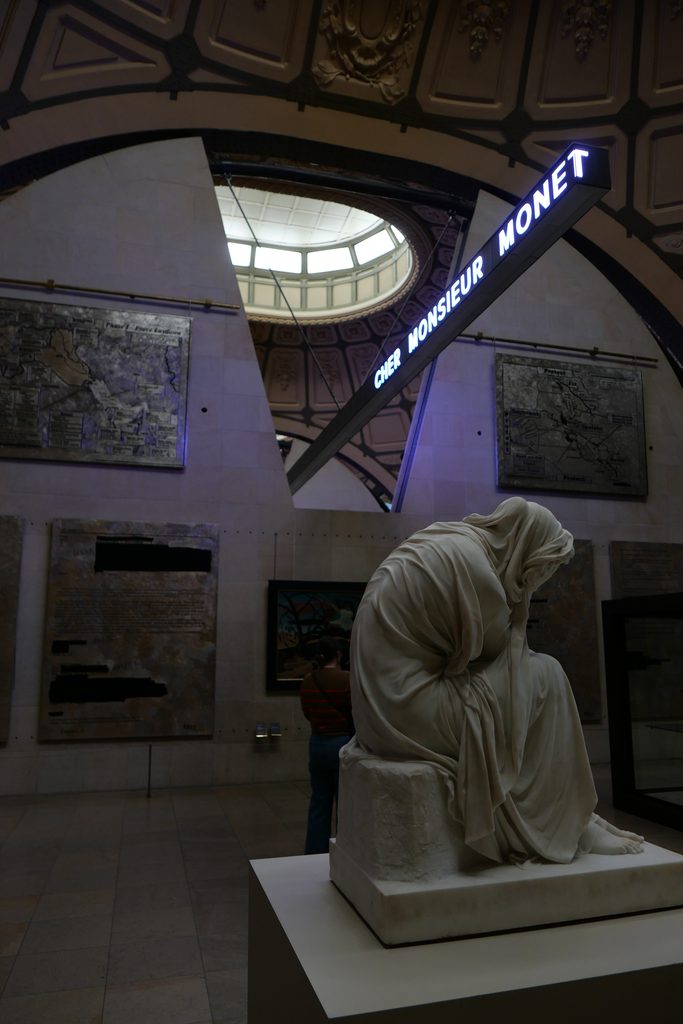
At one moment, the greeting “Mon cher Monsieur Monet” glows above the sculptures. At another, “revolution to be made” flies under the vault. Holzer has worked with LED signs since 1983. This one, however, has its own history. It was originally made for the spiral of the Guggenheim rotunda in New York.
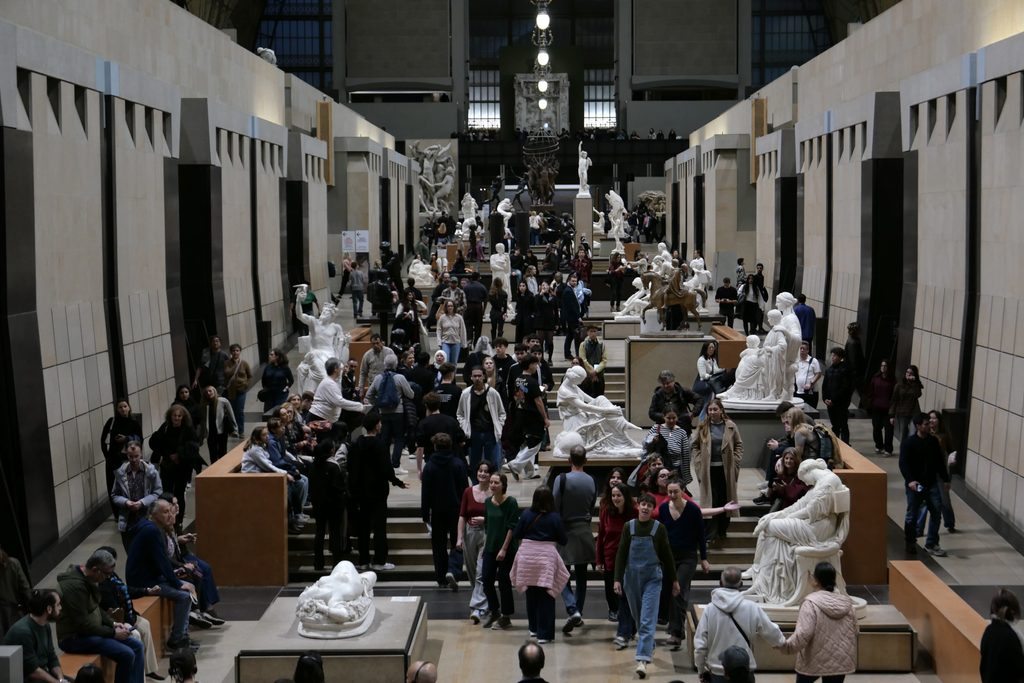
Benches as Mirrors of the Musée d’Orsay’s Pedestals
Holzer has carved texts into stone since 1986. At the Orsay, however, she made columns for the first time. In all there are 19 stone works: 17 benches and 2 columns in ten kinds of marble and granite.
She found her inspiration where visitors hardly ever look: in the pedestals of the sculptures. The museum’s pedestals are unusually varied, and many came from the Louvre. Holzer identified every type of stone and traced its origin. The green Italian Cipollino Verde, for example, matches the oldest column pedestal on display at the Orsay.
Each bench also has a partner in the collection. In front of Manet’s study Lady at a Window (1865) stands a bench with a line by Vincent van Gogh: “There are so many people who imagine that words are nothing.” In front of Couture’s Romans of the Decadence (1847) lies a dark red marble with more Van Gogh. Purity of soul and impurity of body, he writes, can go together.
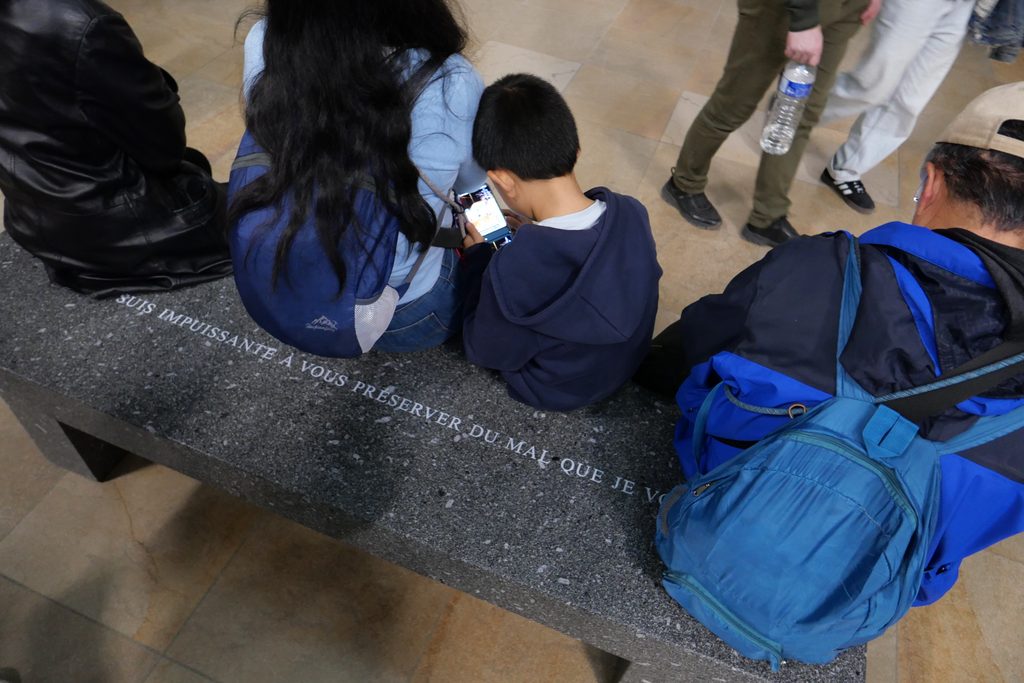
You can sit on the benches. You sit on a text and look at the painting it belongs to.
Zola, Cézanne and the Strangled Woman
Let us return to the opening letter. Zola and Cézanne grew up together in Aix-en-Provence. They wrote to each other for decades. In 1886, however, Zola published the novel The Masterpiece (L’Œuvre). Its hero is a failed painter, Claude Lantier, and Cézanne reportedly recognised himself in him.
Tradition has it that the novel ended their friendship. Historians now doubt this. In 2013, a friendly letter from Cézanne to Zola, dated 1887, was discovered. Yet the distance between them grew. Zola’s dark line about the future now also reads as a premonition of their own story.
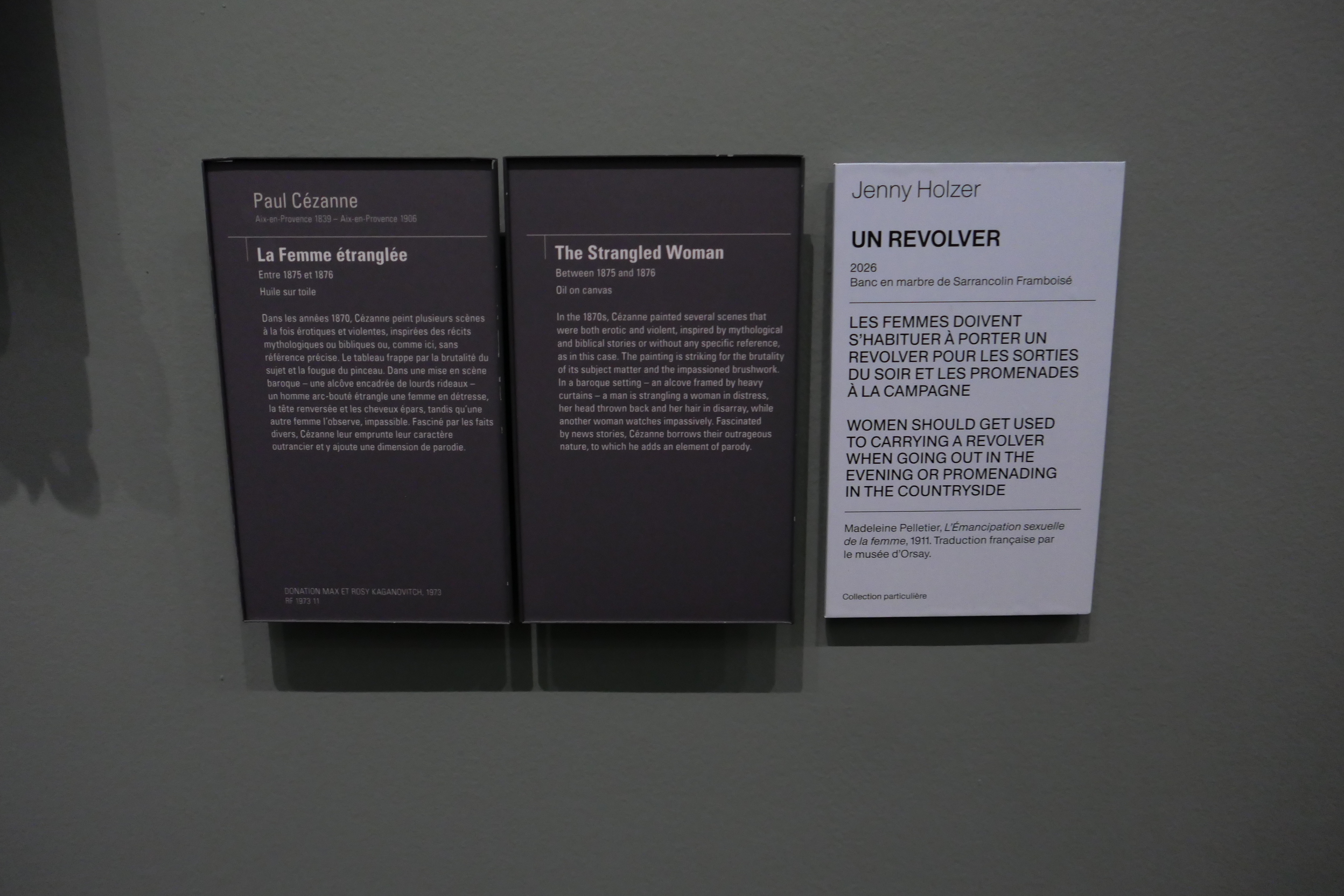
And now the chess move. A few rooms away hangs Cézanne’s small painting The Strangled Woman (c. 1875–1876). Holzer told T Magazine she was astonished by it. She expected a still life or a landscape, not a murder.
In front of the painting she placed a bench with a line by Madeleine Pelletier from 1911. The physician and feminist advises: “Women should get used to carrying a revolver when going out in the evening or promenading in the countryside.” Cézanne’s painting shows violence. Thirty-five years later, Pelletier proposes self-defence. Holzer adds, speaking to the NYT: “It’s a chronic thing that women are assaulted and killed, and it’s getting worse.”
© 2026 Jenny Holzer, member Artists Rights Society (ARS), New York/ADAGP, Paris | Photo: Michaela Slobodová / pinkpink.space
Camille Claudel Before The Gates of Hell
This is the most powerful pairing in the whole exhibition. Auguste Rodin’s plaster Gates of Hell stands at the Orsay. It is more than six metres high and weighs 1,715 kilograms. Rodin worked on it from 1880 until his death in 1917.
In front of it, Holzer placed a bench with a line by Camille Claudel. The sculptor wrote it to Rodin in August 1886. She says she is powerless to protect him from the evil she sees. Pupil, lover and a great sculptor in her own right, she is given the floor before his most famous work.

Other texts in the exhibition complete her story. Among them is her letter to Rodin from 1891, full of longing. There is also Rodin’s reply from 1897: what stands against her are the hardships of life and her own imagination.
And then a letter from February 1927. Claudel writes it to her mother from a psychiatric asylum. She asks whether “he” will let her die there. She never left the asylum and died in 1943. Holzer leaves these lines without comment. None is needed.
The Cradle and the Last Letter
Berthe Morisot painted The Cradle in 1872. It shows her sister Edma watching over her sleeping baby daughter. It is one of the tenderest paintings of Impressionism.
In front of it stands the bench I LOVE, in Sarrancolin-Beyrède marble. Holzer chose the stone for its colours. Its pale pink and blue-grey tones echo the colours of the painting.
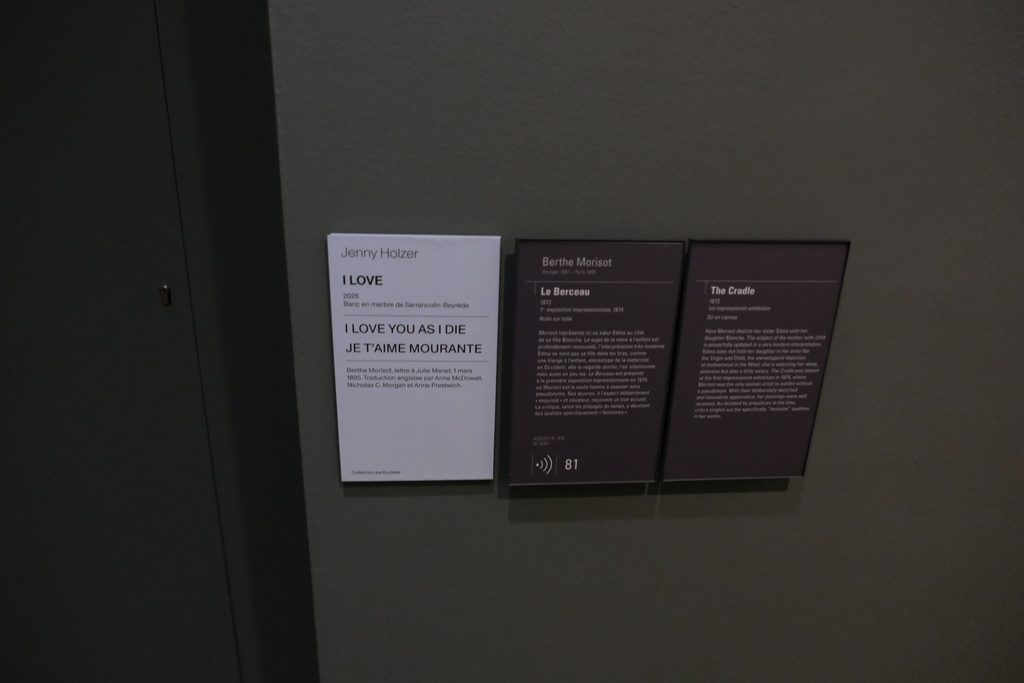
Into the stone she carved a line from Morisot’s last letter to her daughter Julie, dated 1 March 1895: “I love you as I die.” Morisot died the next day. On the canvas, a mother protects her child. On the bench, a mother says goodbye to her child.
Holzer tells T Magazine that what moved her in the Orsay collection were precisely such moments in which preserving the beloved is paramount. She ironically calls herself “tender-adjacent.” Morisot also has a sharper voice in the exhibition. In a letter to her sister from 1869, she writes that men readily believe they are a woman’s whole life.

Musée d’Orsay | Photo: Michaela Slobodová / pinkpink.space
Jenny Holzer and War: Then and Now
War is the central theme of the exhibition. Holzer explains it simply: war chooses people, and people choose war. If she did not see it everywhere around her, it would not be her subject.
So the museum rehung Room 55. It usually holds history scenes of every kind. Now it holds only conflict. Rousseau’s War (c. 1894), with a wild rider above the corpses. Detaille’s vast Dream (1888), with sleeping soldiers and phantom armies in the sky. The museum’s war selection also includes Hervier’s small Barricade, June 1848, acquired only in 2023.
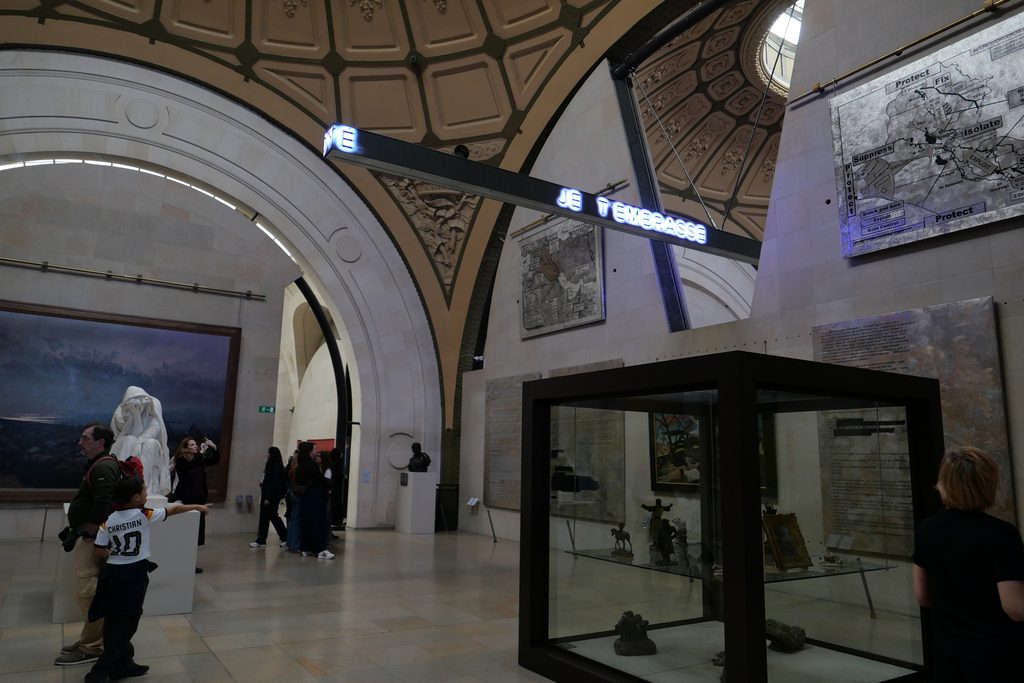
Among them hang eight of Holzer’s large paintings. They deal with the war in Iraq, interrogation techniques used on detainees and the threats of artificial intelligence.
Stone That Remembers War
Stone completes the picture. Monet’s bench carries the words “I am searching for the impossible” from a letter of 1918. It stands in front of de Neuville’s Cemetery at Saint-Privat (1881), from the Franco-Prussian War. In September 1914, the American painter Elizabeth Nourse wrote that the wounded have no nationality. Her column stands by Jean Baffier’s sculptures of his parents.
In the central nave rises the second column, MAD JUST NOW. It carries Mary Cassatt’s line from a letter of 8 July 1915: “As you say the world is mad just now.” Cassatt wrote it in the middle of the First World War. The column stands by Carpeaux’s sculpture of four continents holding up the globe.
Gold on Redacted Documents
Since the mid-2000s, Holzer has painted what are called Redaction Paintings. She transfers declassified government documents to canvas, black censorship bars and all. She copies the text by hand onto linen, layers oil paint and adds metal leaf.
Forty-four such paintings hang at the Orsay. She used four kinds of gold, palladium and platinum. The documents date from 1967 to 2024. Their subjects range from Vietnam and CIA weapons through the PATRIOT Act and Donald Trump to the war in Ukraine and voting rights. They also include pages from the Epstein files. Holzer tells T Magazine she wanted them “enlarged — made shiny so people might give them a look.”
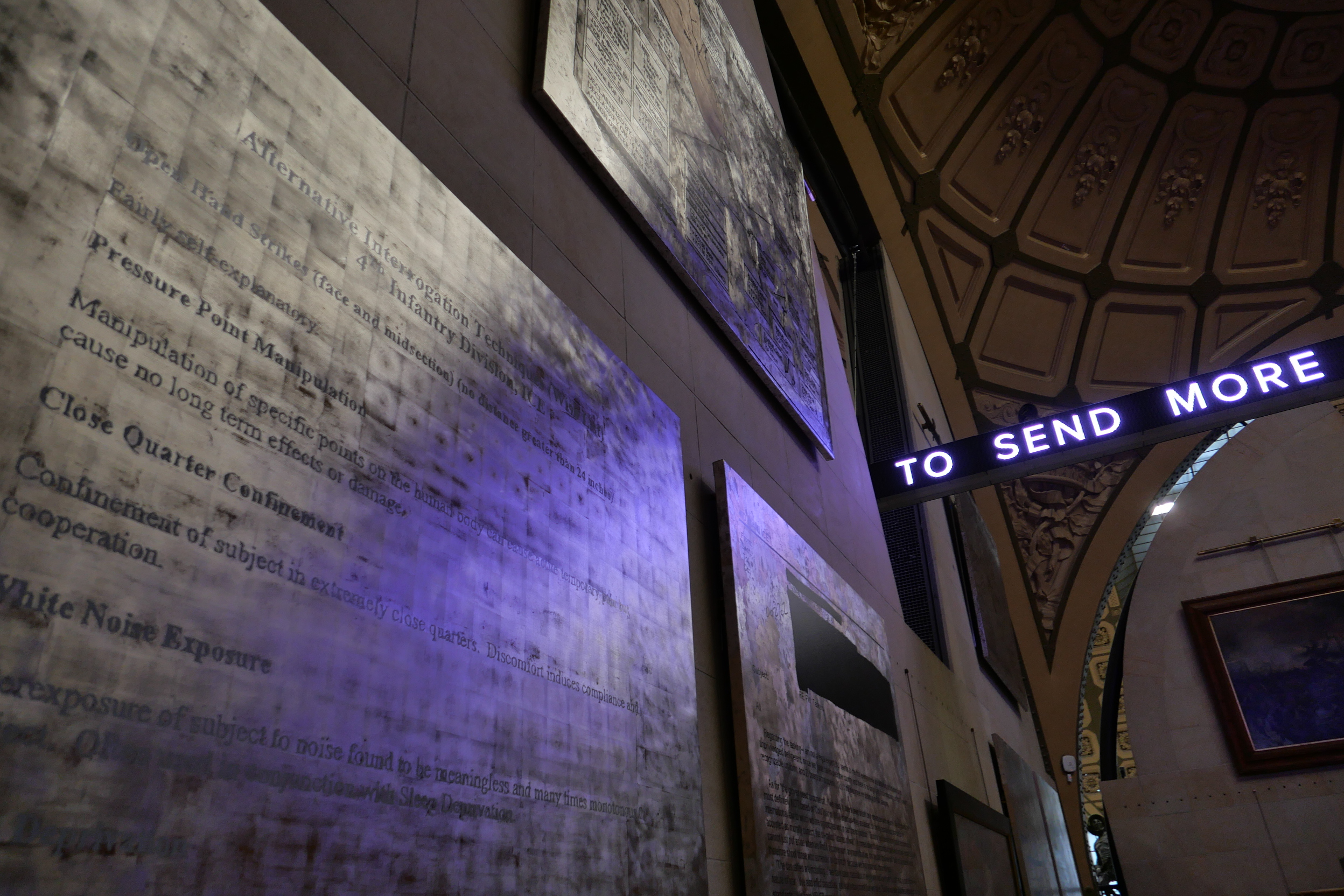
Jenny Holzer, painting from the Wish List series and the LED sign ÉCRIT, 2026, Musée d’Orsay | © 2026 Jenny Holzer, member Artists Rights Society (ARS), New York/ADAGP, Paris | Photo: Michaela Slobodová / pinkpink.space
Room 57: Thirty-Four Secrets
Thirty-four smaller paintings hang in Room 57. The metal reflects the light of the Seine and changes through the day. One large painting addresses the ethics of artificial intelligence. The other shows a page from a briefing on domestic threats. It is entirely redacted, except for the line “shifting to softer targets.”
In front of the painting Teaching Robots stands a bench with Monet’s words from 1901. In a letter to his wife, he complains: “It is rather unfair to have such beautiful things to paint only to find oneself suddenly confronted with a layer of darkness of an indescribable colour.” Next to the redacted documents, that darkness takes on a new meaning: censorship.
Façade, Louvre and Helmut Lang
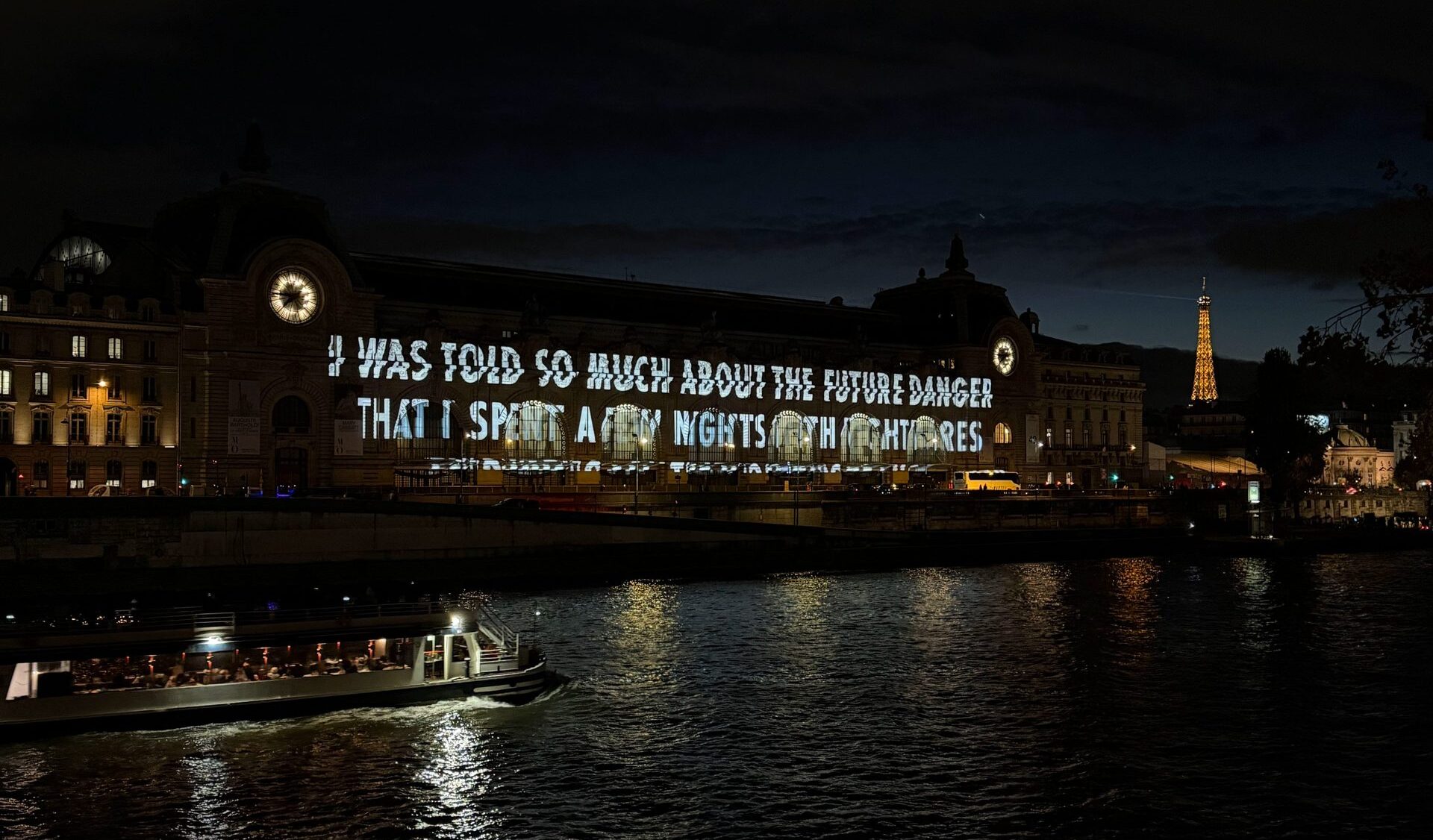
The exhibition began outside. From 18 to 22 October, every evening from 7 to 11 pm, the projection ÉCLAIRÉ (Illuminated) shone on the façade above the Seine. Holzer selected nearly 250 excerpts by 34 authors. Most ran in her signature sans-serif type. Some lines, however, appeared in the authors’ own handwriting, such as Van Gogh’s letter to Émile Bernard from November 1888.
Holzer told T Magazine that the projections “break my heart in a good way. Even though it’s only light, it’s strangely tactile and emotional.”
Jenny Holzer, painting from the Wish List series and the LED sign ÉCRIT, 2026, Musée d’Orsay | © 2026 Jenny Holzer, member Artists Rights Society (ARS), New York/ADAGP, Paris | Photo: Michaela Slobodová / pinkpink.space
She has made large-scale light projections since the 1990s. The first was created in 1996 on the bank of the Arno in Florence. It was a collaboration with the fashion designer Helmut Lang for the Biennale di Firenze. Lang and Holzer also created a fragrance together, and he later invited her into his New York flagship and his perfume store. The Orsay projection, then, has a fashion pedigree.
From Rome to the Louvre Pyramid
Holzer has since projected onto the Spanish Steps in Rome, onto Guggenheim museums and onto city halls in London and Singapore. And onto the Louvre pyramid. In 2016, JR optically “made disappear” the very same pyramid. I wrote about his Venice project with Veronese’s Wedding at Cana here. Two artists, one pyramid, two ways of rewriting a museum’s memory.
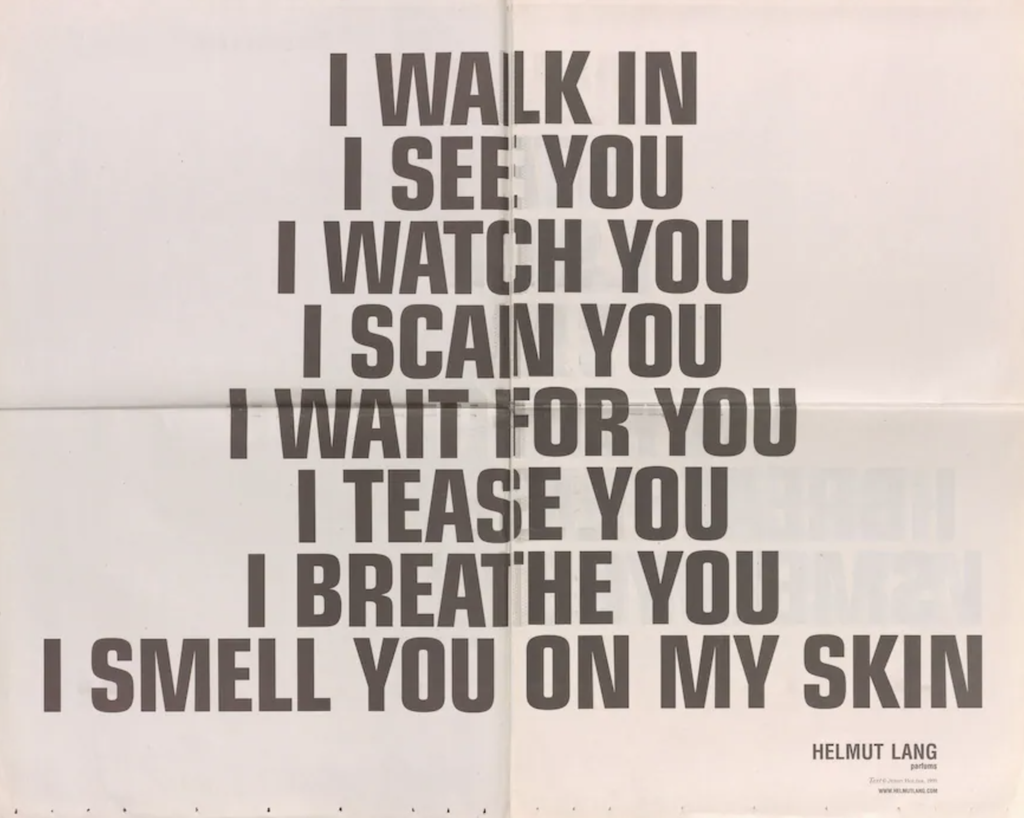
Helmut Lang, Helmut Lang Parfums supplement from The New York Times newspaper, text by Jenny Holzer (2001). MAK Helmut Lang Archive, LNI 572-2-3. Courtesy of hl-art
Venice, Louisiana and Tracey Emin
Stone benches are nothing new in her work. Holzer showed them at the Guggenheim as early as 1989. A year later she brought them to Venice. In 1990 she became the first woman to present a solo exhibition in the American Pavilion at the Venice Biennale. It won her the Golden Lion for best national participation. You can find more about this year’s Biennale in my Venice Biennale 2026 section.
The Venice exhibition then travelled. Besides Düsseldorf, it also stopped at the Louisiana Museum in Denmark. That is exactly where Tracey Emin’s retrospective A Second Life has been on view since 8 October 2026.
And Emin is in Paris right now, too. At the Trocadéro, a short way downstream on the Seine, her three monumental bronzes of the female body stand until 1 November. I wrote about them here. Two women artists in one city, in the same month. Emin gives the female body bronze and a public square. Holzer gives women’s voices marble and a museum façade.

Photo: Michaela Slobodová / pinkpink.space
Paris in the Streets, the Musée d’Orsay at Forty
The exhibition did not open in quiet times. French high school students have been protesting since 21 September. They demand more money for schools, more teachers, building repairs and reform of the Parcoursup university admissions system. The biggest day came on 6 October. The Interior Ministry counted 266,000 people across the country, 56,000 of them in Paris.
Holzer spoke about it to T Magazine during the installation: “It’s gruesome that kids have to fight for a better education.” She worries about their safety. The texts in the exhibition, meanwhile, speak of strikes, the Commune and revolution. The LED sign above visitors’ heads proclaims “revolution to be made.”
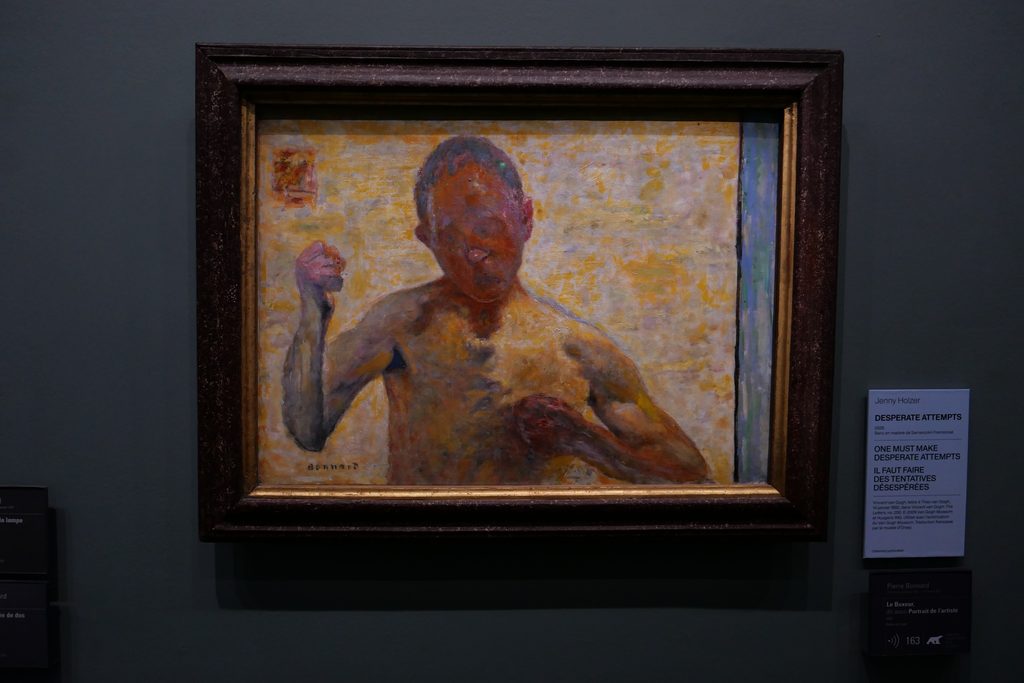
The exhibition is part of the programme celebrating the 40th anniversary of the Musée d’Orsay, which opened in December 1986. Its curators included Sylvain Amic, president of the Musées d’Orsay et de l’Orangerie. He died suddenly on 31 August 2025, aged 58. He did not live to see the anniversary season he had prepared. The co-curator is Nicolas Gausserand.
Holzer is not the only American woman in the anniversary season. Since 6 October, the Orsay has been showing a major retrospective of Mary Cassatt, the first in France’s national museums. It closes with the exhibition in support of women’s suffrage that Cassatt organised in New York in 1915, the same year as her letter about the mad world.
The museum is also marking 250 years of American independence with an exhibition on Bartholdi and the Statue of Liberty. Its French title is La Liberté éclairant le monde, Liberty Enlightening the World. Holzer’s projection is called ÉCLAIRÉ. Illuminated.
Words Are Nothing?
On one of the benches is Van Gogh’s line about people who imagine that words are nothing. Jenny Holzer’s J’ai vu at the Musée d’Orsay proves them wrong at every turn. Zola fears the future. Claudel begs for help. Morisot says goodbye to her daughter. Cassatt sees a mad world. And a redacted document says nothing, except for one line about softer targets.
Holzer herself maintains that people repeat themselves. They do, feel and deny the same things over and over. In her view, we move in echoes and loops across the centuries. That is why sentences from 150 years ago sound so contemporary.
What should visitors take away? Holzer’s answer to T Magazine is brief: “Don’t give up … yet.”

Jenny Holzer at the Musée d’Orsay: Tickets and Opening Hours
- Dates: 20 October 2026 to 21 February 2027
- Opening hours: Tuesday to Sunday 9:30 am to 6 pm, Thursday until 9:45 pm, closed Mondays
- Tickets: €16 online, €14 on site, Thursday evenings from 6 pm €12 online
- Free admission: under 26 for EU citizens; first Sunday of the month for everyone, with reservation
- Where to buy: only on the official website billetterie.musee-orsay.fr
- Address: Esplanade Valéry Giscard d’Estaing, 75007 Paris, Metro 12 Solférino, RER C Musée d’Orsay