
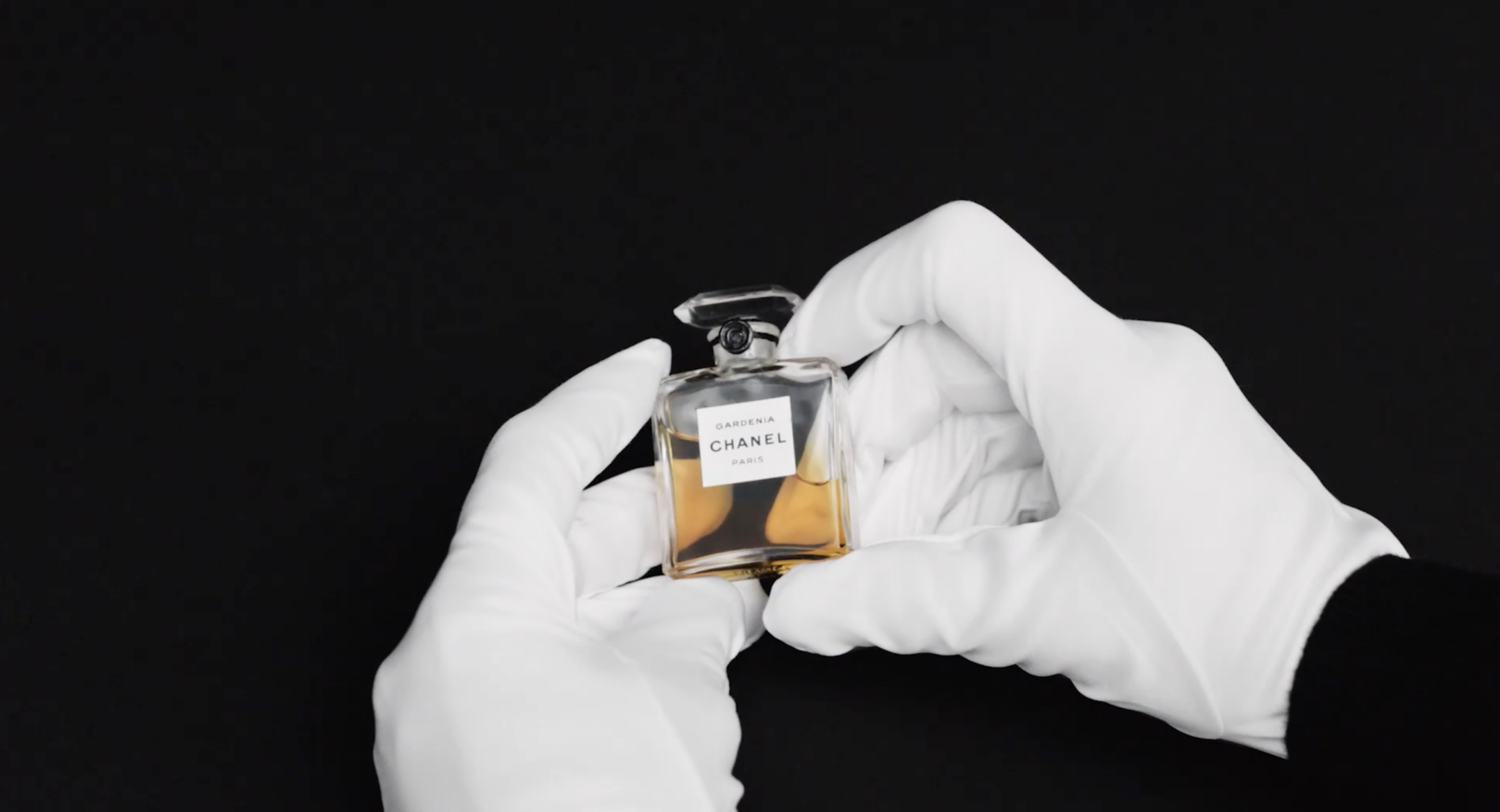
Gabrielle Chanel loved camellias. She even chose them as the house’s personal symbol. The camellia, however, has one flaw. It has no scent. That’s exactly why another flower, gardenia, ultimately lent it its fragrance.

Gardenia itself poses an unusual challenge for perfumers. Its natural scent simply cannot be distilled. The flower refuses to be captured through classical extraction methods. In 1925, perfumer Ernest Beaux took on exactly this task. The same man who, four years earlier, had created Chanel No. 5 for the house now faced an entirely different challenge. While No. 5 was meant to feel abstract, almost otherworldly, gardenia demanded the exact opposite. It had to evoke an actual flower, even though it emerged entirely from other raw materials.

Beaux rebuilt the scent of gardenia from orange blossom, tuberose, and jasmine. He rounded it out with woody notes of patchouli, vetiver, and sandalwood. The result was a perfume that read as a white flower, even though it never actually was one.
Gardenia saw its own return in the 1980s. At the time, Chanel relaunched it alongside two other exclusive house fragrances, Bois des Îles and Cuir de Russie. The new version stayed true to the original composition, though thanks to more advanced synthetic materials, it feels lighter. It loses, in fact, the heaviness that today’s reader might intuitively expect from a white floral.

Today, the fragrance belongs to Les Exclusifs de Chanel. This collection deliberately sits outside the house’s main lineup. It gathers, in fact, the scents Chanel never wanted to make mainstream. Within it, gardenia remains exactly what it was from the start. It remains a quiet, almost elusive flower, one that, in the end, finally let itself be heard.
