New York Fashion Week 2026 belonged to anniversaries, geometry and animal prints, as critic Vanessa Friedman summed it up for The New York Times. We noticed something else, though, how often designers this week turned directly to art and architecture, not just as inspiration, but as literal set design.

Michael Kors: The MoMA Sculpture Garden
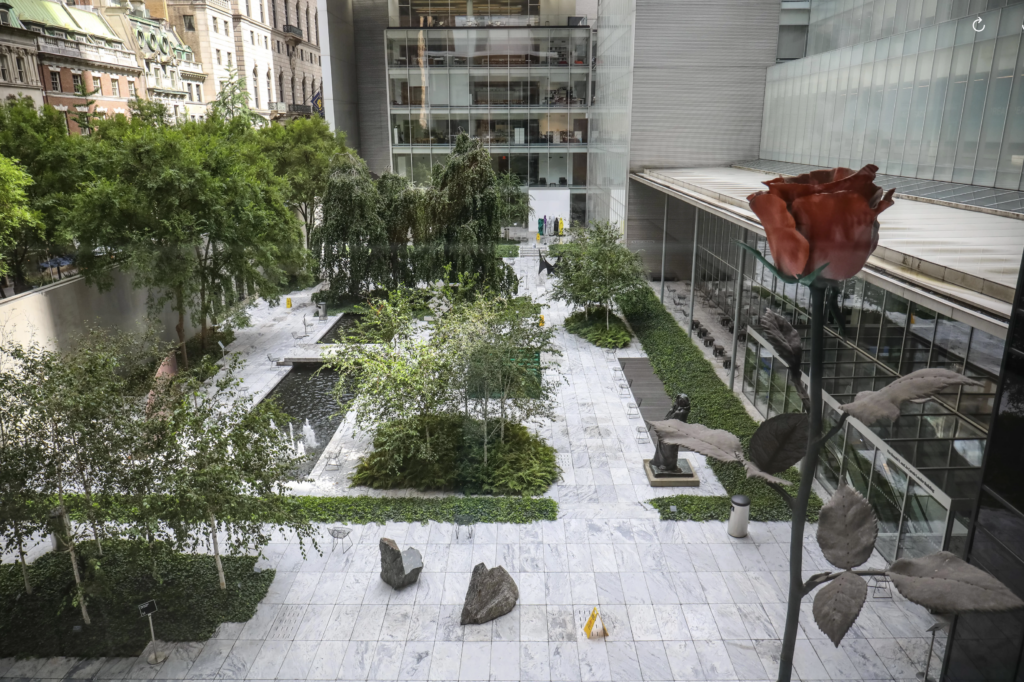
Michael Kors presented his SS27 collection directly in the Sculpture Garden of the Museum of Modern Art, marking the brand’s 45th anniversary. Philip Johnson designed the garden in 1953. He was MoMA’s first head of its architecture department, which he himself founded. Calder’s sculpture Black Widow once stood here too.
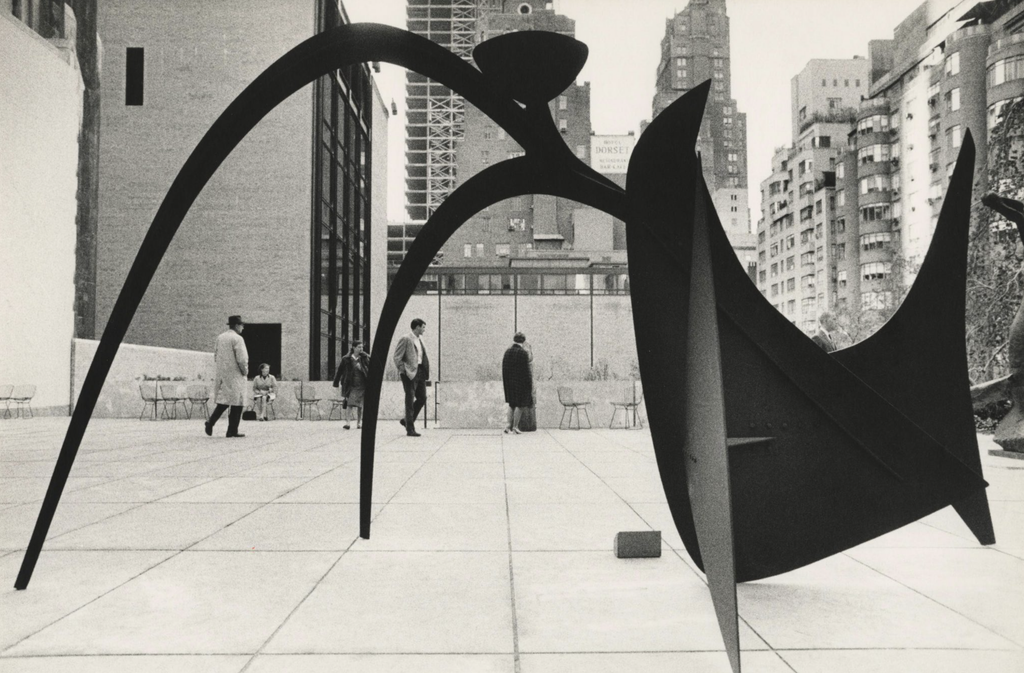
Kors himself told Reuters he was drawn to the tension between something sculptural and something sharply cut. He named three artists as direct reference points for the collection, Carmen Herrera, Alexander Calder and Ellsworth Kelly.
This showed up in blocks of saturated color, graphic contrasts and sculptural silhouettes. Asymmetric dresses in primary red, yellow and black ran throughout the collection, alongside slightly “mod” 1960s shapes, such as a micro skirt suit with a Peter Pan collar in bright green.
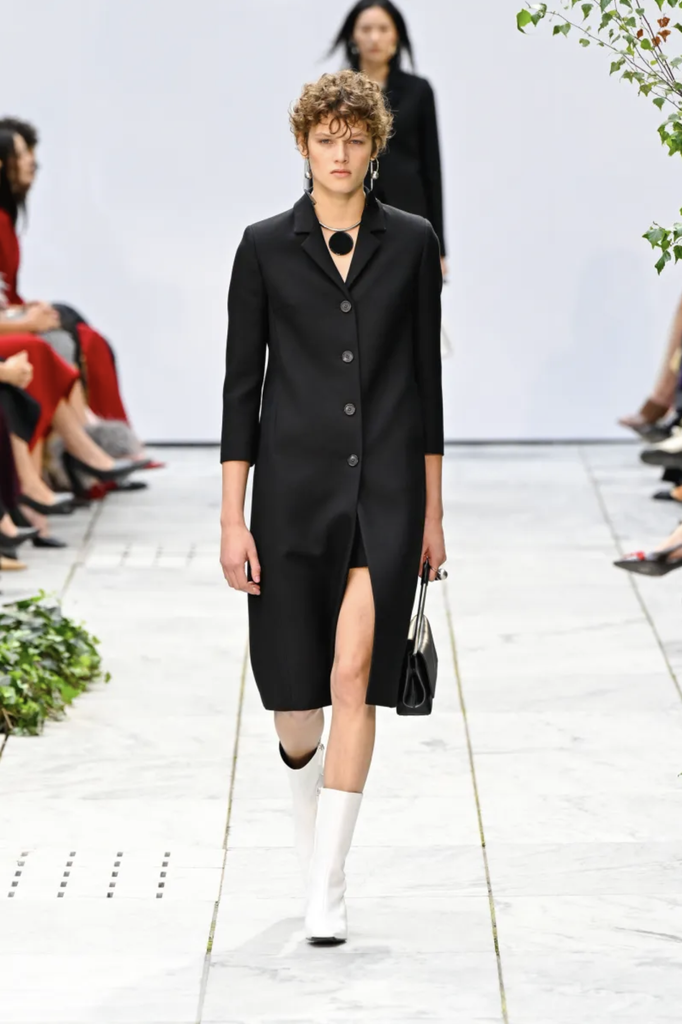
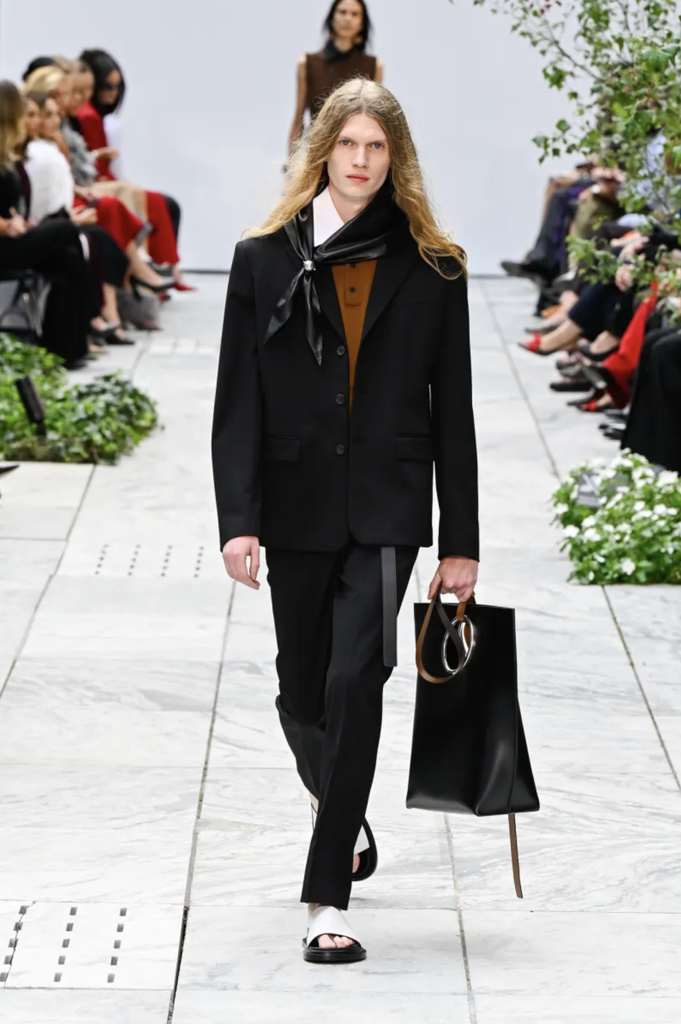
Kors also worked with thin black-and-white stripes in an op-art style. The accessories, meanwhile, had a sculptural character. Bags hung from silver hoops, leather coin purses doubled as layered necklaces, and oversized rings and beehive-shaped sunglasses completed the look. He described the palette, mostly black and white with hits of red, green and yellow, as “Mondrian-esque,” adding: “It’s New York.”
The Impression’s review, notably, described the result as “not so much reinvention as recomposition,” meaning Kors took his most recognizable pieces, the coat, the trousers, the jacket, and subjected them to “subtle but meaningful disruption.”
Carolina Herrera: A Triple Art Collaboration
The richest show of the whole week in terms of artistic crossovers belonged, without question, to Carolina Herrera. Creative director Wes Gordon celebrated the house’s 45th anniversary at Lincoln Center, where a strip of 28,798 yellow tulips bloomed along the promenade between Elie Nadelman’s monumental sculptures. (There were originally 28,800, but Gordon gave two to his children.)
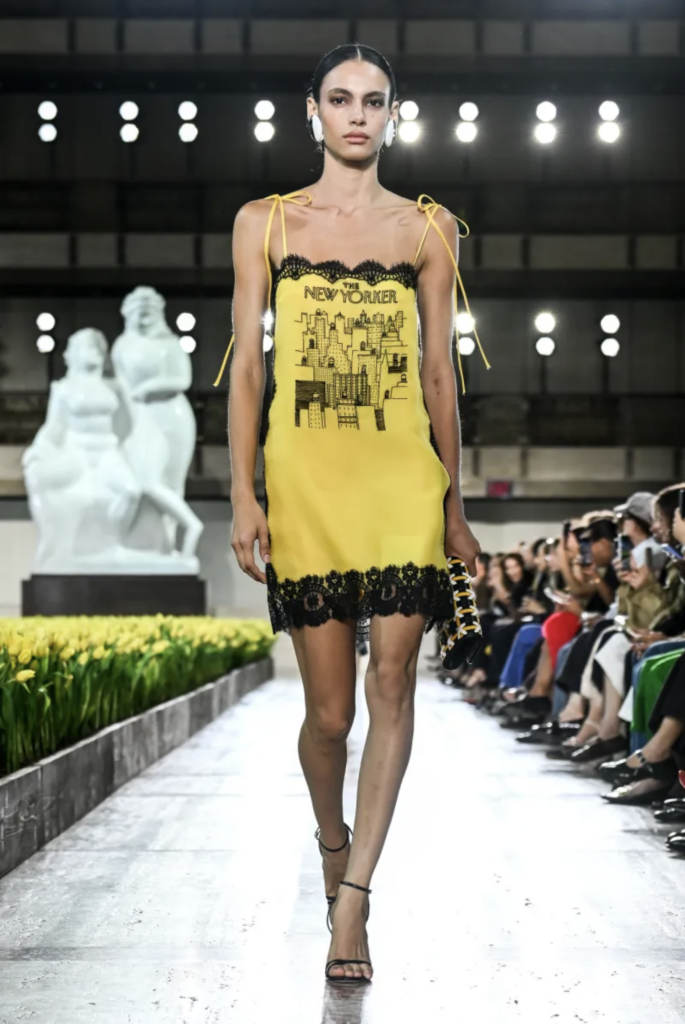
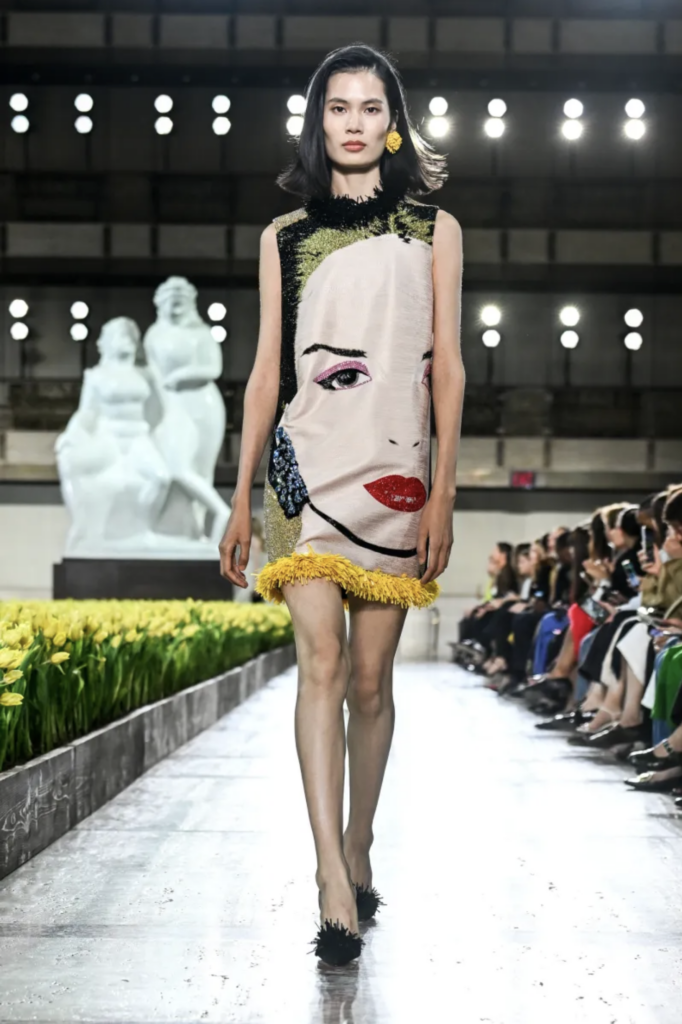
The show brought three separate art collaborations. The first was an official partnership with The Andy Warhol Foundation. Warhol painted a portrait of Carolina Herrera herself in 1978–79. It belonged to his series of portraits of friends and celebrities, alongside names like Liza Minnelli and Truman Capote. According to Gordon, this portrait, with its pink eyeshadow and emerald earrings, became his answer to what the house needed, color, confidence and glamour. He translated it onto embroidered mini shift dresses finished with beaded fringe.
The second collaboration, meanwhile, was with the legendary New York magazine The New Yorker. The atelier hand-embroidered its April 27, 1981 cover, the exact date of Herrera’s first-ever fashion show at the Metropolitan Club. The third layer was a collaboration with James de Givenchy and his house Taffin.
De Givenchy is known as a colorist who also works with unconventional materials, such as ceramic. He designed massive jewelry pieces for Herrera that read more like small sculptures. Floral earrings featured giant amber-colored stones set in pink petals, while other rings were made of cherry-red ceramic and gold. Karlie Kloss, who closed the show, wore them too.
Calvin Klein: Walter De Maria’s Installations
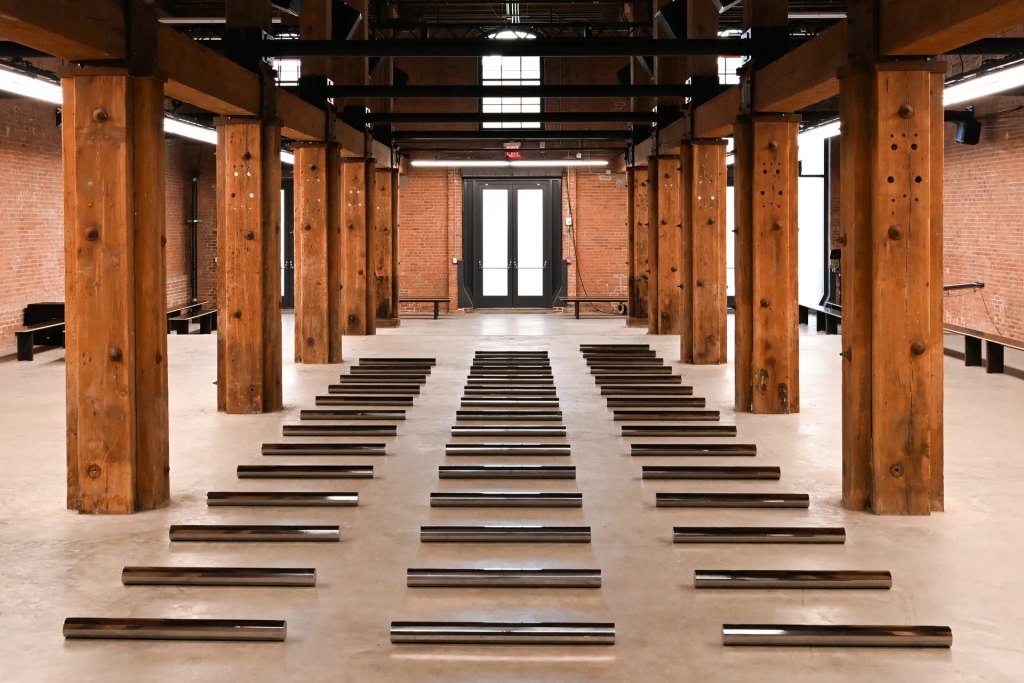
Veronica Leoni presented her spring collection for Calvin Klein at the Terminal Warehouse, once the New York nightclub Tunnel. The space was shared with installations by Walter De Maria, a key figure in American land art and minimalism.
She described her process as a “discipline of removal.” That means stripping away everything that doesn’t carry the idea itself, until only what’s essential remains, very much in the spirit of the minimalism Calvin Klein himself originally built the brand on.
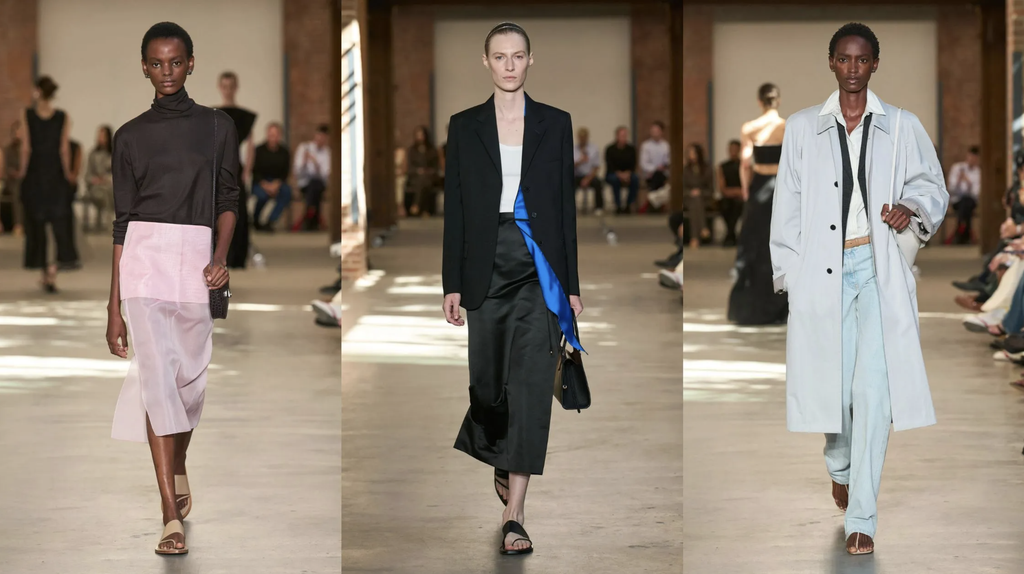
Proenza Schouler: The Former Rubin Museum
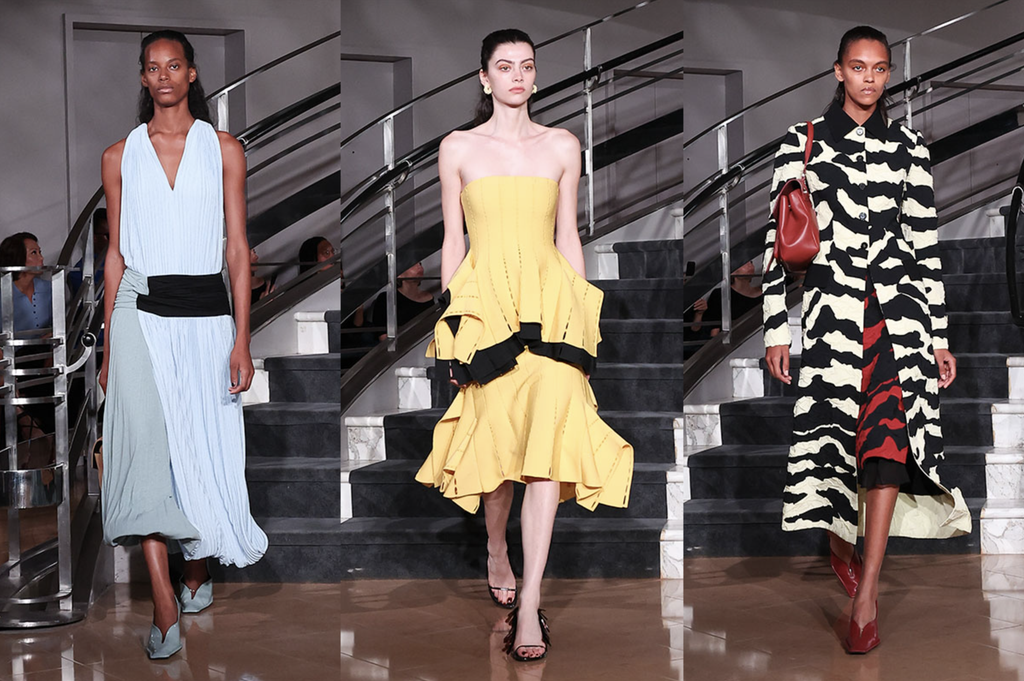
Rachel Scott presented her second collection for Proenza Schouler inside the former Rubin Museum on West 17th Street. The building carries a layered history. Before it was a museum, it housed the New York department store Barneys. In 2002, Barneys was the very first store to sell Proenza Schouler’s thesis collection. The spiral staircase became part of the staging itself, with models moving through a space that links the brand’s beginnings to its present.
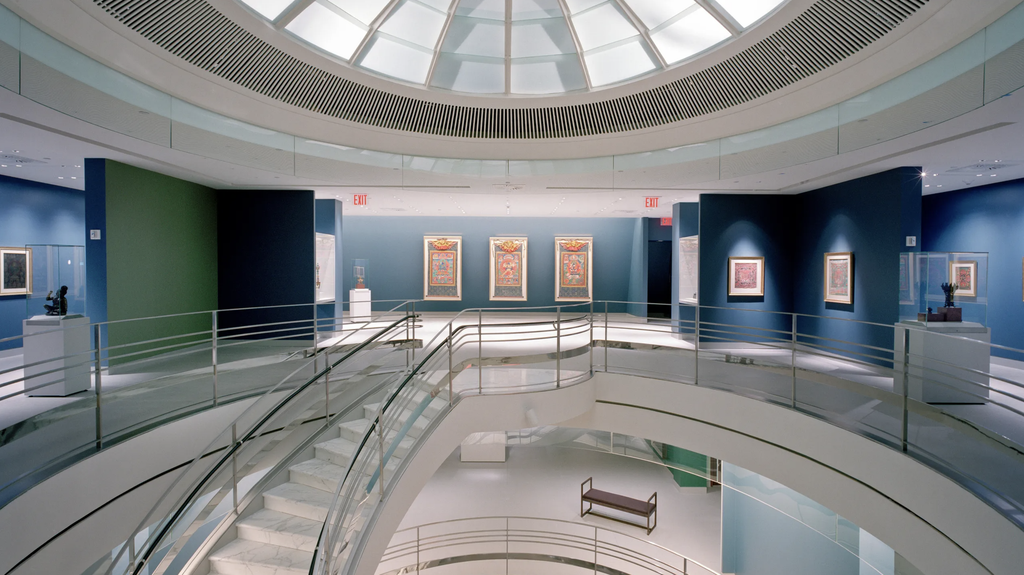
The two central motifs of the collection, meanwhile, were the rose and the tiger. Scott rendered the rose as a cyanotype made from real flowers, an old photographic process she used as a feminist symbol. The tiger, by contrast, appeared in hand-knit intarsia and silk plissé, a wilder, less controlled element within the house’s otherwise precise vocabulary.
Fforme: The Industrial Starrett-Lehigh Building
Frances Howie presented Fforme’s spring collection inside the Starrett-Lehigh Building, the largest space the brand has used to date. She looked to the 1930s for inspiration, a decade when coats lost their lining and coats became translucent.
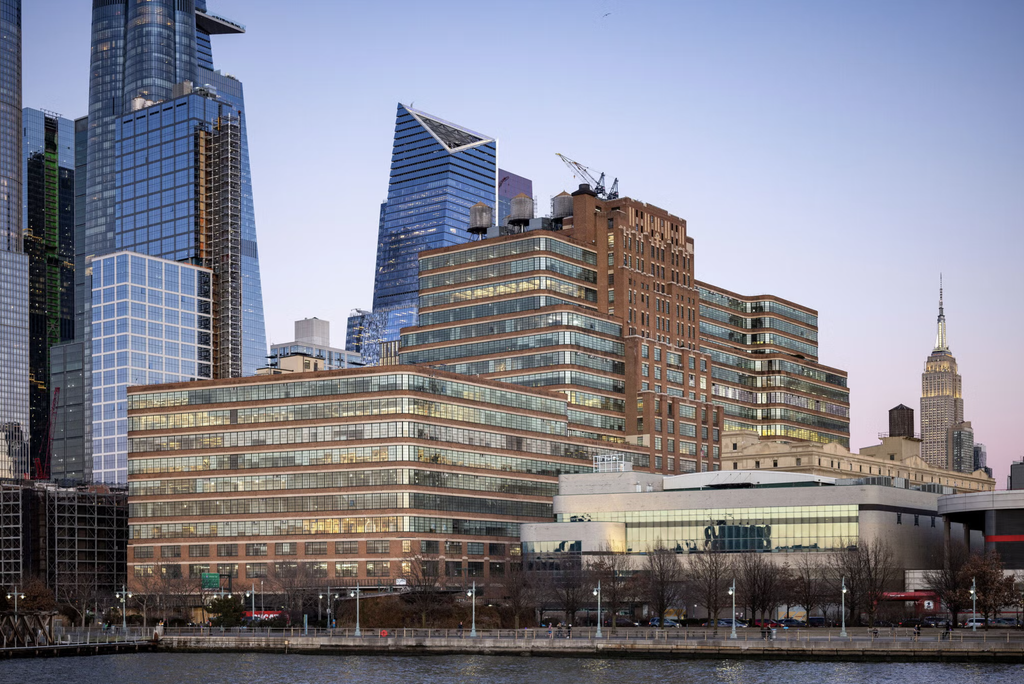
Howie also drew on the punk stylist Judy Blame, who turned everyday objects into jewelry. Working with ANH Studio, she carried that same principle into the garments, leaving the construction visible, much like exposed structural framework in architecture. The same approach applies to the unlined jackets and coats themselves, which reveal the inside of the garment rather than concealing it.
Thom Browne: A Garden Inside The Shed
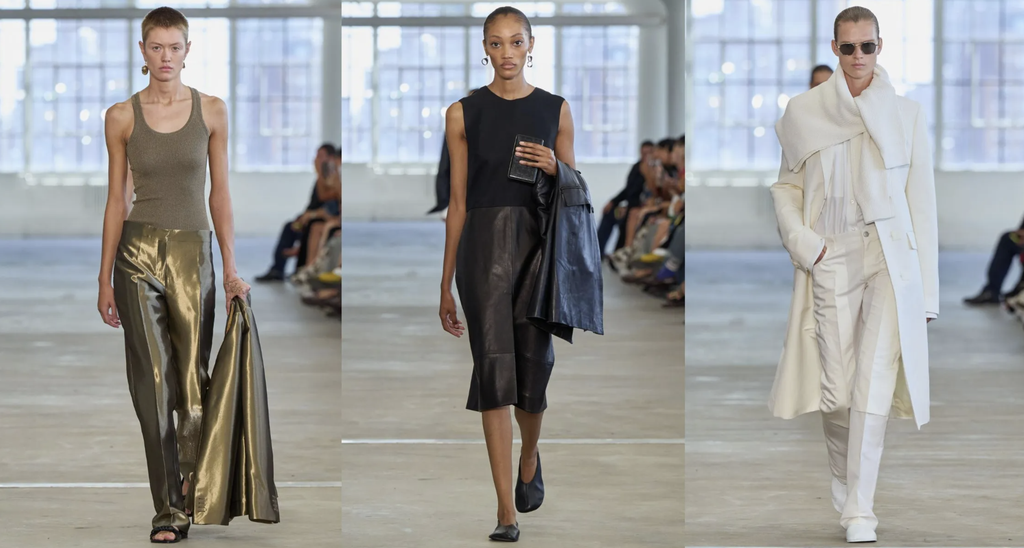
Thom Browne closed out the week with a show at The Shed in Hudson Yards. Completed in 2019, the building was designed by Diller Scofidio + Renfro with Rockwell Group as an “architecture of infrastructure,” its outer shell able to roll back on rails to nearly double the hall’s footprint. The Shed is also home to Frieze New York, which moved there in 2021.
Architect Liz Diller has designed fashion before, too. In 2019, she created two hybrid pieces from nylon for Prada meant to blur the line between garment and accessory, part of the same project that had previously invited Rem Koolhaas and Herzog & de Meuron.
Browne transformed this very adaptable space into a vast garden with oversized leaves, daisies and a chrysalis at its center, inspired by A Bug’s Life. The narrative followed a caterpillar’s life cycle as it became a butterfly, with model Kai Schreiber (daughter of Naomi Watts and Liev Schreiber) emerging from the chrysalis in the final look. Embroidered beetles, flies and butterflies appeared throughout his signature, precisely cut tailoring.

Sergio Hudson: Rainbow Room
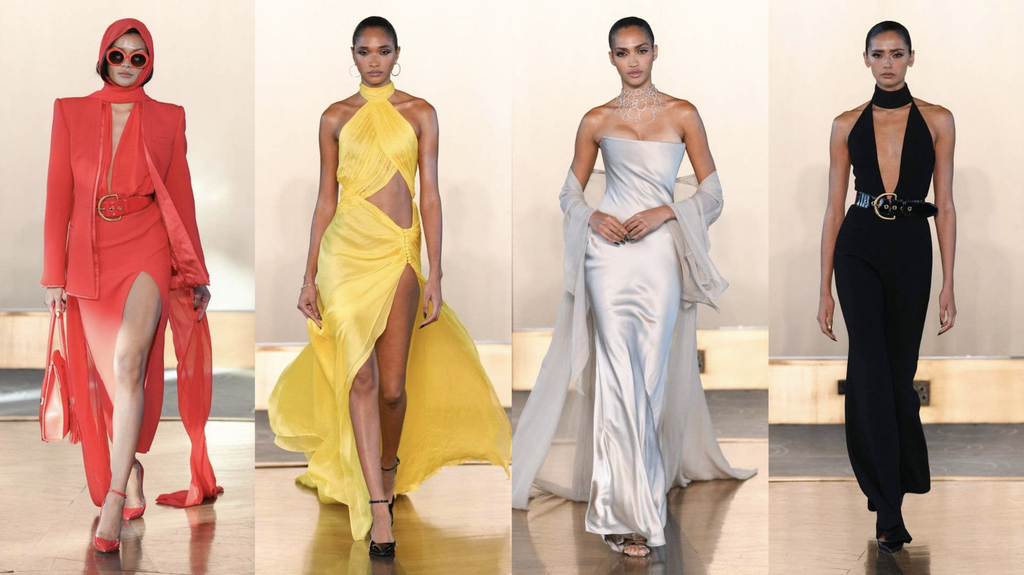
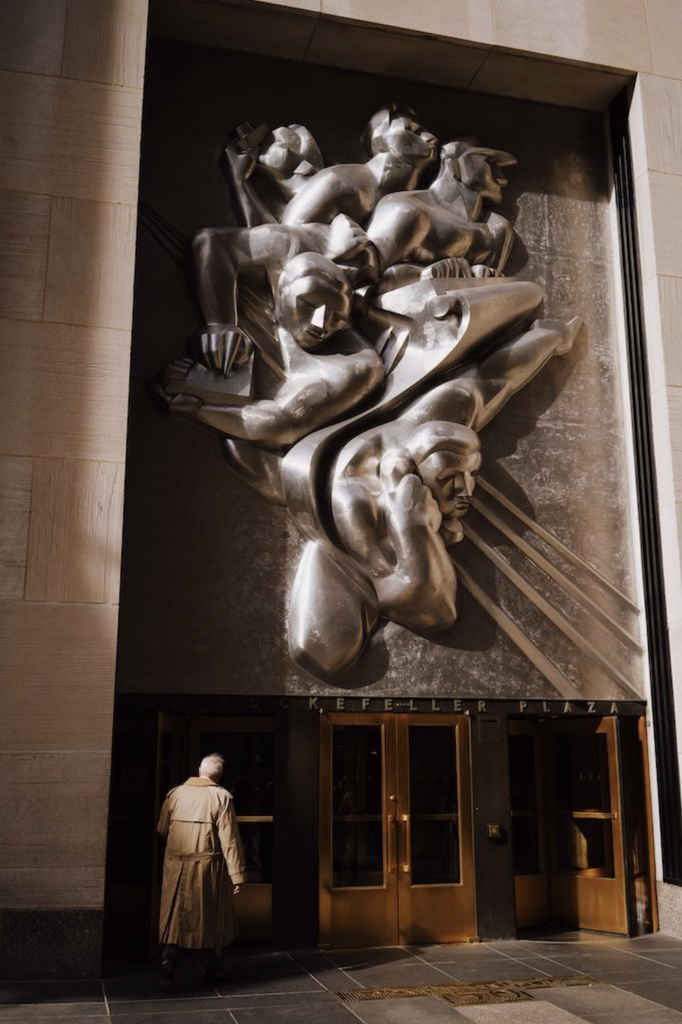
Sergio Hudson flipped the Bond fantasy on its head inside the art deco Rainbow Room on the 65th floor of Rockefeller Center. He cast the woman as the agent, the man as the one in need of rescue. The room’s geometric lines and gilded details echoed directly in the collection’s sharp, geometric cut.
Beneath the building, Isamu Noguchi’s relief News has hung since 1940, the first heroic-scale sculpture ever cast in stainless steel, which the artist himself later described as a premonition of war.
Eckhaus Latta: Confetti and J.Crew
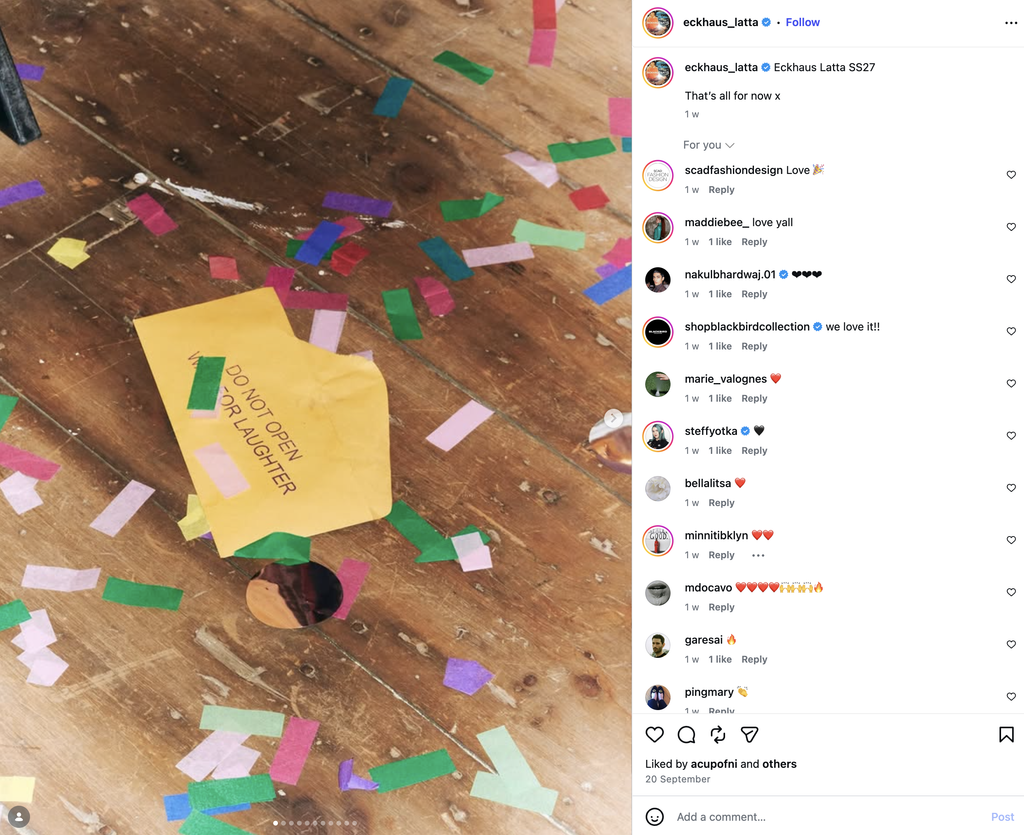
According to Vanessa Friedman of The New York Times, Eckhaus Latta was, without question, the breakthrough moment of the entire week. The label staged its 15th-anniversary show in an upstairs, white-walled space on the edge of NoHo and Chinatown. A sealed envelope waited on every seat, instructing guests not to open it and to wait for laughter.
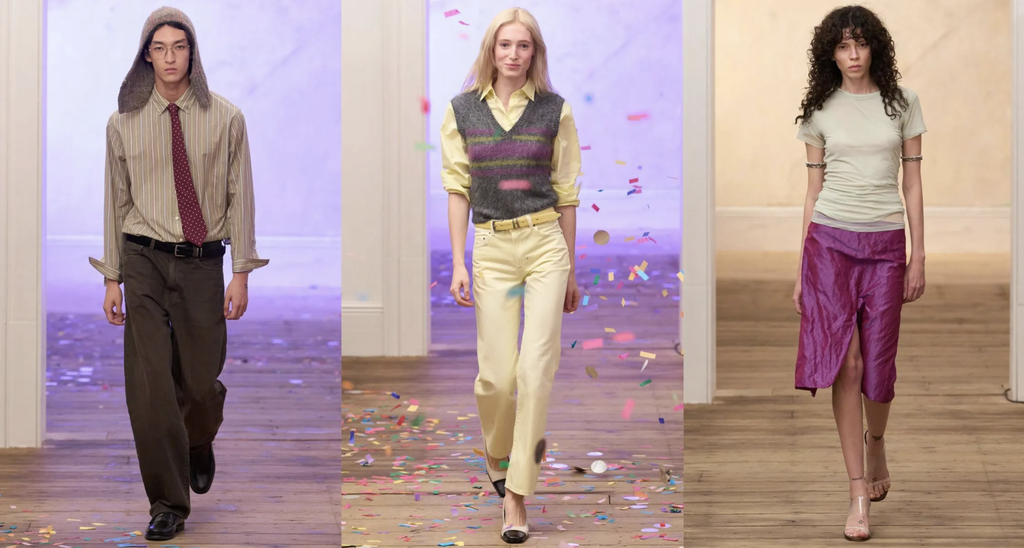
In the show’s final section, confetti spilled out of those envelopes as the audience showered the models with it, revealing a 27-piece capsule collaboration with J.Crew. Behind it was a roll-neck sweater Eckhaus and Latta had designed for J.Crew back in February, one that sold out so fast it prompted the bigger brand to request a larger-scale partnership. Backstage, Zoe Latta suggested they have no interest in staying small.