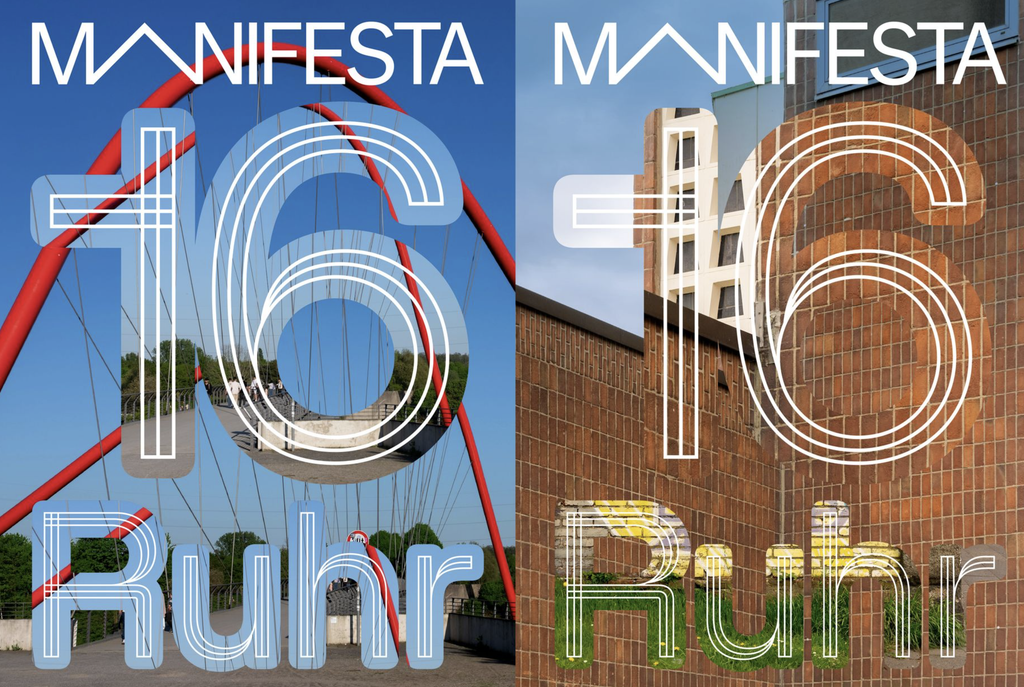
Manifesta is a nomadic European contemporary art exhibition. Every two years it moves to a different city or region. Its 16th edition takes place in Germany’s Ruhr area, an industrial region in the west of the country, from June 21 to October 4, 2026. Across four cities: Essen, Duisburg, Bochum, and Gelsenkirchen.
What This Is About
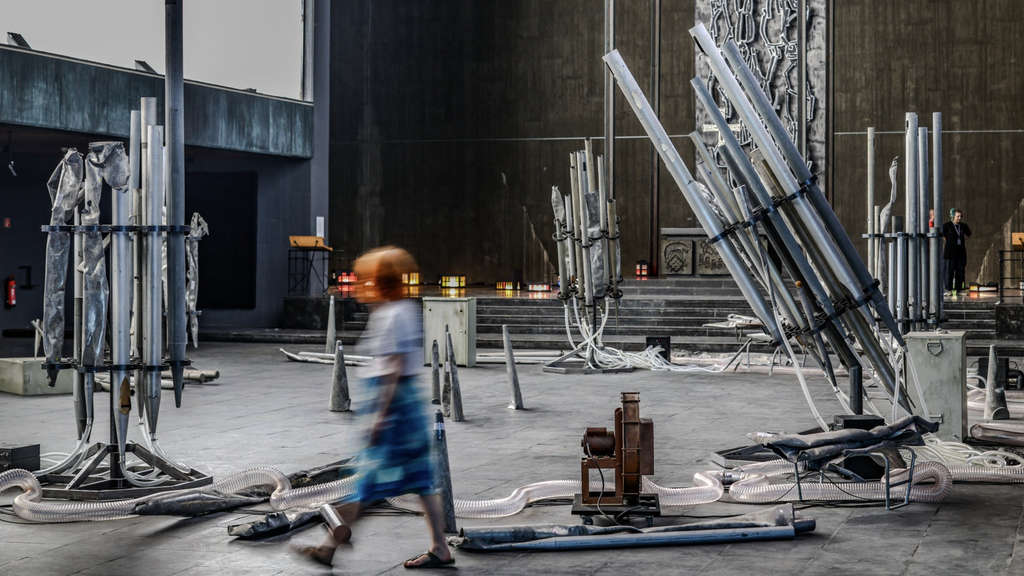
This edition has an unusual home: twelve old churches that no longer function as places of worship. Most of them were built after the Second World War, when the Ruhr area was being rapidly rebuilt. Today they stand empty or barely used. The biennial asks a simple question: what to do with them now?
This isn’t just about the Ruhr. Across Germany, more than 20,000 similar buildings are expected to become vacant or stop functioning as churches over the coming decade. Manifesta 16 Ruhr gives them a new, temporary purpose. They become exhibition halls, gardens, concert venues, art schools, textile workshops, or spaces for people to gather.
Why Churches Hold Special Meaning Here
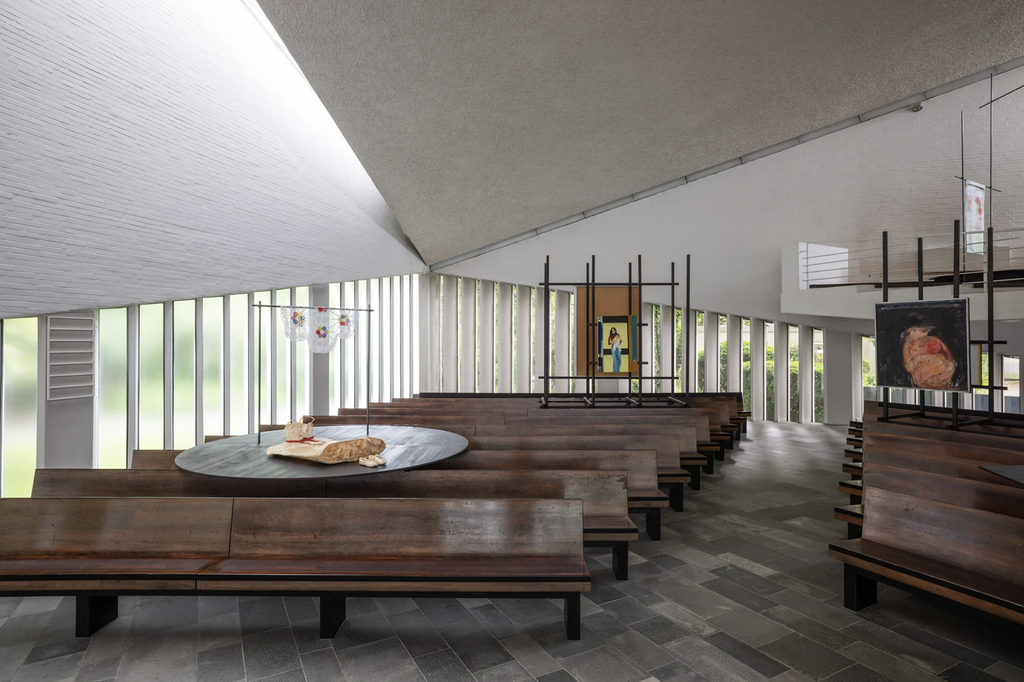
In the industrial neighborhoods of the Ruhr, a simple rule once applied. Everything essential, home, work, and church, had to be within walking distance. People would go to church in their house slippers. That’s where the local nickname “Pantoffelkirchen,” or “slipper churches,” comes from.
The building material itself is worth noting too. The walls of Gethsemane-Kirche in Bochum were built from bricks that local residents collected straight from the postwar rubble. This work was done by the so-called “Trümmerfrauen,” or “rubble women.” The future was literally built from the debris of the past, which is also the central idea behind the entire biennial.
A Church by a Pritzker Prize Winner
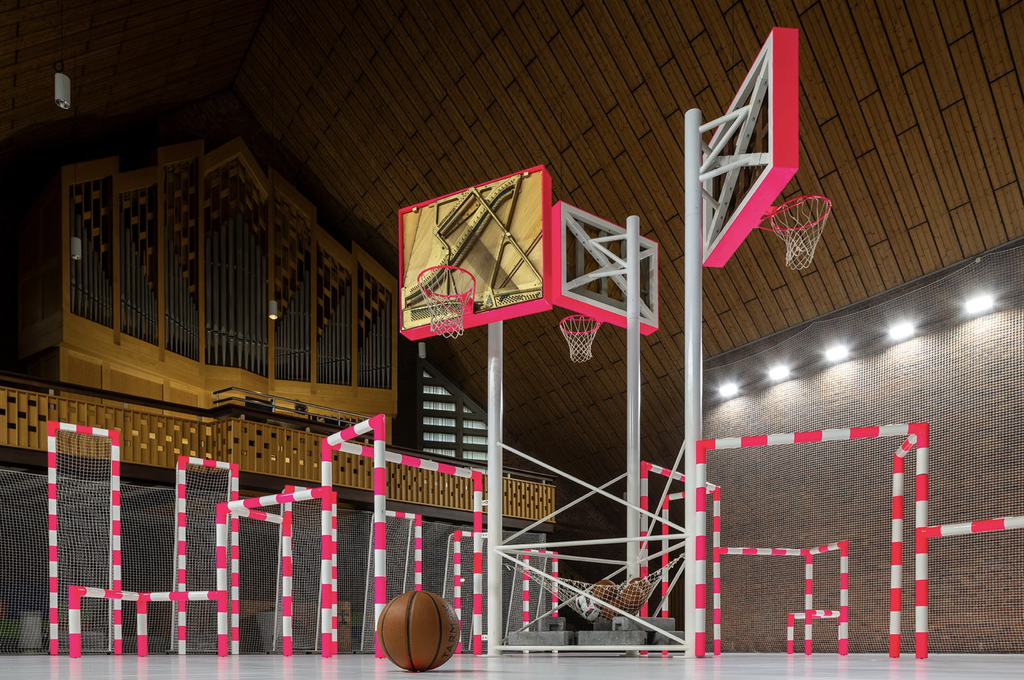
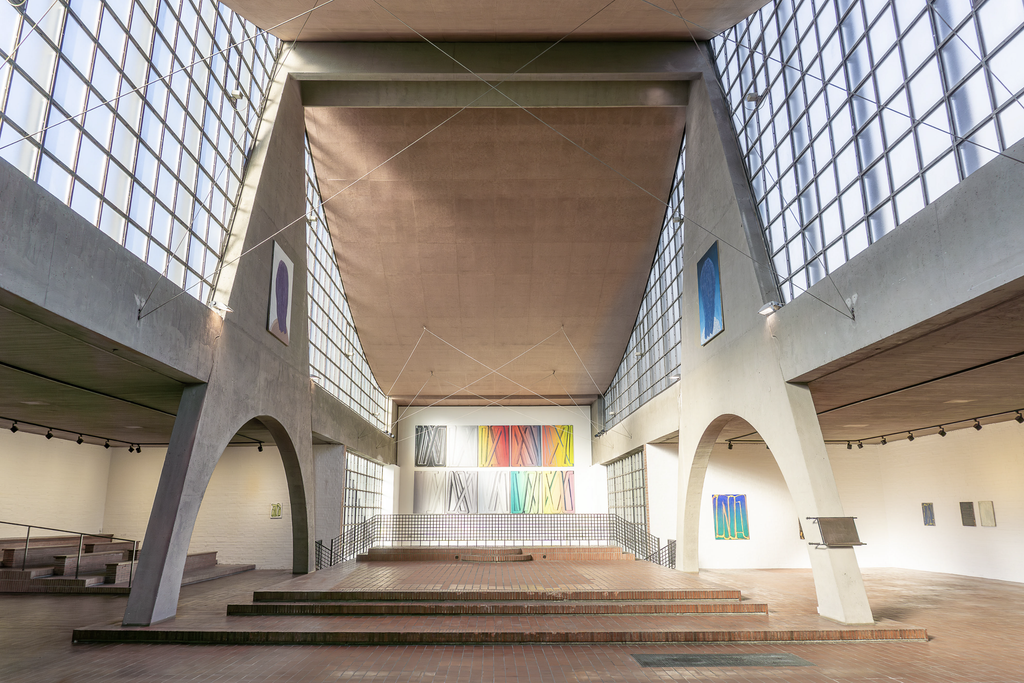
One church stands out architecturally among the twelve: Essen’s Heilig-Geist-Kirche by Gottfried Böhm. Böhm was the first German ever to win the Pritzker Prize, architecture’s most prestigious global award, in 1986. He came from a family of church builders. His father, Dominikus Böhm, was a significant architect of the interwar period, and the son carried that tradition forward in his own way. He became known above all for his expressive, almost sculptural concrete churches from postwar Germany. His buildings feel more like pieces of modern sculpture than traditional sacred spaces. This particular building gives the biennial not just a historical and social dimension, but a purely architectural one too.
Who’s Coming and Why
The Ruhr has a long history of migration. At the end of the 19th century, more than a million Poles arrived to work in its industries. Another major wave followed between the 1950s and 1970s. West Germany, in the midst of its postwar economic boom, needed labor and welcomed so-called “Gastarbeiter,” guest workers from Italy, Turkey, Greece, Poland, and the former Yugoslavia.
This history is reflected in the biennial itself. It brings together 107 artists and collectives from more than 25 countries. Germany, Poland, and Turkey are the most strongly represented, a direct reflection of the region’s migration history. There will also be 67 entirely new works, created specifically for the occasion.
Who Put It All Together
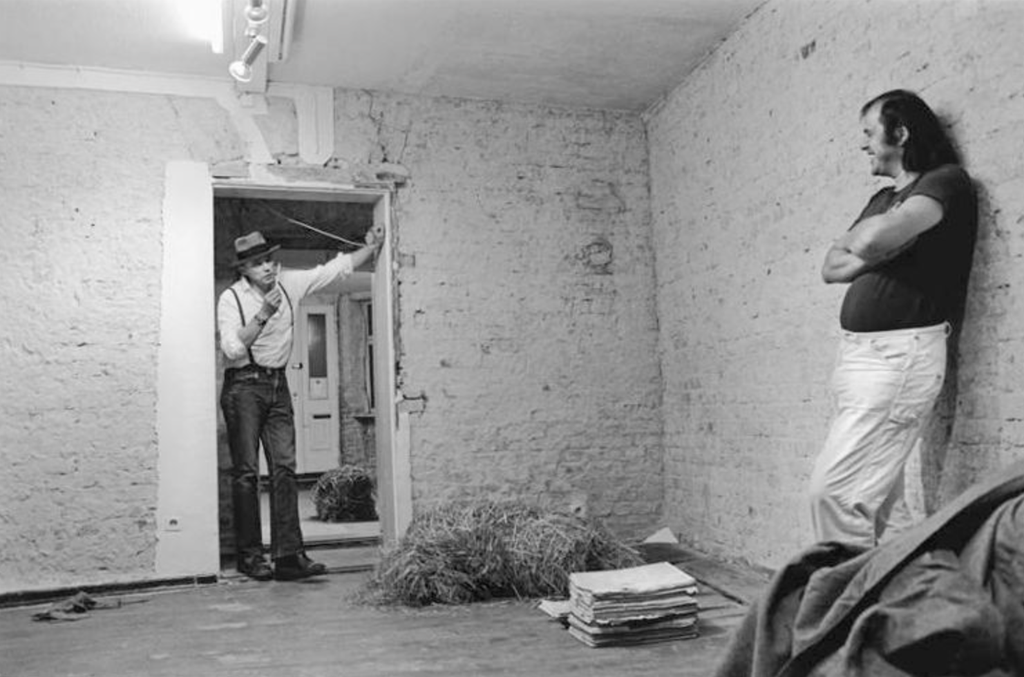
Rather than a single head curator, eight people stand behind the program. The organizers call them “Creative Mediators.” They work in intergenerational pairs from different countries. For example, the British duo Michael Kurtz and Henry Meyric Hughes, the German duo René Block and Leonie Herweg, or the Polish duo Krzysztof Kosciuczuk and Anda Rottenberg.
A Wider Program Beyond the Main Cities
Alongside the twelve main churches, there’s also an extended program called Manifesta 16+. It brings sixteen additional smaller, community-led projects to six further Ruhr cities. It’s built on local initiatives and the experiences of the people who live in these communities.
The Final Chapter of an Era
This edition also carries an emotional weight. It’s the last edition of Manifesta led by its founder, Hedwig Fijen, marking the close of more than thirty years of her leadership of the nomadic biennial.
The official opening took place on June 20 at Zollverein, a former coal mining complex that is now a UNESCO World Heritage Site.
From Coal Mine to Architectural Icon
The choice of opening venue is no accident. Zollverein was once the largest and most modern coal mine in the world, employing up to 8,000 miners a day at its peak. Mining continued here for 135 years, until the mine was permanently closed in 1986.
Its worldwide fame came largely from its architecture. Shaft XII was designed in 1932 by architects Fritz Schupp and Martin Kremmer in the strict, functionalist Bauhaus style, where form strictly follows function. This earned Zollverein the nickname “the most beautiful coal mine in the world.” In 2001, the complex was added to the UNESCO World Heritage List, alongside landmarks such as Cologne Cathedral and the Leaning Tower of Pisa.
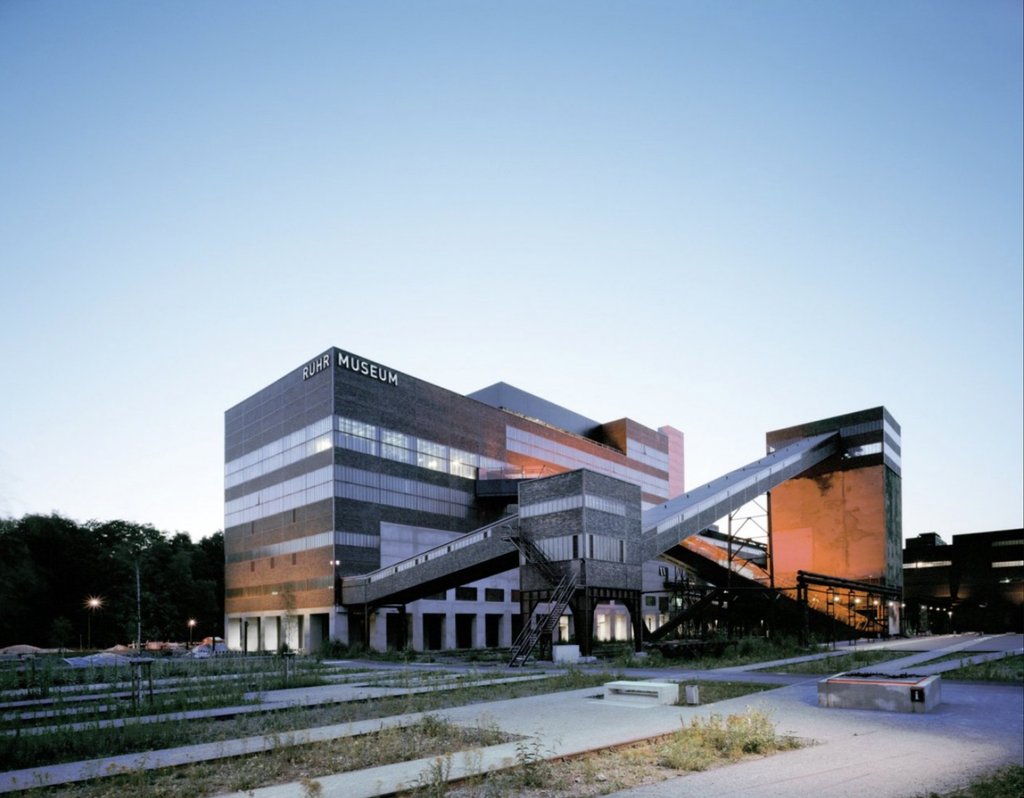
The transformation of the mine into a cultural space was designed as an overall master plan by Dutch architect Rem Koolhaas and his firm OMA. As part of this plan, Japanese architects Kazuyo Sejima and Ryue Nishizawa, known as SANAA, built the iconic Zollverein School of Management and Design in 2006, a perfect concrete cube with 35-meter edges, inspired by the dimensions of the original mining structures. Today, alongside this school, you’ll also find museums, design studios, concert halls, and even an ice rink.
It’s precisely this transformation from industrial ruin into a living cultural space that makes Zollverein a fitting symbolic introduction to Manifesta 16 as a whole, which asks that very same question: what should be done with buildings that have lost their original purpose?
Where and When
Manifesta 16 Ruhr, Essen, Duisburg, Bochum, and Gelsenkirchen. June 21 – October 4, 2026. Admission to all venues and the accompanying program is completely free