
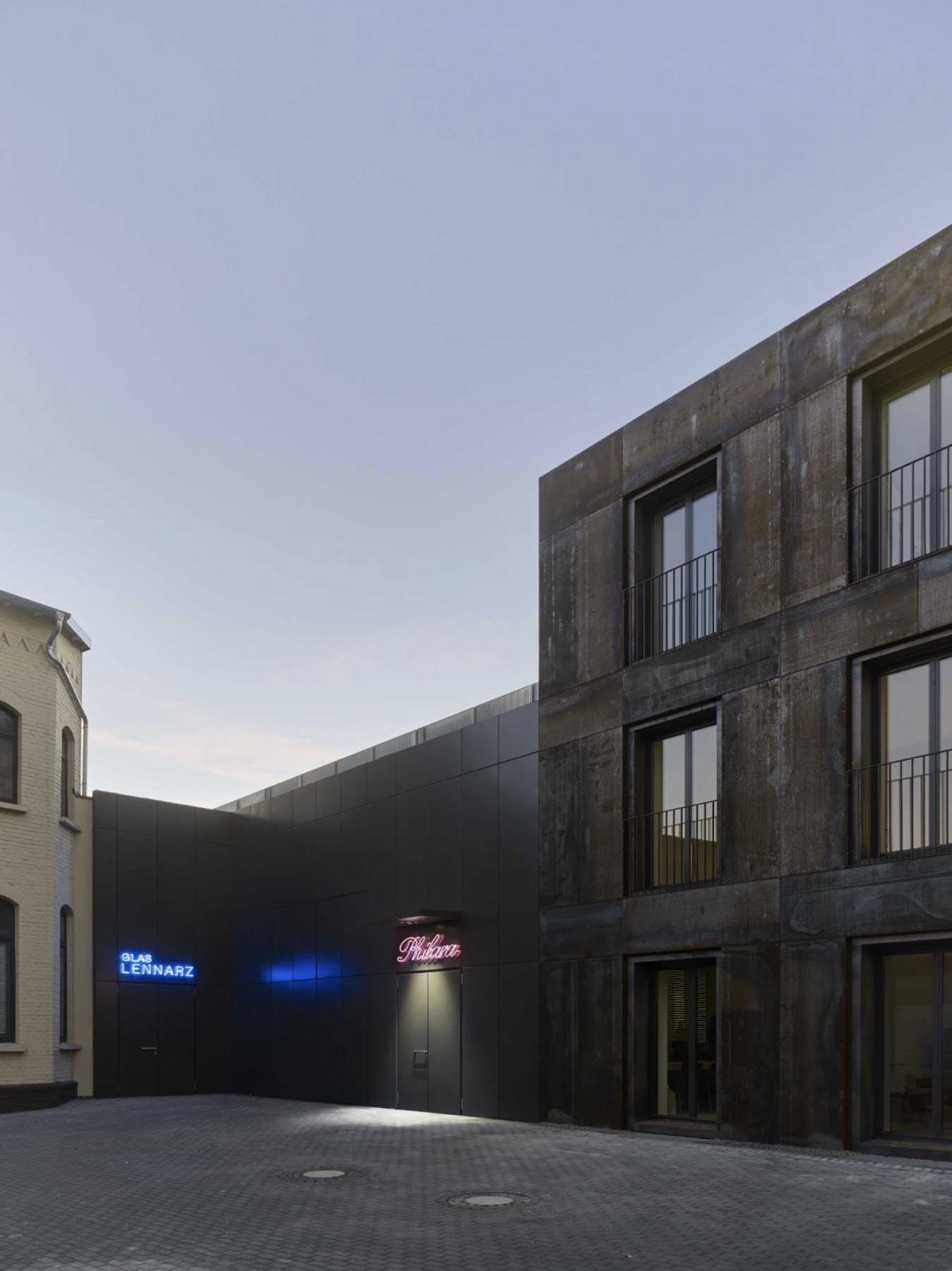
The Philara Collection in Düsseldorf is celebrating ten years at its current address. To mark the occasion, the collection opens House of Balagan, an exhibition running from June 27, 2026, to February 14, 2027. Curator Hannah Niemeier selected over one hundred works by more than eighty artists for the show. She spread them across the entire exhibition space.


Three generations, one collection
This exhibition isn’t simply a showcase of Gil Bronner’s collecting passion, though his collection now includes around two thousand works. It also draws on pieces from his parents’ collection, the very works that shaped his early interest in art. Meanwhile, the show includes what his children, Philip and Lara, collect today, and the exhibition space itself carries their names. As a result, House of Balagan reads less like a single collector’s story and more like a portrait of three generations within one family.
A former factory building
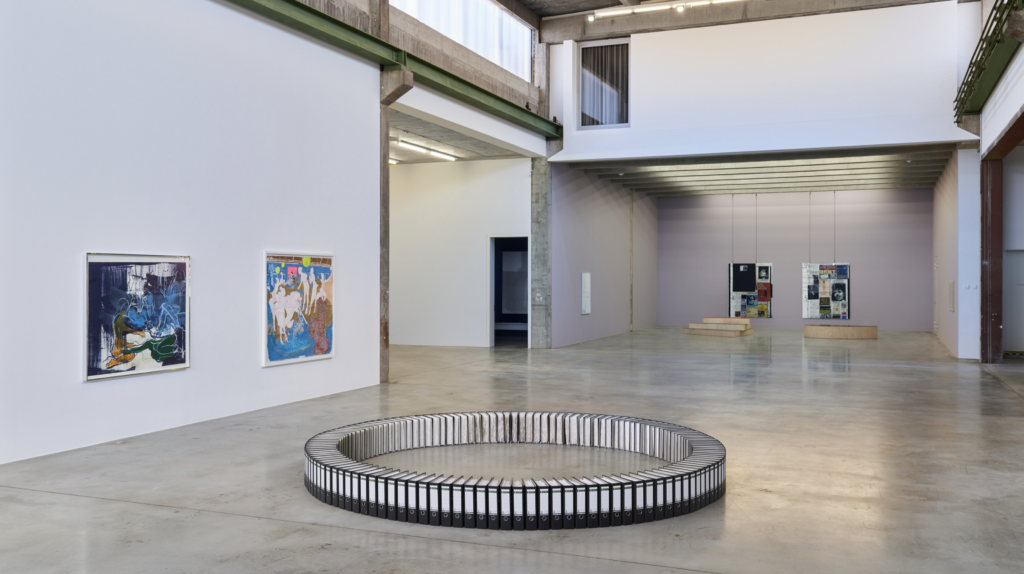
Today, the collection lives inside a space that architecture studio Sieber Architekten converted in 2016. Before that, the building served as an industrial site belonging to the Leitz factory. Photographer Stefan Müller documented the entire transformation. Interestingly, this history resurfaces inside the exhibition itself, almost by accident: Ignacio Uriarte’s work Ringbinder Circle is built from one hundred eighty Leitz office binders. Without meaning to, it nods directly back to the building’s industrial origins.
The first purchase, the final touch
The exhibition also includes Der Seher (1990) by Miguel Ángel Campano. This was the very first work Bronner bought, in Barcelona in the early 1990s, and it laid the foundation for his entire collection. Photographs by Christoph Westermeier add a further personal layer to the show. They offer a glimpse into the private apartment of Bronner’s parents, as well as into his own home.

Threads running through the show
Beyond its personal story, the exhibition unfolds across several thematic threads. One explores physicality and femininity, featuring works by Anys Reimann, Heidi Hahn, and Rita Ackermann. Another examines domesticity through pieces by Matthias Weischer, Michaela Yearwood-Dan, and Cerith Wyn Evans. A further thread touches on politics and society, spanning a 1924 drawing by George Grosz, Hanne Darboven’s exploration of time, and the urban psychogeography found in Sarah Morris’s paintings. A dedicated space also highlights artists connected to the East German art scene, including Christoph Ruckhäberle and Sebastian Gögel.
Finally, House of Balagan features a standalone solo presentation of works by Marcel Dzama.
Practical information
Sammlung Philara is located at Birkenstraße 47a in Düsseldorf. House of Balagan remains on view through February 14, 2027.

