Paris Internationale 2026 opens the twelfth chapter of a story that changed our idea of what an art fair can be. From 20 to 24 October, it moves to a new address by the Canal Saint-Martin. It brings galleries from 19 countries, ambitious presentations and architecture by the studio Christ & Gantenbein. Admission remains, as always, free. Chris Dercon cannot imagine Paris’s international reawakening without it. One walk through and you’ll understand why.

Paris Internationale 2026: a focused format, bigger ambitions
The fair was founded in 2015 by gallerists for gallerists. Today it is run by three founding galleries: Ciaccia Levi, Crèvecœur and Gregor Staiger. Silvia Ammon has been its director from the very beginning.
This year the organisers deliberately chose a more focused format. Each booth will show no more than three artists. Gender parity applies across the exhibitors. All decisions are made collectively and with ecology in mind. The organisers call it ecosophy: improving instead of growing. The result? More than 20,000 visitors a year and no ticket.
Debord, dérive a umenie blúdiť
Za menom Paris Internationale sa skrýva odkaz na jednu z najvplyvnejších avantgárd 20. storočia. Jej názov aj identita vychádzajú zo Situacionistickej internacionály.
Kto boli situacionisti? Išlo o skupinu umelcov, spisovateľov a mysliteľov. Založili ju v roku 1957 v talianskom mestečku Cosio d’Arroscia. Na čele stáli francúzsky teoretik Guy Debord a dánsky maliar Asger Jorn. Chceli spojiť umenie s každodenným životom. Umenie podľa nich nemalo patriť len galériám a zberateľom.
Kto bol Guy Debord? Francúzsky filozof, filmár a kritik konzumnej spoločnosti. Jeho najznámejšia kniha Spoločnosť spektáklu vyšla v roku 1967. Debord v nej tvrdí, že sme sa z účastníkov života stali pasívnymi divákmi. Jeho myšlienky ovplyvnili študentské nepokoje v Paríži v máji 1968. Skupina sa rozpadla v roku 1972, no jej idey žijú ďalej.
Čo je dérive? Doslova to znamená „unášanie sa“. Debord tak nazval spôsob, ako objavovať mesto bez plánu. Človek nechá cieľ aj povinnosti bokom a ide tam, kam ho priestor potiahne. Nevedie ho mapa, ale atmosféra ulíc. Nejde o obyčajnú prechádzku, ale o vedomé vnímanie toho, ako na nás miesto pôsobí.
Ako sa to prejavuje na veľtrhu? Paris Internationale 2026 z tejto filozofie stavia celý program. Daily Dérives sú denné prechádzky veľtrhom. Vedú ich kurátori, riaditelia múzeí, umelci aj zberatelia. Nehovoria akademicky, ale osobne. Organizátori sa pritom priamo odvolávajú na Deborda. Chcú, aby sa návštevník nechal uniesť priestorom a stretnutiami v ňom.
Rovnako funguje aj usporiadanie. Galérie sa nedelia na sektory podľa veľkosti či prestíže. Začínajúci a etablovaní vystavujú vedľa seba. Návštevníka tak vedie zvedavosť, nie hierarchia. Presne ako pri dérive.
Debord, the dérive and the art of wandering
The name Paris Internationale hides a reference to one of the most influential avant-gardes of the 20th century. Both its name and its identity draw on the Situationist International.
Who were the Situationists? They were a group of artists, writers and thinkers. They founded the movement in 1957 in the small Italian town of Cosio d’Arroscia. It was led by the French theorist Guy Debord and the Danish painter Asger Jorn. They wanted to merge art with everyday life. In their view, art should not belong only to galleries and collectors.
Who was Guy Debord? A French philosopher, filmmaker and critic of consumer society. His best-known book, The Society of the Spectacle, was published in 1967. In it, Debord argues that we have turned from participants in life into passive spectators. His ideas influenced the student uprising in Paris in May 1968. The group dissolved in 1972, but its ideas live on.
What is the dérive? Literally, it means “drifting”. Debord used the term for a way of exploring the city without a plan. You set aside your destination and obligations and go wherever the space pulls you. You are guided not by a map but by the atmosphere of the streets. It isn’t an ordinary stroll but a conscious awareness of how a place affects us.
How does this show up at the fair? Paris Internationale 2026 builds its entire programme on this philosophy. The Daily Dérives are daily walks through the fair. They are led by curators, museum directors, artists and collectors. They speak not academically but personally. The organisers refer directly to Debord. They want visitors to let themselves be carried along by the space and the encounters within it.
The layout works the same way. Galleries are not divided into sectors by size or prestige. Emerging and established galleries exhibit side by side. Visitors are guided by curiosity, not hierarchy. Just like in a dérive.
From the Champs-Élysées to the Canal Saint-Martin
Paris Internationale has never had a permanent address. Every year it moves and discovers a different corner of Paris. Last year it stood a stone’s throw from the Arc de Triomphe, near the Champs-Élysées. This year it moves to the Canal Saint-Martin, one of the liveliest neighbourhoods in the city.
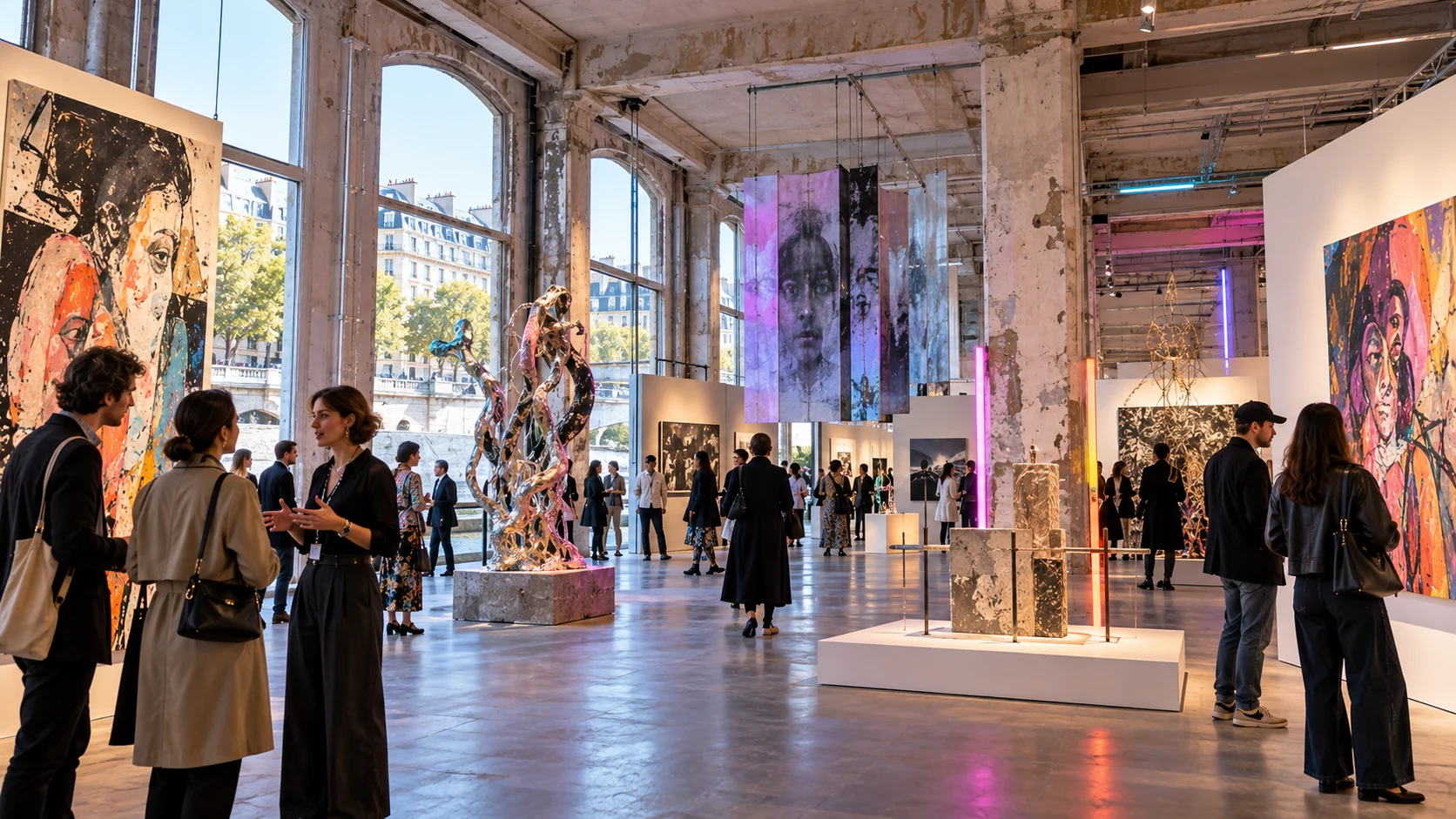
Instead of a grand palace, it has chosen an ordinary urban building on the Quai de Valmy. It has 3,500 m², five storeys facing the street and four courtyards full of daylight. The architects describe it as an ode to the city we usually overlook.
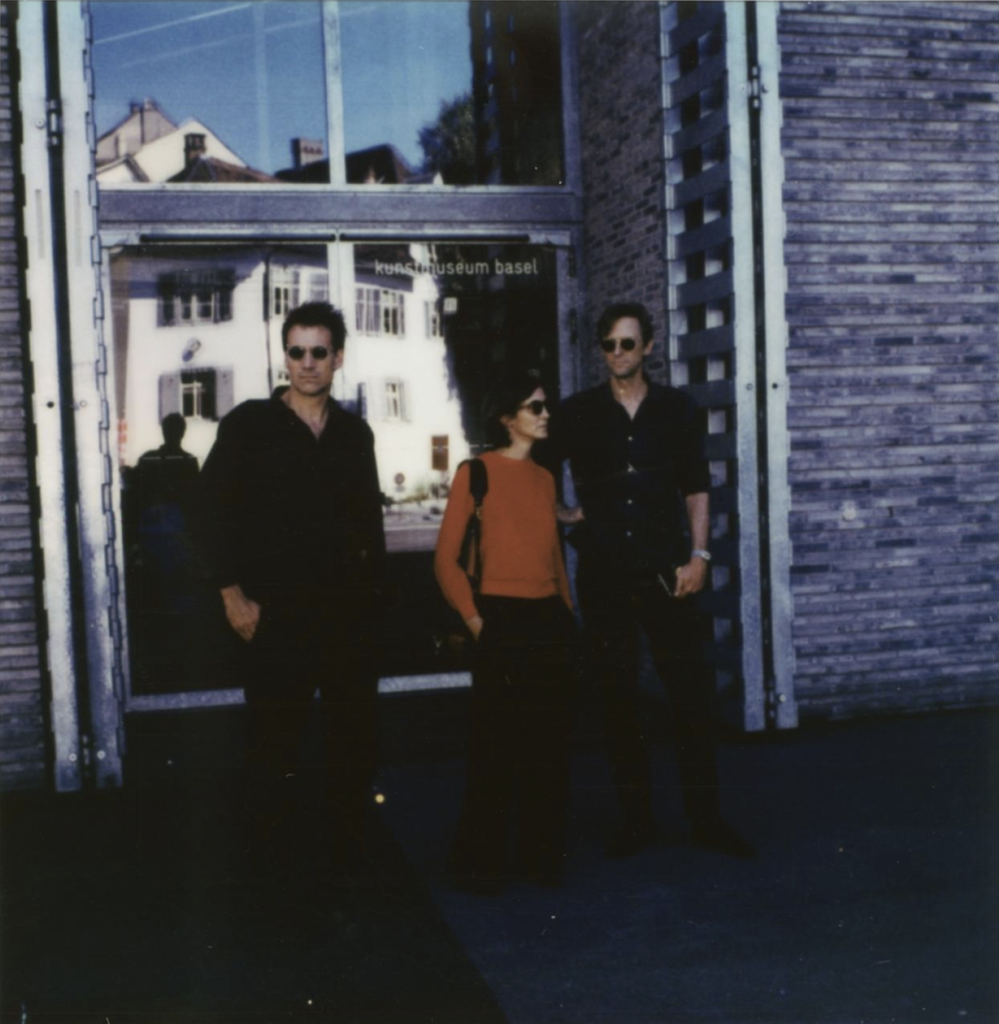
The space was designed by the Basel studio Christ & Gantenbein. Museum lovers will know the name. They built the new Kunstmuseum Basel building, through which thousands of collectors pass during Art Basel. The extension of the Swiss National Museum in Zurich is also their work. They are currently expanding MACBA in Barcelona.
They have been working for the fair since 2022. Inside the building they installed angled walls that guide visitors naturally through the space. The courtyards are lit by a grid of LED tubes. The walls can be dismantled and reused – back in April they served the fair’s Milan edition.
Galleries worth a stop at Paris Internationale 2026
Molitor, Berlin
The gallery brings together two strong names. Ketuta Alexi-Meskhishvili was born in 1979 in Tbilisi. She is a Georgian-American photographer based in Berlin. She combines analogue and digital techniques and leaves room for chance. Exhibiting alongside her is Jesse Darling, winner of the 2023 Turner Prize. Darling works with barriers, hazard tape and office binders, assembling banal objects into an image of a fragile society.
Sophie Tappeiner, Vienna
The gallery presents painter Jasmine Gregory. She was born in 1987 in Washington and lives in Zurich. Her paintings poke fun at the art market and at luxury. In 2024 she had a solo exhibition at MoMA PS1, titled Who Wants to Die for Glamour. At the fair she is showing her Divorce series, in which fashion and art flirt with irony.
Vistamare, Milan and Pescara
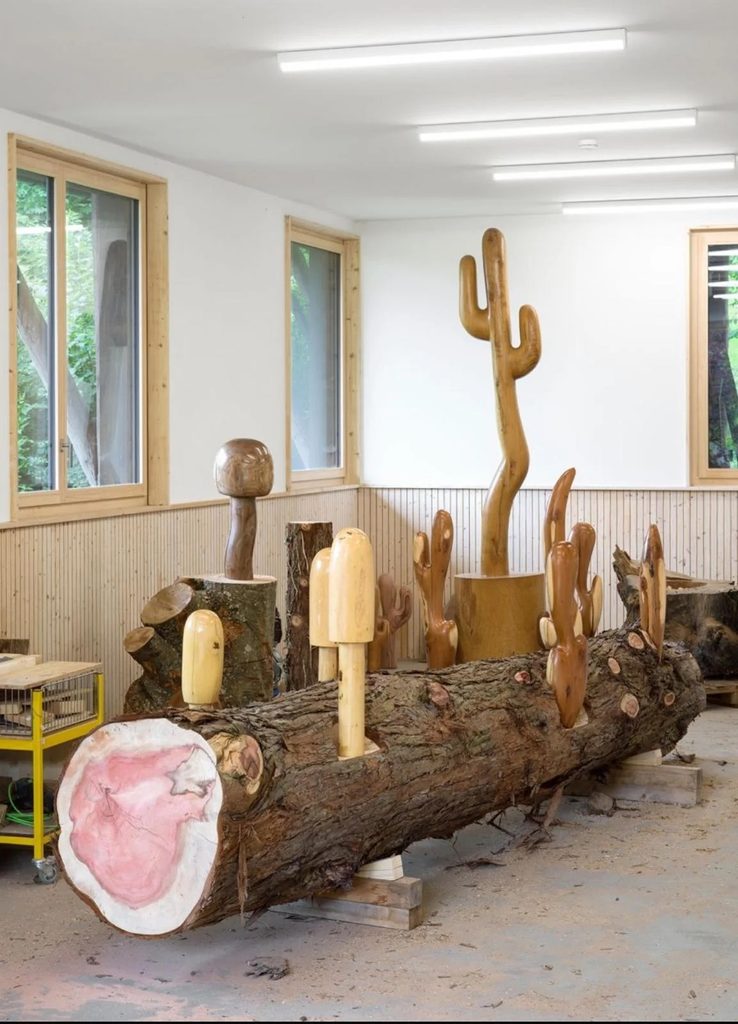
The gallery is betting on contrast. Claudia Comte was born in 1983 in Grancy, Switzerland. She carves sculptures with a chainsaw, and her cacti have become iconic. In 2019 she sank concrete cacti off the coast of Jamaica so that corals could grow on them. Agnes Waruguru was born in 1994 in Kenya. She paints on cotton, dyes, pours and embroiders – techniques she learned from the women in her family. In 2024 she exhibited in the main exhibition of the Venice Biennale.
The Breeder, Athens
The gallery brings together two generations. Eleni Pitari-Pangalou (1905–1995) was a Greek modernist. Her ink drawings from the 1960s and 1970s were only revealed to the public by the EMST museum in 2024. Kostis Velonis was born in 1968 in Athens. He is a sculptor with a doctorate in architecture. He first exhibited at The Breeder back in 2004 with the show Bauhaus is not our House.
Seoul and the AlUla desert
The special projects shift the map eastward. The NEXT KOREA: GALLERIES programme brings seven young Seoul galleries. Their joint exhibition, Second Nature, was curated by Oriane Durand and Jiwon Yu.
Right at the entrance awaits Ayman Zedani, a Saudi-born artist. His immersive project In the Bellies of the Rocks is presented by the AlUla Contemporary Art Museum with AFALULA. Zedani explores archaeological sites and the gaps that civilisations have left behind.
Fashion, a farm and lunch on the fourth floor
For the fashion world, there’s On. The Swiss sportswear brand and Sky High Goods are presenting the third chapter of their collaboration: a performance farming collection – clothing for working on a farm. All proceeds from the booth go to the non-profit Sky High Farm in the Hudson Valley.
The farm was founded by artist Dan Colen on land he bought in 2011. A chess move: Colen has collaborated with Dover Street Market for years – and that’s exactly where we followed [Six at Dover Street Market](INTERNAL LINK) during Frieze. The panel Impact as Medium with Colen begins on 20 October at 5 pm.
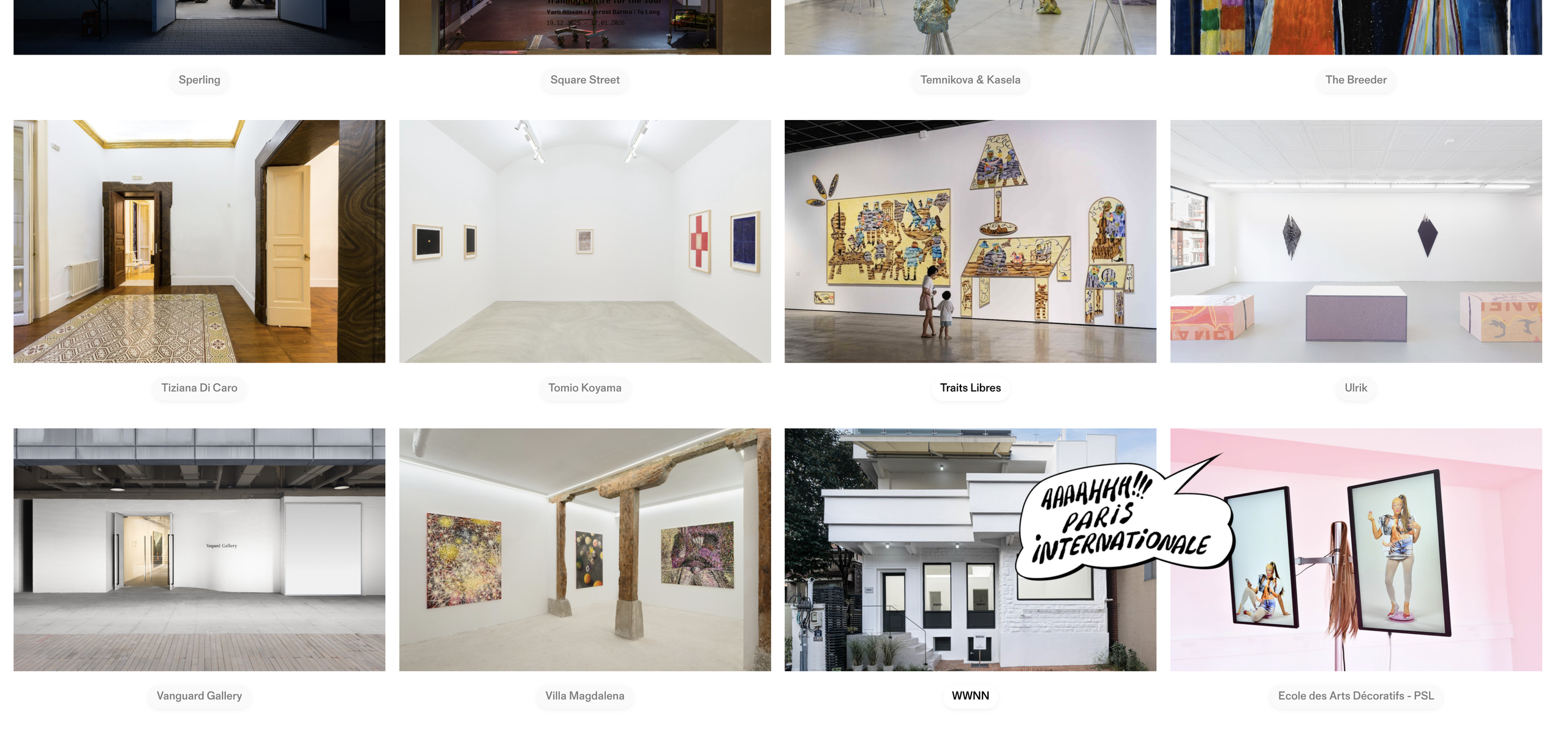
The fourth floor belongs to gastronomy. Banc Public is opening a pop-up restaurant there called Permanent Hospitality, with Numa Muller from Arles in the kitchen. The fair also hosts the AFTER Project Room by the École des Arts Décoratifs, where thirteen recent graduates show that design no longer decorates the world – it rebuilds it.
The fair’s new address by the Canal Saint-Martin. Photo: © Records Collection, courtesy Paris Internationale
Paris Internationale 2026: practical information
When: 20–24 October 2026. VIP preview on 19 October, by invitation only.
Opening hours: Tuesday 11 am–7 pm, Wednesday to Friday 12 pm–7 pm, Saturday 12 pm–6 pm.
Where: 187–189 Quai de Valmy, 75010 Paris.
Metro: Louis Blanc (line 7), Jaurès (lines 2 and 5).
Admission: free. Programme and map at parisinternationale.com.
This year, Paris Art Week has two opposite poles. At the Trocadéro, Tracey Emin’s bronze women lie, kneel and sit under the open sky, accessible to everyone. By the Canal Saint-Martin, by contrast, art hides inside an ordinary building and waits for you to discover it. Monument versus dérive. Paris Internationale 2026 chooses the second path – and has been doing so for twelve years. Laurent Le Bon, president of the Centre Pompidou, would sum it up in a single word: encore. Once more.