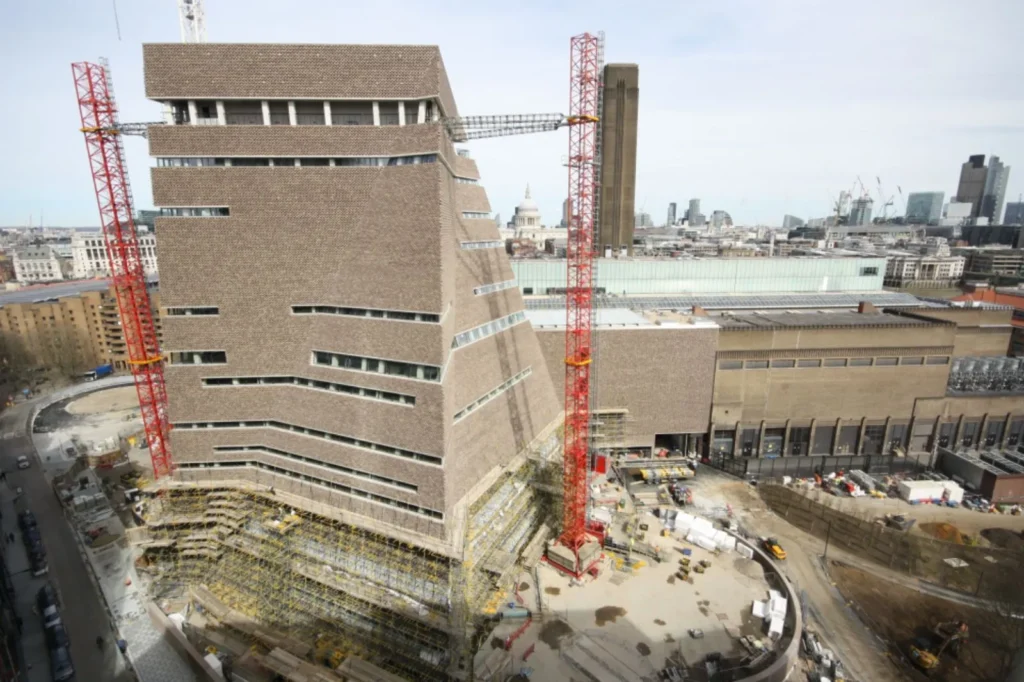
A retrospective of Ana Mendieta is running at Tate Modern in London from July 15, 2026, to January 17, 2027. The exhibition presents the Cuban American artist, whose work fuses literally with the land, through mud, flowers, fire, and her own body. Throughout the show, visitors move through the very spaces where the artist worked: caves, groves, and archaeological sites, where past and present layer directly on top of each other.
The Girl Exiled From Cuba
Mendieta was born in 1948 in Havana, into a wealthy and politically influential family. In 1961, following Castro’s revolution, her parents sent her into exile in the United States along with her older sister, when she was just twelve years old. She grew up in orphanages and foster homes across Iowa, where she later studied art under Hans Breder. This early experience of displacement, of losing family and home, became a lasting theme running through her entire body of work.

Silueta as a Trace That Disappears
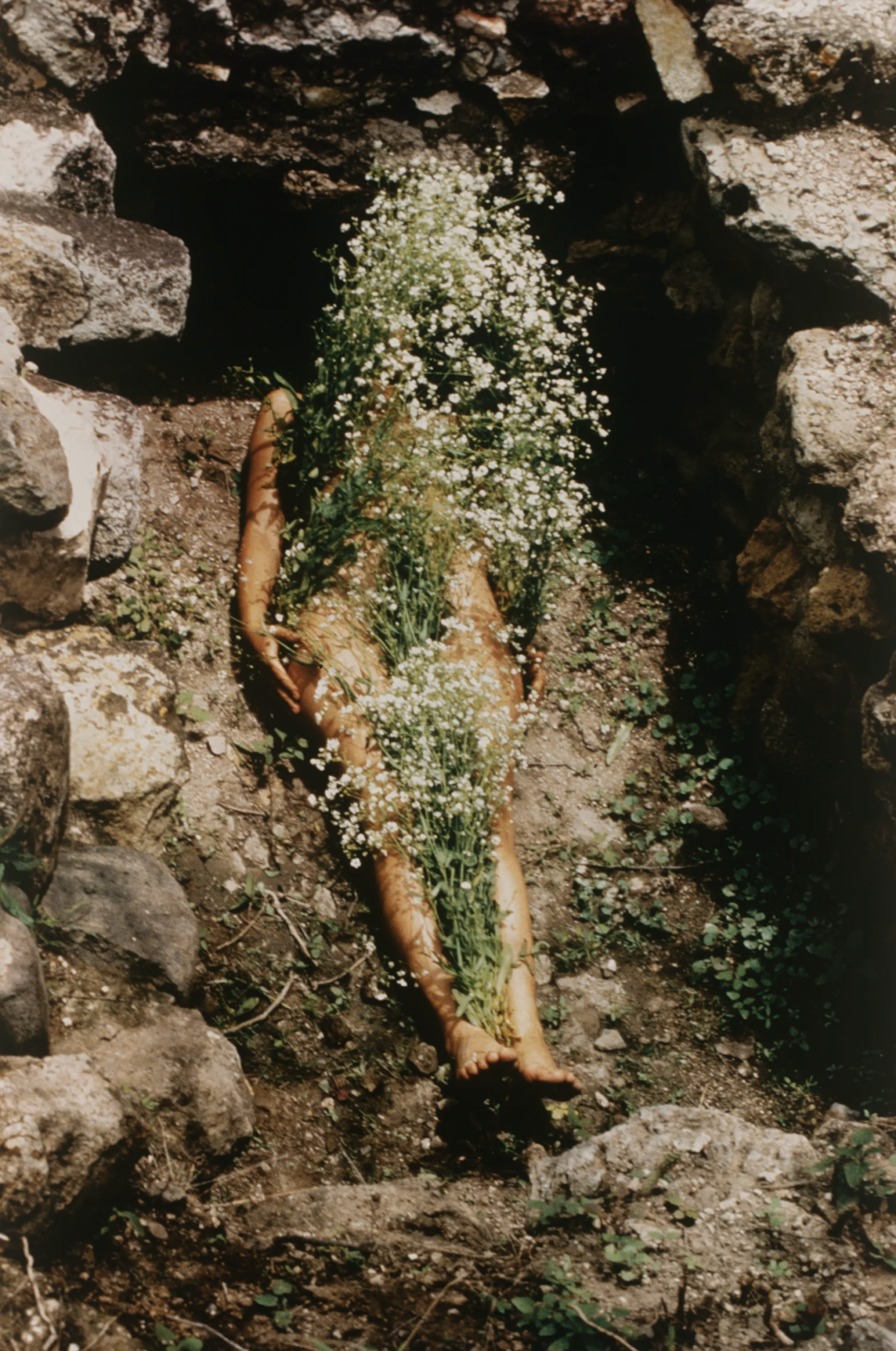
At the heart of the exhibition sit more than two hundred works from the Silueta series, in which Mendieta pressed the outline of her own body directly into the landscape, on beaches, in forests, and along the banks of the Iowa River. Sometimes, the body vanishes entirely, leaving only an imprint carved into the earth. Other times, her figure dissolves right into the landscape itself, covered in mud, feathers, flowers, or blood. Largely, these works survive today only through photographic documentation, since the physical imprint itself often disappeared almost instantly, washed away by the sea or scattered by the wind.
In the first work of the series, shot at the Yagul site in Oaxaca, Mendieta lies naked inside an ancient open tomb, her body covered in white flowers, surrounded by the jagged rocks of the archaeological site.
A Marriage That Shaped Her Legacy Too
In January 1985, Mendieta married American minimalist sculptor Carl Andre. Eight months later, in September 1985, she died after falling from the window of their Manhattan apartment. Andre faced trial over her death, though a court ultimately acquitted him. Even today, the verdict remains deeply contested, particularly among feminist artists and critics, who view the case as evidence of how the art world overlooked violence against women. This controversy partly explains why her work remained overshadowed for so long, and why today’s major Tate Modern retrospective feels like overdue, yet all the more significant, recognition.

DACS, 2026. Courtesy Marian Goodman Gallery and Alison Jacques, London.
Land Art Through a Feminist Lens
Mendieta worked across film, photography, sculpture, and drawing. Her approach to land art brings a fresh perspective to the genre. Throughout the 1970s, men largely shaped land art. Mendieta’s work pushed against that. She described her own practice as a belief in one universal energy.
That energy flows through everything, she believed. It moves from insects to humans, and from humans to spirit. From spirit, it flows into plants, and from plants, into galaxies. The exhibition closes with the video Bird Run. In it, a shrouded figure covered in feathers runs toward the camera. She moves through gently breaking grey waves. Finally, she disappears from view entirely.