

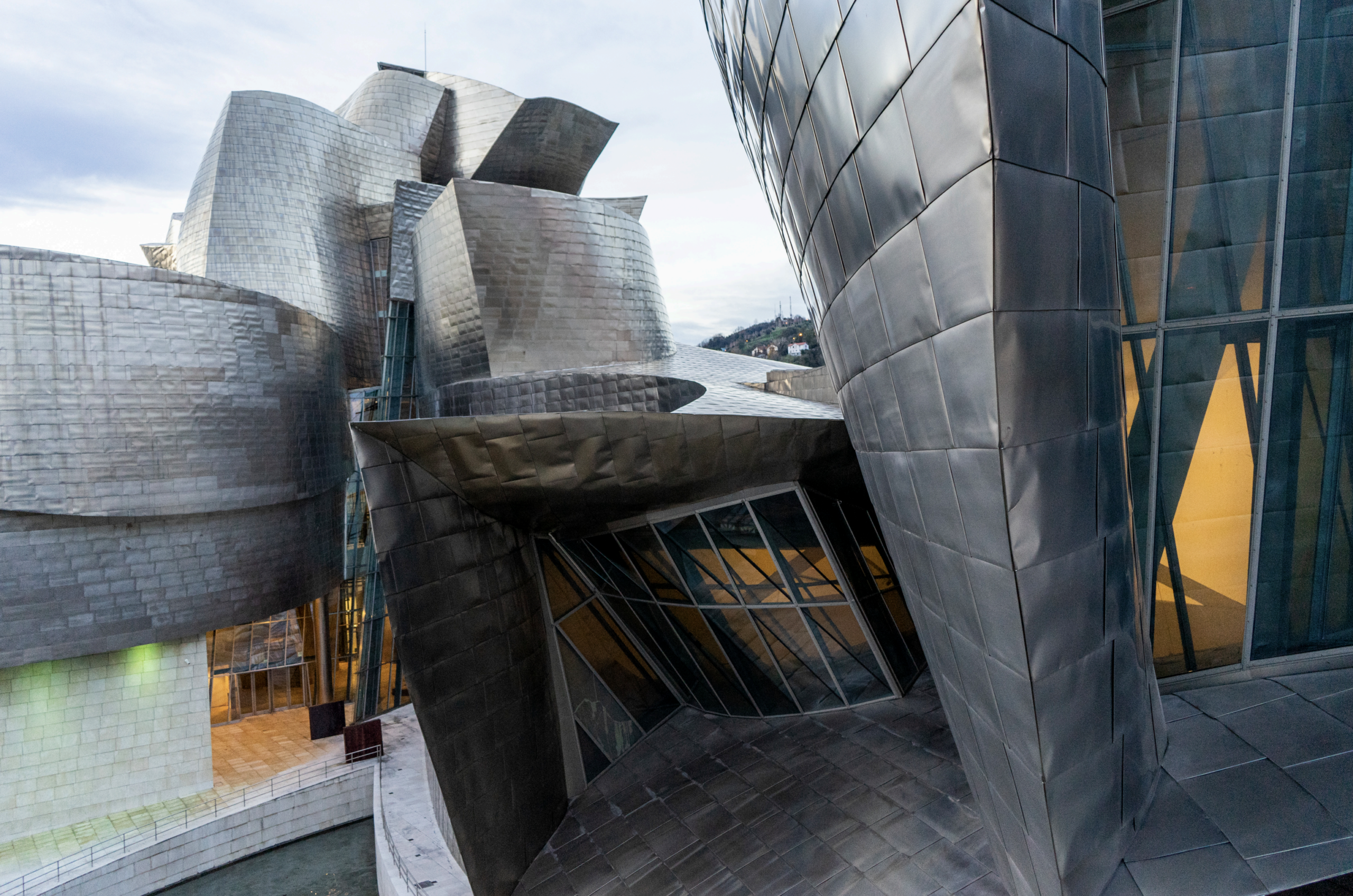
An ordinary fluorescent tube from the store. Ten colours, four lengths. From these, Dan Flavin built some of the most radical work of the twentieth century. Guggenheim Bilbao is now showing more than twenty of his works from the 1960s to the 1980s.
The guard who switched on the light
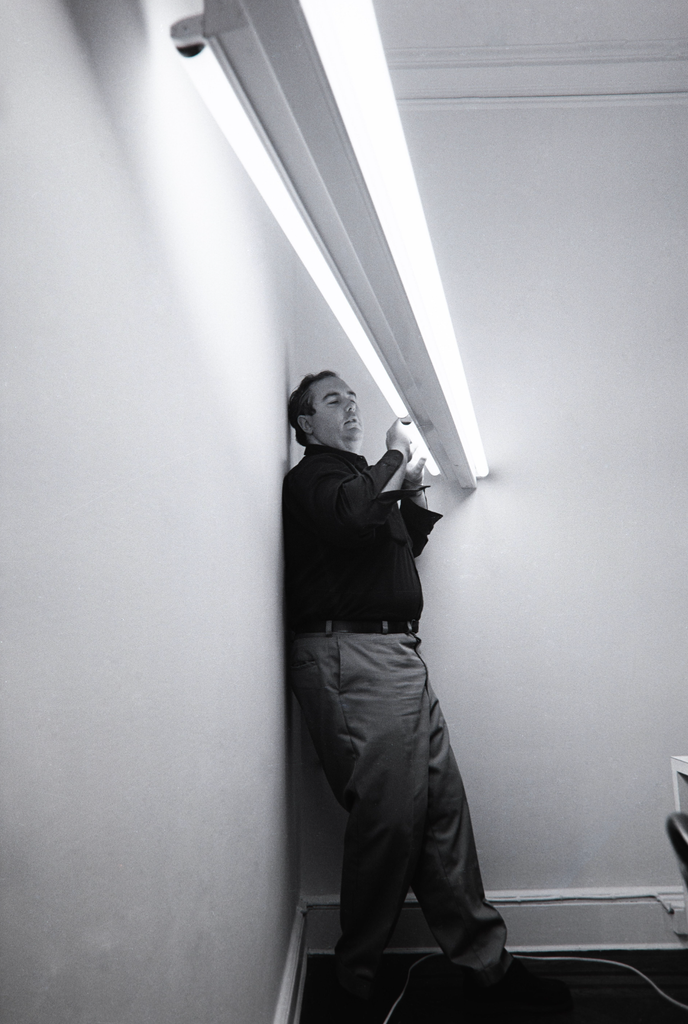
Dan Flavin (1933–1996) was born in Jamaica, Queens, New York. In the summer of 1961, while working as a guard at the American Museum of Natural History, he began to think of electric light as an artistic medium. Then, two years later, he fixed an ordinary fluorescent tube to his studio wall. Unaltered, exactly the kind anyone can buy.
Did you know? A light bulb and a fluorescent tube are not the same thing. In a bulb, a thin filament glows. A fluorescent tube, by contrast, is filled with gas that an electric current makes glow through a coating on the inside of the tube. Flavin worked with fluorescent tubes, the long lamps we know from offices and shops.
From then on, he worked with nothing else. He used commercially available fixtures in ten colours and four standard lengths, and he never altered their basic form. For him, light was “just another instrument”. It was precisely this simplicity that therefore made him one of the key figures of Minimalism.
At first, he hung tubes on walls and laid them on the floor in simple repetitions. Later, by the mid-1960s, he was working with the entire room. At the same time, he developed his own vocabulary: corners, monuments, barriers and corridors. He did not call his works sculptures but “situations”, because each was made for a specific place. For him, light was not an image on a wall but a material that transforms space.
The exhibition title, Some Light, comes from his first solo show of fluorescent light works, held in 1964 at Kaymar gallery in New York.
Highlights
the nominal three (to William of Ockham) (1963). One, two, three vertical tubes side by side. Flavin dedicated the work to the medieval philosopher who held that reality lies in concrete things, not abstractions. The viewer thus sees the light and its source, nothing else.
untitled (1963–66) and untitled (1964). In the first, cool and warm white meet in a corner until the corner itself seems to dissolve. In the second, an arc of white tubes leaves the wall and runs across the floor. Bilbao has changeable daylight, so the white never looks quite the same here.
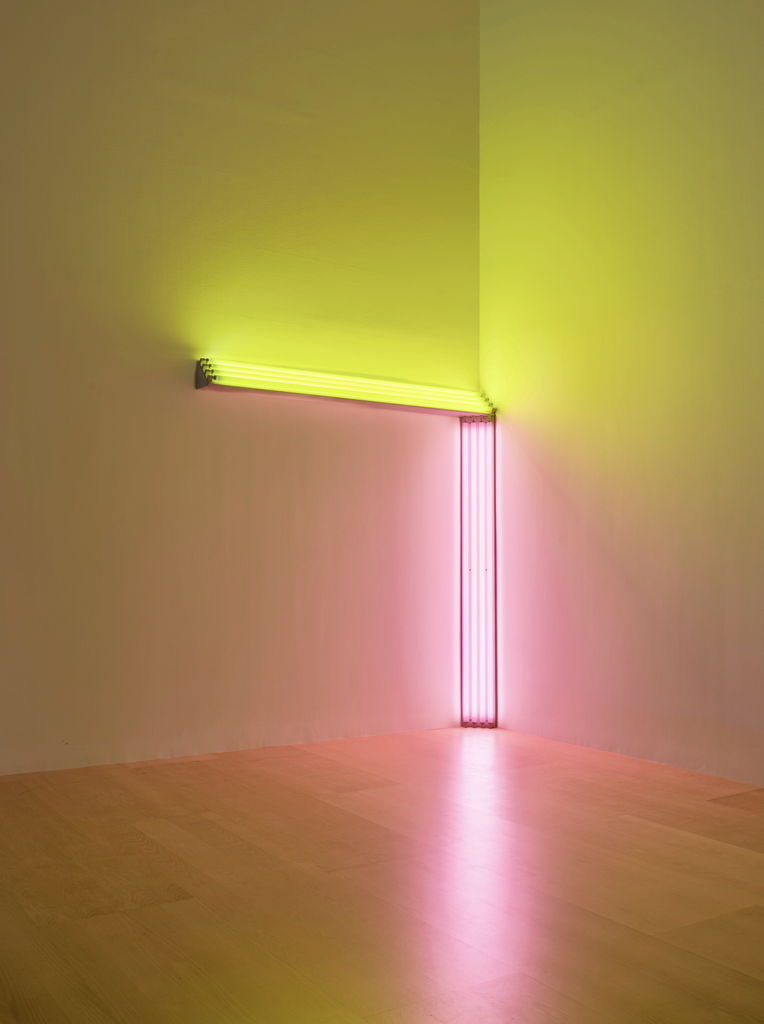
untitled (to Henri Matisse) (1964). Pink, yellow, blue and green as a tribute to the painter of colour. Flavin almost always dedicated his works to specific people: a philosopher, painters, friends and even his dealer.
Corners, barriers and corridors
greens crossing greens (to Piet Mondrian who lacked green) (1966). The first “barrier”. Green tubes in a post-and-lintel structure physically blocked the entrance to the gallery. The museum, a place you go to look, suddenly cannot be crossed. The title is a joke on Mondrian, who did not use green in his paintings.
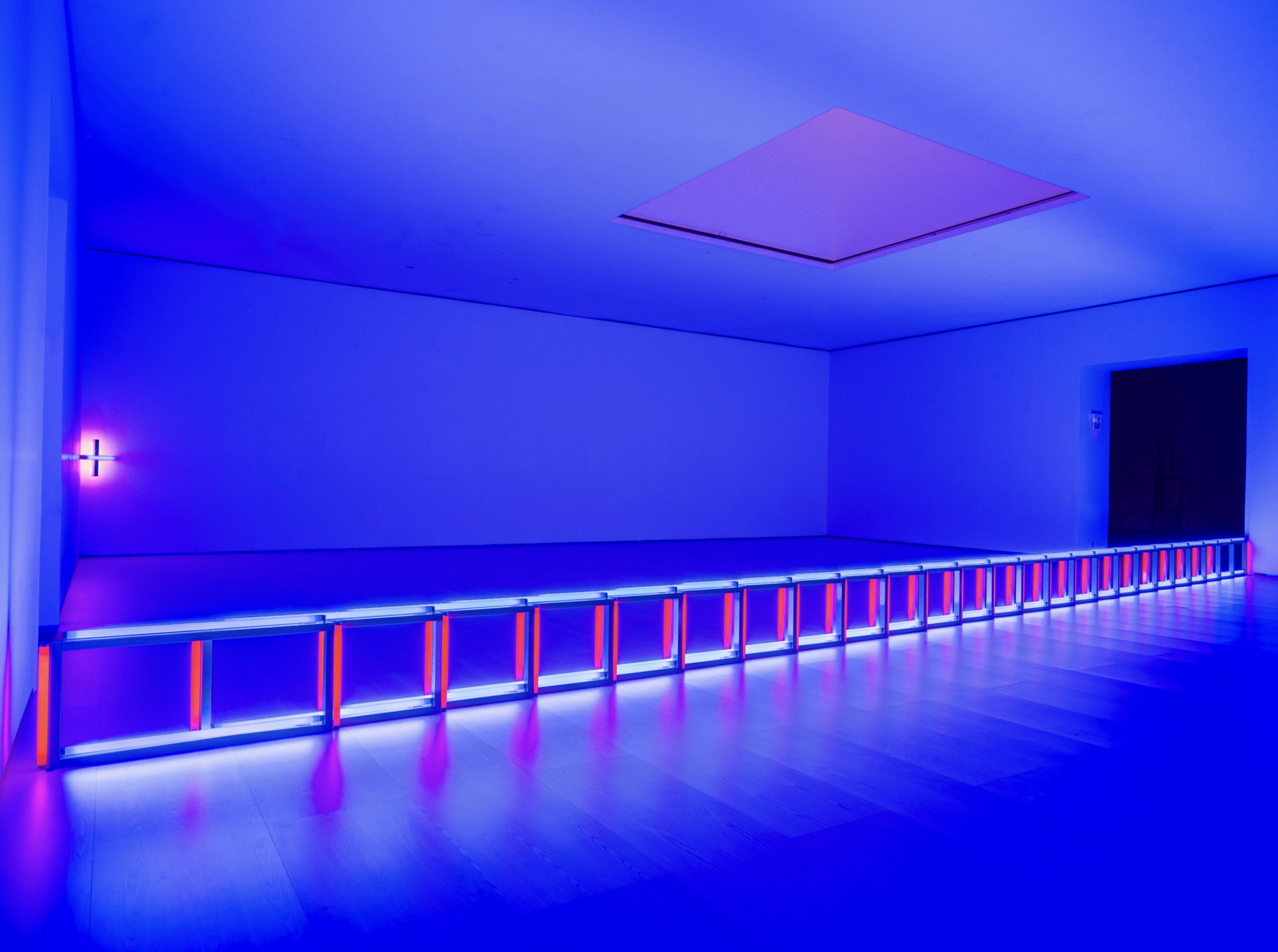
an artificial barrier of blue, red and blue fluorescent light (to Flavin Starbuck Judd) (1968). The centrepiece of the exhibition. Blue and red modules stretch across the whole room from wall to wall like a fence. Moreover, where the light falls on the wall or on visitors, it blends into violet. It is dedicated to Donald Judd’s son, and Judd kept a full-scale version in his studio on Spring Street.
untitled (to Jan and Ron Greenberg) (1972–73). A corridor divided by two rows of fixtures, green and yellow. At the end, a gap the width of a single fixture lets the second colour through. However, you only see where it comes from when you walk around the whole structure.
Monuments and dedications
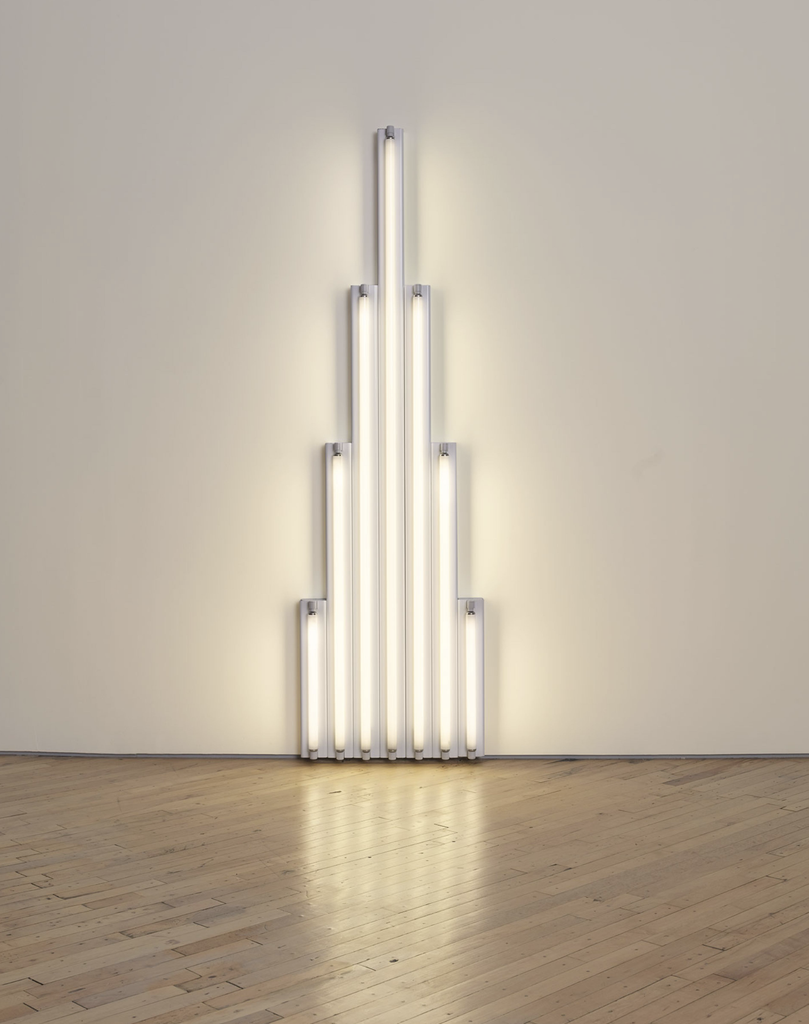
Monuments for Tatlin. Between 1964 and 1990, Flavin dedicated thirty-nine “monuments” to the Russian avant-garde artist Vladimir Tatlin. Dia Art Foundation has lent seven of them to Bilbao. The white tubes rise in tiers towards a single apex, recalling both Tatlin’s tower and the skyscrapers of Flavin’s New York.
untitled (fondly to Margo) (1986). Pink and yellow, colours Flavin associated with the gaudy glow of Los Angeles. Such intensity of colour is, however, rare in his earlier work.
untitled (in honor of Leo at the 30th anniversary of his gallery) (1987). A tribute to the dealer Leo Castelli on the thirtieth anniversary of his gallery. Half of the tubes face forward towards the viewer, half face back into the corner. The colour does not stay on the wall but fills the air.
How do you collect light?
Fluorescent tubes, however, burn out over time. So how do you own a work that can be bought in any shop? Flavin therefore issued certificates on graph paper. The owner could then use them to install the work and replace the tubes.
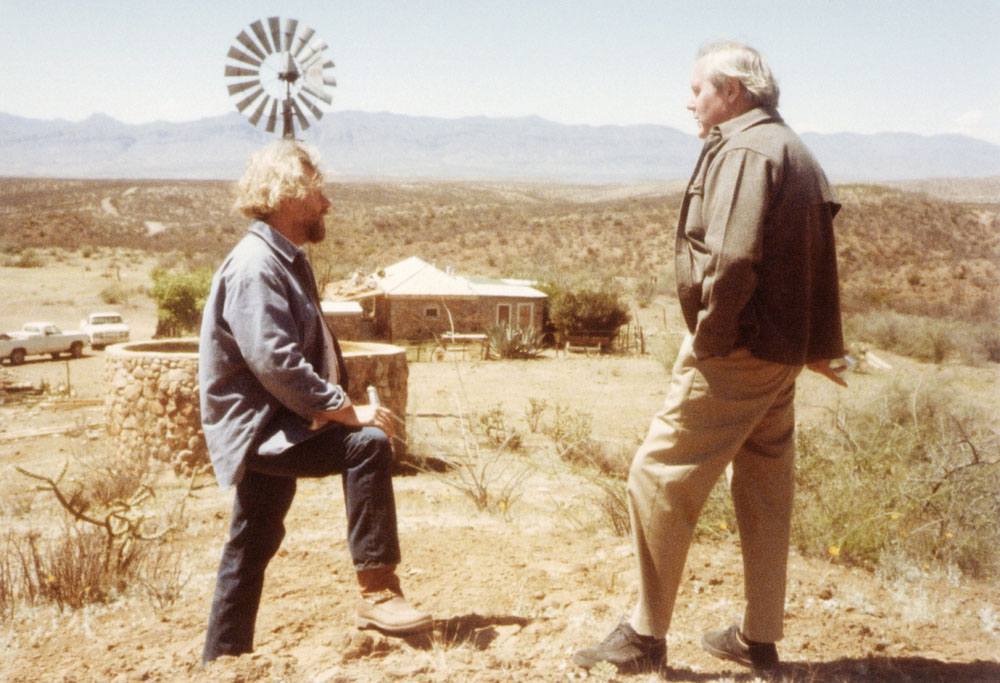
Most of the works in the exhibition come from the collection of the Italian count Giuseppe Panza di Biumo. From 1966, Panza focused on Minimalism and Conceptual art, as one of the very first collectors to do so. Eventually, in 1991–92, the Guggenheim acquired 357 works from him. To do so, it sold paintings by Kandinsky, Chagall and Modigliani, which at the time drew strong criticism.
Since 2010, the Guggenheim has also been researching these works. Above all, it studies how to install them exactly as Flavin intended. In addition, conservators now use a spectrometer to measure the wavelength of each tube’s light, so that old and new lamps can be compared.
Flavin and the Guggenheim
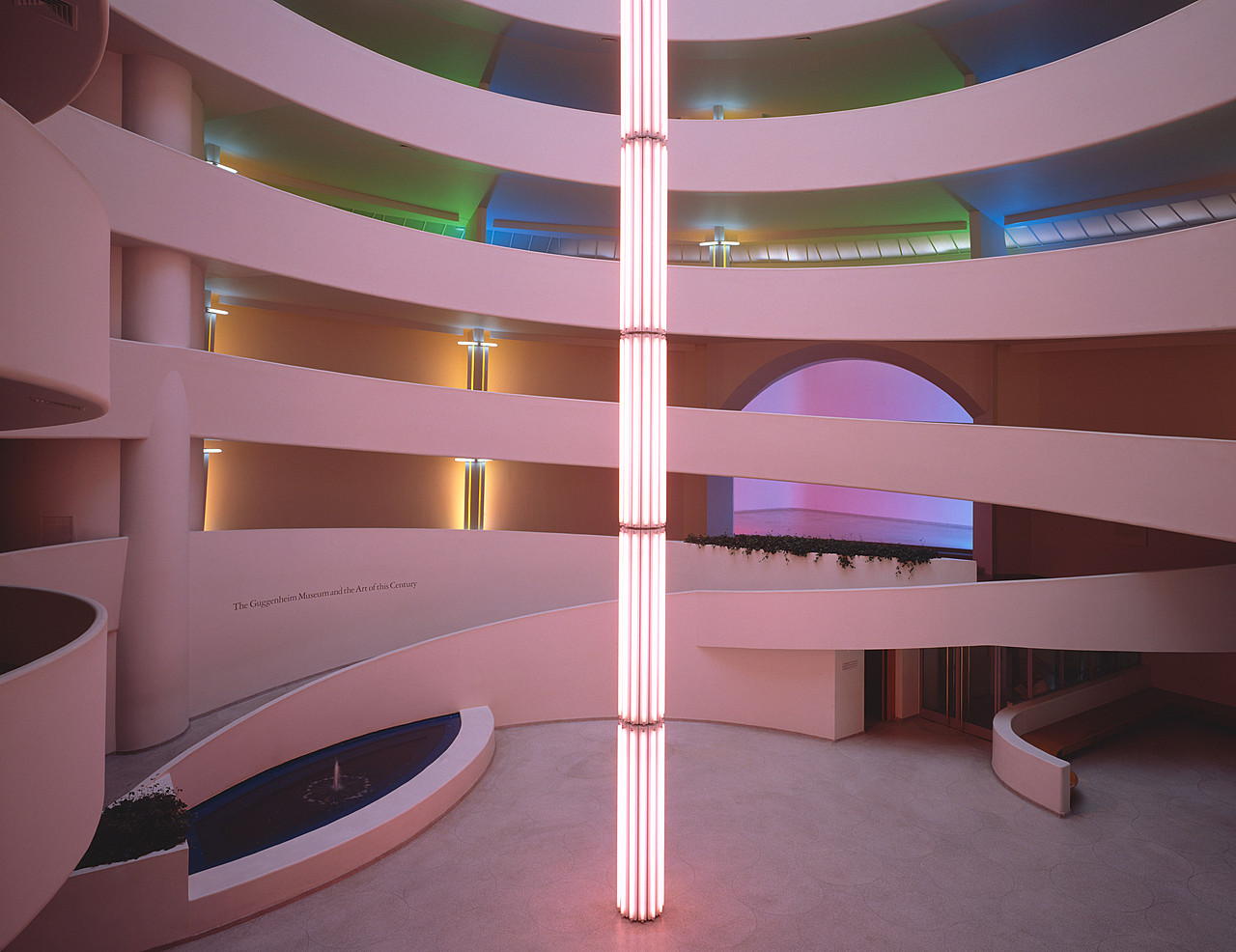
Flavin once worked in the Guggenheim’s mailroom. He carried plans between Frank Lloyd Wright’s office and the museum’s director, James Johnson Sweeney, as curator Lauren Hinkson also points out in the exhibition. Later, the young man who carried the architect’s plans filled Wright’s rotunda with light. In 1971 he lit one of its ramps, and in 1992 the whole of it. That same year, he married Tracy Harris at the museum, beneath a column of pink light rising through the rotunda.
Last light in Milan
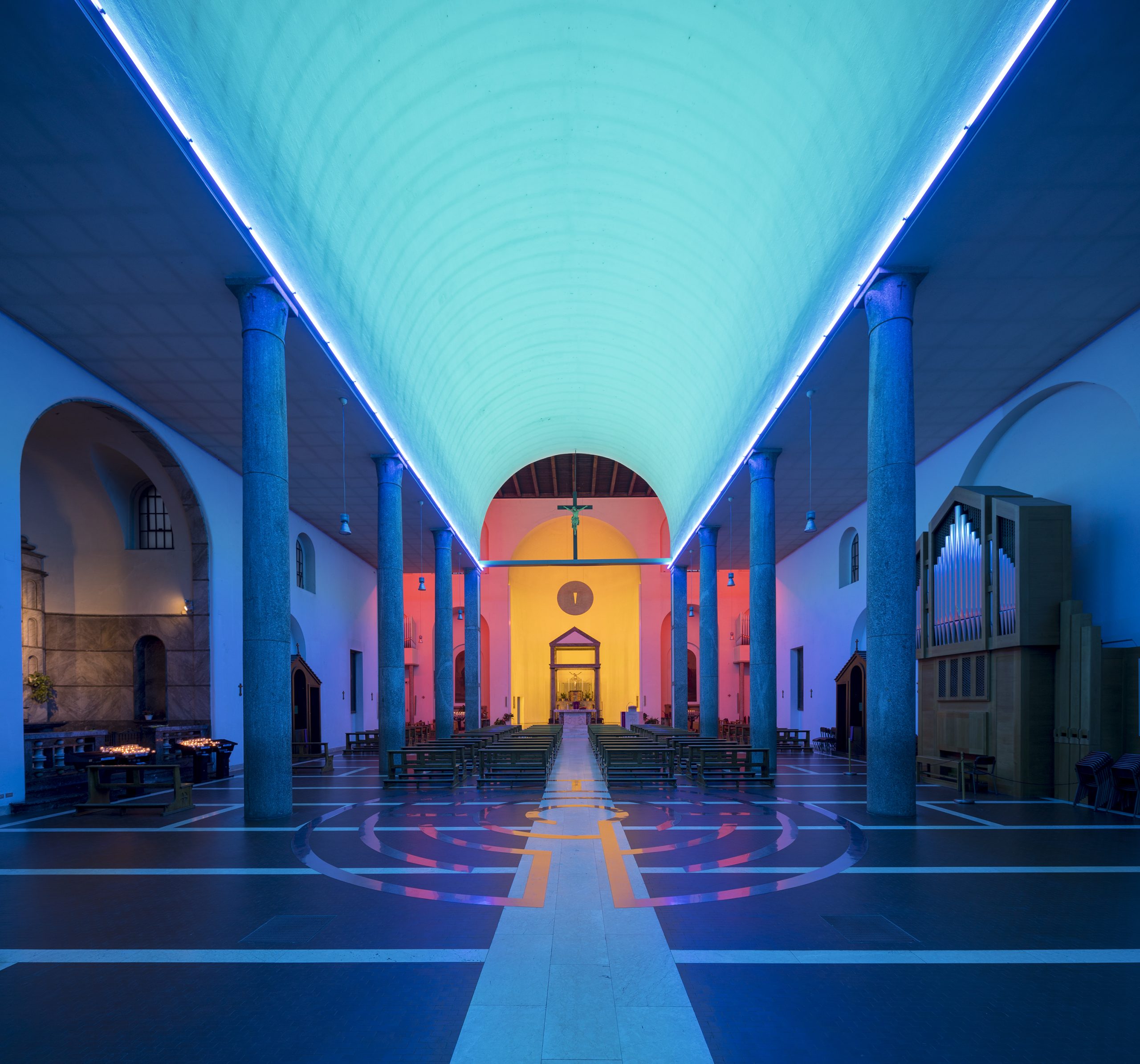
Flavin’s last work is in the church of Santa Maria Annunciata in Chiesa Rossa in Milan, designed in the 1930s by architect Giovanni Muzio. He was invited there by the local priest, Giulio Greco. Flavin completed the design two days before his death in November 1996. A year later, Fondazione Prada realised the installation together with the Dia Center for the Arts. Green, blue, pink, golden and ultraviolet light is the only source of illumination in the entire church. As you walk from the entrance to the altar, the colours therefore shift like daylight from dawn to dusk.
Icons for empty rooms
Flavin said that his icons do not raise up the saviour in elaborate cathedrals. They are concentrated constructions that celebrate empty rooms and bring a limited light. At the same time, the light does not stay on the wall. It fills the air, and the architecture around it seems to dissolve. In Frank Gehry’s building, this is doubly true.
In 1967 he put it even more bluntly: his fluorescent tubes never burn out desiring a god. And yet this minimalist collected antiques and paintings by the Hudson River School at home. Strict in his work, not in his life.
Programme
The exhibition is accompanied by musical tours featuring the minimalist music of Philip Glass, John Cage and Terry Riley. In addition, poet Miren Agur Meabe will lead a tour in February.
More at the Guggenheim Bilbao
- Ever is Over All. Pipilotti Rist, 1 October 2026 – 17 January 2027
- Steve McQueen: 66–76–26, 9 October 2026 – 21 February 2027
- in situ: Zadie Xa. Seed Pattern, 19 November 2026 – 11 April 2027
- Works from the Guggenheim Museum Bilbao Collection, until 1 October 2027

