Anne Imhof, winner of the Golden Lion in Venice, has her first solo exhibition in Asia. At Tai Kwun in Hong Kong, she brings together monumental installations and classical ballet.
House of Swans at Tai Kwun
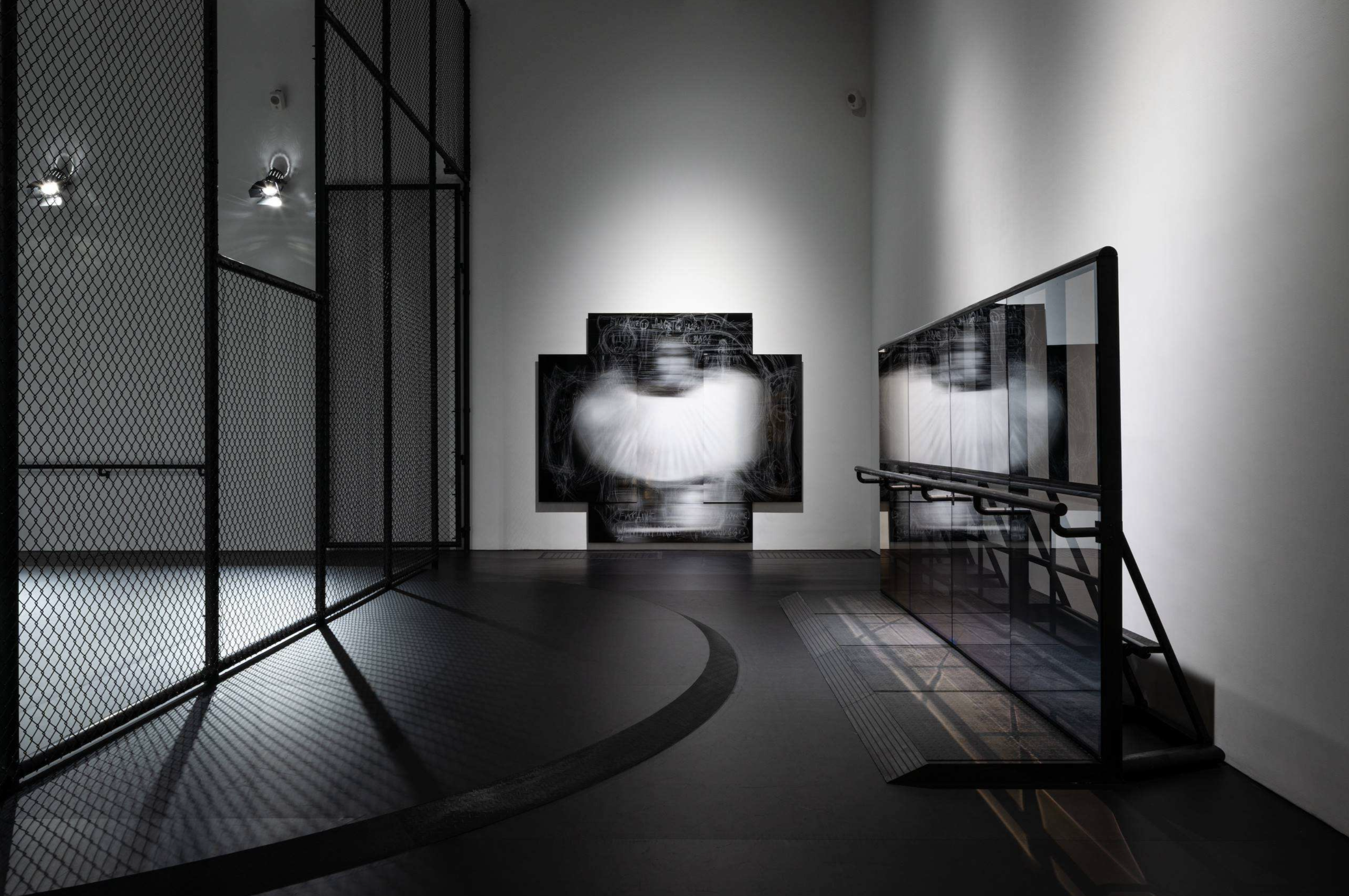
House of Swans is on view at Tai Kwun Contemporary from 25 September 2026 to 3 January 2027. It spans three floors of the JC Contemporary and F Hall galleries and is curated by Ying Kwok and Tiffany Leung. Imhof created most of the works specifically for Hong Kong.
The exhibition builds on her performance DOOM: House of Hope (2025) at the Park Avenue Armory in New York, where she already worked with ballet dancers. In Hong Kong she goes further: the exhibition and the performance were conceived together, in the same space and time.
Anne Imhof: From Bouncer to Golden Lion
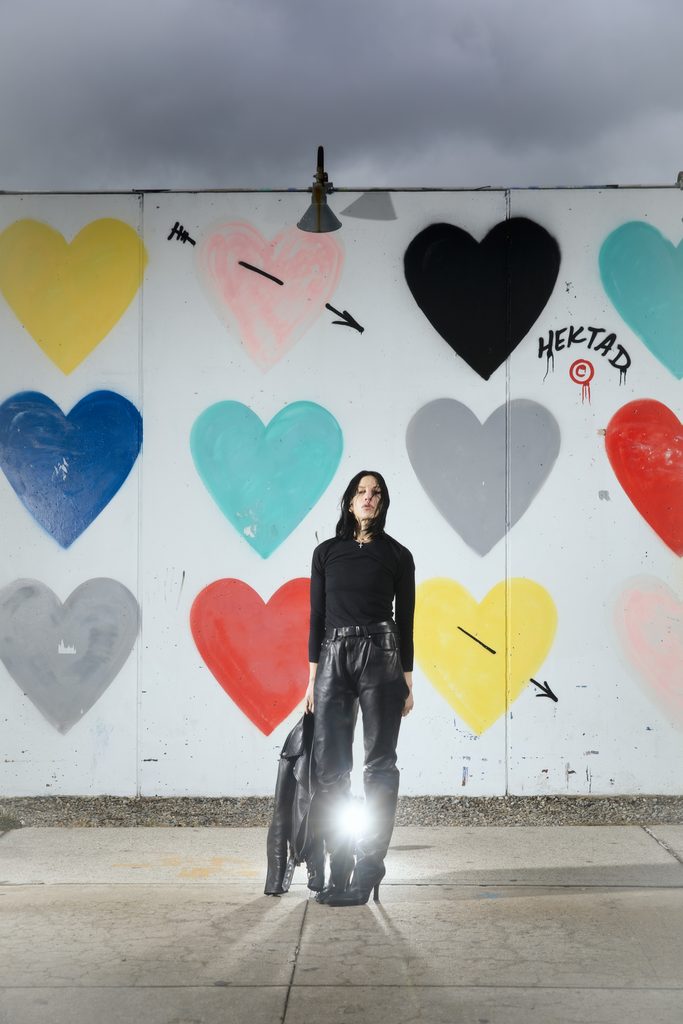
Anne Imhof was born in 1978 in Giessen and now lives in Berlin and New York. She taught herself to draw and make music. Meanwhile, she worked as a bouncer at Robert Johnson, the legendary techno club in Frankfurt, before enrolling at the Städelschule. Deciding who may enter and who may not, she says, still shapes her work today.
In 2017 she won the Golden Lion at the Venice Biennale for Faust in the German Pavilion. Since then she has exhibited at Tate Modern, the Palais de Tokyo, the Stedelijk Museum and Kunsthaus Bregenz, among others. She is represented by Sprüth Magers and Galerie Buchholz.
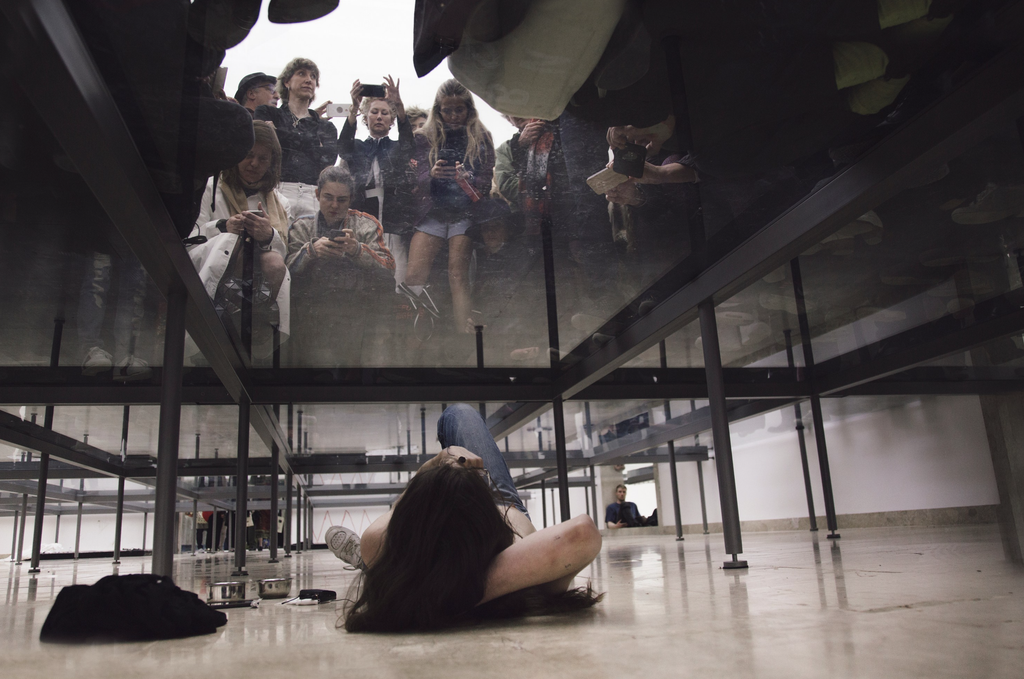
It was Faust that made her an art-world star. She divided the German Pavilion in Venice, a building from the Nazi era, with glass partitions and surrounded it with a tall fence and guard dogs. Performers crawled beneath a glass floor, lit fires, texted on their phones and headbanged in slow motion. Critics saw a catwalk show from hell and a play about power: who holds it and who wants to take it back. Visitors with phones in hand became part of the work, and images from the pavilion spread across social media.
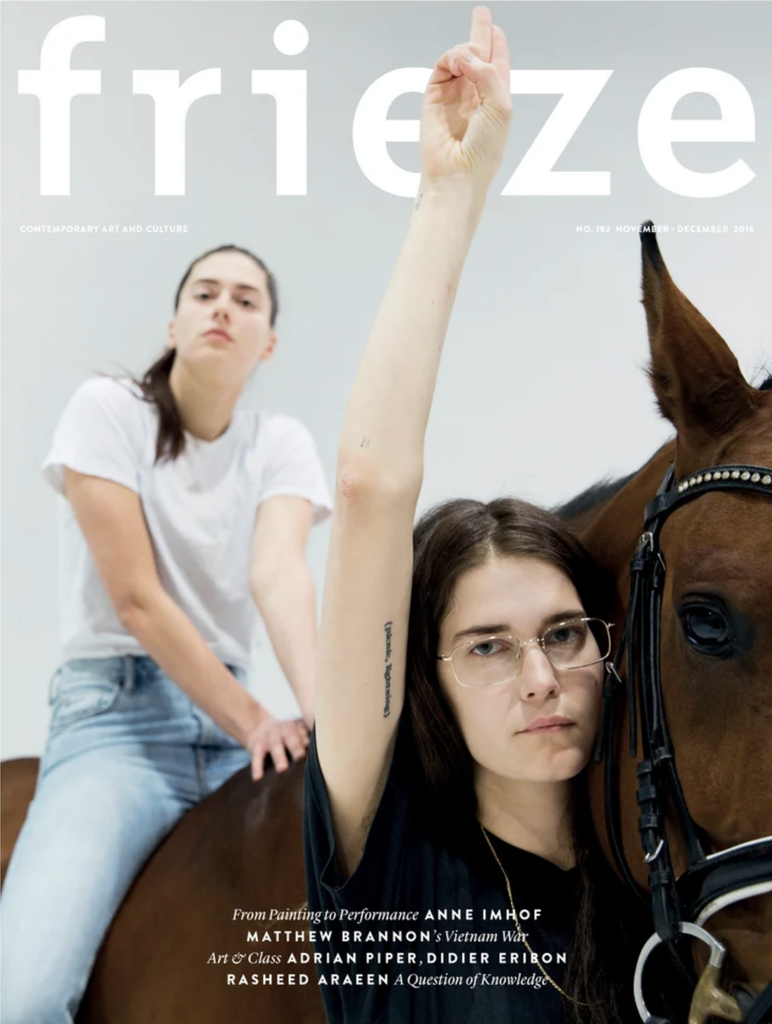
Her performances have a language of their own: slow movement, cold stares, heavy bass, young androgynous performers. Models often take part, and her longtime partner and collaborator Eliza Douglas has walked for Balenciaga. That is also why her work lives on Instagram as much as in the gallery.
What You See
The exhibition opens in F Hall with an overview: paintings, bronzes, installations and videos from DOOM. Here the body appears both in motion and in its absence. Imhof captures it in new paintings whose surfaces she scratched, leaving the trajectories of her movements on the canvas.
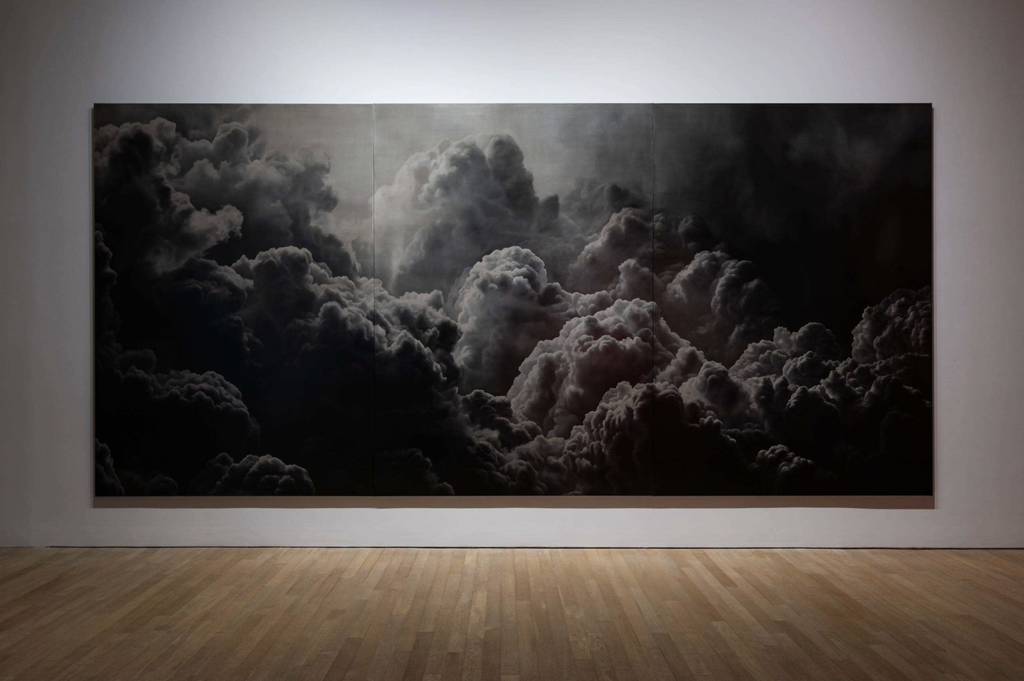
In the JC Contemporary galleries, a giant screen lies crashed on the floor. It counts down to the end of the exhibition while playing footage from DOOM. On either side hang two large cloud paintings, like the moment before a storm. One floor up, a glass vitrine holds archival film reels from Clear Water Bay Film Studio, once linked to the golden age of Hong Kong cinema.edysi spojeného so zlatou érou hongkonského filmu.
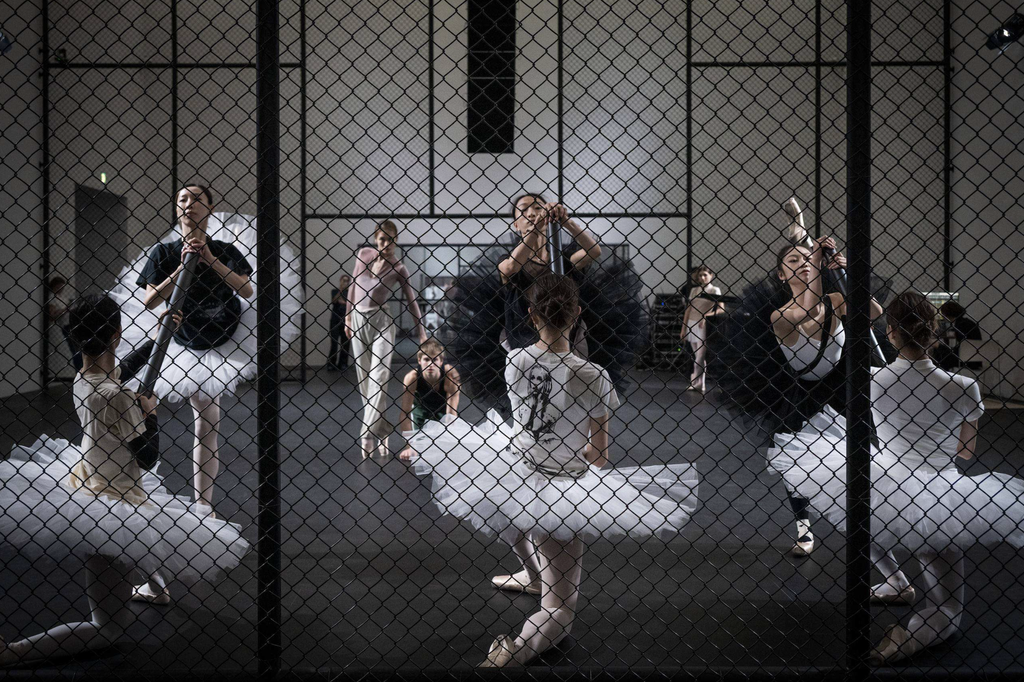
On the third floor, the gallery becomes something between a basketball court and a ballet studio. An array of speakers moves along a track. Behind reflective crowd barriers hang paintings based on the “Mad Scene” from the ballet Giselle (1841), in which the heroine’s betrayal breaks her hold on reality.
The Ballet
This is where members of Hong Kong Ballet dance on weekends. Excerpts from Imhof’s new ballet follow a young heroine who reclaims her power, agency and voice, both in society and on stage. Collaborators include Devon Teuscher of American Ballet Theatre, Daniil Simkin and Eliza Douglas. The music was composed by Jacob Madden, who also performs it live, mixing classical music, electronics, voices, piano and guitar.
After all, Imhof has spent her entire career exploring the tension between freedom and discipline, between spectator and performer. Classical ballet is therefore a natural form for this theme: the strictest discipline of the body, which must nevertheless look completely effortless.

Sources
- Tai Kwun: press release Anne Imhof: House of Swans, 24 September 2026
- e-flux – Anne Imhof: House of Swans
- Thomas Rogers: Anne Imhof’s Stylish (and Shareable) Provocations, The New York Times, 13 October 2021
- Sprüth Magers – Anne Imhof: Citizen
- Galerie Buchholz – Anne Imhof: Cold Hope