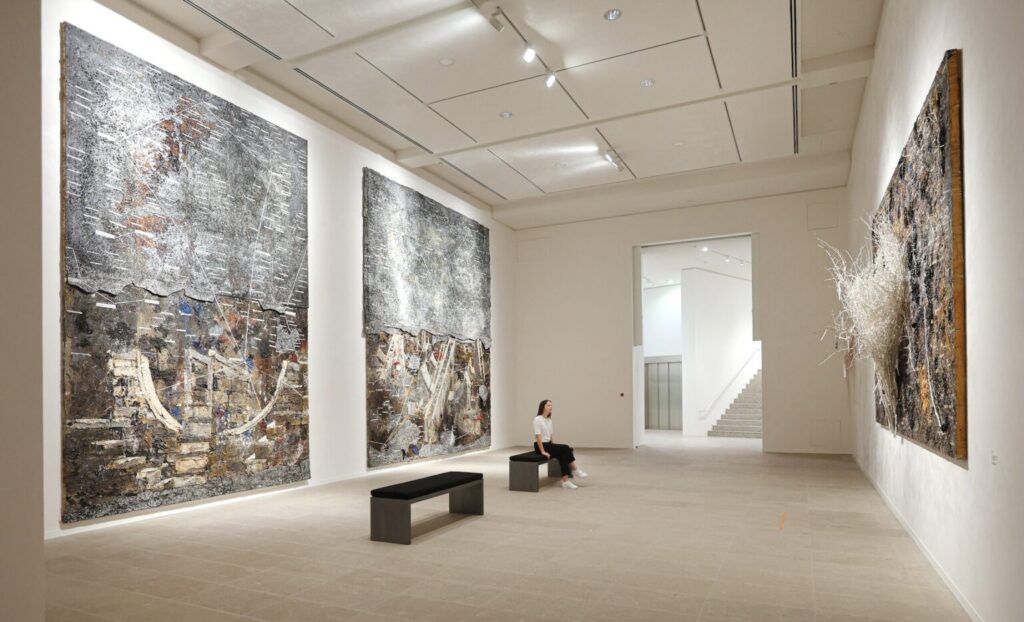
In 2008 the Würth Collection bought a painting it had nowhere to hang. Anselm Kiefer’s Schwarze Flocken, Black Flakes in English, is 11.2 metres high and 7.1 metres wide. For eighteen years nobody saw it.
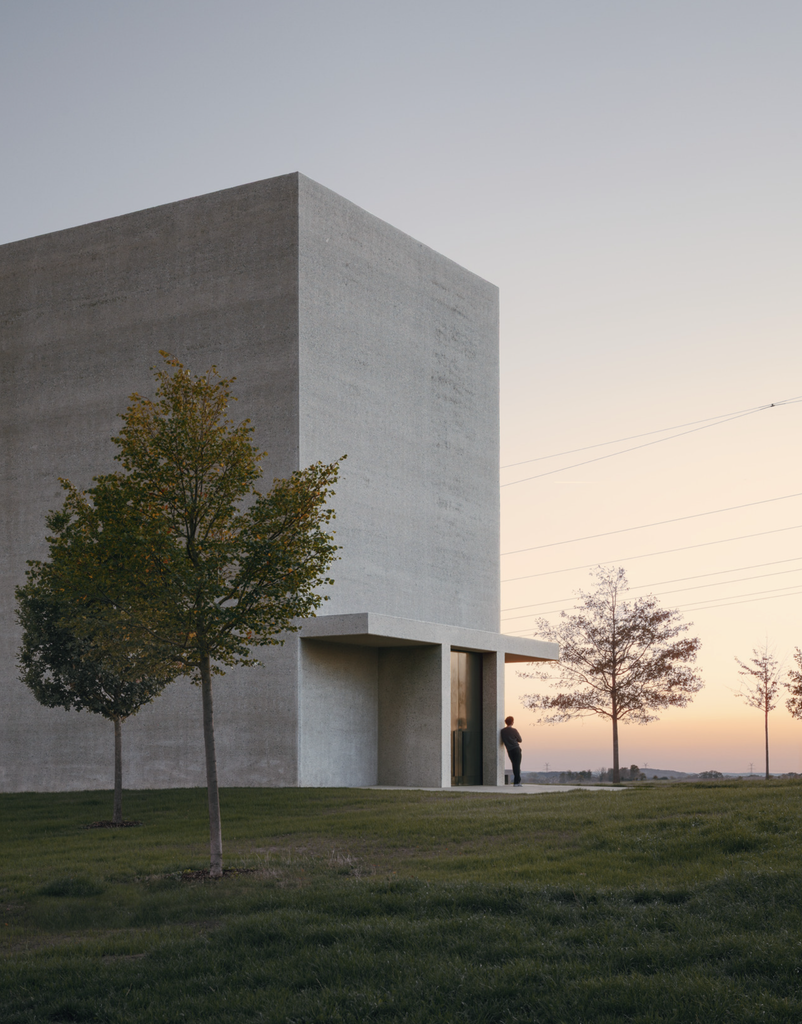
Since 13 October 2026 it has a building of its own. David Chipperfield designed it for the sculpture garden of Museum Würth 2 in Künzelsau, a small town north-east of Stuttgart. It is a room for a single painting. Nothing else hangs there.
Künzelsau is a town of screws. It is home to Würth, a fastener company. German media call Reinhold Würth the Schraubenkönig, the king of screws. Alongside the business, he has collected art all his life. Schwarze Flocken is the largest Kiefer in his collection.
A poem from Czernowitz
The title comes from a poem by Paul Celan. Celan was a Jewish poet from Romania who wrote in German and survived the Holocaust. He wrote the poem around July 1944 in Czernowitz, after returning from a forced labour camp. It was his response to the news about his parents. His mother was shot. His father died of typhus in a camp in Transnistria.
Czernowitz is now called Chernivtsi and lies in Ukraine.
Kiefer has returned to Celan throughout his life. In the early 1980s alone he made more than thirty works referring to Todesfuge, or Death Fugue, Celan’s best-known poem. It is a poem about the death camps. Schwarze Flocken dates from 2007. The upper part of the canvas is covered in handwritten lines. Below stretches a snowy field with rows of real twigs. The materials are oil, emulsion, shellac, soil and branches.
Wallpaper* writes that through abstraction Kiefer captures both the winter landscape of the poem and the grief within it.

Kiefer has made more than one painting under this title. One from 2006, from a private collection, hung in his 2014 retrospective at the Royal Academy in London. Karl Ove Knausgaard, author of the six autobiographical novels My Struggle, stood in front of it. In 2020 he wrote about it in an essay for The New York Times Magazine. According to him, everyone who entered the room fell silent. The essay’s headline called Kiefer the greatest living artist.
Knausgaard then wrote Kiefer a letter, asking for watercolours for his next book. Six months of nothing. Then came a file of pictures and an invitation to lunch.
Clay on the canvas, clay in the wall
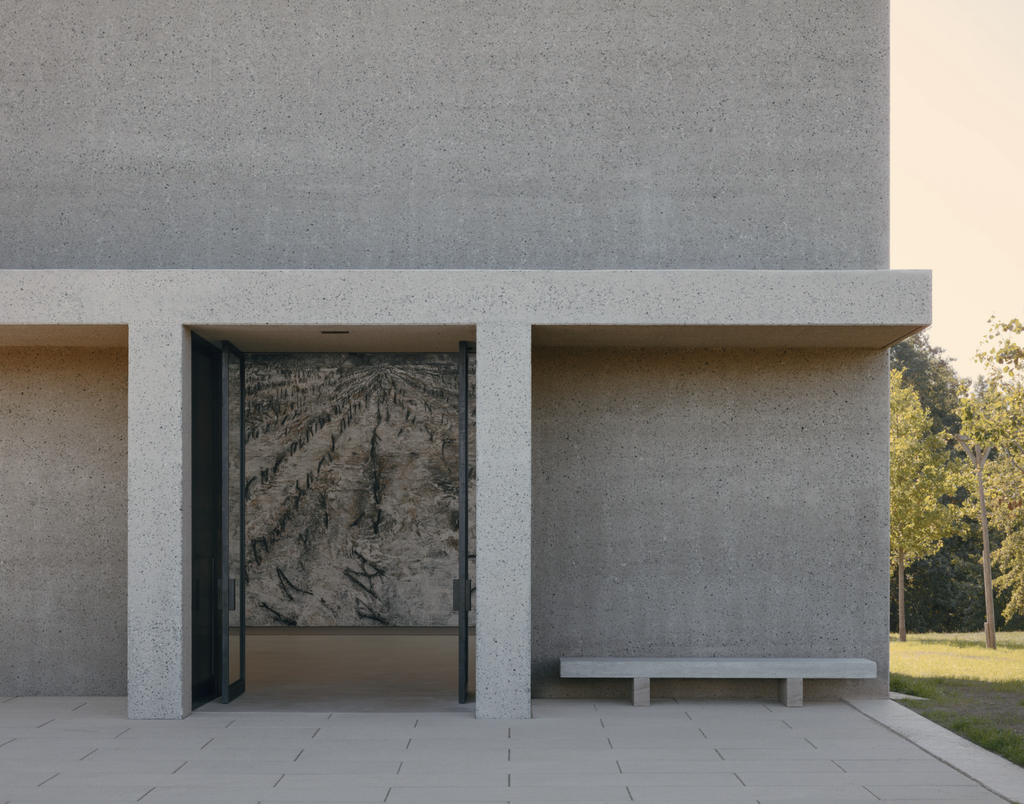
From the outside, the pavilion is a simple concrete block. Inside is a single white room, with light falling from the ceiling. Chipperfield’s team worked out the room’s dimensions and wall colours directly with Kiefer. The idea of giving the painting a house of its own was Kiefer’s.
What the building leaves out is more interesting. No strict air conditioning guards the room. The wall itself holds temperature and humidity. It has three layers: concrete, brick and clay plaster.
So a painting made of soil and twigs hangs between walls that are made of clay too. Kiefer says his works lose their power in the wrong space. He also knows his canvases change over time. In his view, that is part of his work too.

David Chipperfield: screws, juice, steel and weapons
David Chipperfield won the Pritzker Prize in 2023, often called the Nobel Prize of architecture. Look at his museums and one pattern keeps returning. He often builds for money that was made in factories.
Künzelsau. Würth made its fortune on screws. Chipperfield built the whole Carmen Würth Forum here, the cultural centre around the sculpture garden, and now the pavilion too. That is why the pavilion speaks the same language as the buildings beside it.
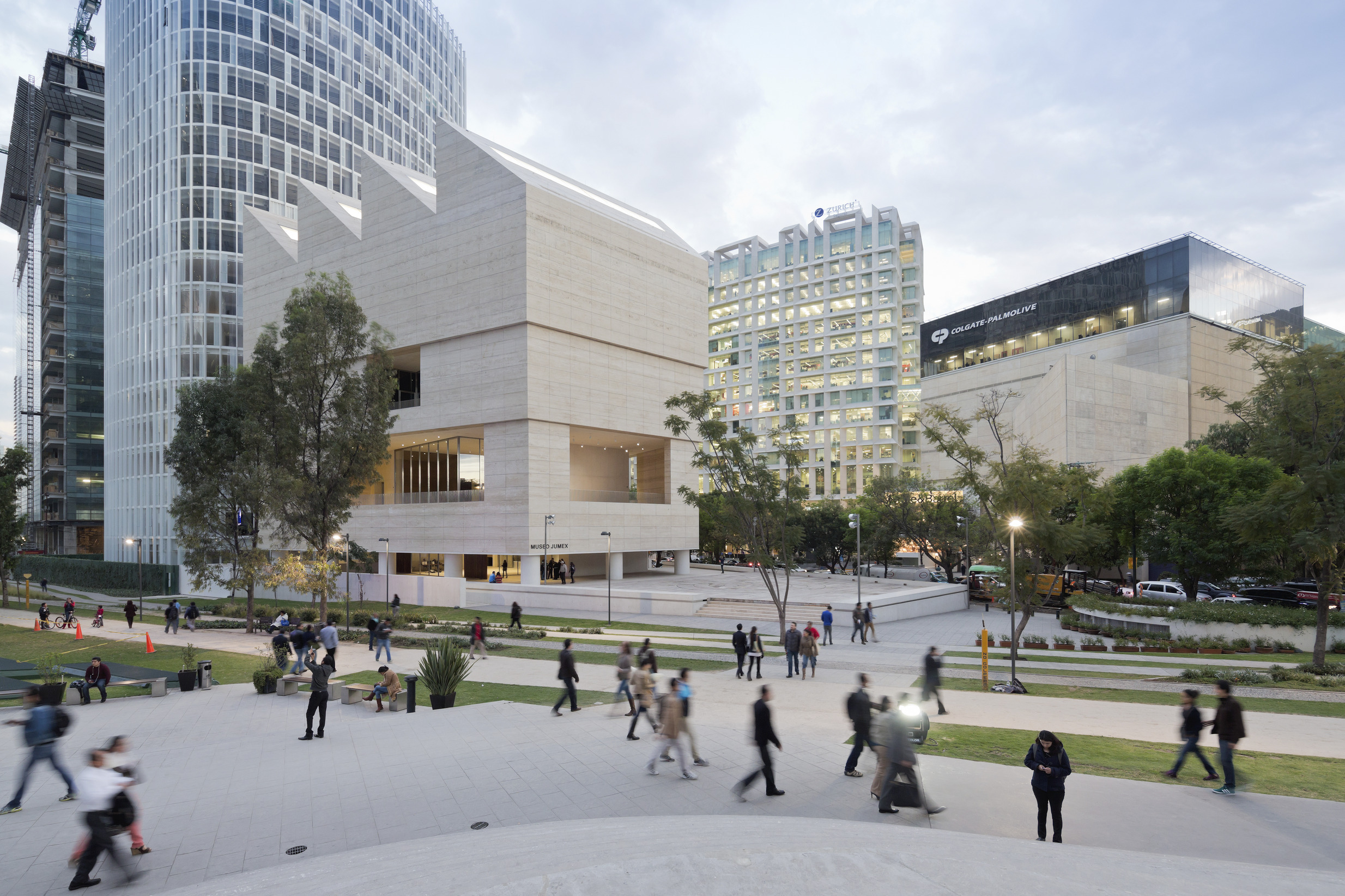
Mexico City. Museo Jumex opened in 2013. It carries the name of collector Eugenio López Alonso’s family company. Jumex makes fruit juice.

Essen. Museum Folkwang takes its name from Norse mythology. Fólkvangr is the meadow of the dead ruled by the goddess Freyja. Germanic myths are Kiefer’s subject too. In 1937 the Nazis removed more than 1,200 works from the Folkwang as “degenerate art”. Chipperfield’s new building opened in January 2010, when Essen was European Capital of Culture. It was paid for by the foundation of the Krupps, the Essen steel dynasty, with a single donation of 55 million euros.
Zürich. In 2021 the Kunsthaus opened Chipperfield’s extension. It houses the collection of Emil Bührle, an arms manufacturer. The Kunsthaus itself states that Bührle made much of his fortune on weapons for Nazi Germany. Frieze and The Art Newspaper have been writing about the collection’s provenance ever since.
Berlín, New York, Margate
Berlín. The James Simon Gallery on Museum Island is named after a Jewish patron. James Simon gave most of his collections to the Berlin museums, including the bust of Nefertiti. Haaretz wrote that the Nazis erased his legacy. In Berlin, Chipperfield also renovated Mies van der Rohe’s Neue Nationalgalerie.
New York. Valentino’s flagship at 693 Fifth Avenue opened in 2014. Its facade of black steel and aluminium with thin vertical bars refers to Mies’s Seagram Building nearby. Mies follows Chipperfield from Berlin all the way to Fifth Avenue.

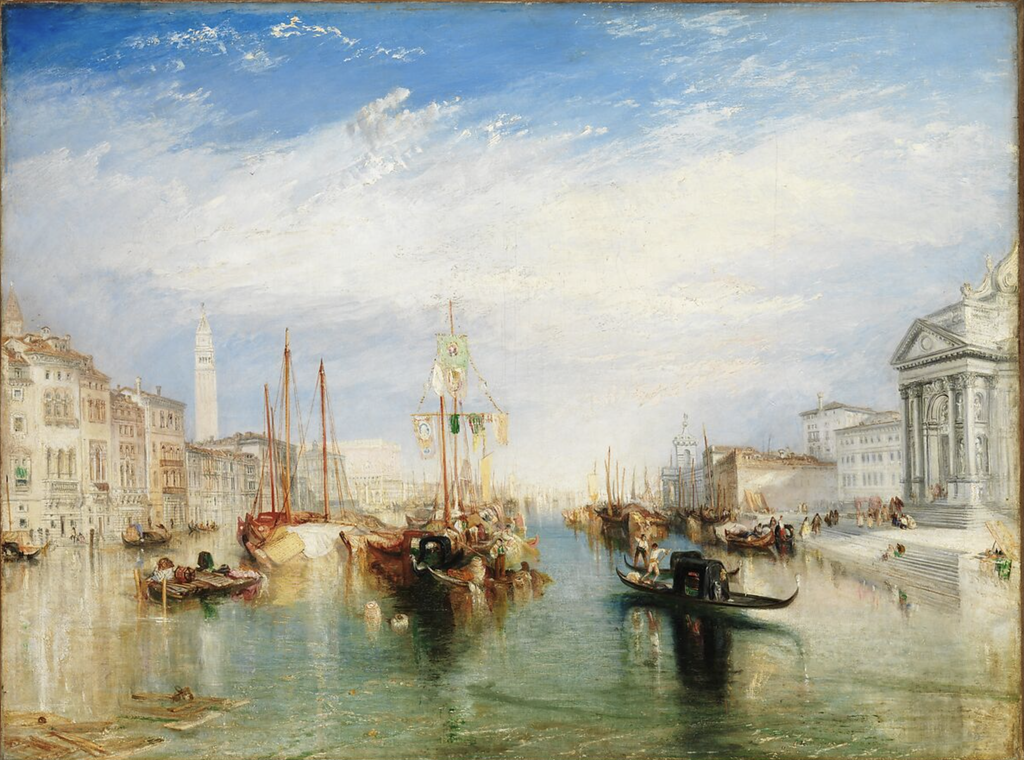
Margate. Turner Contemporary opened in 2011 on the site of Mrs Booth’s guesthouse, where the painter William Turner stayed. Turner claimed the skies over Thanet were the loveliest in Europe. Chipperfield built the gallery exactly where he watched them.
In the end, all these lines meet in Künzelsau. On one side stands Chipperfield’s building in Zurich, which shows a collection built partly on weapons for the Nazi state. On the other side is the pavilion in Künzelsau, with a painting about a poem Celan wrote after his parents died in deportation. On top of that, Kiefer and Chipperfield are both members of the order Pour le mérite, a German society of scholars and artists.

3D cinema, or a single wall
In 2023 Wim Wenders made a film about Kiefer, Anselm, shot entirely in 3D. It is one way to show the scale of his work: enlarge it onto a cinema screen.
Today art is often experienced through projection. Immersive shows play it across every wall at once, with sound and effects. Künzelsau goes the exact opposite way. One painting, one wall, silence and daylight from above.
Anyone who wants a bigger dose of Kiefer can continue to nearby Schwäbisch Hall. There, on 16 October 2026, three days after the pavilion, Kunsthalle Würth opened Anselm Kiefer – Alles, was der Fall ist. It shows around 70 works, some lent straight from Kiefer’s studio. It runs until 3 October 2027.
The exhibition title is the first sentence of Wittgenstein’s Tractatus: The world is everything that is the case. With it, the Kunsthalle reopens and celebrates its 25th anniversary.

Practical info
Anselm Kiefer Pavillon, sculpture garden of Museum Würth 2, Carmen Würth Forum, Künzelsau. Open daily 10:00 to 18:00. Free entry.
Anselm Kiefer – Alles, was der Fall ist, Kunsthalle Würth, Schwäbisch Hall, 16 October 2026 to 3 October 2027.
Installation view, “Anselm Kiefer – Alles, was der Fall ist” (The World Is Everything That Is the Case), Kunsthalle Würth, Schwäbisch Hall © Anselm Kiefer, Photo: Ufuk Arslan